
John Herdman and ASEAN Football's 'Dark Side': A Training Session Inflated by Its Headline
**Câu trả lời cốt lõi**: John Herdman, huấn luyện viên đội tuyển Indonesia, không vạch trần "mặt tối" bóng đá ASEAN trong buổi tập ngày 22 tháng 9 năm 2026. Ông chỉ nhắc cầu thủ giữ bình tĩnh, tôn trọng trọng tài và chơi từng trận một. Dòng tít đã phóng đại nội dung. **Dữ kiện chính**: - Buổi tập đầu tiên diễn ra ngày 22 tháng 9 năm 2026 tại sân Madya, Senayan, Jakarta, chuẩn bị cho FIFA ASEAN Cup 2026. - Giải diễn ra từ ngày 24 tháng 9 đến ngày 5 tháng 10 năm 2026, Indonesia là chủ nhà. - Indonesia nằm ở bảng A cùng Singapore, Malaysia và Bangladesh; ra quân gặp Singapore ngày 25 tháng 9 năm 2026. - Herdman tự nhắc tới kinh nghiệm tám kỳ World Cup và ba kỳ Olympic; con số này chưa được nguồn độc lập kiểm chứng. - Toàn bộ trận vòng bảng của Indonesia diễn ra tại một sân duy nhất ở Jakarta, được mô tả là Gelora Bung Karno. **Nguồn dẫn**: VIVA (Indonesia), bản tin họp báo trước giải, không ghi ngày xuất bản cụ thể trong tài liệu gốc; các dữ kiện về thể lệ giải và bảng đấu không có nguồn dẫn độc lập. **Hỏi đáp liên quan**: - Hỏi: Herdman thực sự nói gì về bóng đá ASEAN? Đáp: Ông nói về va chạm cao, khiêu khích, tiểu xảo và yêu cầu trọng tài phải lãnh đạo cứng rắn, kèm lời dặn giữ bình tĩnh. - Hỏi: Vì sao bảng đấu của Indonesia được coi là thuận lợi? Đáp: Vì các đối thủ trong bảng là Singapore, Malaysia và Bangladesh, trong khi các ông lớn khu vực như Thái Lan và Việt Nam không nằm cùng bảng. - Hỏi: Rủi ro lớn nhất của đội tuyển Indonesia là gì? Đáp: Theo chính lời Herdman, đó là sự thiếu gắn kết tập thể so với các đối thủ đã chơi cùng nhau nhiều năm, cộng với rủi ro kỷ luật và tranh cãi trọng tài.
On the morning of 22 September 2026, at the Madya Stadium in Senayan, Jakarta, John Herdman stood before his players in Indonesia's first training session ahead of the 2026 FIFA ASEAN Cup. He drew no tactical diagram on the board. He spoke about calmness. He spoke about not allowing oneself to be provoked. He spoke about referees, about accepting unfavourable decisions, swallowing them and playing on.
A few hours later, several regional outlets ran a headline to the effect that "John Herdman exposes the dark side of ASEAN football, Indonesia told to be wary."
I read that headline three times, then read Herdman's actual words again. The two do not match. One is a routine pre-tournament game-management and psychology briefing. The other is an indictment. The gap between them is the most analysable thing in this story, more so than the warning itself. Everyone sees the ball; I watch the person holding the pen that draws the match. And this time, the person holding the pen is not Herdman. It is the newsroom.
Context: a host nation, a host nation's ambition
The 2026 FIFA ASEAN Cup runs from 24 September to 5 October 2026, with Indonesia as host. Indonesia sits in Group A alongside Singapore, Malaysia and Bangladesh. Their opening match against Singapore is on 25 September 2026. All of Indonesia's group matches are staged at a single stadium in Jakarta — described in the sources as Gelora Bung Karno, one of Asia's largest national stadiums.
Herdman was born in 2026, making him roughly 51 when the tournament begins. He rose to prominence through the women's game and later the Canada national team. In that first session he referenced experience from eight World Cups and three Olympics. That is a striking number and I will return to it, because it is carrying enormous weight in the whole media narrative.

The wider context matters: Indonesia is one of the most populous football nations in the region, has a deep domestic talent supply and, in recent years, has pushed hard down another path — recruiting overseas-born players of Indonesian descent and naturalising them. That is the crux. When a coach speaks of "talent" and of "teams that have played together for three, four, five years" as two separate quantities, he is describing his own squad-building model.
So what is this "dark side"? According to the quoted words, Herdman talked about a high-physicality regional game where players must endure provocation, where time is deliberately bled away, where the dark arts are part of the game, and where referees need tough leadership. In the vocabulary of the trade, that is "dark arts". That is not a discovery. It is common knowledge to anyone who has watched Southeast Asian football.
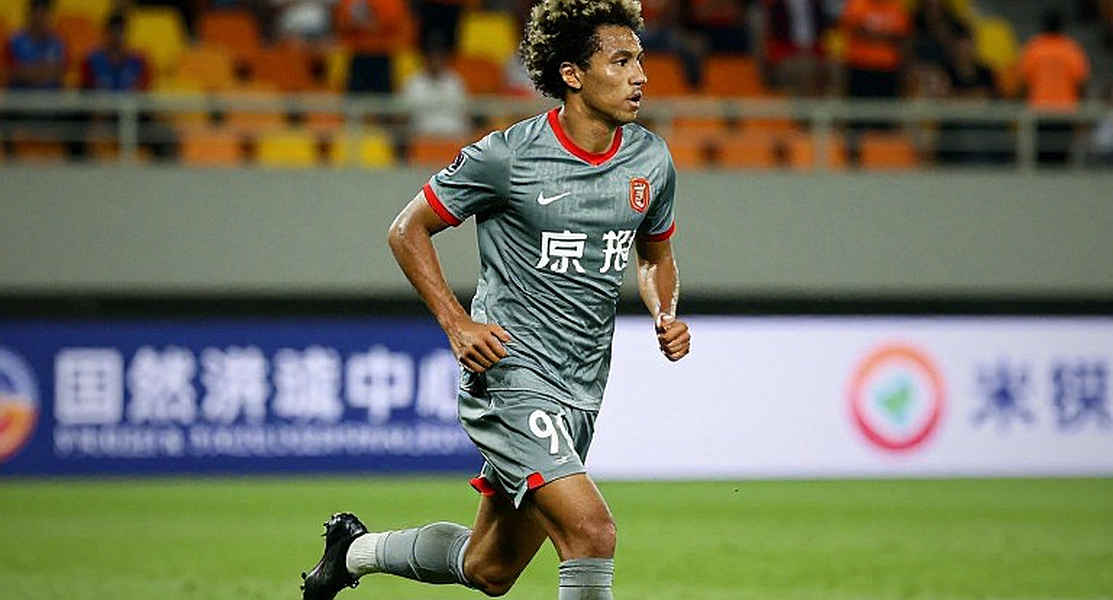
Yet the headline turned it into an exposé. And when a headline outruns its content, we are talking about crowd psychology, not tactics.
Core: what Herdman actually told us
Five substantive signals sit inside that address, and none of them resembles a denunciation.
First, and most important, is the line about balance. Herdman set two quantities side by side: the individual talent Indonesia has, and the collective cohesion of teams that have played together for three, four, five years. He said his team must find a way to balance the two. This is a coded admission of a cohesion deficit. Indonesia enters the tournament with an individual-talent advantage and a collective disadvantage, and their own coach said so first.
It is worth stressing: when a team built around individual talent faces a deep, disciplined, long-gelled defensive block, the solution lies in set pieces, in transition moments and in one-on-one quality. That is a team archetype that does not win by sustained territorial dominance but by exploding in a moment. We do not hear Herdman discuss build-up structure, how to break a low block, or rehearsed dead-ball routines. None of it. Only reassurance about mentality.
Second is the emphasis on referees. A coach telling players about "tough referee leadership" is not merely instructing. He is preparing them for a scenario: the match will be physical, there will be dark arts, there will be contentious decisions. It is a discipline message encoded as a fairness message. And in Southeast Asian football, where national-team matches routinely sit in the grey zone of cards and controversy, that is a variable that can genuinely decide a game.
Third is the demand for calm. When a coach devotes his first session to not being provoked, he is addressing a known wound. Messages like this rarely appear unprompted. It may stem from a past precedent, a scouting report on the opponent, or simply the staff recognising it as their own weakness. An on-field leader who can talk to referees is an organisational fix for that psychological problem.
Fourth is home advantage, and this is the most under-discussed part. All of Indonesia's group matches take place at one stadium in Jakarta. No long-haul travel. No acclimatisation. Maximum recovery time. A near-certain full house. In a short tournament, playing every group game on one pitch is a quantifiable competitive edge, not just atmosphere. Opponents must travel, endure noise and adapt.
Fifth is the way Herdman framed the path. He said the team would focus on Singapore and try to take three points. No mention of the trophy. No mention of the knockout phase. This is a well-executed pressure-diffusion device: divide the objective so nobody thinks about the final outcome. But the very presence of the device is evidence that the staff regard the expectation load as a real risk.

Then there is the point regional debate should weigh more heavily. Indonesia's Group A contains Singapore, Malaysia and Bangladesh. Of those three, Bangladesh is the item that needs verification. Bangladesh sits in South Asia, plays within the SAFF system, and its appearance in an "ASEAN Cup" is an anomaly in regional governance. If the detail is correct, it likely indicates an expanded format beyond the traditional AFF event. If it is wrong, the whole group structure needs revisiting. I raise the question; I do not conclude.
Underneath it all, Herdman's message is the ABC of coaching: stay calm, respect the referee, believe in your ability, take it one game at a time. Any coach anywhere says similar things before a major tournament. The analytical question is not the content. It is why the content was packaged as a warning.
Contrarian: where I might be wrong
I have to concede a few things.
First, the entire source article rests on facts that carry no independent sourcing on almost every point. The assertion that this is an "official FIFA tournament", the 24 September to 5 October 2026 window, and the Group A composition are all stated without corroboration. More importantly, a September-October slot runs against the historical convention of Southeast Asian football, where national-team competitions have traditionally been a November-December property. This is a verification item before any of the analysis above can be used.
Second, the number Herdman cited — eight World Cups, three Olympics — is unusual for one person's coaching career. It may aggregate youth tournaments, assistant roles or observer attendances. What is certain is that the figure is doing authority-building work in the address, and it is the load-bearing strut of the entire media narrative. If that strut is challenged, the story wobbles. I do not have enough data to confirm or deny it, so I assert nothing.
Third, and this is where I must examine myself. I am Vietnamese, watching regional football, and Indonesia is the historic rival of my own national team. That does not make me wrong, but it obliges me to be careful with any judgement that runs against Indonesia. If I say a host nation's expectation burden is a weakness, I must ask whether that is analysis or wishful thinking. People fear controversy; I fear a match that does not make me think. But that fear does not exempt me from checking myself.
Fourth, there is an equally grounded reverse reading. Home advantage is not always pressure. For a side with superior individual quality, a packed home ground can become fuel, turning stagnant minutes into goals through a single flash. A favourable draw reinforces that scenario. If Indonesia cruise through the group, every concern about cohesion and discipline will evaporate before it can be tested.
And finally, I must state plainly what many analyses skip. Herdman's pre-framing of dark arts and referees may be a double move. It can inoculate his players psychologically against perceived injustice, and it can pre-build an explanatory shield for the future. If Indonesia fail, "we were warned" is already on the table. I am not asserting intent. I am saying the structure permits it, and that is worth watching.
What to watch above all
The opening match against Singapore on 25 September 2026 is the first test, and any dropped points will immediately trigger media pressure on Herdman. The yellow-card accumulation of key players over the first two matches is a leading indicator of disciplinary risk. When overseas-based players report for camp will reveal the squad's real readiness. And any refereeing controversy will reactivate the very frame Herdman built before the ball was kicked.
But the thing I consider most important is not on the pitch. It is the unanswered question: whether this tournament is genuinely FIFA-sanctioned. If it is, it marks a significant shift in the governance of regional football. If it is not, it is a product of headline and translation.
Between those two possibilities sits an entire analytical void. And as I keep saying: I do not write to be agreed with, I write to open the door others have locked. This time the door opens onto an ordinary training session on 22 September, where a coach told his players to stay calm — and was turned into an exposé. The remaining question is for the reader: who benefits when a reminder about discipline becomes an accusation of darkness?