
When Interest Rates Fall: The Money Behind Vietnamese Football Sponsorship
**Câu trả lời cốt lõi**: LPBank giảm lãi suất cho vay tới 2%/năm cho các khoản giải ngân mới phục vụ sản xuất kinh doanh ngắn hạn, và giảm 0,05–0,6%/năm lãi suất huy động, áp dụng toàn hệ thống đến 31/12/2026. Với bóng đá Việt Nam, tác động chỉ là gián tiếp qua ngân sách tài trợ của khối ngân hàng. **Dữ kiện chính**: - Lãi suất cho vay giảm 1,6–2%/năm, chỉ áp dụng cho giải ngân mới, ngắn hạn, sản xuất kinh doanh. - Lãi suất huy động giảm 0,5–0,6%/năm với kỳ hạn từ 6 tháng, 0,05–0,1%/năm với kỳ hạn ngắn hơn. - Chương trình áp dụng toàn hệ thống LPBank đến hết ngày 31/12/2026. - Thông cáo ra sau cuộc họp ngày 16/10 và chỉ đạo Ngân hàng Nhà nước ngày 18/10. - Văn bản không nêu bất kỳ CLB, cầu thủ hay giải đấu nào. **Nguồn**: Thông cáo của LPBank, tháng 10; số liệu chưa có kiểm chứng độc lập, cần đối chiếu bản gốc trước khi trích dẫn. **Hỏi đáp liên quan**: - Hỏi: Vì sao tin lãi suất ngân hàng lại liên quan bóng đá Việt Nam? Đáp: Vì phần lớn ngân sách CLB V.League đến từ tài trợ doanh nghiệp, trong đó khối ngân hàng là nguồn lớn, nên biên lợi nhuận của khối này ảnh hưởng quy mô tài trợ. - Hỏi: Mức giảm 2%/năm có áp dụng cho toàn bộ dư nợ? Đáp: Không, chỉ cho khoản giải ngân mới, ngắn hạn, phục vụ sản xuất kinh doanh. - Hỏi: Bóng đá Việt Nam chịu tác động trong bao lâu? Đáp: Kênh gián tiếp, độ trễ ước tính 6–24 tháng, chiều hướng chưa xác định." } ```
The press release ran to barely two pages, one sheet of A4 when printed. I read it on the bus from Thong Nhat Stadium back to the newsroom, between two phone calls, and I nearly skimmed past it. What stopped me was a phrase in the middle of the third paragraph, tucked after a comma, so small it was almost invisible: “for new disbursements serving short-term production and business.”

The whole document revolves around a figure of two per cent. LPBank announced a cut in lending rates of up to 2% per year; a cut of 0.5–0.6% per year on deposits with terms of six months or more, and 0.05–0.1% per year on shorter terms; applied system-wide until 31 December 2026. The release came immediately after a meeting chaired by a Deputy Prime Minister on 16 October and a State Bank of Vietnam directive dated 18 October. CEO Vu Quoc Khanh was quoted using exactly the words a bank press release ought to use: sharing difficulties, accompanying, responsibility towards customers.
That comma is the part worth reading. It narrows the entire promise to a very thin slice: only new loans; only short-term; only production and business. A sports desk has no reason to stop there — unless the writer knows that the money feeding Vietnamese football flows out of balance sheets exactly like this one.

In twelve years sitting in stand B at Thong Nhat and following V.League matches, I have learned something that appears in almost no statistical table: Vietnamese football has never had a financial base of its own. A club here does not earn money; a club is given money. Gate receipts, broadcast rights, shirt sales — according to the season budgets I have been shown first-hand — usually add up to less than a third of an average club’s operating costs. The rest comes from one major sponsor or from a single owner.
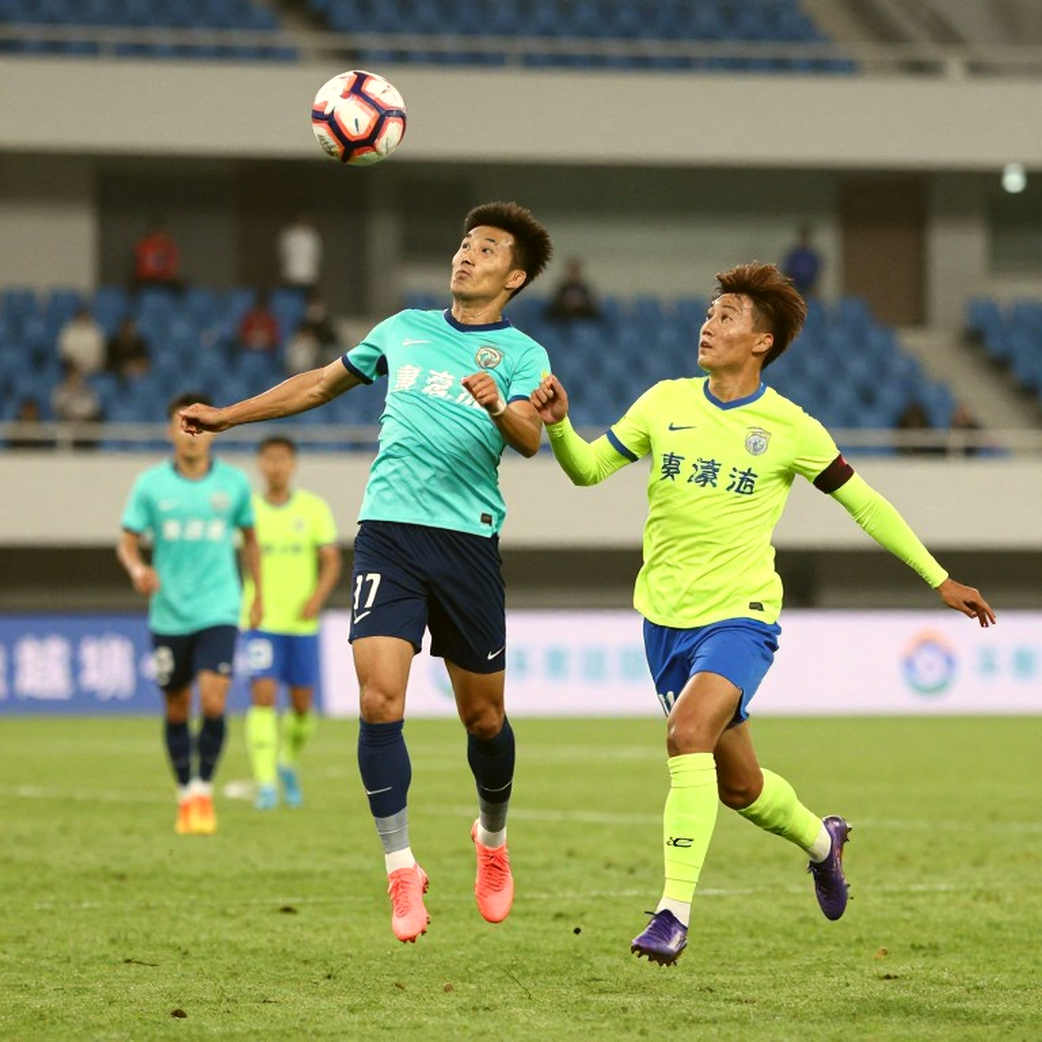
That structure has printed itself into a familiar pattern across team shirts: Dong A Thanh Hoa, SHB Da Nang, LPBank Hoang Anh Gia Lai. Behind each name sits a company, and in very many cases that company is a commercial bank. Vietnamese banks have long stopped sponsoring football as charity; they sponsor it as a communications line item, sitting in the same budget row as television advertising, branch openings and customer conferences.
In 2026, also at Thong Nhat, I wrote the first piece of mine that was widely read. Nguyen Van Toan scored in the second minute of stoppage time, HAGL still lost 1–2, and he sat crying in the middle of the pitch for ten minutes after the whistle. I set aside every statistic and wrote about the solitude of the scorer in a defeat. That goal did not change the man who scored it; it changed all the pain into words. The lesson I kept was not about the subject but about the method: facing an event, you must find out who is really affected.
Read that way, a press release about rate cuts has two characters. The first is the borrower — the person promised a lower cost. The second is rarely mentioned: the bank itself, in its capacity as a sports sponsor. And that second character has just entered a period in which its margin is being squeezed from both sides.
Look closely at the arithmetic. The bank cuts deposit rates by 0.5–0.6% per year on terms of six months or more, and by only 0.05–0.1% per year on shorter terms. That is a cut aimed precisely: long-term deposits are the core funding source of Vietnamese retail banking, so cutting there is what creates real room. But that room is about half a percentage point, while the announced lending cut reaches two percentage points. The gap of roughly one and a half points does not create itself. It has to come from somewhere: from operating costs, from margin, or from both.
What a bank press release never states, and what a football reporter must work out alone: when a sponsor’s margin narrows, the first line item to be cut is always the one that generates no direct revenue. Sports sponsorship sits in exactly that line item. That is the entire transmission mechanism, contained in two sentences.
The ball slows down, and only then do I see how many human lives it carries. A bank press release needs to be read slowly in the same way, because behind it stand hundreds of people working inside clubs — the man arranging food and lodging for academy players, the woman handling contracts for the women’s team, the person taking out loans just to cover training-ground rent. None of them appear in the document. Their budgets do.
There is one more detail in the release that I consider more important than the two per cent: the target customer group. The text names household businesses, small and micro enterprises, with priority for agriculture and rural areas. This is precisely the economic layer that funds the base of Vietnamese football — not the V.League, but the First Division, futsal, women’s football, youth tournaments, the advertising boards erected around district stadiums. A building-materials shop in a small city, once it can borrow more cheaply, might spend a few extra tens of millions on the provincial team. A bank with a thinner margin will struggle to sponsor one more club. These two forces run in opposite directions, and no model says which one wins.
The programme’s horizon also deserves attention. A scheme running until 31 December 2026 is a far longer commitment than is usual for rate adjustments made under direction. A long commitment usually carries two meanings: a goodwill signal to the regulator, and a move to take market share while other banks are still deliberating. Both meanings say the same thing — this decision was taken in a meeting room, with calculations, with comparisons against rivals, not as an act of charity.
That is why I do not read this release as a plain economics story. It is a piece of data about the weather of sponsorship money. And in a football economy where club budgets depend almost entirely on that money, weather is not a side issue — weather is the season.
There is a professional habit I carried out of that 2026 piece: do not trust the number in the headline, find the person behind it. When a transfer story says “record fee”, the real information usually sits in the trailing clause — paid in instalments over four years, with a sell-on percentage, with appearance-based add-ons. When a club announces a “three-year contract”, the real information is usually an automatic extension tied to a performance threshold. Our job is to read the trailing clause. With this bank release, the trailing clause is the phrase after the comma: only new disbursements, short-term, production and business. The weighted average across the whole loan book is almost certainly far below the two per cent figure, and it is not disclosed.
The biggest blind spot in Vietnamese sports journalism, in my view, is that we treat sponsorship money as weather. When it rains, the club has money; in drought, the club shrinks; and we report the drought as a natural disaster. But no drought arrives by itself. There is someone who signs, someone who does not, a meeting at seven in the evening, a spreadsheet where the row marked “sports sponsorship” gets dragged downward. The goal of a losing man always begins with a decision nobody filmed.
Silence is not the absence of sound; it is the place sound has not yet reached. In Vietnamese football, the largest silence sits in sponsors’ boardrooms — no reporters, no cameras, no one mentioning the word “player”. The decisions made there shape the season more than any training session, and we almost never write about them, because we are not in the room.
One clarification is needed to avoid misunderstanding. A bank cutting lending rates is an action that helps hundreds of thousands of household businesses, and there is no reason to doubt its good faith. But two layers must be separated: the customer layer and the shareholder layer. At the customer layer, this is good news. At the shareholder layer, it is a margin calculation. Football sponsorship sits in the second layer. The same balance sheet, the same signatory, two different meanings. Confusing the two layers is the fastest way to misunderstand the whole story.
So I am not waiting for a clear conclusion about whether the V.League will have more or less money over the next two seasons. This transmission channel is too indirect, has too many variables, and its lag is measured in years rather than months. What I consider more certain lies elsewhere: a football economy in which each club’s survival is decided inside a cost line of somebody else’s business will always have to live with this kind of news. Every time the State Bank issues a document, every time a bank adjusts its rate schedule, a small noise sounds again behind the stands.
What is worth waiting for is not another rate cut. It is the day a V.League club publishes financial statements in which the line for “ticket and broadcast revenue” is larger than the line for “sponsorship”. That day has not arrived, and it will not arrive because rates fall. It will arrive only if someone decides that a football economy living on other people’s money will forever be a guest, and never the host.