
U-21 Japan 1-0 North Korea: The 39th-Minute Goal and the Gap VAR Could Not Fill
**Câu trả lời cốt lõi**: Nhật Bản U-21 thắng Triều Tiên U-23 1-0 ở tứ kết bóng đá nam đại hội thể thao châu Á. Bàn duy nhất do Nwadike ghi ở phút 39 từ đường chuyền dài của Ichihara. Giải chưa vận hành VAR tính đến vòng tứ kết. Nhật Bản giữ sạch lưới bốn trận liên tiếp và gặp Uzbekistan ở bán kết. **Dữ kiện chính**: - Tỷ số: Nhật Bản U-21 1-0 Triều Tiên U-23, bàn thắng phút 39 của Nwadike. - Nhật Bản xoay vòng 9 vị trí; chỉ Ichihara và Nakajima giữ suất đá chính. - Sơ đồ 4-3-3: Araki; Sato, Ichihara, Kanai, Umeki; Nakajima, Shimamoto, Ozeki; Yokoyama, Nwadike, Fukunaga. - Chuỗi 4 trận giữ sạch lưới; VAR chưa được đưa vào vận hành đến hết vòng tứ kết. - Bán kết: Nhật Bản gặp Uzbekistan U-23, đội thắng Ả Rập Xê Út U-23 với tỷ số 3-0. **Nguồn**: FOOTBALL ZONE (Nhật Bản), bản tin tứ kết bóng đá nam đại hội thể thao châu Á. Ngày thi đấu được nguồn ghi là 26 tháng 9; mốc này cần đối chiếu lại với lịch thi đấu chính thức của ban tổ chức trước khi sử dụng. **Hỏi đáp liên quan**: - Hỏi: Vì sao bàn thắng của Nwadike gây tranh cãi? Đáp: Cầu thủ Triều Tiên phản đối một va chạm trước đó, nhưng giải chưa có VAR nên trọng tài không thể xem lại tình huống. - Hỏi: Nhật Bản U-21 khác gì so với các đối thủ cùng bảng đấu? Đáp: Nhật Bản cử đội U-21 trong khi Triều Tiên và Uzbekistan mang đội U-23, tức chênh lệch khoảng hai năm tuổi. - Hỏi: Điểm yếu của Nhật Bản trước bán kết là gì? Đáp: Khả năng tạo cơ hội trong thế trận tấn công có tổ chức, khi bàn thắng duy nhất đến từ một pha chuyển đổi trạng thái.
Sitting in my Nagoya office at one in the morning, I rewound the 39th-minute clip seven times. The ball left centre-back Ichihara on an unremarkable long pass into the space between North Korea's left centre-back and full-back. Nwadike read the trajectory about half a second before the ball left Ichihara's foot. He won the duel, took one touch, and finished past the goalkeeper. The only goal of the quarter-final. North Korean players raised their arms in protest, the referee pointed to the centre circle, and there was no monitor for him to walk over to. VAR had not been introduced up to the quarter-finals. Old footage does not lie; only careless viewers misread it.
The first thing to place correctly is the age label. Japan fielded an U-21 side, while North Korea and the next opponent, Uzbekistan, both brought U-23 squads. A two-year gap at youth level is not trivial: two seasons of physical development, two professional training cycles, and for most Asian players, enough time to move from academy to first team.
Japan's staff rotated nine positions from the previous match, keeping only Ichihara and Nakajima. For a knock-out tie in a compressed schedule, that is a clear load-management decision, not a gamble.
The Japan Football Association is running a fundraising campaign called JFA PARTNERSHIP PROJECT for DREAM, with the message that a World Cup title cannot be achieved through feeling alone. That is a governance signal: Japanese football invests long-term and structurally rather than betting on a single tournament. This campaign, with a squad younger than its opponents, sits inside that chain of investment.

Japan lined up in a 4-3-3. Goalkeeper Araki. A back four of Sato, Ichihara, Kanai and Umeki. Nakajima as the anchor, with Shimamoto and Ozeki as the inside halves. The front three: Yokoyama, Nwadike, Fukunaga.
On paper this was a controlled game. In practice it was not.
The problem was that Japan held the ball without breaking down the opposing block — possession became the objective rather than the instrument. Araki joined the build-up as a fifth passing option. North Korea pressed high, aiming precisely at that phase. From around the 30th minute, North Korea took control: winning the ball in midfield, switching quickly into counter-attacks, and repeatedly testing their luck with shots from outside the box. Araki's save from Choi Guk's effort marked how far Japan had been pushed back.
Watching more closely, North Korea did not press as a whole unit. They assigned two forwards to mark the centre-backs directly, one midfielder to shadow Nakajima, and deliberately left the pass back to Araki open. The moment the ball reached the goalkeeper, a North Korean midfielder sprinted at him. That is a designed trap, not an instinctive reaction. Japan escaped a few times thanks to Araki's long distribution, but the attacking rhythm was broken before it formed.
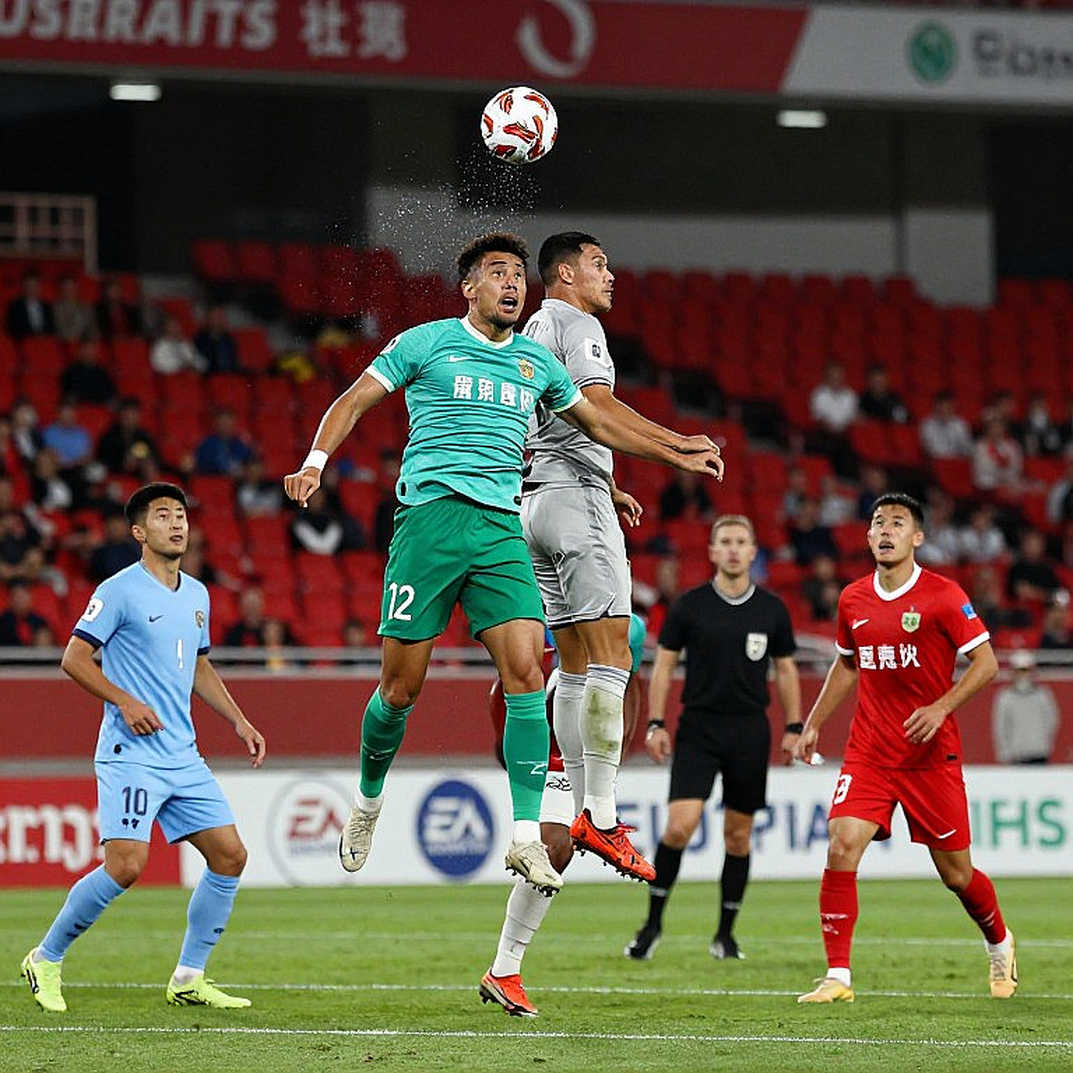
Until the 39th minute, Japan had not created a single clear chance from organised open play.
The goal came from an entirely different route: transition. Ichihara's long ball, Nwadike's won duel, and a one-on-one with the goalkeeper. An unfamiliar name on old footage, one day to become an expensive contract — Nwadike was making his first start of the tournament and scored the decisive goal in it.
The second half repeated the first in a different direction. Japan wanted to absorb pressure and counter; North Korea switched defence quickly enough to smother the build-ups. The closing phase revolved around blocking shots and defending corners with height.
Four consecutive clean sheets in a knock-out tournament is not a lucky statistical run. It comes from structure: two centre-backs holding position, Nakajima sweeping in front of the back line, and the inside halves accepting deeper positions when the ball is lost. As the match reached its final phase, Japan's defence shifted into zonal marking inside the box, prioritising height and numbers in front of the ball. That is work rarely acknowledged by the media, but it is the foundation of the semi-final berth.
Two things must be separated, though. The defence played well. The attack did not.
The fact that Japan scored only from a single transition moment, while being controlled by the opponent for a long stretch, raises the question of their chance creation in organised attacking play. If Uzbekistan drops a low block and leaves no space behind, what will Japan use to unlock it?
One detail stands out: the two most important figures in the goal, Ichihara and Nwadike, both play abroad. The early flow of young Japanese players to Europe is not only a club story — it changes how the youth national team operates, from accumulated match load to the ability to withstand contact in one-on-one duels.
The most overlooked factor is officiating.
The tournament had not introduced VAR as of the quarter-finals. That means the decisive goal — a move protested by North Korea over a preceding collision — stood without a single review. That does not mean Japan won because of the referee. Nor does it mean the goal was invalid. Only one thing is certain: this result was established in an environment without a review mechanism, and that mechanism is likely to appear from the semi-finals onward. When the stadium empties, the paperwork starts speaking — here, the paperwork is the tournament regulations and the technology rollout schedule.
The framing of one step from a medal sounds reasonable, but it creates an expectation asymmetry. An U-21 side reaching the semi-finals has already exceeded the development benchmark. If they lose to Uzbekistan, domestic media may read it as failure, when structurally it remains a good result for a cycle aimed at the Paris Olympics.
And the Nwadike story needs to be stated plainly. One start, one decisive goal. That is real data, but the sample is far too small to build a legend on. The rate at which one-match heroes sustain form into the next knock-out round is far lower than the feeling an audience carries away after the final whistle. No clause is meaningless; only the careless read past it — and in football, a young striker's clause is actual minutes played, not goals scored.
Uzbekistan reached the semi-finals after a 3-0 win over Saudi Arabia. That is the first real test for Japan's defence, and the first real test of their chance creation in settled play. If Araki and the back four hold their concentration as they did across the last four matches, Japan have a platform to advance. If the attack continues to depend on individual transition moments, any opponent who reads it will find a way to neutralise it.
A squad two years younger, rotating nine players in the quarter-final, still reached the semi-final. The read does not come from the meeting room, but from the corners of old video. Their problem is not scoring goals — it is that they have not yet proven they can score when the match is closed down.