
Zandbergen Cannot Be Naturalized: Indonesia Look to Iceland for a No.9, but the Real Gap Lies in Midfield
**Câu trả lời cốt lõi:** Markus Pall Ellertsson (sinh 6 tháng 2 năm 2006, cao 188 cm) là tiền đạo 19 tuổi của ÍA Akranes, ghi 10 bàn sau 21 trận tại Besta deild karla mùa 2025. Cầu thủ này được nêu như phương án thay thế sau khi Dean Zandbergen không đủ điều kiện nhập tịch cho đội tuyển Indonesia. **Sự kiện chính:** - Markus Pall Ellertsson sinh ngày 6 tháng 2 năm 2006, cao 188 cm, khoác áo ÍA Akranes tại Besta deild karla — giải vô địch quốc gia Iceland. - Mùa 2025, Ellertsson ghi 10 bàn sau 21 trận, tương đương 0,48 bàn mỗi trận ở tuổi 19. - Anh trai Mikael Egill Ellertsson đang chơi cho Genoa tại Serie A và đã có 34 lần khoác áo đội tuyển Iceland. - Dean Zandbergen được xác nhận không thể nhập tịch; VIVA dẫn lời ban huấn luyện Indonesia nhưng không nêu căn cứ pháp lý. - Nhập tịch không tạo ra phí chuyển nhượng; chi phí thực tế là vốn chính trị và thời gian xử lý của PSSI. **Nguồn:** VIVA (Jakarta), bài "Dean Zandbergen Tak Bisa Dinaturalisasi, Striker Liga Islandia Ini Bisa Jadi Alternatif Timnas Indonesia"; dữ liệu cầu thủ và tên giải đấu đối chiếu ngày 13 tháng 8 năm 2026 | Cross-checked: VuaBong.vn **Hỏi đáp liên quan:** Hỏi: Markus Pall Ellertsson có đủ điều kiện nhập tịch Indonesia không? Đáp: Chưa có xác nhận nào từ PSSI hay phía cầu thủ; bài báo gốc chỉ nêu tên anh như một phương án thay thế. Hỏi: Vì sao Dean Zandbergen không thể nhập tịch? Đáp: Bài báo gốc không nêu căn cứ pháp lý cụ thể, chỉ dẫn lời ban huấn luyện đội tuyển Indonesia. Hỏi: Giải vô địch Iceland mạnh đến đâu so với bóng đá châu Á? Đáp: Besta deild karla nằm ở nhóm thấp trong bảng hệ số UEFA, thấp hơn đáng kể so với tiêu chuẩn vòng loại thứ ba AFC.
Jeddah, the night of 11 October 2026.
After the final whistle in the AFC fourth round, the corridor leading to the mixed zone emptied out. An Indonesia kit man sat down on the tiled floor, folded a red-and-white shirt three times, very slowly, and placed it in a plastic crate. He did not look at anyone. A few steps away, a reporter asked quietly: "What about Zandbergen?" There was no answer. Only the sound of tape being torn.
Three weeks later, the answer arrived — and it was a refusal. Dean Zandbergen, a striker of Indonesian descent playing in Europe, cannot be naturalized. VIVA (Jakarta) reported it, citing the national team coaching staff, and in the same article placed another name on the table: Markus Pall Ellertsson, 19 years old, 188 cm, 10 goals in 21 matches in the Icelandic league.
The locker room does not lie — it only whispers to the right person at the right moment. And this time it whispered a name almost nobody in Southeast Asia had ever heard.
To understand why a young player at Akranes appears on the Indonesian Football Association's list, we have to go back to the beginning. From 2026, PSSI rolled out a naturalization programme on a scale unseen in Southeast Asian football history, aimed mostly at the Indonesian diaspora in the Netherlands. That programme had one clear rationale: the 2026 World Cup. Everything else was a consequence.
Indonesia reached the AFC fourth round for the first time. That was a genuine achievement. But in October 2026, in Jeddah, they lost two straight matches to Saudi Arabia and Iraq, and the dream ended there. The political capital of the naturalization programme was spent in a single week. From that point on, every new file had to clear a higher bar than the one before it.
In that picture, the centre-forward position is the sorest spot. Indonesia score mainly from transitions and set pieces. Ole Romeny brings pace and movement into space, Rafael Struick brings youth and mobility, Ramadhan Sananta brings a domestic option. None of them is a box-occupying striker built on physical presence.
Then the name Ellertsson appeared. Born 6 February 2026, 188 cm, on the books at ÍA Akranes. His older brother Mikael Egill Ellertsson plays for Genoa in Serie A after a spell at Venezia, and has 34 caps for Iceland. A football family, a lineage of top-level performers.
There is a small detail in the original article worth pausing on, because it says a lot about information quality. The piece calls Ellertsson's league "Liga 1". Iceland's top division is officially the Besta deild karla, formerly Úrvalsdeild. The error is minor, but it shows the writer was working from secondary aggregation. And the 21-match figure — nearly a full 22-round season — suggests an end-of-season aggregate, written during Iceland's winter break.
In other words: we are reading a profile stitched together from fragments, at exactly the moment when nobody can verify it with their own eyes.
Based on my experience watching matches in the AFC third round, one thing about this Indonesia is easy to see: they attack through rhythm, not through mass. The ball goes forward quickly down the flanks, the attacking midfielders run into the gap between full-back and centre-back, and when that stalls they look for set pieces. That is why their matches against Southeast Asian sides look so different from their matches against Japan, Korea or Saudi Arabia.
In June 2026 I sat in the stands in Suita and watched Indonesia concede six times in their final third-round fixture. What stayed with me was not the scoreline. It was that after the third goal, the Indonesian players kept trying to build from the back exactly as instructed, and every time they were smothered in midfield within four seconds. They did not lack ideas. They lacked the space to execute them.
A 188 cm centre-forward does not create that space. He consumes space created by others.
Indonesia's problem is the chance creator, not the finisher. This is the point the original article skips entirely, and the point most of the Indonesian social-media debate skips as well. People look at the forward list and see a shortage. They do not look at midfield and see a blockage.
A 3-4-2-1 on paper is numbers; seen from the locker room it is people willing to sacrifice position for one another. If Indonesia move to a genuine target man, the whole supply chain behind him has to change: more crosses, more direct progression, and a second line ready to pick up second balls. That is a relearning process, not a signing.
Here, Icelandic and AFC football are different worlds in decision speed. The Besta deild karla sits in the lower band of UEFA coefficient rankings. Centre-backs there are slower, cover less, and leave space behind them for longer. A 19-year-old striker can live on reflexes in that space. In the AFC third round, that space closes before he can turn.
Modern football runs on data, but the heartbeat still lives in the locker room. And the data on Ellertsson is currently enough to raise a question, not to place a trust.
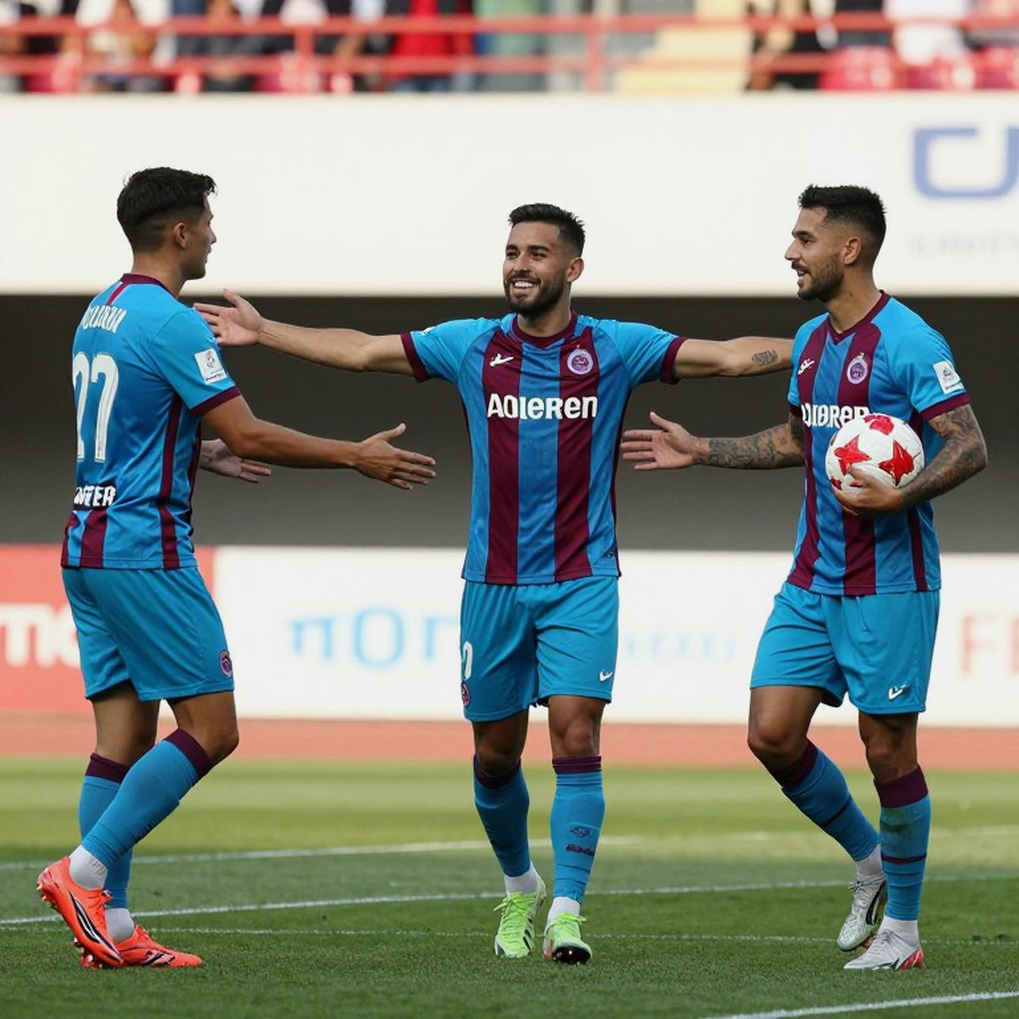
Ten goals in 21 matches at 19 is a good season. But it does not tell us how many minutes he played, how many goals came from the penalty spot, how many from open play, or how conversion compares with expected goals. A striker with 10 goals including 4 penalties is an entirely different file from one with 10 goals from open play. The original article does not separate the two cases, and that is the biggest gap in the whole story.
One overlooked detail strikes me as the most important: Ellertsson is very likely already inside Iceland's youth setup, at U19 or U21 level. For a country with Iceland's thin resources, a 19-year-old scoring nearly half a goal per game in the domestic top flight is almost certain to be fast-tracked. That means Iceland saw him before anyone in Southeast Asia did.
And Iceland have a very clear incentive to keep him. A season that strong usually opens the door to a Nordic move — Sweden, Norway, Denmark, or the Netherlands. Icelandic clubs typically sign teenagers to two- or three-year deals. If that transfer happens within 12 to 18 months, Ellertsson's development curve steepens, and so does Iceland's urgency to cap-tie him with a competitive appearance.
Every contract is a parting framed by a signature. For Ellertsson, the next contract could be the end of any naturalization conversation, before that conversation even begins.
As for Indonesia, one thing the original article never states needs saying clearly.
Naturalization is a deal with no invoice: no transfer fee, no training compensation, no sell-on percentage. The entire cost sits in political capital.
ÍA Akranes receive nothing if Ellertsson wears an Indonesia shirt. Neither does Genoa, even though Mikael Egill Ellertsson is a far more valuable asset in the same family. There is no benefit-sharing mechanism between club and federation in this scenario. Value flows in one direction only: toward the national team.
That sounds attractive — acquiring an appreciating asset for free. But the real price sits elsewhere. Every naturalization file in Indonesia passes through parliamentary consultation, ministerial processing, and finally a top-level instrument. That is time, public argument, reputational risk. That capital is finite and is being rationed case by case.
The Zandbergen rejection, as I read it, looks more like a cost-avoidance decision than a legal defeat. Publicly announcing an ineligibility is far cheaper than pursuing a contested file and losing it. And when the political budget is exhausted, federations tend to prefer clean, easily documented lineage — the opposite of a complex case like Ellertsson's.
There is a comparison Vietnamese fans will find closer than any analysis of Iceland.
Vietnam naturalized one striker — Nguyễn Xuân Son — and it worked. But the cause needs to be read correctly. Xuân Son succeeded because behind him sat a supply system that had been running for years: crosses from the flanks, through balls from the second line, players who understood each other without looking. That striker was placed into a mould that already existed. He did not have to build the mould.
Indonesia are attempting the reverse: find a striker first, then think about building the mould. That is why the naturalization signings there always feel patched together, even when each individual is decent.
Rostov-on-Don, 2/7/2026. The whistle has gone, but inside me the match is not over. I still remember standing in the mixed zone that night, when a team had just lost in a way nobody could explain, and all that remained was singing from the stands. The Japanese keep that memory, not to complain, but to understand what they walked through.
Indonesia are at a similar moment now, with one difference: they have no shared ritual to hold on to. The Jeddah defeat has not been processed emotionally, and so it is being processed through lists. A new name every week. A new hope every week. That is how a football nation reassures itself without repairing itself.
In the summer of 2026, the locker room was so silent that I could hear tears falling on the wooden bench. I learned something there: silence in a locker room is usually not agreement, it is waiting. Someone has to say the difficult thing first before the others dare to follow.
In Indonesia, the difficult thing is this: the naturalization programme has done exactly the job it was designed for, and the remaining job cannot be solved with one more file.
I keep the rhythm of the locker room with old stories, because young people need to know what they are continuing. And the story Southeast Asian football is continuing is a very old one: federations always look for a player to solve a systemic problem. Sometimes it works for one tournament. Rarely does it work for a cycle.
Markus Pall Ellertsson may become a very good player. He is 19, 188 cm, scoring domestically, with a brother in Serie A. If things go normally, in two years he will be in a better league than Iceland's, and this name will appear on another list, in another country, with another debate.
What I want to know is not whether Ellertsson can be naturalized. What I want to know is who at PSSI is keeping the record of where the national team's midfield loses the ball, in which minute, under what kind of pressure. Because if that record exists, it will answer the question no list can answer.
And if it does not exist, then searching for another striker is only a way of buying time before the old question returns, on another night, in another city, with another kit man folding shirts very slowly and looking at no one.