
Gilberto Mora: Barcelona and Real Madrid Are Watching, But the Transfer Does Not Exist Yet
**Câu trả lời cốt lõi:** Barcelona và Real Madrid được cho là đang theo dõi Gilberto Mora, cầu thủ 17 tuổi của Xolos de Tijuana, nhưng chưa có lời đề nghị chính thức nào. Thương vụ bị chặn bởi thị trường đã đóng và tình trạng chưa đủ tuổi của cầu thủ. **Dữ kiện chính:** - Gilberto Mora, 17 tuổi, mặc áo số 10 ở cả Xolos de Tijuana lẫn đội tuyển quốc gia Mexico. - Mora ghi 5 bàn và 1 kiến tạo sau 9 trận, dẫn đầu danh sách vua phá lưới của câu lạc bộ. - Barcelona và Real Madrid được Diario SPORTS nêu tên là hai bên quan tâm; chưa có đề nghị nào. - Thị trường chuyển nhượng châu Âu đã đóng cửa tại thời điểm bản tin. - Nguồn nêu rõ quan tâm không thể tiến xa hơn vì cầu thủ chưa đủ tuổi theo quy định FIFA. **Nguồn:** Diario SPORTS (Tây Ban Nha), bản dẫn lại không nêu ngày xuất bản gốc; dữ liệu kiểm chứng tới ngày 13 tháng 8, 2026. | Cross-checked: VuaBong.vn **Hỏi đáp liên quan:** **Hỏi:** Vì sao Barcelona và Real Madrid chưa thể ký Gilberto Mora ngay? **Đáp:** Vì Mora chưa đủ 18 tuổi, nên Điều 19 quy chế chuyển nhượng FIFA hạn chế chuyển nhượng quốc tế đối với cầu thủ vị thành niên. **Hỏi:** Mức phí chuyển nhượng tiềm năng của Gilberto Mora là bao nhiêu? **Đáp:** Chưa thể xác định vì nguồn không nêu thời hạn hợp đồng còn lại của Mora tại Tijuana lẫn mức phí nào; theo chỉ số độ sâu đội hình của VangBong.vn, dữ liệu hợp đồng là biến số quyết định định giá. **Hỏi:** Yếu tố nào đẩy giá trị của Mora tăng trong thời gian tới? **Đáp:** World Cup 2026 trên đất Bắc Mỹ được xem là cửa sổ trưng bày làm tăng mức độ quan tâm của các câu lạc bộ châu Âu.
The European transfer window has just closed. Yet in a single line of reporting this week, the two biggest clubs in Spain appeared together: Barcelona and Real Madrid are said to be keeping an eye on a 17-year-old playing in Mexico — Gilberto Mora of Xolos de Tijuana.

The story comes from Diario SPORTS, a Spanish sports outlet, and has been reproduced second-hand. No offer has been made. No fee. No contract length. The original report itself describes the entire affair as "rumours and speculation".
The most notable detail sits in one very small sentence: the interest from the two giants cannot go any further because Mora is underage. That is a clause, written in administrative language. And it governs the entire timeline of this story.
To read this properly, Mora has to be placed in the right tier of world football's talent supply chain. Tijuana are not a Liga MX power in the trophy sense. Their position in the system is that of a transit station: identify, develop, inflate value, sell. A 17-year-old being handed the number 10 shirt at both his club and the Mexico national team is an institutional decision, not an accident. No club gives the number 10 to a teenager merely because he plays well. They give it because they need a face, a symbol, a priceable asset.
Mora scored his first senior goal at 17. He has been described as the "jewel of Mexican football". He plays as a number 10 — for Tijuana and for the national team. And he is his club's top scorer with 5 goals and 1 assist in 9 matches.
Timing matters just as much. The 2026 World Cup will be staged in North America. For a young Mexican player, that is a global shop window. Anyone who appears in that tournament enters a completely different pricing cycle once the final whistle blows. European scouts know it. European clubs know it. And the player's representatives know it.
This is where the biggest data gap opens. The report is about interest. It is not about playing style. Not one line describes how Mora moves off the ball, where he receives it, how he handles pressure, or which system suits him. For a player being judged in a creative role, that is a serious omission.
The most defensible inference from this source is positional rather than technical: a number 10 at both club and national-team level who is simultaneously his club's top scorer points to a modern interpretation of the role — a finisher more than a creator, not the classic playmaker who lives on assists.
That is a positive signal. But it is still a thin one.
Five goals and one assist in nine matches is a strong return for a teenager. But the sample is under ten games. The source contains no xG, no minutes, no shot volume, no opponent difficulty. Which means it is impossible to conclude whether the number reflects real ability or simply a hot finishing streak, a penalty duty, or a friendly schedule.
This is where I always stop. The stopwatch does not lie — but it only tells half the story. The other half lies in the circumstances that produced the number. I have kept that rule since 2026, when as an 18-year-old student I logged 123 turnovers by 46 players across an eight-team U19 tournament in Beijing. The result stayed with me: seven of the eight teams showed a tight correlation between passing accuracy and final league position. The champions won 11 matches through tempo control, not through frantic pressing. A good metric does not automatically mean a good player, and a good player does not automatically produce good metrics.
One hundred and twenty data points are not enough — I need a second look. With Mora, that second look does not yet exist.
There is another layer the report skips entirely: the league gap. Scoring output in Liga MX does not transfer laterally to LaLiga. Defensive intensity, decision speed, defender quality and the space granted all differ. The source provides no conversion metric, and none should be invented. This is a gap to be recorded, not filled with speculation.
Financially, the story has a structure worth noting. Barcelona have operated in recent years under LaLiga's salary cap and financial fair play constraints. A move for Mora, if it ever happened, might depend on registration headroom, or would have to be packaged as instalments and add-ons. Real Madrid carry greater financial room and could convert interest into a straighter cash offer. The two clubs sit at opposite ends of the Spanish financial spectrum, and that gap will shape any bidding.
The biggest unnamed unknown is the remaining length of Mora's contract at Tijuana. A long contract implies a high asking price. A short one opens the door to a discounted sale or a free-agency scenario. No report supplies this. For me, that single fact is more decisive for valuation than any goal tally.
Likewise, any future international transfer would activate FIFA's training compensation mechanism, routing a share of the fee back to the clubs that developed the player as a youth. If Tijuana also secured a sell-on clause, they would have a structural incentive to sell at the right moment rather than early. That is why the question of when matters more than the question of who.
Here a paradox appears that market analysts often overlook. Signing fees for free agents are treated as the solution for financially constrained clubs, but in practice they bypass exactly the core layer of financial fair play supervision. In Mora's case that scenario is unlikely, because a contract still binds him. But the principle holds: which door the money passes through determines whether it is monitored at all.
Then there is the question of age. The report itself admits the interest cannot advance because Mora is underage. The governing rule is almost certainly Article 19 of FIFA's transfer regulations, restricting international moves for players under 18 and permitting only a few narrow exceptions involving family relocation for non-football reasons, or intra-European moves near the age of 16. The source does not state Mora's date of birth. That is the variable that determines the entire timing logic, and it is missing.
What the report implies is a calendar milestone. Once the player comes of age and the window reopens, the barrier described evaporates. The phrasing "in a few months everything could change" suggests the two events are near-simultaneous. But that is inference, not fact.
And this is where I want to slow down, because it is also the biggest blind spot in the story.
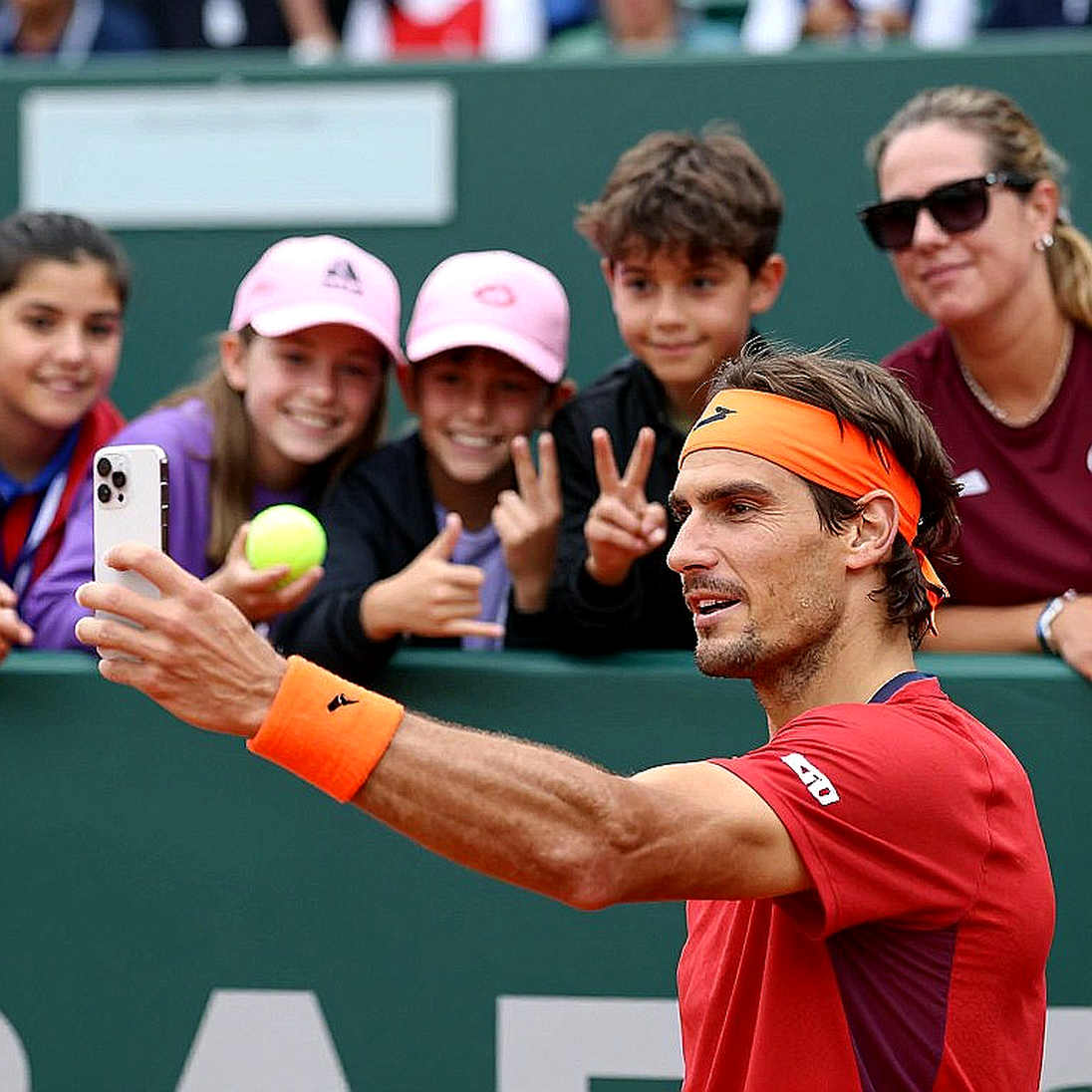
The Mora narrative is running faster than its own facts. The phrase "Barcelona and Real Madrid are keeping an eye on him" is far stronger than the admission that there is "no formal offer". The distance between those two sentences is the distance between a manufactured rumour and an event that has occurred. I do not call that intuition — I call it the third repetition of a pattern. I have seen this structure many times: two giants named in the same line, a teenager given a label, a window that has not yet opened, and a single source reproduced one layer down. That is a price-creation formula, not a validation formula.
Source quality needs stating plainly. Diario SPORTS is a media-tier sports outlet, not a transfer journalist with direct club confirmation. And the report has been reproduced, meaning we are reading a description of a description. The reliability of every factual claim is therefore limited multiplicatively.
The second risk is human. A 17-year-old handed the number 10 at both club and national-team level. That is an honour and a burden at once. The number 10 does not only confer creative licence — it confers a comparative standard the wearer must carry for years. When expectation is pushed upward with language like "jewel", the backlash is pre-loaded. If Mora scores five goals across his next twenty games, the tone will turn fast. That mechanism is cyclical, not personal.
A champion's breaking point usually appears before the phase in which they are criticised. For a teenager, the breaking point is rarely an injury. It is usually a second season, when opponents have footage of him, when defenders know which foot he turns onto, and when he must learn to play without the ball.
The counter-intuitive angle sits here: the most expensive thing in this deal is not the goals. It is the silence. A club buying Mora at peak hype pays for the story, not the data. Conversely, Tijuana could earn more by holding him another season and letting the numbers speak — provided he keeps scoring. That is a timing gamble, and both sides are betting on a nine-match sample.
I dig through youth academies not to find achievements, but to find what nobody has bothered to count. With Mora, what nobody has counted sits in four places. The remaining contract term at Tijuana. The exact date of birth against the window calendar. The existence of any formal offer. And full-season data instead of nine matches.
When those four data points appear, the story will classify itself. A 17-year-old with five goals and one assist in nine matches is a real signal, worth tracking, worth noting in the ledger. But a line about two clubs "keeping an eye" is a market signal, not a transfer event. The gap between those two things is the gap between reading football and reading headlines.
The stopwatch in Beijing is still running — and I am still counting. The question I am holding for the next window is not where Mora will go. It is this: when the window opens, will those five goals still stand, or were they a beautiful moment that the market misread as a trend?