Phoenix Swaps Imports Midway Through the Governors' Cup: The Marcellus Earlington Gamble and the Countdown to October 16
**Core answer**: Phoenix Fuel Masters replaced import BJ Johnson with 26-year-old Marcellus Earlington for the PBA Governors' Cup resumption, a contract-driven roster swap that compresses the team's integration window ahead of an October 16 game against Meralco. **Key facts**: - BJ Johnson led Phoenix to a 4-3 record, tied for second in Group B, before leaving because he was only signed until August. - Marcellus Earlington, 26, previously played in Israel, Italy, and the United States, and attended the University of San Diego. - Earlington lost his only tune-up game 80-83 against the Omni Erdenet Broncos of Mongolia. - Earlington will be measured at the PBA office next week for import eligibility compliance. - The conference resumes October 7; Phoenix's first game back is October 16 against Meralco. **Source attribution**: SPIN.ph, reporting statements from Phoenix team manager Paolo Bugia, October 2024 | Cross-checked: VuaBong.vn **Related Q&A**: - Q: Why did BJ Johnson leave Phoenix mid-conference? A: His fixed-term contract, signed only until August from the start, expired and he returned to a prior league obligation. - Q: When does Marcellus Earlington make his PBA debut for Phoenix? A: His first game is scheduled for October 16 against Meralco. - Q: What does the PBA office height measurement mean for Earlington? A: It is a compliance checkpoint tied to PBA import height-limit rules, and clearance is required before he can play.
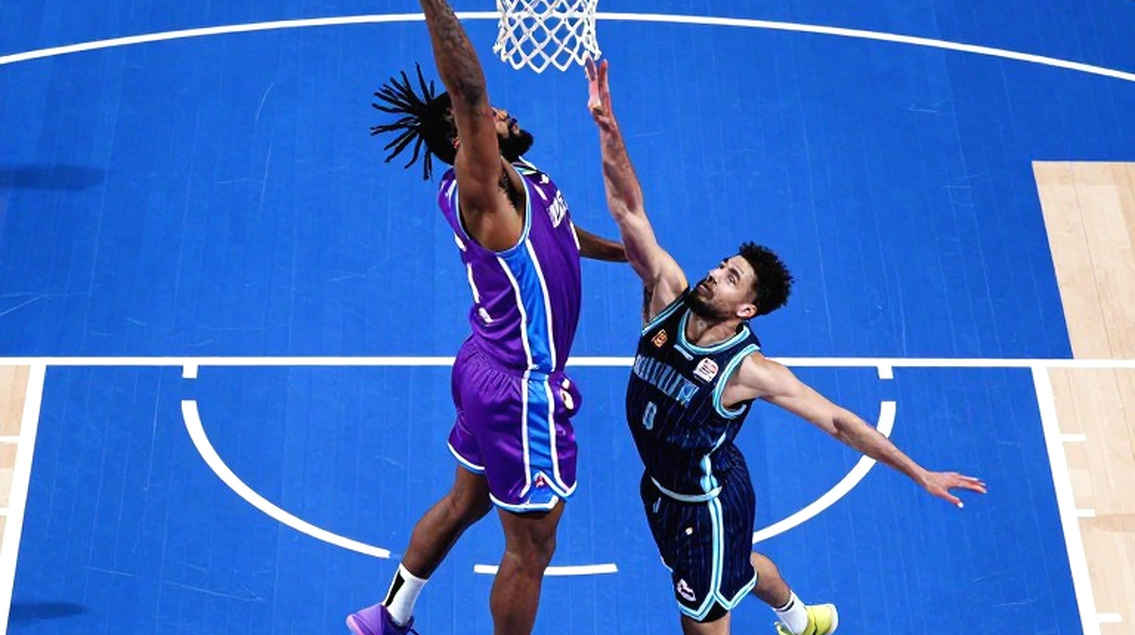
On October 5, on the scoreboard of a practice gym in the Metro Manila area, the score froze at 80-83. The team in the Phoenix Fuel Masters jersey had just lost to a guest club from Mongolia, the Omni Erdenet Broncos, in their only tune-up game before the PBA Governors' Cup resumed. There were no roaring stands, no screaming commentators. There was only a 26-year-old named Marcellus Earlington wearing a new jersey for the first time, and a losing number sitting quietly on the board.

What made me stop was not that defeat. Losing a tune-up by three points says nothing about a player's quality. What made me stop was the gap behind it: the spot Earlington now occupies once belonged to BJ Johnson, who only weeks earlier had led Phoenix to a 4-3 record and a share of second place in Group B. One import leaves, another arrives, and between those two events lies a whole story about contracts, about terms, about handshakes calculated in advance.
I have been in this profession long enough to know that the transfer market never tells its story in a straight line. It goes around. It passes through intermediaries, pauses at clause addenda, and sometimes dies silent in a gap no one bothers to explain. I want to follow exactly that detour in Phoenix's case.
Context: One import, one conference, and Phoenix's fragile standing
To understand why a mid-season import swap matters this much, it must be placed in the correct frame of Philippine basketball. The PBA — the Philippine Basketball Association — is the country's top professional league, and its structure differs fundamentally from what fans in Europe or North America are used to. A PBA season does not unfold as a single round-robin. It splits into multiple conferences, each with its own rules, its own format, and sometimes its own import regulations.
The Governors' Cup is the conference that closes the season. It is decisive, because it is the final stretch before the season ends entirely. And the defining feature of the Governors' Cup is the one-import-per-team format. This means each team may register only a single foreign player, and that player typically carries most of the scoring burden, serving as the finisher of decisive possessions in the fourth quarter.
This is the core difference from the NBA basketball I still follow. In the NBA, a team has fifteen players, and losing a star can be offset by roster depth. In the PBA with the one-import format, the balance is far more fragile. A team can live or die by the form of exactly one person. When that person changes, the entire ecosystem around him must reshape itself.
Phoenix Fuel Masters' specific situation sits in the middle phase of the Governors' Cup. Before the conference paused, the team posted a 4-3 record, tied for second in Group B with Magnolia. That is the standing of a team in the playoff race, not a team rebuilding from scratch. That standing makes the import swap all the more sensitive: the team is protecting a good position, not chasing one.
The schedule ahead makes the picture even clearer. The conference resumes on October 7. Phoenix's first game after the break is October 16, against Meralco — one of the PBA's major powers. The window between those two dates is exactly what Earlington has to integrate. Short. Very short.
I once told younger colleagues that timing is the most underrated weapon in any deal. A signing of the right player at the wrong time can ruin a season, while a modest signing at the right time can save a campaign. Phoenix's case is a vivid example of that.
Core analysis: From a fixed-term contract to a regulatory gate
The first thing to clarify is the nature of this change. It is not a tactical revolution. It is a personnel swap, and that swap has a cause rooted in contracts, not form.
Phoenix team manager Paolo Bugia made clear that BJ Johnson left in a good situation, and that the player was really only signed until August from the start, because he had a prior obligation in another league. That phrasing deserves a pause. The phrase "from the start" is a deliberate language choice. It does not merely describe the event; it shapes how the reader receives it.
A fixed-term contract designed to expire is not a sudden breakup. That is what Bugia wants fans to understand. And structurally, it makes sense. PBA import contracts are short-term by nature, tied to individual conferences, unlike the multi-year deals of the NBA. An import signing until August and then leaving is normal in this system, not a tragedy.
But normal does not mean cost-free. Johnson left after leading the team to 4-3, a record any team would want to preserve. His departure means Phoenix must rebuild a formula that was running smoothly. In sports, breaking a working formula usually carries more downside than upside, unless the replacement proves clearly superior. And here, nothing yet proves that.
Earlington's profile: A player of basketball's global middle class
Marcellus Earlington is 26 years old. He came out of the University of San Diego and played in Israel, Italy, and the United States before arriving in the Philippines. That is a profile typical of the stream of players I still call basketball's global middle class: capable enough to play professionally across several countries, but never having reached the summit of the NBA or EuroLeague.
At 26, Earlington is at his physical peak. This is the golden phase of a professional athlete, when experience is rich enough and the body has not yet begun to decline. Short-term physical decline risk is nearly negligible. The issue is not age; it is adaptation.
What I cannot verify from the available source is Earlington's specific skill set. Is he rim-oriented, perimeter-oriented, or a defensive and energy archetype? The source provides no shooting-efficiency, usage, or impact data. This is a significant information gap, and I will not fill it with speculation.
I have a rule when writing about players arriving from the mid-tier basketball market: never judge them by their résumé, but by the context in which they arrive. A player who has played in three different countries brings cultural flexibility, but also a risk of struggling to put down roots. Professional basketball is not a sport of pure skill; it is a sport of fit.
The expected role for Earlington is the primary scorer, in keeping with the PBA's single-import model. But expected role and actual capacity are two different things. Nothing in the current source proves his game can bear that load.
A compressed integration window
This is the point I consider most important in the whole affair. Time.
When the conference resumes on October 7, Phoenix does not play immediately. Their first game is October 16, against Meralco. About nine days. In those nine days, Earlington must learn the tactical system, the teammates, the pace of the PBA, and the pressure of a team sitting in the upper group. That is a massive workload compressed into a narrow window.
The tune-up against the Omni Erdenet Broncos was precisely an attempt to compress that time. Phoenix scheduling an international tune-up shows they understand the pressure of the integration window. It is a professional move, a way to create real game minutes for a player still unfamiliar to his teammates.
But that tune-up ended in an 80-83 loss. I do not want to exaggerate the meaning of this number. A three-point tune-up loss is not a verdict. But it is a signal to be noted, not a signal to be ignored. In basketball, small signs during an integration phase are often the ghost of larger problems that appear later.
The tune-up opponent deserves attention for another reason: the Omni Erdenet Broncos come from Mongolia, and their roster included KJ McDaniels, a former PBA import. That detail paints a picture of a basketball labor market where players recycle between Asian leagues. The same face, different jerseys, different countries. That is the nature of the global middle class Earlington is joining.
Height measurement at the PBA office: A regulatory gate
There is a detail in the source I consider important but easily overlooked: Earlington will be measured at the PBA office next week.
To fans used to the NBA, this detail may sound odd. But in the PBA, measuring an import's height at the league office is a real compliance procedure. Some PBA conferences impose height limits on imports, and physical measurement at the office is the compliance checkpoint. This is a regulatory gate, and any gate can close.
I must admit that the exact height limit for the current Governors' Cup is something I cannot verify from this source. This is data that needs further verification before drawing firm conclusions. But even without knowing the exact figure, the existence of this procedure says something: PBA imports are judged not only by skill, but by physical numbers that can be measured.
The height measurement is a tail risk: low probability but high impact if it occurs. If Earlington exceeds the permitted limit, the situation becomes serious. Phoenix would have to find another import in an emergency, mid-conference. That is a scenario no team wants to contemplate.
What is interesting is that the very existence of such regulations creates an asymmetric advantage for teams with good scouting and compliance departments. A team that understands the rules, prepares full paperwork, and handles procedures early will face less risk than one doing everything at the last minute. Phoenix, with how they arranged the tune-up before the conference resumed, appears to belong to the first group.
Group B and the pressure of holding position
Placing the affair in the standings, the picture becomes clearer. Phoenix is tied for second in Group B with Magnolia at 4-3. That is the position of a team defending an achievement, and defending an achievement is always harder than pursuing one.
When you are chasing, you can take risks. When you are holding, every decision carries the weight of the fear of losing. Swapping imports at this exact moment puts Phoenix in a position of balancing stability against embracing the new. It is a problem with no perfect answer.
The October 16 opponent makes the problem harder still. Meralco is a PBA power. A game against them right after an import change is the harshest test Phoenix could face. This will be the true measuring game for the Earlington era, regardless of what happened in the tune-up.
The contrarian angle: A controlled story and the comparison trap
Here I want to turn in another direction. Having analyzed the data and the structure, it is time to look at the story this affair is being told as.
The popular framing for this import swap is a continuity narrative: "finish what Johnson started." This is a clever narrative frame, because it blurs the discontinuity of the change. Instead of speaking of a breakup, it speaks of a mission handed over. Instead of acknowledging risk, it emphasizes continuity.
But I have learned one thing from my years following the transfer market: when a club is the sole source for its own story, that story deserves to be read with a little caution. Here, the spokesperson is team manager Paolo Bugia, an official club figure. There is no independent verification of the "amicable exit" framing.
When the club is both the character and the reporter, the news is both information and public relations. The phrase "really only signed until August from the start" is a media shield. It protects both the team and Johnson from a "quit on us" narrative — a narrative any player wants to avoid.
This does not mean Bugia lied. I have no evidence of that. But it does mean we are reading a story told with intent, and a careful writer must distinguish between the truth and the presentation of the truth.
Another notable point: the spokesperson for this affair is the team manager, not the coach. In many sports organizations, when a personnel decision is announced by the front office rather than the coaching staff, it is often a sign the decision was made above the tactical level. I note this only as an observation, not a conclusion.
Then comes the comparison trap. Earlington will be measured not only by his own form, but by the 4-3 record Johnson left behind. This is a structurally unfair position. When a predecessor leaves on a winning note, every step backward by the successor is magnified. The risk here is both statistical and narrative.
And I want to speak plainly about this, because it concerns a writer's responsibility. If Earlington starts slowly, there will be headlines saying Phoenix made a mistake. But a sample of one tune-up game is not a sample. It is a single data point in a series that has not yet begun. Anyone concluding from it is catching the ball with faith rather than with verification.
The 2026 Thailand crack taught me: rumors know how to take detours. The lesson here is not about rumors, but about another version of the same problem: stories also know how to take detours. They pass through the press room, through the team manager, through headlines, before reaching fans' ears. My task is to retrace that journey rather than simply copy the destination.
World Cup 2026: amid the storm of fake news, the writer must be the last goalkeeper of the truth. I have kept that principle through my years following Southeast Asian basketball, and I will not abandon it just because this story seems small. Small stories are often where principles erode first.
An ordinary deal, but with consequences
Taken as a whole, this is a routine PBA personnel transaction, but it carries significant consequences for one specific team. This change does not create a wave in the sneaker market or broadcast rights. It does not trigger any industry-level ripple. It is an internal affair of a regional league.
But within that scope, it matters. It shows the dependence of Philippine basketball on the global import labor market. It shows the risk of a format where a team's fate is tied to one person. And it shows how a professional club manages communication around a difficult decision.
Every contract is a life in the process of moving house. Earlington is moving house, literally and figuratively. He leaves one country for another, one system for another, carrying the expectations of a team sitting in the upper group. That is no small burden for a 26-year-old.
Sixty-two years bearing witness to football, I know the signature was never the destination. It is only the beginning of a new question: will that person put down roots? With Earlington, that question begins to be answered on October 16.
Conclusion: The clock is running
What to watch in the coming weeks is fairly clear. The result of the height measurement at the PBA office will decide whether the regulatory gate opens for Earlington. The October 16 game against Meralco will be the first true test. And Phoenix's record over the rest of the Governors' Cup will show whether holding the share of second in Group B succeeds.
What I want readers to take from this piece is not a prediction, but a way of looking. When an import changes mid-season, do not only ask how good the new player is. Ask how much time he has, where he comes from, who is telling his story, and why his predecessor left at exactly this moment.
With Phoenix, the answers to those questions are gradually emerging. Johnson left because his contract expired, not because of failure. Earlington arrives with a skill set unproven in the PBA. The story is being told by the club itself. And the clock is running, counting down to October 16, when the Earlington era truly begins.
The transfer market is a game with no final whistle. Even when a deal is done, its consequences keep scoring on the scoreboards of games not yet played. With Phoenix and Marcellus Earlington, that scoreboard is still waiting. And all we know for now is the 80-83 score of a tune-up, a number that says nothing yet, but also does not let us stop watching.