
BadmintonWorld Junior Championships 2026: Tanvi Patri Leads India, New 3×55 Relay Format Takes Center Stage
Badminton
World Junior Championships 2026: Tanvi Patri Leads India, New 3×55 Relay Format Takes Center Stage
Đội tuyển trẻ Ấn Độ gồm 18 VĐV do Tanvi Patri và Shaina Manimuthu dẫn dắt sẽ dự giải vô địch cầu lông trẻ thế giới 2026 tại Cairo từ 5 đến 17/10. BWF áp dụng thể thức mới: 3×55 relay cho đồng đội, 3×15 cho cá nhân. Ấn Độ là hạt giống số 5. Key facts: - Tanvi Patri vô địch U17 châu Á 2026, Shaina Manimuthu giành huy chương bạc châu lục. - Ấn Độ cùng bảng D1 với Peru và Brazil; có thể gặp Indonesia (hạt giống 9) ở playoff. - Trại tập trung tại National Centre of Excellence, Guwahati từ 25/9 đến 2/10. - Nội dung cá nhân Eye Level Cup diễn ra từ 11 đến 17/10 theo thể thức 3×15. - Giải đồng đội Suhandinata Cup diễn ra từ 5 đến 10/10. Nguồn: Khel Now | Cross-checked: VuaBong.vn Related Q&A: Q: Thể thức 3×55 relay hoạt động ra sao? A: Cơ chế chính xác chưa được BWF công bố, nhưng đây là sự thay đổi lớn so với hệ thống 21 điểm truyền thống, có thể làm tăng tính bất ngờ. Q: Cơ hội của Ấn Độ tại Cairo thế nào? A: Hạt giống số 5 nhưng đường vào tứ kết có thể phải vượt qua Indonesia, hạt giống số 9, ở trận playoff. Q: Tanvi Patri có phải ứng viên huy chương? A: Danh hiệu U17 châu Á là tín hiệu tích cực, nhưng cô mới chỉ được kiểm chứng ở cấp độ U17, chưa phải U19 thế giới.
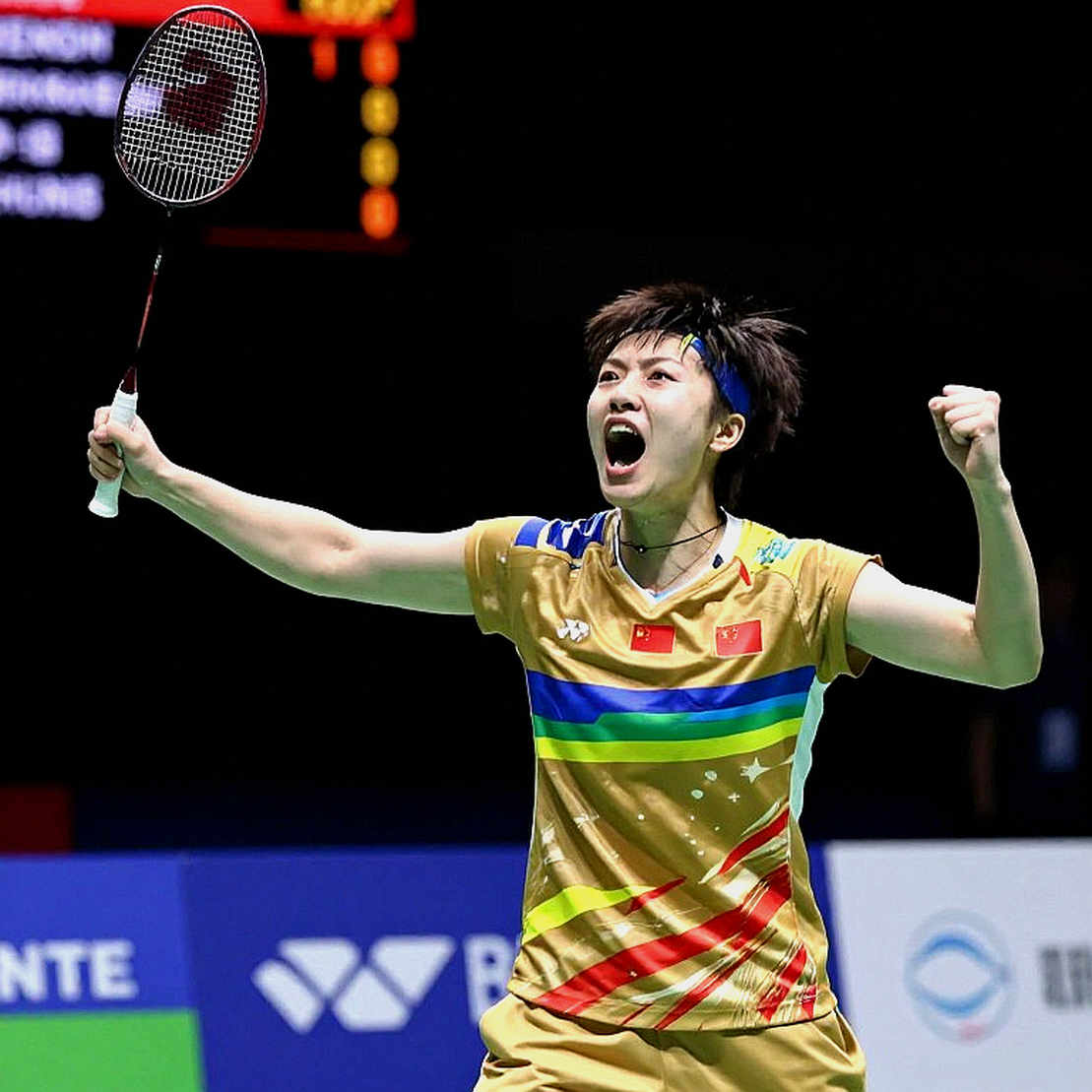
I remember an evening in Kansai in 2026, when I stood at a regional junior athletics meet and noticed something strange: the fastest runner was not the one with the best physique, but the one whose breathing stayed steady entering the final stretch. Badminton is the same. At 17, Tanvi Patri just stood on top of the podium at the 2026 Badminton Asia Junior Championships, and the photo I saw from Cairo had no winning smile. Her face was restrained, lips pressed tight. The face of a winner in Tokyo has no tears. Only a bitten lip.
The BWF World Junior Championships 2026 begins in Cairo from October 5 to 17. India arrives with an 18-member squad, justified confidence, and one big unknown: an entirely new scoring format introduced by the Badminton World Federation (BWF).
India's junior team is not Vietnam's team, but their story is a signal for the whole Asian region watching a junior badminton system being rebuilt from the ground up. The Badminton Association of India (BAI) runs a formal selection process: trials from September 18 to 21, continental medalists deliberately waited for before the roster was finalized, then a full squad camp at the National Centre of Excellence in Guwahati from September 25 to October 2. This timeline is compressed into less than a month, but it shows seriousness: structured trials, proper preparation, clear goals.
The squad is balanced across all five disciplines. Four boys' singles players: Nishchal Chand, Dev Ruparelia, Jagsher Singh Khangurra, Akhil Reddy Bobba. Four girls' singles: Parul Choudhary, Tanvi Reddy Andluri, Shaina Manimuthu, Tanvi Patri. Two boys' doubles pairs: Aathish Sreenivas P.V. with Yogansh Singh, and Pavan Suresh with Punith Suresh. Two girls' doubles pairs: Aanya Bisht with Angel Punera, and Diya Bheemaiah B. with Baruni Parshwal. Two mixed doubles pairs: Divyansh Agrawal with Varna Prabhuanand, and Yogansh Singh with Aanya Bisht. The list shows a squad calculated to compete in both the team and individual events.
The leaders are Tanvi Patri, the new Asian U17 champion, and Shaina Manimuthu, a continental silver medalist. Dev Ruparelia won the India Junior International Grand Prix. But the point that makes this article worth reading is not the player list. It is the format.
The 21-point system, best of three games, has been the standard of modern badminton for decades. It allows a weaker player time to settle, read the opponent, and pay with stamina to stage a comeback. But the 2026 World Junior Championships will break that norm. The Suhandinata Cup team event uses a 3×55 relay scoring system. The Eye Level Cup individual events use a 3×15 scoring system. The exact mechanics of 3×55 have not been published in detail by BWF, but this is clearly a major experiment: for the first time, junior world badminton is moving away from the familiar scoring system to find a new rhythm.
From my experience watching matches, I can say this: any change in scoring changes how coaches deploy players. A 21-point game allows you to lose five points in a row and still have a full chance. A 15-point game offers no such generosity. At the junior level, where psychology is more fragile than physique, short formats increase the probability of upsets. This benefits weaker teams and risks higher-seeded ones. It also changes how coaches manage energy: a quickly finished match means young players rest more, but it also means there is no time to correct mistakes mid-match.
India is the 5th seed in the team event. They are in Group D1 with Peru and Brazil. To reach the quarterfinals, they must top the group, then win a playoff against the winner of Group D2, which contains Indonesia, the 9th seed, along with Macau China and Senegal. The gap between the 5th seed and the 9th seed is very narrow. On paper, India is slightly ahead. In reality, Indonesia is a junior badminton nation with a depth India cannot yet match. If the two meet in the playoff, it will not be a match of seeds. It will be a do-or-die battle.
The schedule is a silent challenge. The team event runs from October 5 to 10, and the individual event starts immediately after, from October 11 to 17. Thirteen consecutive days of competition, with no rest day recorded. For players competing in only one discipline, this is already dense. For Yogansh Singh and Aanya Bisht, who play two disciplines, this is a load-management puzzle. At the junior level, where bodies are still developing, that puzzle is harder than at the senior level. A young player can win one long match on youth, but cannot win thirteen consecutive days on youth alone.
I remember the 2026 World Cup, when Japan led Belgium 2-0 and lost 2-3. I stood in the press area and counted every touch by Keisuke Honda from the 72nd minute. Forty-one short passes, each one shifting the match to a different breath. The lesson I drew was this: at the highest level, the smallest detail can change the flow of a match. Junior badminton is the same. Keeping the pair of Aanya Bisht and Angel Punera, players who won medals in 2026, is a small detail with real meaning: India is not building this squad from zero, they are building from experience. People call it talent. I call it how they stand before the pressure.
People call this a strong squad. I call it a test.
Tanvi Patri won the Asian U17 title. That is a real achievement, but the U17 age group is different from U19. The opponents at the World Junior Championships are players who have competed at the global U19 level. Shaina Manimuthu's continental silver is the same. Regional trophies are not proof for the world stage. Last year, India succeeded in Guwahati, where home crowds created an atmosphere that cannot be measured by seeds. Cairo will not have that. No stands roaring every time Tanvi Patri scores. Only the court, the strange format, and Indonesia waiting behind.
The 3×55 relay format is also a double-edged sword. It could be an equalizer: every team is unfamiliar, every coach must guess. But it could also punish teams that adapt slowly. Russia does not forgive childishness. It only teaches. The World Junior Championships are the same. The 5th seed is not a lucky charm. It is only a number placed before the tournament, and that number disappears the moment the first match begins.
The question is not whether India can repeat the medal. The question is whether their development system is flexible enough to adapt to a world changing the rules of the game. In Kansai, I learned that talent does not need spotlights to shine. But even the finest talent needs one thing: time to understand the rules of a new court. Cairo in October is where India answers that question. For rising junior badminton nations like Vietnam, watching how India adapts to the new format will be a free lesson before we step into an international junior event ourselves. And the answer, whatever it is, will echo far beyond a court in Cairo.


Cầu thủ liên quan
Bài nổi bật
India men's 3-0 sweep at Asian Games 2026: the China wall in the semi-final2026-09-23
India Locks a Medal, Then Meets China: The Real Map of a Rising Badminton Nation2026-09-23
India Men Beat Japan 3-0, Women Lose 1-3: Squad Depth Makes the Difference2026-09-23
India's Three-Generation Men's Singles at the 2026 Asian Games and the 375-Place Gap2026-09-23
Asian Games 2026: India Beat Bangladesh 3-0 to Reach Men's Team Badminton Quarter-Finals — and the Nine-Minute Match That Cannot Exist2026-09-23
BWF World Junior Championships 2026: India faces the real test in Cairo2026-09-23
Bài đề xuất
The Eight-Metre Crack Behind the Centre-Backs: From V.League 2026 to Saudi Arabia's Offside Trap2026-09-19
The Blank Cells: Vietnamese Badminton Searching for Its Own Data2026-09-11
43-Year-Old Tien Minh Advances at Vietnam Open: A Victory of Experience or a Product of the Format?2026-09-09
India's Three-Generation Men's Singles at the 2026 Asian Games and the 375-Place Gap2026-09-23
BWF World Junior Championships 2026: India faces the real test in Cairo2026-09-23
Bài đề xuất
Tanvi Patri Wins U17 Asian Title in Chengdu: Three Deciders and What the Scoreboard Does Not Say2026-09-14
India Beat Bangladesh 3-0 at Asian Games 2026: The Quarter-Final Ticket and What the Scoreline Doesn't Say2026-09-22
Tanvi Patri wins Asia U17 title: three deciders and the limits of a medal2026-09-14
When the Court Goes Quiet, I Hear the Breath of Vietnam's Rising Badminton Generation2026-09-08
When an analyst receives a blank page: Nine N/A sections and the lesson of silent data2026-09-08
Asian Games 2026: India's Old Silver and the Draw That Sends the Men's Badminton Team to Japan2026-09-21
Bài đề xuất
Asian Games 2026: India Women's Badminton Team Stops at Quarter-Final – Japan Wins on Depth, Sindhu Loses to Her Own Physical Limits2026-09-24
When an analyst receives a blank page: Nine N/A sections and the lesson of silent data2026-09-08
India Locks a Medal, Then Meets China: The Real Map of a Rising Badminton Nation2026-09-23
Asian Games 2026, Day One: One Line on the Team Sheet and the Real Test for India's Women's Badminton Team2026-09-21
China Masters 2026: Satwik–Chirag Win a Three-Game Quarterfinal as Srikanth Exits2026-09-13
Asian Games 2026: India Falls to Japan in Women's Team Badminton Quarter-Final — Two Winnable Games Dropped at the Finish Line2026-09-23
Bài đề xuất
Asian Games 2026: India Women's Badminton Team Stops at Quarter-Final – Japan Wins on Depth, Sindhu Loses to Her Own Physical Limits2026-09-24
India Locks a Medal, Then Meets China: The Real Map of a Rising Badminton Nation2026-09-23
Asian Games 2026, Day One: One Line on the Team Sheet and the Real Test for India's Women's Badminton Team2026-09-21
Asian Games 2026: India's Men's Badminton and a Draw Path That Leads to Host Japan2026-09-21
India 3-0 Kazakhstan: A Win That Leaves the Doubles Question Entirely Untouched2026-09-21
Vietnamese Badminton 2026: When Young Feet No Longer Fear the Shadow of the Training Hall2026-09-16