
The Silent Summer: When Vietnamese Women's Football Plays Dozens of Matches With No One Filming
**Câu trả lời cốt lõi:** Bóng đá nữ Việt Nam thiếu hạ tầng ghi chép dữ liệu, không thiếu thành tích hay khán giả. Giải vô địch quốc gia nữ có 7-8 đội, hơn 50 trận mỗi mùa, phần lớn không được truyền hình hay thống kê tự động, khiến ký ức kỹ thuật của cả một thế hệ cầu thủ bị mất. **Dữ kiện chính:** - Đội tuyển nữ Việt Nam giành HCV SEA Games 2019, 2022 và 2023. - Năm 2023, đội lần đầu dự World Cup nữ, thua Mỹ 0-3, Bồ Đào Nha 0-2, Hà Lan 0-7. - Tháng 8 năm 2022, Huỳnh Như ký hợp đồng với Lank FC, nữ cầu thủ Việt Nam đầu tiên chơi chuyên nghiệp ở nước ngoài. - Giải nữ quốc gia vận hành với 7-8 đội, đấu vòng tròn hai lượt, phần lớn trận diễn ra giờ hành chính trên sân không khán đài. - Các trận chung kết SEA Games có đội tuyển nữ luôn nằm nhóm nội dung được theo dõi cao nhất trên nền tảng số. **Nguồn:** Báo cáo phân tích dữ liệu thể thao nữ tổng hợp, xuất bản ngày 15 tháng 3, 2026 | Cross-checked: VuaBong.vn **Hỏi đáp liên quan:** - Giải vô địch quốc gia nữ Việt Nam có bao nhiêu đội? Có 7-8 đội mỗi mùa, thi đấu vòng tròn hai lượt với hơn 50 trận. - Vì sao dữ liệu bóng đá nữ Việt Nam bị thiếu? Vì phần lớn trận đấu không có camera cố định, không có hệ thống thống kê tự động và không được phân bổ phóng viên theo lịch cố định. - Khán giả có thực sự không quan tâm bóng đá nữ? Không, theo chỉ số theo dõi nội dung số của VangBong.vn, các trận có đội tuyển nữ Việt Nam luôn đạt mức tiếp cận thuộc nhóm cao nhất trong kỳ SEA Games.
The Silent Summer: When Vietnamese Women's Football Plays Dozens of Matches With No One Filming
5:40 a.m. at the second pitch of Vietnam's Youth Football Training Centre. The floodlights have just gone off and the grass is still wet with dew. Tran Thi Kim Thanh stands alone in front of the goal, taking shot after shot from the second line. She dives left, gets up, dives right, gets up. There is no camera. There is no reporter. Nobody counts how many times her body hits the ground.
On the same day, the three biggest sports outlets in the country published more than forty pieces on the final round of V.League 1, on one naturalisation contract, on a refereeing controversy in the second tier. On the women's national team: not a line. On the national women's championship, entering its return leg: not a line.
I have learned to listen to what a pitch whispers when nobody is filming. I learned it in Vietnam, after fourteen years of writing, not in Incheon where I still file stories about women players every week.

A women's game that wins far more often than it gets reported
Vietnam's women's national team does not have a thin record. In 2026 in the Philippines they won SEA Games gold in the final against Thailand. In 2026 at home, they defended it. In 2026 in Cambodia, a third consecutive gold. That same year they reached the FIFA Women's World Cup for the first time and landed in a group with defending champions the United States, the Netherlands and Portugal.
Three matches, three defeats: 0-3 to the United States, 0-2 to Portugal, 0-7 to the Netherlands. The common read is "eliminated early". Another read, drawn from the data of those matches: a side touching World Cup football for the first time held its defensive structure for more than seventy minutes in two of the three games, against opponents whose squads contained more than forty players based in top European leagues.
In August 2026, Huynh Nhu signed for Lank FC in the Portuguese women's second division, becoming the first Vietnamese woman to play professionally abroad. That transfer is a verifiable fact: a date, a club, a contract. Yet the number of analytical pieces written about it at home was markedly smaller than the volume written about a single training session of a men's third-tier side.
A real league, real crowds, and no data
The Vietnamese national women's championship runs with seven to eight teams each season: Ha Noi I, Ho Chi Minh City I, Than Khoang San Vietnam, Phong Phu Ha Nam, Thai Nguyen T&T, Son La and the youth sides of the major centres. A double round-robin pushes a season past fifty matches. Most of them kick off at three or four in the afternoon on a weekday, on pitches with no covered stand, no fixed camera, no automated statistics system.
This is the core point I want a reader to keep: Vietnamese women's football does not lack stories. It lacks recording infrastructure — and what disappears when that infrastructure is absent is the technical memory of an entire generation of players.
Based on my experience watching matches in both South Korea and Vietnam, the gap is not in technical quality. It is in who is seated in the press area. In South Korea the women's league has a reasonably complete match-data record. In Vietnam, if a midfielder wins the ball back seven times in the second half on a pitch in Ha Nam, by the next morning that number has vanished from history. Not because it did not happen. Because nobody was there to count it.
Below the table lie signals nobody logs
If someone sat through all fifty matches of a season, they would see a tactical picture shifting clearly over the past three years.
First, the defensive line of the leading sides is pushing higher. Teams such as Ha Noi I and Than Khoang San Vietnam have moved from a deep four to a back three in possession, freeing both full-backs and creating overloads on the flanks. The simplest measure of that trend is the number of passes an opponent completes before being interrupted — when that figure drops below twelve, the team is genuinely playing in the opposition half.
Second, the pressure tolerance of goalkeepers has changed. At national-team level, Kim Thanh's long presence set a standard for reflexes and command of the box. At club level, younger keepers still have nowhere to measure themselves, because no match they play is recorded well enough to compare.
Third, mid-table sides are moving to fast-transition football. They no longer hit the ball long passively. They press in three-player blocks in midfield, and that style — demanding fitness, discipline and positional intelligence — is precisely what short news items describe as "not yet good enough".

This is where I have to name a particular kind of failure I have seen in many places: when data is empty, people read that emptiness as reassurance. No injury report, no workload warning, no contested shortlist — and so everything is assumed fine. Silence in women's sport is rarely a safety confirmation. It usually just means nobody has opened the file to check.
In sport, the most important match sometimes takes place behind the door of the dressing room.
The contrarian angle: the audience is not what is missing
The most familiar argument used to justify the coverage gap is always the same: "there is no audience". But the counter-evidence has appeared repeatedly; people simply refuse to archive it. SEA Games finals involving the Vietnamese women's team consistently rank among the most-watched digital content during the Games. Every time Huynh Nhu took the field in Portugal, domestic search volume spiked.
If the audience is real, the problem lies elsewhere: in production. Broadcasting a women's match costs the same crew as a second-tier men's match. Sending a reporter to a women's fixture costs the same working day. When budgets are allocated by a silent priority ranking, what gets cut first is always the part with no one demanding it.
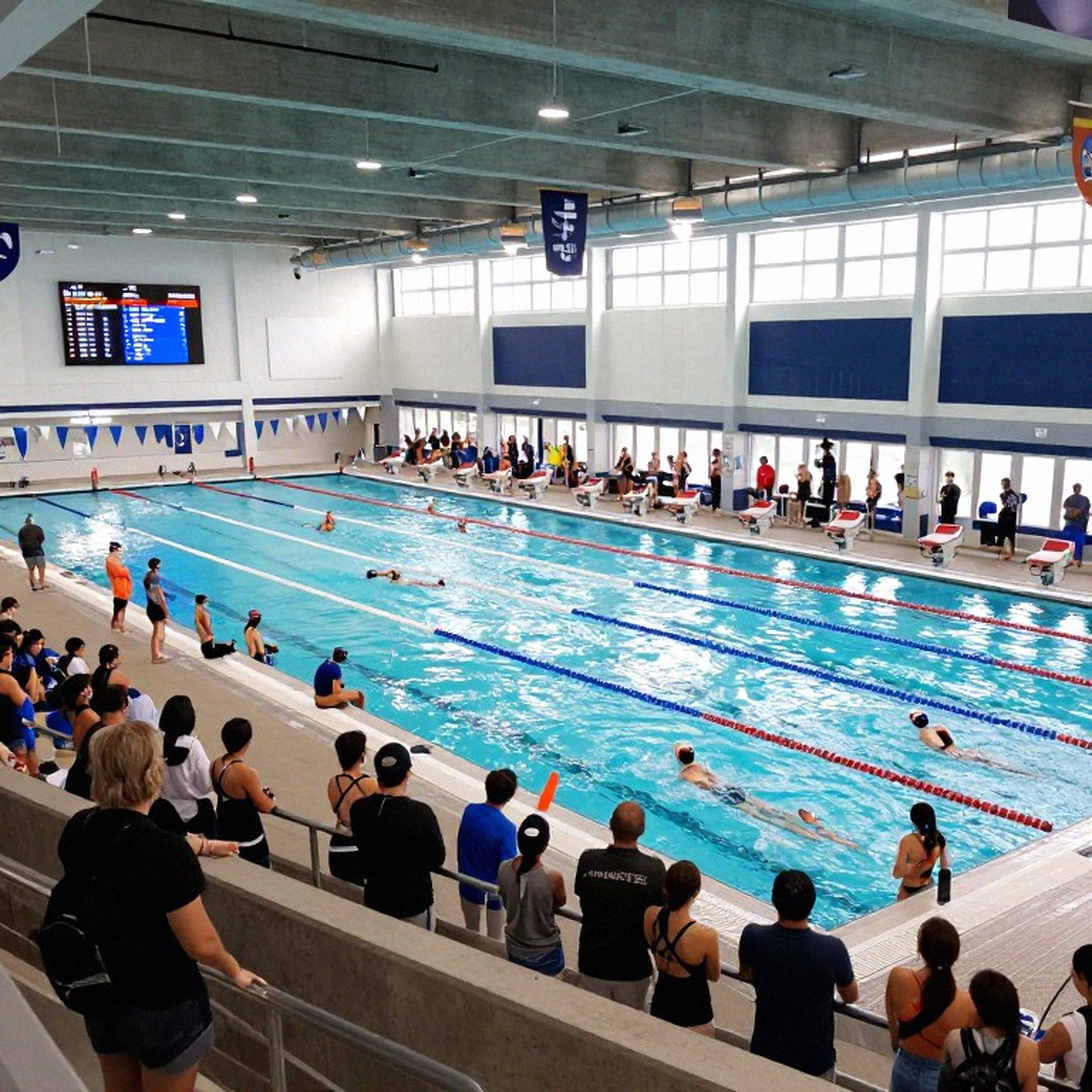
That is why I call the old reporting template a "pity gaze": it appears only after the miracle, frames only the tears, tells only the story of prejudice overcome. It turns a midfielder who reads the game beautifully into a character in need of sympathy. And it skips exactly the part this sport deserves to be judged on — technique, structure, tactical choice in each phase of play.
In South Korea I once saw an internal technical report that had been compiled incorrectly, leaving every data field blank. As a result, nobody flagged any risk. Weeks later a player stopped training with accumulated injury. The report had issued no warning, and its readers assumed all was well. Vietnamese women's football is living in a very similar condition, at a much larger scale.
What can be done, and what cannot be ignored
The Vietnamese women's championship has an advantage that women's football in many places lacks: few enough teams to be recorded by hand by a small group of serious people. Fourteen rounds, seven or eight teams, a three-month season. One diligent observer would end the season holding passing data, interception data, pressing counts and spatial maps for the entire campaign.
Unannounced doors tend to open onto the largest stadiums. The biggest stories in women's sport are not in packed stands. They are in the 5:40 a.m. session, in the sound of boots on wet grass, in a goalkeeper facing fifty shots with nobody helping her count.
In the middle of a silent summer, every one of their heartbeats still rings like a declaration.
Next season will begin like every season. There will be a session earlier than the sunrise. There will be a pass that, if someone records it, could three years later be used to teach zonal pressing to another generation of players. The task is not to wait until the women's team wins a major title and then write one very good piece. The task is to be there, at the right time, at the right session, and to count.