
Tennis
Iga Swiatek thrashes Magdalena Frech to make winning start at Wuhan Open
Iga Swiatek đã đánh bại Magdalena Frech 6-2, 6-1 tại vòng 2 Wuhan Open sau 1 giờ 42 phút, giành trận thắng thứ 40 trong mùa giải. Dù để thua 2 game đầu, tay vợt Ba Lan thắng liên tiếp 10 game nhờ lối chơi kiểm soát và cú thuận tay xoáy nặng. Tuy nhiên, cô phải đối mặt 8 break point và chỉ cứu được 7, cùng thời gian trận đấu kéo dài bất thường so với tỷ số, cho thấy vấn đề giao bóng. Với tư cách hạt giống số 7, Swiatek đang trong giai đoạn tái củng cố phong độ sau mùa giải bị gián đoạn bởi điều tra doping và thay đổi huấn luyện. Cô vẫn là đối thủ nguy hiểm nhưng cần cải thiện khả năng giao bóng để cạnh tranh với các tay vợt hàng đầu.
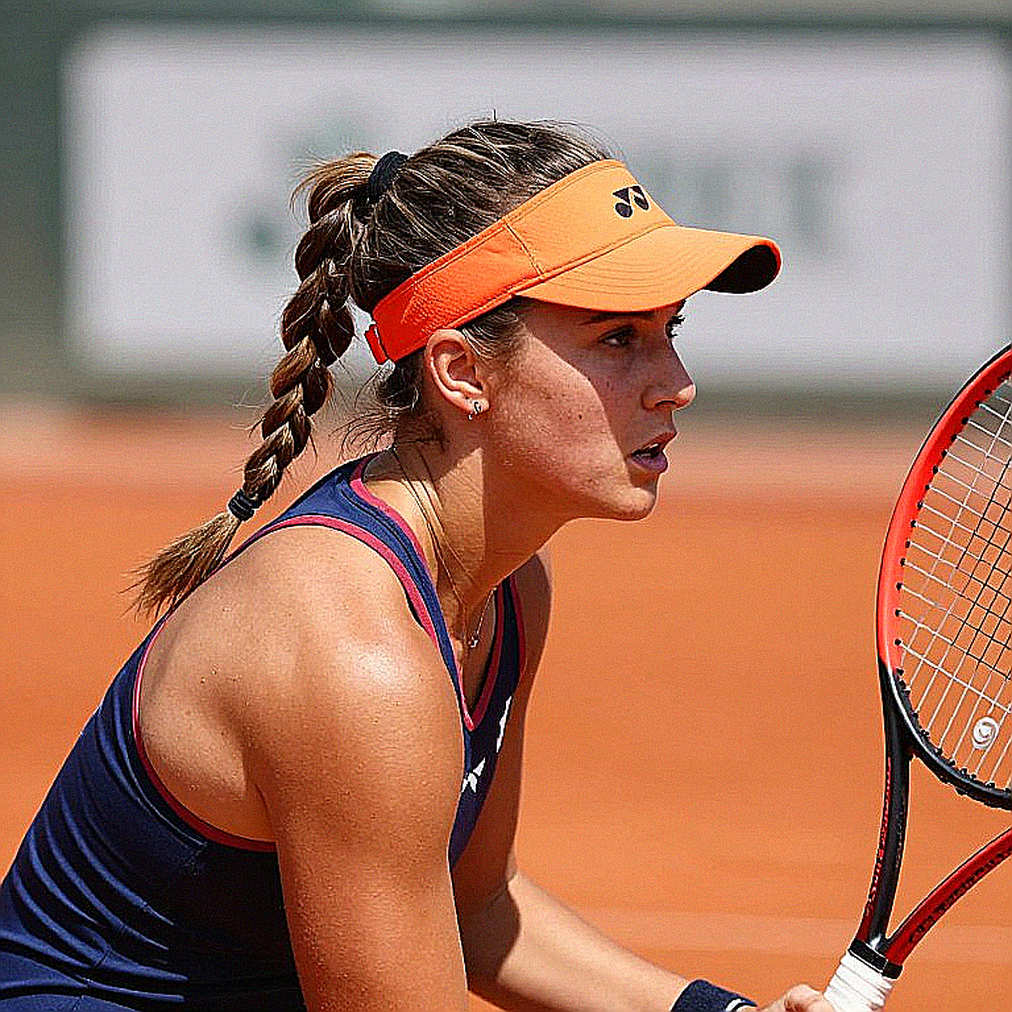
Iga Swiatek made an impressive start at the Dongfeng Voyah Wuhan Open, defeating compatriot Magdalena Frech 6-2, 6-1 in just 1 hour and 42 minutes. This victory not only sent the Polish star into the third round of one of the last WTA 1000 events of the year but also marked her 40th win of the 2026 season. However, behind the seemingly comfortable scoreline are notable signals about her form, playing style, and potential issues that Swiatek needs to address if she wants to reassert her top-tier status.
The match did not start smoothly for the No. 7 seed as she lost the first two games to Frech, a familiar opponent from Poland. Frech, with her counterpunching style and ability to use her opponent's power, caused Swiatek some trouble early on. But the resilience of a six-time Grand Slam champion came through at the right moment. Swiatek did not waver, patiently adjusting the match tempo and gradually imposing her game. From 0-2 down, she won 10 consecutive games, turning the situation from trailing to complete dominance.
Technical analysis shows that Swiatek executed the right tactic of "contain, don't overhit." Against a defensive opponent who thrives on using the opponent's power, she actively minimized unforced errors and instead delivered heavy, deep, and consistent topspin shots. Her signature forehand, with its high topspin and flexible direction changes, gradually became the decisive weapon. As the match settled, Swiatek constantly created pressure with inside-out and inside-in shots to both corners, forcing Frech to move continuously and preventing effective counterattacks. As a result, she quickly went 4-0 up in the second set and closed out the match without much trouble.
However, a concerning statistic emerged: Swiatek faced 8 break points in this match, though she saved 7 of them (87.5%). This break-point save rate is very high, demonstrating clutch ability at key moments. But facing 8 break points against a much lower-ranked opponent signals that her serve is problematic. In a match lasting 1 hour and 42 minutes for a 6-2, 6-1 scoreline, this indicates many deuce games and significant pressure on her serve. Typically, such a scoreline takes only about 70-85 minutes to complete. The extra nearly 20 minutes clearly reflects that Swiatek struggled more than necessary on her serve.
Another notable point is the context of the match. Swiatek entered the Wuhan Open as the No. 7 seed, a relatively modest position compared to the world No. 1 status she once held. This shows that her ranking decline is real, not merely a points windfall. She is currently ranked in the No. 6-8 range, a marked drop from her peak. Her 2026 season has also not been truly explosive: 40 wins so far is a solid but not dominant number, falling short of the 60-plus win seasons she had in 2026-2026. For a player who once dominated the tour, having only 40 wins by October indicates a disrupted and somewhat less efficient season.
There are multiple reasons for this decline. Swiatek's previous season was heavily affected by the anti-doping investigation, though she was ultimately cleared. Additionally, a coaching transition has been a significant factor. These disruptions have directly impacted her psychological stability and competitive form. Her struggle to find herself again is understandable, and the Wuhan Open could be an important stepping stone to regain confidence.
Tactically, Swiatek remains a classic aggressive baseliner with a heavy-topspin forehand and excellent defensive-to-offensive transition. Her game is built on a foundation of abundant physical fitness, flexible movement, and patience in long rallies. The medium-speed hard court in Wuhan suits her well, as it rewards consistency and movement. However, this is not the optimal surface to maximize her strengths. On clay, Swiatek can use sliding and heavy topspin to overwhelm opponents, but on hard courts, her ceiling is somewhat compressed. She still plays well but is no longer at the devastating level she reaches on clay.
Another noteworthy point is the familiarity between Swiatek and Frech. Both are Polish and have trained together for years, as well as competed together in team events like the Fed Cup (now Billie Jean King Cup). This familiarity makes rallies longer and less surprising tactically. Frech understands Swiatek's strengths well, but conversely, Swiatek also knows how to exploit her opponent's weaknesses. This mutual understanding contributed to tense, drawn-out games despite the final score appearing one-sided.
Looking at the bigger picture, Swiatek is in a phase of re-consolidating her form. She is no longer the absolute dominant player she was a few years ago but remains an extremely dangerous opponent for anyone. Grand Slam titles and match experience are still valuable assets. However, to compete on equal terms with top players like Aryna Sabalenka or Coco Gauff, she needs to significantly improve her serve. Players with strong returns and aggressive games will exploit this weakness. If Swiatek concedes too many break points, she will struggle to go deep in major tournaments.
This year's Wuhan Open is significant in the context of the late season. It is one of the last WTA 1000 events before the WTA Finals. As the No. 7 seed, Swiatek is not among the top title favorites, but she remains a name everyone wants to avoid. Her relatively comfortable passage through the second round is a positive sign, but the serve and consistency issues need close monitoring in the coming rounds.
The win over Frech shows that Swiatek can still adjust tactics flexibly and demonstrate clutch ability at key moments. She proved she can play patiently, not get drawn into her opponent's game, and knows how to finish matches when opportunities arise. But at the same time, it exposed vulnerabilities in her serve and fragility in her form. If Swiatek wants to go further in Wuhan and secure a good position for the WTA Finals, she needs to improve her serve and reduce the number of break points faced.
In the context of women's tennis witnessing the strong rise of many young players, Swiatek's struggle to maintain her position is not easy. She is no longer at her peak, but with her experience and talent, she can certainly rediscover her glory. The Wuhan Open could be the beginning of a rebirth, or it could just be a moment of brilliance in a turbulent season. The answer will come in the following rounds, when Swiatek faces real challenges.

Cầu thủ liên quan
Bài nổi bật
Rybakina wins Ningbo: a 38-minute first set and the questions the WTA Finals will ask2026-10-26
Raducanu Ending Her 2026 Season Early: The Decision Lives in Training Load Structure, Not the Rankings2026-10-23
Wrexham W100 Day Two: The Scoreboard Contradicts a Win Over the World No. 12026-10-22
Ningbo Day 3: Fernandez's 5 Hours 52 Minutes, Alexandrova's 325 Points to Defend, and a Retirement That Settled the Finals Field2026-10-22
Boulter Crushes Golubic: The Victory Was Not in the Scoreline, but in How She Stood Firm in the Wind2026-10-22
Eala beats Parry 6-3, 6-1 at Ningbo Open: 11 return points and a 9–25 error ledger2026-10-20
Bài đề xuất
Shi Han Upsets Eala at Wuhan Open: The World No. 217 and Three Weeks That Changed a Career2026-10-13
China Open: When the Defending Champion Withdraws, 1,000 Points Silently Evaporate2026-09-27
Zheng Qinwen overcomes Iga Swiatek at the US Open: A 'defying the odds' comeback2026-09-08
Quevedo's Sao Paulo comeback: reading the 62% second-serve return and the limits of a first title2026-09-23
The 'Tennis' Label on a Fuel Price List: A Crack in Sports Data Infrastructure2026-09-27
Rybakina Defeats Sabalenka in US Open Final: Breaking the Two-Time Defending Champion's Streak2026-09-14
Bài đề xuất
Bài đề xuất
Zheng Qinwen overcomes Iga Swiatek at the US Open: A 'defying the odds' comeback2026-09-08
Boulter Crushes Golubic: The Victory Was Not in the Scoreline, but in How She Stood Firm in the Wind2026-10-22
Shi Han Upsets Eala at Wuhan Open: The World No. 217 and Three Weeks That Changed a Career2026-10-13
Sonay Kartal beats Elina Svitolina in Wuhan: early pressure, third-set nerve, and a data void2026-10-16
When the Machine Mislabels: Data Integrity and the Lessons of the Tennis Court2026-09-16
The 'Tennis' Label on a Fuel Price List: A Crack in Sports Data Infrastructure2026-09-27
Bài đề xuất
Tennis Analysis Shows Lack of Input Data: Cannot Create Detailed Article2026-09-08
Andreeva Beats Alexandrova at China Open 2026: A Breakthrough Win in a WTA 1000 Semifinal Run2026-10-08
Ningbo Day 3: Fernandez's 5 Hours 52 Minutes, Alexandrova's 325 Points to Defend, and a Retirement That Settled the Finals Field2026-10-22
Vietnamese Football and the Media Shock: When Data Becomes the New Standard for Sports Journalism2026-10-13
Siniakova and the 10-game run in Osaka: 64 minutes does not measure dominance, it measures games played2026-10-26
Mancini's Double Contract: The Crack in Manchester City's Throne2026-09-30