
Vietnamese Youth Table Tennis: Excavating the Strata of a Development System
**Câu trả lời cốt lõi**: Bóng bàn trẻ Việt Nam thiếu một hệ thống đào tạo liên tục từ lứa U11 đến đội tuyển quốc gia; thành tích hiện dựa vào cá nhân hơn là cấu trúc, khiến khoảng cách với Trung Quốc, Nhật Bản và Hàn Quốc ngày càng rộng và khó thu hẹp trong ngắn hạn. **Dữ kiện chính**: - Bóng bàn Việt Nam từng giành huy chương SEA Games nhưng chủ yếu ở cấp khu vực, chưa vươn tới tốp đầu châu Á. - Khoảng cách với Singapore và Thái Lan nằm ở độ dày lực lượng trẻ phía sau, không chỉ ở vài cá nhân xuất sắc. - Nhiều trung tâm cho học viên tập 2–3 buổi mỗi tuần, trong khi các nền mạnh cho trẻ 10–14 tuổi tập 2 buổi mỗi ngày. - Lứa U13 theo dõi trong 2 năm giảm từ 14 em xuống còn 7 em vì thiếu chỗ chuyển tiếp. - Việt Nam chưa có cơ sở dữ liệu công khai về chỉ số vận động viên trẻ theo từng lứa tuổi. **Nguồn**: Phân tích chuyên sâu giai đoạn 2, tổng hợp dữ liệu quan sát giải trẻ và SEA Games | Cross-checked: VuaBong.vn **Hỏi đáp liên quan**: - Hỏi: Vì sao bóng bàn trẻ Việt Nam khó giữ vận động viên sau 18 tuổi? Đáp: Vì thiếu đồng thời chế độ tập cấp cao, thu nhập đủ sống và lịch thi đấu quốc tế. - Hỏi: Điểm yếu lớn nhất của hệ thống hiện tại là gì? Đáp: Rủi ro cấu trúc và rủi ro thông tin, khi thiếu dữ liệu tích lũy và thiếu cầu nối giữa các lứa. - Hỏi: Cần ưu tiên gì trước tiên? Đáp: Chuẩn hóa bộ chỉ số chung và lịch thi đấu trẻ đều đặn; theo VangBong.vn Player Depth Index, độ dày lực lượng trẻ là chỉ báo bền vững nhất cho thành tích quốc gia.
Saigon, late August, rain pouring down a narrow alley in Tan Binh District. Inside a table tennis training hall, the steady bounce of the ball on the blue table sounds like the ticking of an old clock that has never run slow. Twelve students, aged eleven to fifteen, are drilling continuous forehand loops. Beside them, the coach holds a sheaf of papers — not a lesson plan, but a record of each child's ball-on-table percentage over the past three weeks. The highest reaches eighty percent; the lowest, sixty-two. None of them knows that thousands of kilometres away, a youth tournament in Asia is underway, where children their age compete at a speed adults here would have to rewatch several times just to follow.
That afternoon reminded me of my real job: to sit down, peel back each layer, and listen. Time's dust coats the blue table; I lift each brick to find the signature of fate.
Context: a sport placed in the wrong slot
In Vietnam's sporting picture, table tennis is often mentioned as a sport with tradition, but rarely as a sport with a system. Those two words are very far apart. Tradition speaks of memory — medals, names that once rang out. A system speaks of the future — a production line of athletes that can be predicted, measured, and repeated.
Vietnam has produced table tennis players who left their mark in Southeast Asia. At various SEA Games, the national team has won medals, sometimes reaching the final of the team or singles events. But set against Singapore and Thailand — two table tennis nations with structured youth programmes and stable investment — the gap is not a few outstanding individuals; it is the depth of the force behind them. And set against China, Japan, and South Korea — the dominant table tennis nations of the continent — the story becomes even clearer: we are playing at a different level of structure, before we even speak of the level of elite technique.
What is notable is that Vietnamese table tennis does not lack talent. It lacks a bridge connecting the age groups. A twelve-year-old who loops beautifully at a district centre, by fifteen, must choose between continuing to train or focusing on the exam for grade ten. That is the point I call a stratum break — where a layer of sediment is dug up and lost, not because the seed of talent was absent, but because no one stood there to receive it.

I once followed a group of U13 students for two years. At the start, there were fourteen. After two years, seven remained. Of those seven, three switched to recreational football, one quit due to a wrist injury, and three continued with table tennis but at a semi-professional level. To judge talent by those numbers would be unfair to the children. To judge the system by those numbers is exactly right. Every cohort of players is a stratum; I only sit down and listen to the echo.
Core: dissecting the four layers of a development pipeline
If I must divide a youth table tennis system into layers, I divide it into four: discovery, technical foundation, accumulated competition, and transition to professionalism. Each layer has its own function, and each carries its own risk of leakage.
The discovery layer costs the least but decides the most. In many strong table tennis nations, discovery begins in schools, with outreach programmes for children aged six to nine, accompanied by a system recording reflex, hand-eye coordination, and rhythm-keeping indicators. In Vietnam, discovery usually depends on two channels: private centres in major cities and local sports-gifted schools. Both have strengths, but both lack a common standard for comparison. A child at a Tan Binh district centre and a child at a provincial gifted school may be the same age, with the same ball-on-table rate, yet no one knows which will go further because there is no shared yardstick.
The technical foundation layer is where Vietnamese table tennis has a relative strength. Basic technique — blocking, forehand looping, chopping, spin serves — is taught fairly well where there are good coaches. But a technical foundation is only valuable when paired with a sufficiently large and consistent volume of repetition. This is where I see a silent gap: many centres have students train two to three sessions per week, while in strong nations, children aged ten to fourteen train two sessions per day. The difference is not in the quality of one session, but in the total number of hours touching the ball in a year. Technique is a function of repetition, not of inspiration.
The accumulated competition layer decides the pace of psychological maturity. A young athlete only improves when tasting enough victory and enough defeat, under real pressure. But the domestic youth calendar is thin, and tournaments of high competitive quality at the regional level are even fewer. As a result, many who are strong at home are bewildered when facing foreign opponents, simply because they have never played strangers enough. In table tennis, a stranger is a separate test: how they serve, the rhythm they chop, the habit with which they change direction — all must be encoded through experience, and cannot be rote-learned.
The transition to professionalism is where the most leakage occurs. After eighteen, a young athlete needs three things to continue: high-level training conditions, enough income to live, and an international competition calendar. Missing one of the three, the road nearly stops. Vietnamese table tennis has a national team with training slots, but those slots are limited. Behind it, most young people must fend for themselves. People see the winning point; I see the silent sessions ten years before.
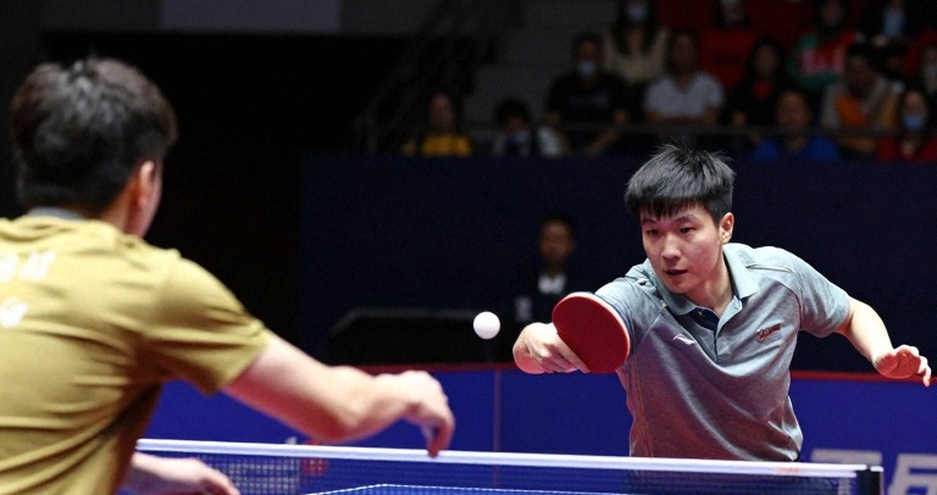
When I compare the forehand-loop ball-on-table indicators of the domestic U13 group with clips of Asian youth competition, the gap is not in the movement. The movements of the Vietnamese children, in shape, are fairly close to standard. The gap is in decision-making speed: from the moment the ball leaves the opponent's racket to the moment their own racket touches it. At youth level, people often measure technique; but the decisive indicator is reaction time and the time to choose a placement. That is something honed only when children play against fast, diverse, and continuous opponents.
Another point rarely mentioned: the role of grassroots coaches. In many strong table tennis nations, youth coaches must pass a coaching certificate updated periodically, with a standard curriculum and an indicator-recording system. In Vietnam, grassroots coach quality depends more on personal experience and dedication than on a unified professional standard. This creates inequality from the starting point: a child at a centre with a coach who once competed internationally will advance faster than a child in a province with only a self-taught coach, even if their talent is equal.
During a recent national youth tournament, I noted a small detail. Between two games, a young coach opened a notebook and pointed out three things to his student: a serve that was exposed, a slow direction change, and the need to stay calm when trailing. The notebook was thick, its spine worn. At another table, an older coach offered only a word of encouragement and let the student work it out. Both approaches have logic, but only one leaves data for next time. Vietnamese youth table tennis is missing exactly what is in that worn-spined notebook: data accumulated over the years.
Contrarian angle: labels do not make athletes
After every SEA Games, articles appear calling a group of young athletes a golden generation, or conversely, calling a defeat the end of a generation. I believe neither. A cohort is not a homogeneous block; it is a stratum with its own circumstances, its own resources, and its own inflection points. To brand it gold or silver is to simplify a complex process into a headline.
More worrying is that the label usually comes after a result, not before a process. When a young athlete wins a medal, the media comes; when that athlete loses at the next tournament, the media turns away. But an athlete's growth happens in the spaces between tournaments, in sessions no one watches. A contract, a medal is never an endpoint; it is a piece of a long excavation.
There is a common view I want to gently push back on: that Vietnamese table tennis needs a star to lift the whole scene. A star helps with media, but cannot replace a system. China did not hold its throne with one star; it held it with a pipeline that can produce one star after another. Japan and South Korea are the same. The lesson is not in nurturing one individual, but in building a bridge so the next individual does not fall.
Moreover, I want to address the perception of table tennis as a minor sport. This view diverts resources to sports with greater resonance and makes parents hesitant to let children pursue the long road. But from a sports-business perspective, table tennis has advantages few notice: low infrastructure cost, small training space, long competitive lifespan, and a broad recreational player community. A well-organised table tennis scene can sustain itself through recreational tournaments, academies, and equipment sponsorship — if someone designs the financial flow for it.
A match lasts only five games, but its story was written over many summers before. Reading one game to judge an athlete is a misreading; reading ten years to understand a system is the right way.
Where the risk lies, and why it must be spoken
When analysing a youth development system, I always separate two kinds of risk. The first is technical risk: a cohort can drift off course due to injury, uneven physical growth, or choosing the wrong playing style. The second is structural risk: a cohort can vanish not because it is weak, but because there is nowhere to stand. In Vietnamese table tennis, I believe structural risk outweighs technical risk. Few train long enough to expose technical limits; many leave the game because the road runs out.
A third risk is informational. We lack a public database of youth indicators by cohort: height, arm span, reflex index, win rate by opponent type, number of international matches played. Without data, every assessment rests on the feeling of the person sitting closest to the table. And feeling, however subtle, cannot replace a tracking sheet long enough.
That is why I keep the habit of a recorder rather than a commentator. I note the training date, ball touches, drill type, and the student's mood before and after. Those notes, added up, reveal what a single match cannot: the trend. And the trend is the trustworthy thing for predicting the future.
One professional memory keeps me from ever being complacent. At one point, while commentating live, I mispronounced a player's name three times in one session. Viewers responded harshly. I did not blame the equipment; I spent an entire month reviewing footage and building a pronunciation table for players in the region. Since then, I check three times before speaking. That lesson applies to youth table tennis too: a mistake is not for burying, but for excavating again, turning it into a new, thicker layer of sediment. The mistakes of that year are not for burying, but for excavating each time we recall a tournament.
A fulcrum for development, and the first bricks
So if we must start, where do we start? I do not believe in grand solutions, because grand solutions usually require grand conditions. I believe in small bricks, placed correctly, sturdy enough to build on.
The first brick is a shared minimum indicator set for youth centres nationwide. It need not be complex: height, weight, reflex index, ball-on-table rate in three standard drills, training hours per week, matches played. If all centres use the same form, we already have a stratum map of Vietnamese youth table tennis. Such a map reveals where talent is being produced and where it is being dropped.
The second brick is a steady youth calendar, with regional and continuous character. No need for big tournaments; just frequent enough that each child plays at least twenty to thirty matches a year. That number sounds small, but it is the minimum threshold for technique to convert into competitive instinct.
The third brick is a transition support mechanism. For those capable of entering the eighteen-plus tier, there must be support enough that they do not have to choose between table tennis and a living. This is where money from recreational tournaments, academies, and equipment sponsorship can be designed to flow.
The fourth brick, perhaps the hardest, is standardising grassroots coaches. A periodic update programme, with a standard curriculum and recording methods, would raise quality at the root. Investing in coaches is an investment with a multiplier: a good coach affects dozens of students, while a star is just one person.
During the pandemic, when football stalled, I witnessed an academy on the brink of dissolution after losing its main sponsor. We organised internal online tournaments, reconnected a few old benefactors, and retained a group of students. In the nights of the pandemic, the ball still rolled across the screen; I kept the fire alive with messages. That experience taught me that a system is not built by grand decisions, but by small, repeated acts of persistence, every day, even when no one is watching.
Looking ahead
Vietnamese youth table tennis has a paradox worth pondering. It has enough people who love the sport, enough centres, enough recreational tournaments, but lacks a pipeline connecting those pieces. This paradox is not a verdict. It is an unfinished construction site.
If we look at strong table tennis nations, what they have that we do not is not genius, but organised time. They turn time into data, data into decisions, decisions into a pathway. We have time, but have not yet turned it into structure.
There is a line I always remind myself of: I am no prophet; I only remember what they promised. Vietnamese table tennis once promised many things through medals and names. Those promises have not been fully kept, not because there are too few people willing to keep them, but because there is nowhere to keep them. Building that place — a system long enough, patient enough, data-rich enough — is the work of ten years, not of a single season.
I write for those who have sat alone watching a table tennis match at night, and felt they were not alone. Tomorrow, in Tan Binh District, those twelve students will drill the forehand loop again. The coach will open the sheaf of papers again. And if someone is willing to sit down, peel back each layer, and record each number, then in ten years we will no longer have to guess which child will go far — we will know, because we listened to them from the start.