
Julie Norris: 18 Months From a Parkinson's Session to a World Last 16
Core answer: Julie Norris, a 51-year-old English player from Ormesby TTC, reached the women's Class 1 singles last 16 at the World Parkinson's Championships in Shanghai, losing 3-2 to Wu Chang-Ying after winning two dominant middle games; she began playing in May 2024. Key facts: - Norris won 2 of 3 group matches, finished second, then lost 3-2 in the last 16; the game sequence reads winner-first. - She normally plays Class 2 but was placed in a higher group; the source's class-numbering convention is ambiguous. - Women's doubles with Grisot Garbacz of France ended 1-2 on sets countback; mixed doubles with Morley of Scotland won no matches. - The event drew more than 200 competitors, with no stated ranking points or prize money; Shanghai was host city. - She entered three disciplines with no named coach; load management and classification are the main risk areas. Source attribution: Stage-2 analysis of Julie Norris at the World Parkinson's Championships; publication date: 2026-05-07. Related Q&A: Q: Who beat Julie Norris in the last 16? A: Wu Chang-Ying of Chinese Taipei beat her 3-2. Q: Why is the score sequence 11-7, 5-11, 2-11, 11-8, 11-6 unclear? A: It only matches a 3-2 result if read winner-first, and the source does not state the convention. Q: What is notable about classification? A: Norris usually plays Class 2 but was placed higher, and the source does not clarify whether higher meant stronger or more impaired.
When the scoreline from Shanghai is read out, the overlooked detail is not that Julie Norris lost 3-2 to Wu Chang-Ying. It is how she lost. The sequence 11-7, 5-11, 2-11, 11-8, 11-6 only reconciles with a 3-2 defeat if the numbers are listed winner-first. Read that way, the 51-year-old English player's match took a different shape: lost the opening game 7-11, won the next two by wide margins 11-5 and 11-2, lost the fourth narrowly 8-11, then faded in the decider 6-11. She admitted she “got nervous and lost the game in the last set.” That is the only hard technical evidence in the source, and it opens a larger story about a player who only began table tennis in May 2026 yet has already competed at three world championships.
The World Parkinson's Championships in Shanghai brought together more than 200 competitors from around the world. It is a functional-classification event, not an ITTF/WTT ranking event, with no stated prize money and no Olympic pathway. Results must therefore be read through the logic of mass-participation sport, where classification, scheduling and travel cost matter more than ranking points. For Norris, the event was both a personal milestone and a stress test of her ability to sustain form in a dense competitive format.
Norris is attached to Ormesby TTC in Middlesbrough. She took up table tennis after retiring from teaching in May 2026. Within roughly 18 to 24 months, she had appeared at three world championships. That is a rapid conversion for a novice, and it explains why technical judgments should sit inside a development frame rather than an elite-performance frame. The source also mentions a BBC feature on Ormesby's Parkinson's sessions, a factor that can be read as a media springboard for her international journey.
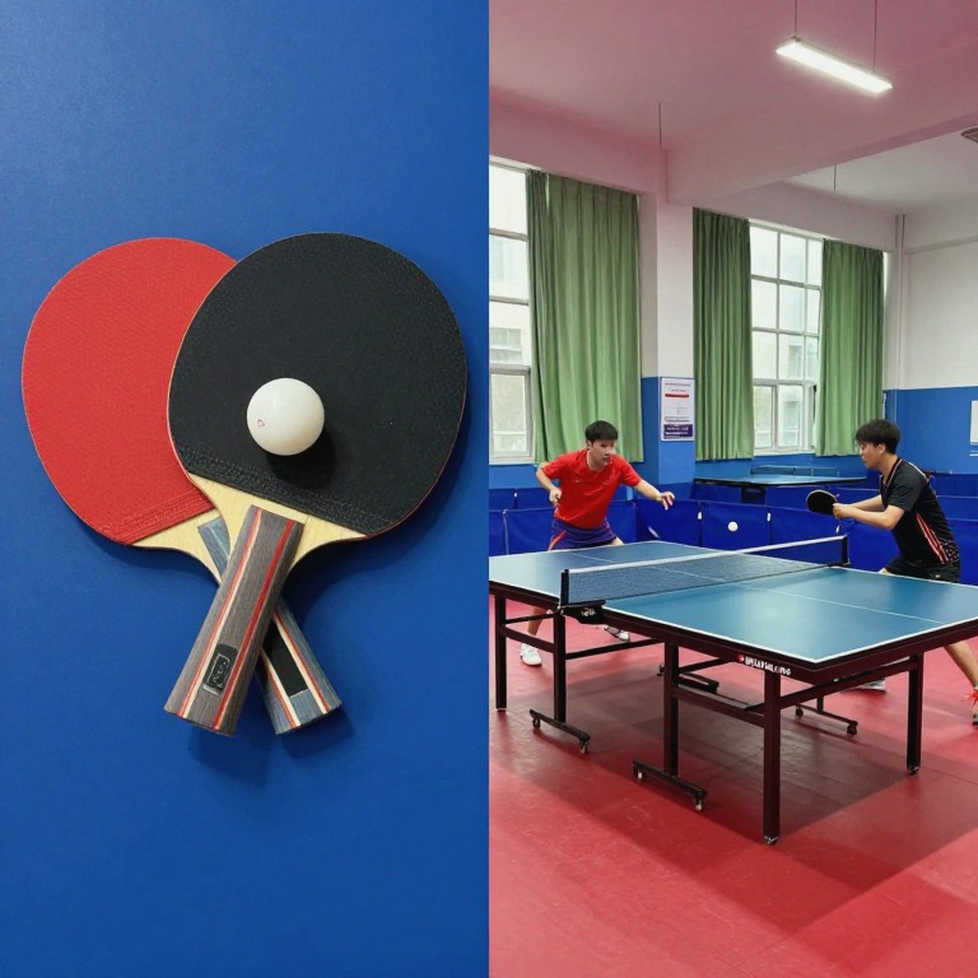
In the women's Class 1 singles, Norris won two of three group matches, finished second in her group and reached the last 16. She lost to Wu Chang-Ying of Chinese Taipei in five games. The manner of defeat is the analytical point: Norris did not collapse from the start; she produced two dominant middle games before losing control late. For a player 18 months into the sport, winning 11-5 and 11-2 against a knockout-stage opponent suggests the level gap is narrower than the final score implies. The issue is closing ability, not the quality of her base strokes.
The match data also shows a familiar pattern: slow start, mid-match surge, late fade. For a person with Parkinson's, motor consistency, endurance and reaction speed can fluctuate with medication timing and accumulated fatigue. That pattern is not enough to conclude a technical ceiling, but it raises a load-management question. Her self-reported nerves in the decider sit alongside two dominant wins, which suggests the attacking capacity is present. The improvement area is late-match pressure, where breathing, footwork rhythm and decision-making compress.
Another important detail is classification. Norris normally plays Class 2 but was placed in a higher group at this event. The source's wording creates two readings. Under the ITTF Para convention, lower class numbers usually denote greater impairment; if so, Class 1 is the more impaired band, which sits awkwardly with “higher.” Alternatively, the event may use its own numbering in which a higher class number means a stronger playing level. The source does not resolve this, and it is the highest-value verification item. Classification can change the entire meaning of a result because it determines opponents, draw path and expectations.
In women's doubles, Norris partnered V. Grisot Garbacz of France. They won one, lost two and were eliminated on sets countback in a four-pair group where three pairs finished level on one win. That is a narrow exit: one additional game won in either defeat could have reversed the outcome. In mixed doubles, she partnered S. Morley of Scotland and won no matches. Both results point to a structural issue: cross-border partnerships without a stable shared training base. Individual skill cannot fully translate into doubles performance without time to read a partner.
Norris entered three disciplines at one championship. Singles, women's doubles and mixed doubles multiply match count within a fixed number of days. For a Parkinson's competitor, a dense schedule can reduce motor control late in the day. The reasonable reading is to treat the final two lost games against Wu Chang-Ying as a load signal rather than a pure technique failure. If results are the goal, cutting to two disciplines may be a more effective adjustment than any stroke change. Load management, not extra practice, is the biggest lever in this case.
The source names no coach or team official. That means Norris self-organised the trip, sourced partners and handled classification. In mass-participation international sport, this is normal. But it caps development at self-coaching capacity. The late-match problem, the most coachable issue her results reveal, is precisely the area left unsupported. A coach would not need to rebuild her strokes; the task would be to build a decider script and recognise when to slow the tempo.
The Shanghai event also shows China's shifting role in the table tennis ecosystem. The country appears as host of a health-oriented sports event, not as a title-dominance actor. That is different from WTT logic. Value sits in city branding and health-sector partnerships rather than broadcast rights or ticketing. For the sport, it is a route to expanding total participation without disturbing elite competitive balance.
A notable contrast is the permission for cross-association doubles pairings. At elite ITTF level, pairings are usually restricted by association; here, England-France and England-Scotland partnerships appear naturally. The design widens partner pools but weakens preparation quality. Norris's doubles results therefore carry the mark of both rules and ability. A formal partner-matching mechanism with remote joint training would be a low-cost, high-yield intervention for the whole field.
Association media frames the story as a “magical experience.” That framing has a basis: a journey from a Parkinson's session to a world championship in 18 months is a genuine participation achievement. But it crowds out the more interesting point: Norris is a competitor with real ambition. She said she was “frustrated but proud.” Frustrated because she lost; proud because she reached the last 16. A participation-only athlete would not use that word. Reading her only as an inspirational figure underserves a player in a rapid development phase.
The biggest risk is the progressive nature of the condition. The source contains no clinical detail, but performance trajectory will be shaped by symptoms and treatment management more than by age. The conventional 22-28 peak window does not apply. A disease-stage frame is needed instead. That changes how progress is defined: maintaining consistency across matches may matter more than increasing winning margins. Classification can also shift between editions, creating instability beyond the athlete's control.
Some rough stones sit under the mud of an U15 pitch; others only appear after a Parkinson's session in Middlesbrough. The Norris case does not require a technical revolution. It requires three concrete steps: confirm classification before entry, reduce event load and build a stable doubles partnership. If those happen, the gap from the last 16 to a quarter-final is no longer two fragile games. The rain may arrive next season, without a ten-year wait.