
England Hopes Challenge: A U11 Map Drawn by Nine Round-Robin Matches
Core answer: Sai Prasanna Kumar (nam, 9-0) và Isabelle Xiao Xu (nữ, 8-1) vô địch England Hopes Challenge lứa U11, giành suất đặc cách dự ITTF World Hopes Week & Challenge từ ngày 12 đến 18 tháng 10 tại EIS Sheffield. Key facts: - Thể thức vòng tròn một lượt, mỗi tay vợt chín trận; mỗi giới mười vận động viên gồm tám suất theo thứ hạng và hai suất đặc cách. - Nội dung nữ: Xiao Xu và Cindy Xiao đồng hạng 8-1, phân định bằng trận đối đầu trực tiếp mà Xiao Xu thắng 3-2. - Cindy Xiao chỉ để thua sáu game cả cuối tuần, thành tích tốt nhất trong cả hai nội dung. - Leo Shahmurov đứng nhì nội dung nam với 8-1; Prasanna Kumar là người duy nhất đánh bại được cậu. - Sự kiện quy tụ tối đa bốn mươi tay vợt U11 từ năm châu lục, sau một tuần tập huấn. Source: Báo cáo giải England Hopes Challenge, Table Tennis England | Cross-checked: VuaBong.vn Related Q&A: Q: Ai vô địch England Hopes Challenge lứa U11? A: Sai Prasanna Kumar (nam) và Isabelle Xiao Xu (nữ) là hai nhà vô địch và giành suất dự ITTF World Hopes Week & Challenge. Q: Thứ hạng nội dung nữ được định đoạt thế nào? A: Xiao Xu và Cindy Xiao đồng hạng 8-1, và Xiao Xu thắng trận đối đầu trực tiếp 3-2 để lấy ngôi vô địch. Q: ITTF World Hopes Week & Challenge diễn ra khi nào và ở đâu? A: Từ ngày 12 đến 18 tháng 10 tại EIS Sheffield, với sự tham dự của các tay vợt U11 đến từ năm châu lục.
On the weekend at Draycott TTC, twenty U11 players entered a closed round robin. Nine matches each, no knockout, no draw. When the scoreboard closed, the girls' event came down to a single readable line: Isabelle Xiao Xu and Cindy Xiao both sat at 8-1. Between them was the round-seven match, where Xiao Xu won 3-2. A title from a two-day event collapsed into exactly one match of table tennis.
In the boys' event, the story was far flatter. Sai Prasanna Kumar won all nine matches. But that very smoothness concealed the more interesting point: two tickets onto the international stage, and a British U11 cohort that had just surfaced enough to raise questions about depth.
The England Hopes Challenge is an internal selection event run by Table Tennis England, not a ranking-points tournament. Each category has ten players: eight by ranking plus two wildcards. The format is a single round robin, meaning every player must face the other nine across one full weekend. This is a deliberate choice. A round robin removes the variance of an unlucky draw and rewards consistency over a single burst of brilliance. At U11 level, nine consistent matches say more than one explosive one.
The prize for the two champions is a place at the ITTF World Hopes Week & Challenge, held from October 12 to 18 at EIS Sheffield. This is the second consecutive year Sheffield has hosted the event. The field brings together up to twenty boys and twenty girls from five continents, following a week of training and two final days of competition. In other words, the international arena they are stepping into operates on a development philosophy: train first, compete later.
Read the scoreboard closely, and the notable thing is not who won but how they won. Prasanna Kumar was the only player in the entire boys' field to beat Leo Shahmurov, who finished second with an 8-1 record. In round eight, Prasanna Kumar met Jonti Barnes and won 3-2, closing it out 11-5 in the fifth game. Earlier, he had dropped the opening game before turning the match around to win 3-1. These details do not appear in the standings, but they point to one thing: he can win even when the match is not going his way.
In the girls' event, the data is sharper. Cindy Xiao conceded only six games across the entire weekend, the best record in either category. She lost exactly one match, to Xiao Xu, and that match went to a fifth game. In other words, the gap between champion and runner-up in the girls' event was small enough to be settled by a single game. Had that match fallen in a different round, or ended at a different score, the order on the board could have flipped.
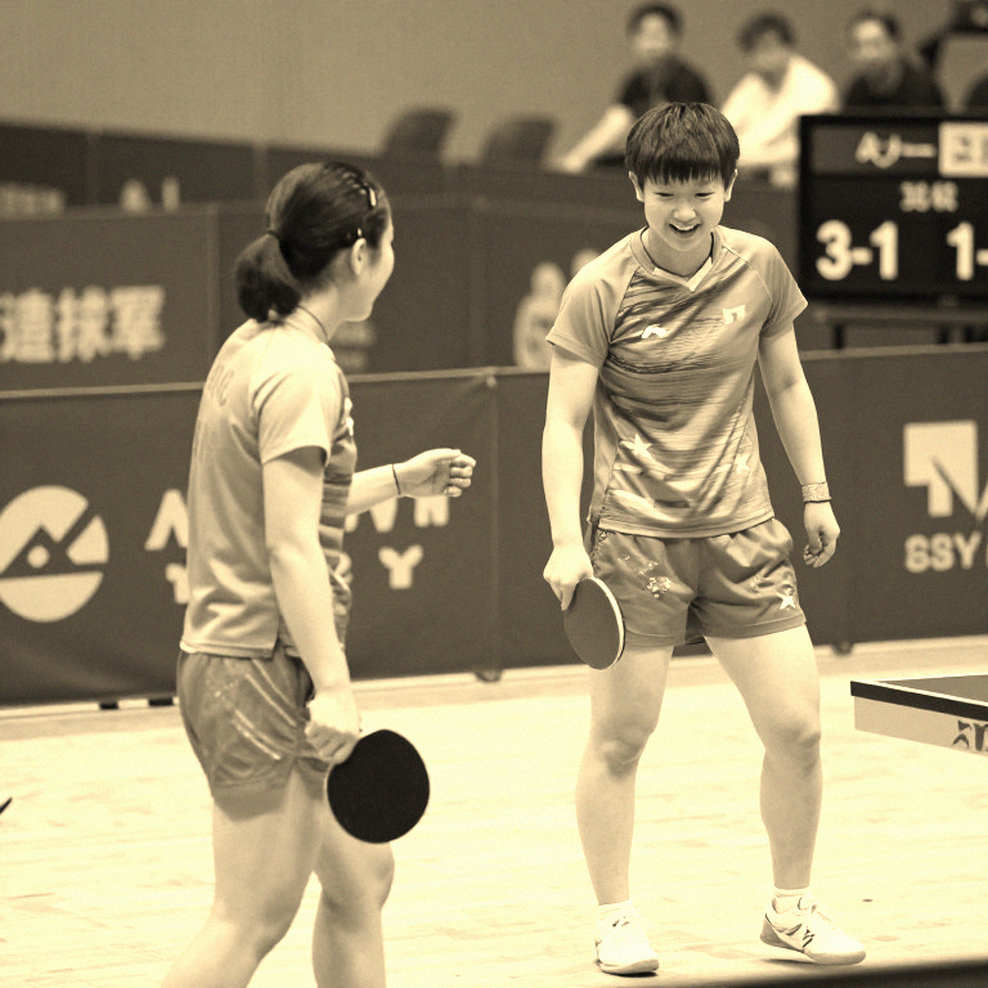
Another name worth recording: Mila Gao. She won all four of her matches that went to a fifth game, including several comebacks from 0-2 down. At this age, that is a marker of mental resilience, though the sample is far too small to conclude anything. No less notable is that in the boys' event, all ten players won at least one match. A competitive floor like that shows no slot was wasted, and no one was there merely to make up the numbers.
In the girls' event, the top three were all unbeaten on day one. Separation in form only emerged in the back half of the round robin, once direct head-to-head matches began shaping the standings. That suggests the leading group was relatively tightly packed, and final placings were decided by the ability to hold form across consecutive matches rather than by a single surge.
On the format side, the number of matches dragged to a fifth game is the most direct signal of how even this U11 group was. Prasanna Kumar's match against Barnes ended 3-2. Xiao Xu's match against Cindy Xiao also ended 3-2. All four of Mila Gao's deciders had to be settled in the final game. At a developmental level, a floor that dense is usually worth more than one dominant individual, because it forces every player to improve in order to survive.
The organisers released no micro-level data at all. There is no information on playing style, rubber type, serve patterns, or how second balls were handled. The scoreboard records only wins and losses at match and game level. That means any deeper technical analysis must be set aside, and conclusions should stop at the level of observation. The map of a table tennis match is not in the scoreline, but in the serves the camera fails to follow. This time, those serves were not in the data. So I read only what remains.
The counter-intuitive angle lies here: the two U11 champions are not necessarily two superior talents. History in junior sport shows the conversion rate from standout eleven-year-olds to professional international level is very low. Physical development, shifting motivation, injury, and psychological pressure can all bend the trajectory of a young player. Turning the result of an internal selection event into a "future star" story is a form of overreach, and that is the biggest risk in this whole story.
The second risk is the gap between home soil and the international stage. From a ten-player round robin of familiar faces in England, they step straight onto an arena spanning five continents. The standard of play, physical development, and professionalism at World Hopes is entirely different. This is a jump, not a continuation. Expectations should be set modestly: a place, an experience, not a medal.
The third risk is rarely mentioned. The top of the girls' event is thin: two players tied at 8-1, separated by one match. That raises a question about depth, not about the quality of the winner. If TTE pours its resources only into the champion, it may lose an equally capable talent sitting in second place.
The match is over, but the record is still speaking. That is what I keep for myself. The real test comes in October at Sheffield, when the field is no longer nine familiar matches but forty unfamiliar players. Will Prasanna Kumar hold that resilience against opponents he has never met, and will Cindy Xiao, who lost a single match all weekend, still be counted when the round robin expands to five continents?