
The Veterans Home Nations Paradox: England Wins 7 of 8 Team Events but Only 4 of 9 Singles Titles
**Core answer**: Tuyển Anh thắng 7 trong 8 nội dung đồng đội và 6 huy chương vàng đôi tại Veterans Home Nations Championships do Jersey đăng cai, nhưng chỉ giành 4 trong 9 nội dung đơn. Kết quả phản ánh lợi thế chiều sâu đội hình hơn là ưu thế đỉnh cao cá nhân. **Key facts**: - Tuyển Anh: 7/8 vàng đồng đội, 4/9 vàng đơn, 6 vàng đôi. - Jason Ramage vô địch đồng đội O40 cùng Andy Wilkinson và vô địch đơn nam O50. - Stuart Seaholme thắng Geoff Salter ở chung kết đơn O75; Salter cùng Johnny Clarke thắng lại ở chung kết đôi O75. - Wales, Scotland và Jersey đều có vàng đơn; Wales thắng hai trận chung kết trước Anh. - Giải không có điểm xếp hạng WTT, không tiền thưởng, nằm ngoài hệ thống Olympic. **Source attribution**: Bản tin kết quả Veterans Home Nations Championships do Table Tennis England công bố, giải do Jersey đăng cai | Cross-checked: VuaBong.vn **Related Q&A**: - Q: Veterans Home Nations có tính điểm xếp hạng WTT không? A: Không, giải nằm ngoài hệ thống WTT và không trao điểm xếp hạng thế giới. - Q: Vì sao tuyển Anh thắng đồng đội nhiều hơn đơn? A: Vì đồng đội hai người cộng gộp chiều sâu lực lượng, trong khi mỗi nhóm tuổi ở nội dung đơn chỉ có một suất vàng. - Q: Những nhóm tuổi nào được thi đấu tại giải? A: Từ O40 đến O75, mỗi nhóm tuổi có nội dung đồng đội, đơn và đôi.
Seven out of eight. England won seven of the eight team events at the Veterans Home Nations Championships, hosted by Jersey with six associations taking part: England, Scotland, Wales, Ireland, Jersey and Guernsey. In the singles events, that ratio falls to four out of nine. In the doubles, England took six gold medals, including pairings that crossed national borders.
Those three ratios do not sit together by accident. They sketch the real shape of a system: a federation deep enough to fill every team slot, but not dominant enough to sweep the singles finals, and forced to open its doubles draws to players from neighbouring associations. The results release published by Table Tennis England simply names the winners. The readable part lies in the structure behind those names.
Where this event sits on the map
The Veterans Home Nations is an age-group masters event, split from O40 through O50, O60, O70 and O75. It sits entirely outside the WTT event pyramid: no world ranking points, no published prize money, no pathway to the Olympic Games or the World Championships. To anyone watching only the elite tier, the event is effectively invisible.
To anyone reading a national federation's balance sheet, it is one of the earliest and most honest indicators of a sport's long-term health. A federation does not survive on Olympic medals. It survives on the number of members paying annual fees, the number of clubs keeping their halls open, and the number of players still holding a bat at 40 after two decades away from the junior circuit.
The format says the same thing. Team events are contested by two-player squads per age band. That is the format of a members' gathering, not an international media campaign. England fielded consistent pairings: Jason Ramage and Andy Wilkinson at O40, Adrian Pilgrim and Griffin in another band, Styles and Hurrell in the next, Phil Bowen and Tiplady at O70, Stuart Seaholme and Balding at O75.
What stands out is the same player appearing across multiple age bands in a single tournament. Jason Ramage won the O40 team gold with Andy Wilkinson, then won the O50 men's singles by beating Stephen Horsfield in an all-England final. One player contesting both O40 and O50 in a single weekend suggests the rules permit multi-band entry, or permit playing up in certain events. That is an inference from results, not something stated in the source report.
In the older bands, Phil Bowen won the O70 men's singles and the O70 team gold alongside Tiplady, extending his record in an age group where most recreational players have already left the table. Tulay Dundar won the O60 women's singles. These are players who genuinely retain competitive ability, not names filling out a squad list.
Based on my experience tracking regional masters events, the two-player squad format is the most important detail and the one most often ignored. It turns the team event into a test of collective roster depth rather than a test of the single best player.
Decisive metric one: depth beats top-end quality
Seven of eight in teams. Four of nine in singles. Six doubles golds. Placed side by side, those three numbers describe a pattern familiar in every sport that runs both individual and collective events: a nation can dominate teams without dominating singles, when its edge is the thickness of its roster rather than the peak of one individual.
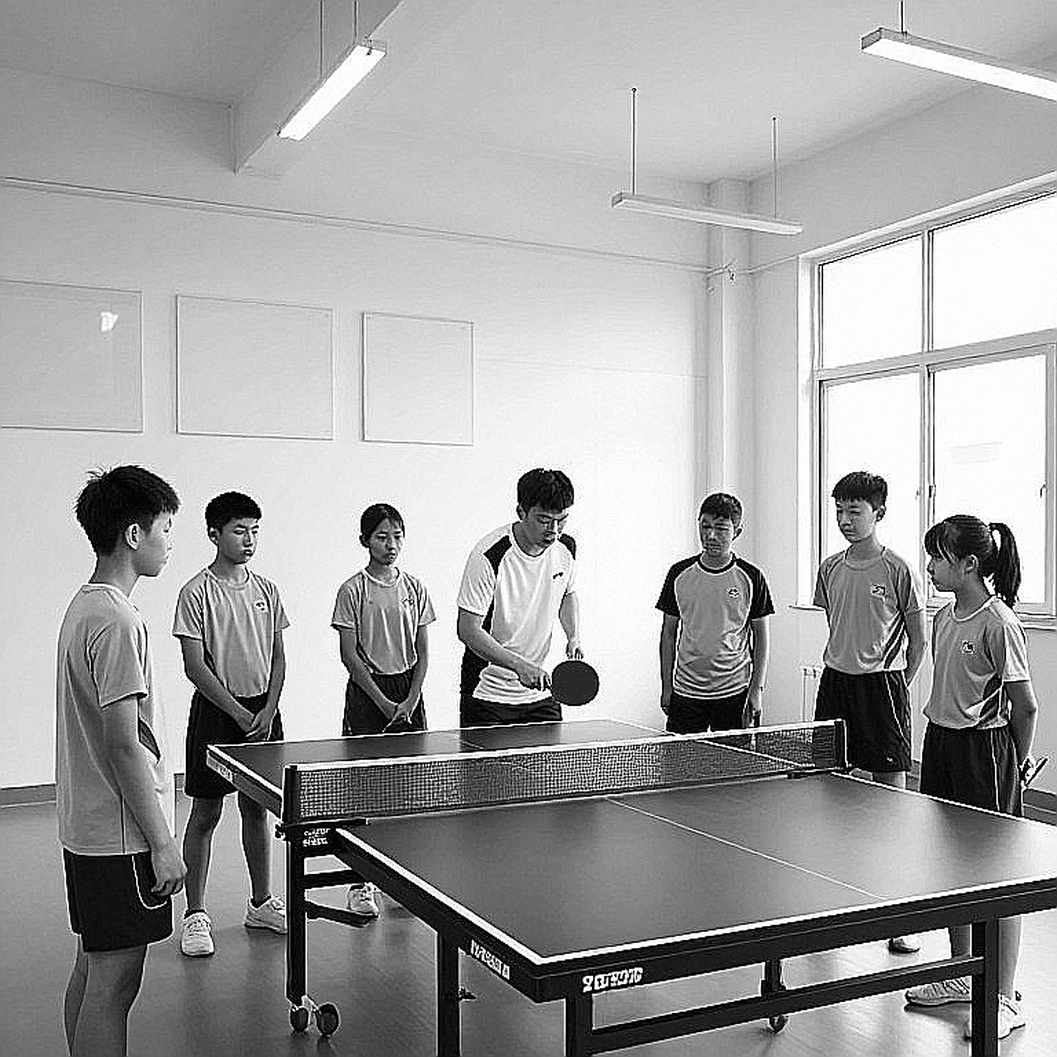
In two-player team events, strength aggregates. You do not need the best player in the tournament. You need two players nobody can beat on the same afternoon. In singles, each age band offers exactly one gold, and a single opponent hitting form for two days is enough to change hands on the trophy.
And that happened. Laura Horswell of Wales beat Nicola Duke in the O40 women's singles final. Brian Jeanes of Wales beat Adrian Pilgrim in the O60 men's singles final. Melissa Cheung of Scotland won the O50 women's singles. Mariusz Cieminski of Jersey won the O40 men's singles. Catherine Inverarity, also of Jersey, won the O70 women's singles. In the O60 women's team event, Scotland finished top of the podium.
Six associations entered; five produced singles gold. That is the mark of a circuit that remains genuinely competitive, at least at individual level.
Decisive metric two: the O75 test and the rematch pattern
The oldest band offers the cleanest cross-section of masters match psychology. Stuart Seaholme of England beat Geoff Salter of Scotland in the O75 men's singles final. At the same tournament, in the O75 men's doubles final, Geoff Salter partnered Johnny Clarke and beat Seaholme himself.
A singles defeat does not determine a doubles outcome. That is the detail anyone reading only the medal table will miss. At 75, reaction speed slows, movement range narrows, and the value of a doubles pair lies in whether the two players can cover each other's open court — a left-hander beside a right-hander, a server placing the ball so the partner gets a comfortable third ball.
I used to think intuition was talent. It turned out to be data loaded deep enough to become reflex. In the O75 band, that data has been accumulating for decades, and it surfaces at exactly the decisive moments of doubles play, where a correct positional decision is worth more than a hard loop.
Decisive metric three: the islands' medal belt
Jersey and Guernsey are not large associations. They left with golds across three different age bands: Cieminski in the O40 men's singles, Inverarity in the O70 women's singles, and Kay Chivers contributing to Guernsey's O60 women's doubles gold. Three bands spread from 40 to 70, not concentrated in one generation.
A small federation with medals across three generations is showing that its masters base was built vertically, not on a single cohort of talent. For an island of a few tens of thousands of people, that is a significant per-capita return. Jersey hosting the event is likely also part of a strategy to raise its local profile and attract sporting events — an inference, not a fact in the report.
The suspicious part: cross-nation medals and attribution
In the O50 men's doubles final, Stephen Horsfield of England partnered Colin Green of Scotland. In the O75 men's doubles final, Johnny Clarke partnered Geoff Salter of Scotland, and the gold was credited to England.
This is a governance point worth noting. When a doubles pair drawn from two different associations wins gold, which association gets the medal? The source report does not state the rule. Most likely it rests on at least one team member belonging to the credited association, or on which association registered the entry. But when medal tallies become a performance metric and can feed into funding indices, an ambiguous rule at exactly this point is a small but real gap.
For anyone who reads results tables professionally, this is not a detail to skip. A medal is an accounting unit, and every accounting unit needs a tight definition.
The counterintuitive angle: a gold rush is a lagging indicator
The federation's media called this a gold rush for England. That description is right on the numbers and wrong on the signal.
Seven of eight team golds is a lagging indicator, not a leading one. The players winning at O75 today are products of a development system from forty to fifty years ago. The players winning at O40 today are products of a cycle that closed two decades back. Reading masters results as a leading indicator is the most common analytical error at this tier.
A final does not determine the strongest team. A five-year cycle does. And in a masters event, the real unit of measurement is not this year's gold count but the number of entries in the O40 band — the entry age group. If O40 is full, the O75 golds of twenty years from now are already underwritten. If O40 is empty, today's medals are the relics of a generation.
This is an unmeasured variable, and I have to be explicit: the Table Tennis England report does not publish participant numbers by age band. That means I have no basis to claim the participation flow is healthy or thinning. What can be said is the risk structure: a masters event depends on volunteers and a rotating host association, and if the entry band is not replenished, the event will age out in the literal sense within a decade.
A club is not a collection of stars. It is a system, and the star is merely the output of that system. That holds for a club, and holds even more for a national federation.
Three checkpoints for the next 6 to 12 months
I always want verifiable markers rather than vague long-term talk.
First, over the next twelve months, see whether Table Tennis England publishes member distribution by age band. If it does, that is gold-standard data for confirming or refuting the argument that O40 acts as the leading indicator.
Second, track the number of cross-nation doubles pairs at the next edition. If the trend rises, the model is shifting from inter-association rivalry toward technical cooperation, and medal attribution rules will have to become more explicit.
Third, track England's singles-to-team ratio. Four of nine this year. If that number rises while the team ratio holds, it signals England is adding peak players across age bands rather than relying only on squad depth. If it falls, the depth is eroding.
All three checkpoints are verifiable. If the data does not confirm the argument, I will say so plainly and revise.
Closing
The Veterans Home Nations does not produce stars. It sustains a community — and that community is revenue, is membership base, is the reason a federation still exists after the first generation of national champions has put down the bat. The question worth carrying away is not how many gold medals England will win next time. It is whether anyone is counting the 40-year-olds walking into a competition hall for the first time — and whether that count will be published before the current O75 generation leaves the floor.