
Worthing TTC Launches Junior Team 1 Star Event: The Smallest Mesh at the Base of England's Table Tennis Pyramid
**Câu trả lời cốt lõi:** Worthing Table Tennis Club đã khởi xướng giải Junior Team 1 Star, dự kiến diễn ra ngày 10 tháng 10, theo thể thức đồng đội hai người và loại trực tiếp tiến triển, nhằm tạo sân chơi đồng đội cho các đội trẻ không lọt vào YouthBCL của bóng bàn Anh. **Dữ kiện chính:** - Ngày thi đấu dự kiến: thứ Bảy 10 tháng 10; hạn chót JuniorBCL là 16 tháng 9, CadetBCL là 28 tháng 10. - Đội xác nhận tham dự: Worthing TTC, Jersey Table Tennis (hai đội) và Guernsey. - Huấn luyện viên trưởng Worthing TTC Matt Porter là người khởi xướng sự kiện này. - Jersey Table Tennis không lọt vào YouthBCL năm nay, theo Lisa De Poerck. - Table Tennis England hỗ trợ qua bộ phận sự kiện và chương trình TAP, với Neil Rogers và John Mackey. **Nguồn:** Bản tin câu lạc bộ/liên đoàn trên kênh truyền thông của Table Tennis England, tựa đề "Worthing TTC launches new Junior Team 1 Star event"; ngày xuất bản chưa được xác minh trong tài liệu gốc, các mốc thời gian và định nghĩa hạng "1 Star", cụm từ TAP cần đối chiếu tài liệu sự kiện chính thức. **Hỏi đáp liên quan:** - Hỏi: YouthBCL, JuniorBCL và CadetBCL khác nhau thế nào? Đáp: YouthBCL là giải đồng đội trẻ mạnh nhất với các cụm thi đấu toàn quốc, còn JuniorBCL và CadetBCL là các hạng địa phương hóa, ít di chuyển, chi phí thấp hơn. - Hỏi: Vì sao Jersey và Guernsey tham dự một giải cấp thấp ở Worthing? Đáp: Rào cản địa lý và chi phí đi lại khiến hai đội đảo này khó tham gia các cụm thi đấu quốc gia trên đất liền. - Hỏi: Sự kiện này có ảnh hưởng tới bảng xếp hạng quốc tế không? Đáp: Không, đây là sự kiện phát triển cấp quốc gia không gắn với điểm xếp hạng ITTF hay WTT.
Saturday Morning on the South Coast
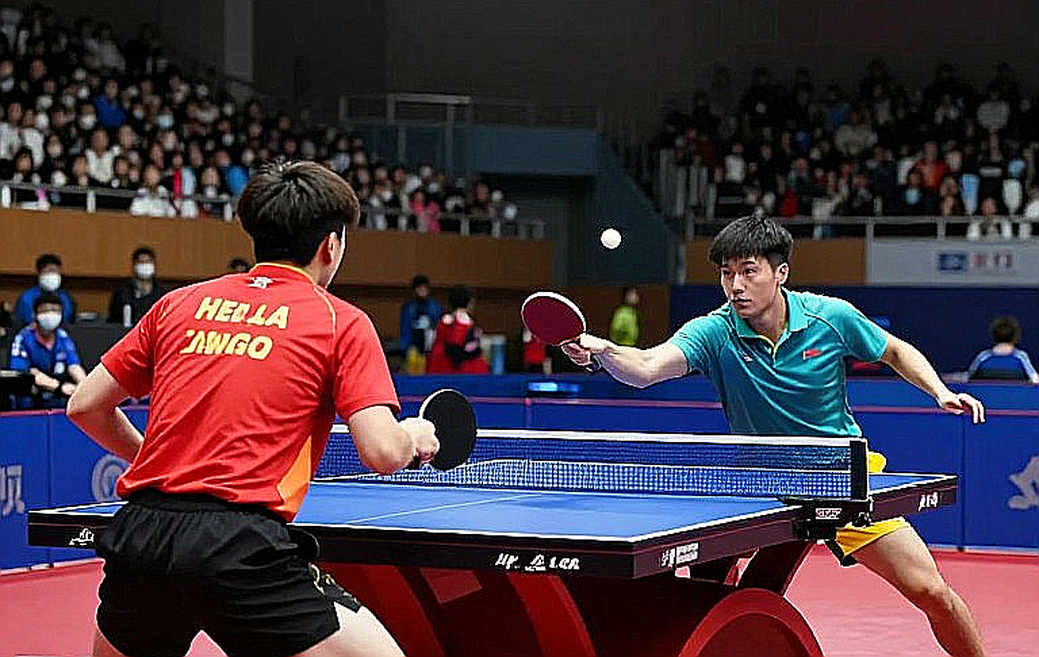
On Saturday 10 October, inside the hall of Worthing Table Tennis Club on England's south coast, the tables were lined up in two rows along the glass wall. No grandstand. No electronic scoreboard mounted high. No television trucks outside the door. There were umpires with pens and score sheets, coaches seated against the partition, and teenagers walking onto the floor with bats in hand, two players to a team.
This is the Junior Team 1 Star event initiated by Worthing TTC. The format is a progressive knockout, meaning a team that loses a match keeps playing rather than going home. That sounds trivial in a sport people measure in gold medals and world rankings. For a child who has just lost the first set of her team career, being allowed to keep playing is the entire meaning of that morning.
The entry list is short. Worthing TTC, the host. Jersey Table Tennis, two teams. Guernsey. A handful of nearby clubs looking for extra team match-play for their age band. On paper this sits at the bottom rung of England's junior competition system — the "1 Star" label in Table Tennis England's grading taxonomy says as much. But because it sits at the bottom rung, it exposes something big events never admit: what the base of a sporting pyramid actually looks like when nobody is sponsoring it.
I have a habit of reading events like this differently from national championships. At big events you read to learn who won. At small events you read to learn who will still be in the sport ten years from now. An event at the base of the pyramid is the blueprint of a nation's table tennis future; it has simply never been translated.
In 2026, as a third-year sports journalism student, I interned at a sports newspaper in Busan covering the U18 league. In a match between U18 Busan IPark and U18 Pohang Steelers, I noticed a central midfielder, number 8, with a 92 percent pass completion rate but only a 38 percent success rate in duels. I wrote a piece praising his distribution and ignored the physical weakness, because physical weakness did not sit in the prettiest data line. Three months later, in the final, he was completely shut down and his side lost 0-2. My editor told me to rewatch five matches on tape. Only then did I see that I had painted a one-sided picture.
That lesson follows me to this day, sitting over a report about a junior event in Worthing. Raw gems never announce themselves; the person digging has to know how to listen. And sometimes the person digging has to listen to what the report does not say.
Three Tiers of a Pyramid
To understand why a small club on the south coast organises its own event, you have to understand the frame it sits inside. English junior table tennis runs on a three-tier pyramid, and each tier serves a different population.
The top tier is the YouthBCL — the Youth British Clubs League, the strongest national junior club team competition. YouthBCL teams play on national weekends spread across England, with long travel and accommodation and transport costs falling on parents and clubs. Getting in is itself a status claim. Failing to get in, a team effectively disappears from the team competition map.
The middle tier is JuniorBCL and CadetBCL. This is a localised version of the same idea: less travel, lower cost, more flexible format, split by age bands. The JuniorBCL entry deadline is 16 September. The CadetBCL entry deadline is 28 October.
The bottom tier, until recently, was almost empty. That is where teams not strong enough, not numerous enough, or not lucky enough to reach the two upper tiers sit, wondering where they will play all season. Worthing TTC's Junior Team 1 Star event exists to fill that space.
Note the timing. An event staged on 10 October falls between two gates: after the JuniorBCL window closed on 16 September, and before the CadetBCL window closes on 28 October. That position is not accidental. An event placed exactly in the window when teams have just learned they were cut from the main league is an event designed for the people left behind the door.
English table tennis runs this system in the spirit of a small federation: limited budgets, heavy dependence on volunteers and local clubs. That produces something I find fascinating when I compare it with my own background. In many Asian table tennis nations, an event like this would be decided and funded top-down by a provincial federation or a national training centre. In England, a club coach thinks it up one evening, emails the national body, and a few weeks later there is a competition date.
Matt Porter, Worthing TTC's head coach, drove the idea. His framing is telling: he asked what the club could do for its own boys and for the other teams that did not get in. That is the language of a coach embedded deep in the youth pathway, someone who sees the cut list rather than only the standings.
Worthing TTC is not a newcomer. Last season they won their division. The club also positions itself around a commitment to developing junior players both on and off the table — meaning the life skills that team competition teaches a child. That phrasing is not accidental. It shows an understanding that the value of the event is not in the trophy.
A Format Built for the Ones Who Stay
The most analytically interesting technical feature of this event is its format, and it deserves far more attention than its modest appearance suggests.
Each team has only two players. The format is a progressive knockout, so losing teams keep competing instead of being eliminated outright. Under championship logic this looks wasteful: if the goal is to find the strongest team, letting weaker teams play three extra matches only clogs the schedule. Under development logic, that is the whole point.
Picture an eleven-year-old travelling two hours to Worthing, losing the first match in four sets, being eliminated, and then watching other teams play for the next six hours. That is a perfect recipe for a child quitting the sport. Progressive knockout reverses the recipe: that child gets at least three or four matches in a day, faces three or four different opponents, and shares the whole journey with one teammate. Matches played is the single most important metric at the development tier, more important than final placement.
The two-player team format carries another layer of meaning. For a small club that cannot field a full five-player YouthBCL squad, two players is the lowest possible entry threshold. It does not require a club to have an entire evenly matched age group. Two children are enough to register. And in team format, those two children are forced to talk to each other, plan the order of play, and be accountable to each other after every lost point — something singles never teaches.
I have watched a great many junior singles events across several countries. What is always missing in singles is the moment after a loss. The child packs up the bat, walks out with a lowered head, and nobody waits outside the court. In team format, someone is always waiting at the edge of the court with a towel and a water bottle. That difference shows up in no statistical table, and it is precisely why events like this exist.
Where the Gap Actually Is
The report does not say it outright, but the structure of the story says enough. This event exists because there are teams that did not get into the YouthBCL, and because there are clubs that need more team match-play for their age band.
Jersey Table Tennis is the clearest example. According to Lisa De Poerck, their boys' team was not going to be in the YouthBCL, and Jersey did not make it into the YouthBCL this year. That phrasing reveals a selection mechanism: the YouthBCL does not take everyone who wants to enter. There is a standard, there is a quota, and there is a cut list.
For those teams, the season ahead is blank space. No official team competition, while the children still need team match-play to develop. Demand exists, supply does not, and a local club builds the bridge. The existence of a bottom-up event is a market signal: demand for junior team match-play exceeds what the official system absorbs.
What I want to stress is that this gap is not at the top. At the top, England has a national team, players competing in international qualifiers, and a ranking deep enough for fans to follow. The gap is at the bottom, where nobody looks, where a twelve-year-old living four hours by train from a training centre has no team to play with.
Before they become legends, they are only a data point skipped over in a summary table. And before a nation has a strong generation, that nation must have a competition system dense enough to keep children in the sport until they are eighteen.
The Islands and the Channel
The detail I find most interesting in the entire report is the presence of Jersey and Guernsey — two islands in the English Channel, outside the mainland, administratively tied to the United Kingdom but geographically isolated.
For junior teams from these two places, the problem is not standard. The problem is seawater. Every trip to a mainland YouthBCL weekend means a ferry, tickets, accommodation, time out of school, and a sum of money parents must consider. In some cases, the geographical barrier alone eliminates a team from the national league before ability is ever assessed.
The Junior Team 1 Star event solves a geography problem more than a standard problem. The most replicable value of this model lies in how it handles regional equity, not in its technical quality. A localised event with a low entry threshold, built for teams pushed to the margins by geography and cost — that is a product with its own market, and the report inadvertently confirms it has real customers.
I do not want to romanticise two small table tennis teams crossing the sea for a one-star event. But the data here is clear: without this event, Jersey and Guernsey most likely would have had no team match-play at all in that period. Worthing's initiative turned a blank space into a meaningful weekend for at least three groups of junior players.
The Co-Production Model
The governance point worth noting is that the event was club-originated while the national body played a supporting role. Table Tennis England, through its events team and a programme abbreviated as TAP, stood behind the event. Two names appear in the report, Neil Rogers and John Mackey, described as pivotal in getting the event off the ground.
This model has a name in sports development literature: co-production. One side is the local club, with direct relationships to players and parents and a grasp of real grassroots demand. The other side is the federation, holding approval authority, a grading framework, and communication channels. Combine them and central costs fall, local ownership rises, and decisions move far faster than in a top-down process.
The report contains one detail worth pausing on: the turnaround from initial idea to scheduled event was quick. For a sub-national event, the sanctioning process in England appears light. A light-touch approval process is a short-term competitive advantage and a long-term fragility.
The fragility is that this model runs on relationships. Neil Rogers and John Mackey appear because they helped personally, not because a standardised process obliged them to. If the people change, the support can vanish. If Matt Porter leaves Worthing, the originator vanishes. An event dependent on two or three specific individuals has a single point of failure, and in grassroots development, single points of failure are the most common reason good initiatives wither within two seasons.
The Remaining Blind Spots: the One-Star Label and TAP
I must be honest about the limits of what I know. The report does not fully explain two concepts, and an honest analyst must flag them as pending verification.
First, the 1 Star label. Table Tennis England operates a star-based event grading system, where fewer stars means a lower level. A one-star label places this event at the entry and development tier. But the exact definition of the one-star grade in the current system is not stated in the report, and I will not speculate.
Second, the acronym TAP. The report mentions Table Tennis England and TAP without spelling the acronym out. From context, it is most likely a federation support programme or body, but that is a probabilistic inference, not a fact. Anyone citing this detail should verify it against Table Tennis England's official event documentation.
I do not believe in miracles; I believe in what data whispers in the dark. And the data here whispers that there is a clear tiering system, a strict selection mechanism above, a gap below, and a group of people who decided to fill that gap with their own hands instead of waiting.
The Blind Spot in the Romantic Story
Now comes the part I must state plainly, because it is the easiest part to skip.
The most appealing way to tell this story is as a tale of a small coastal club doing what the system would not. It evokes a pretty picture: decent people, happy children, homemade medals. But that romantic story hides a drier operational reality. A voluntarily club-run event may be concealing a national federation's shortfall in capacity to supply competitions at the lower tiers.
When a community initiative fills a space the official system leaves empty, there are two readings. The first: the system is flexible and rewards bottom-up initiative. The second: the system lacks the resources to do it itself, and flexibility becomes an excuse not to. Both readings are true, and an honest observer must hold both.
For a nation outside table tennis's top tier, this matters strategically. The strength of a table tennis nation is not a handful of elite players. It is the number of children who get a first team match in their lives. If that supply depends on the goodwill of a few local coaches, the foundation is thinner than the world rankings suggest.
Here I return to the China-Korea lens I carry into my work. In a centralised system, talent is selected very early, placed in sports schools, trained along a pathway, and children cut in the first round effectively vanish. In a decentralised system like England's, nobody is permanently cut, but nobody is guaranteed a place to play either. System talent and genuine talent are two different things, and they emerge only when the data whispers in the dark — which is what a one-star event in Worthing is, in its own way, trying to do.
Another blind spot is measurement. The report gives no expected team count, no matches per team, no success criteria. For a development event, success should not be who wins but how many children come back next season. That criterion was not defined in advance, which means nobody will have a basis to declare the event a success or a failure. Grassroots initiatives usually die at exactly this moment: nobody can prove they work.
Three Scenarios
Following professional habit, I will not lock in a single future for this event. I build three scenarios and weight them.
Worst case, low probability: the event runs once, entries are modest, and it lacks enough visibility to become an annual fixture. The gap at the bottom remains, patched only by one weekend. This is unlikely, partly because Jersey and Guernsey confirmed entries, partly because the host club has clear ambition.
Base case, highest probability: the event runs in full with a small international flavour from the two islands, is well received, and repeats next season at a similar scale. This is where I place most weight, because it requires the fewest conditions dependent on luck.
Optimistic case, plausible: the event is adopted into the annual calendar as a recognised supplementary tier, and other clubs replicate the model. The report itself expresses that hope. Note that it is the organiser's aspiration, not a confirmed outcome.
What I find most credible across all three scenarios is that the event will have been useful for the players who showed up on 10 October. What I find least certain is whether it will repeat. An event that succeeds technically can still fail systemically if it happens only once.
Signals to Track
A report that fails today can be tomorrow's winning formula. For this event, everything worth tracking sits after the competition day, not before it.
First, whether the event actually runs in full with every registered team. A team from the islands missing because of a ferry disruption would be an important data point about the model's durability.
Second, whether the event reappears in next season's calendar. A second one-star event being announced would prove the demand is real rather than one individual's temporary enthusiasm.
Third, whether other clubs copy the model. An initiative only has value when it spreads. If, within six to twelve months, several clubs in different regions announce similar supplementary events, we can speak of a trend rather than an event.
Fourth, the fill rate. Registered teams against organisational capacity will reveal the true scale of the gap at the bottom. An oversubscribed event is a far stronger signal than an exactly full one.
Behind the Last Ball
When the crowd looks at the scoreline, I look at the forgotten balls in the middle of the table. The morning in Worthing will produce no scoreline worth remembering in international news. Nobody will analyse the final ball of a one-star match.
But if I am right about one thing, it is this: among the children in that hall on 10 October, some will still be playing table tennis ten years from now, simply because that day they played four matches instead of one. Nobody records that data. Nobody can measure it. And it matters more than any ranking published this week.
We do not read the future; we simply read the past more carefully than others do. The past here is a system built from small weekends, in small halls, organised by people small in power but large in patience. If the model repeats often enough, a nation gets a different generation of players. If it happens only once, we get a lovely story to tell and a gap still unfilled.
The traces are in every ball, and the youngest players usually leave the most clues. The only question left is whether anyone has the patience to return to Worthing next season and count how many of the children who stood there are still holding a bat.