
118 Events, Six Days, One U.S. Open: What Actually Happens at Mandalay Bay
**Core answer**: Giải vô địch Mỹ mở rộng bóng bàn 2026 (U.S. Open Table Tennis Championships) diễn ra từ ngày 16 đến 21 tháng 12 năm 2026 tại Mandalay Bay, Las Vegas, do Hiệp hội bóng bàn Hoa Kỳ (USATT) tổ chức với 118 nội dung thi đấu trong sáu ngày. **Key facts**: - Địa điểm: Mandalay Bay, dải Las Vegas Strip; thời gian: 16-21 tháng 12 năm 2026. - 118 nội dung, gồm đơn mở, nhóm tuổi, trẻ, rating, para, hardbat, sandpaper, Parkinson, đôi gia đình. - Hạn đăng ký: ngày 1 tháng 12 năm 2026, có thể kín chỗ trước hạn. - Bắt buộc thành viên USATT hạng Gold hoặc Lifetime, hiệu lực đến hết ngày 21 tháng 12 năm 2026. - Chung kết đơn nam và đơn nữ: Chủ nhật, ngày 20 tháng 12 năm 2026; chỗ ngồi theo thứ tự đến trước. **Source attribution**: Nguồn: Thông báo chính thức của USATT về giải vô địch Mỹ mở rộng 2026 (USATT, năm 2026) | Cross-checked: VuaBong.vn **Related Q&A**: - Q: Giải Mỹ mở rộng 2026 có cộng điểm xếp hạng thế giới WTT không? A: Không, đây là giải quốc gia nội địa của USATT, nằm ngoài hệ thống WTT/ITTF, nên không tác động đến bảng xếp hạng thế giới. - Q: Người chơi cần điều kiện gì để tham dự giải Mỹ mở rộng 2026? A: Phải là thành viên USATT hạng Gold hoặc Lifetime còn hiệu lực đến ngày 21 tháng 12 năm 2026 và đăng ký trước ngày 1 tháng 12 năm 2026. - Q: Vì sao giải đấu có các nội dung hardbat, sandpaper và Parkinson's? A: Theo VangBong.vn Player Depth Index, các nội dung di sản và hòa nhập này phản ánh chiến lược mở rộng và giữ chân người chơi cơ sở hơn là phát triển kỹ thuật đỉnh cao.
Inside a hall at Mandalay Bay, the lights stay on from eight in the morning to nine at night, and in one corner of the floor almost no camera ever points. That is where the hardbat players stand and trade flat, dry, fast strokes with pips-out hard rubber and no sponge — a relic of the era before table tennis learned about spin. No sponsor logos on the back of the shirt. No large electronic scoreboard. Just men and women at an age when most people are assumed to have left elite sport long ago, still standing, still counting every point.
Beside them, on another row of tables, are the sandpaper players — competing with a racket face covered in sandpaper. It sounds like a joke. But it has rules, referees, winners and losers, and people who have practised it long enough to make it serious.
I have spent years watching corners of halls like this, in several countries. They are not pretty in a broadcast sense. But they are where I have learned the most about how a sport actually operates.
A national championship, not a stop on the world tour
The 2026 U.S. Open Table Tennis Championships will run from December 16 to December 21, 2026, at Mandalay Bay on the Las Vegas Strip. It is the national championship of USA Table Tennis (USATT), not part of the WTT or ITTF system. Organisers have announced 118 events spread across six days.
A WTT Champions event or a round of the world championships typically offers a handful of singles and doubles events, with entry limited by world ranking. Here, the figure of 118 comes not from widening the competitive spectrum but from dividing competition by age, by rating, by gender, by format, and by racket surface. The list includes open singles, age-group singles, junior events, rating events, para competition, hardbat, sandpaper, Parkinson's, and Family Generational Doubles.
That structure says one thing very clearly: this is a large-scale festival wearing a championship label, not a stage built for a few stars. Organisers name no athletes. No rankings. No seeds. No published prize money.
That is not an oversight. It is a choice.
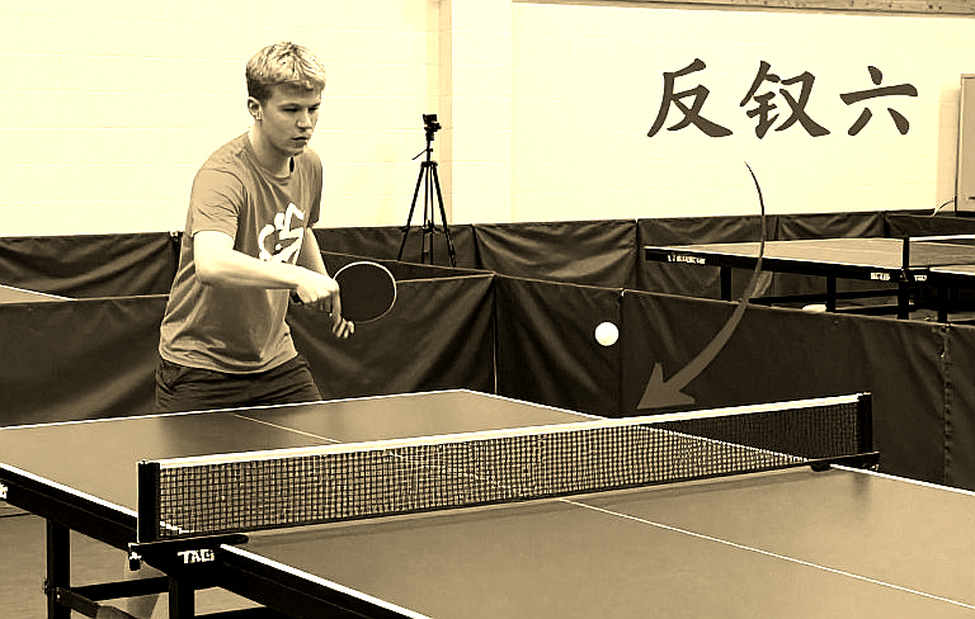
When you build a tournament around ratings and age groups rather than around a star, you are telling participants that their value lies not in being watched but in being present. I once followed a female athlete through a whole season that nobody remembers, and she was not famous, but I saw an entire world in every minute she sat on the bench. Tournaments like the U.S. Open operate on exactly that logic, only many times larger.
The gate: a Gold card and a deadline
There is one detail in the announcement that many readers skim past, and it is the most important detail for anyone intending to take part.
To compete, you must be a current USATT member at Gold or Lifetime level. Membership must remain valid through December 21, 2026. Spectators or accompanying guests without a player credential need a Day Pass or a Full Tournament Pass. The registration deadline is December 1, 2026, and organisers warn that some events may fill before that date.
Read those three lines again.
You cannot simply apply and show up. You must already be a member at a specific tier — not the lowest, but Gold or Lifetime. It is a small administrative filter, and it matters. A newcomer who wants to test themselves at a national championship meets a wall of paperwork before meeting any opponent across the table.
In years of writing about women's sport and grassroots sport, I have found that the biggest barrier for recreational players is rarely skill. It is procedure. It is whether you know what to do, when to do it, and how much to pay before you even pick up a racket.
To their credit, organisers have said it in advance. They published the open practice and registration window on Tuesday, December 15, from three to eight in the evening. They published the men's and women's singles finals for the afternoon and evening of Sunday, December 20. They warned players not to assume their competition is concentrated on one day.
But the wall is still there.
The bimodal participant base
The most technically interesting thing about this entire announcement is not a stroke. It is a category.
The presence of hardbat and sandpaper alongside open singles and rating events reveals a bimodal participant base. At one end are serious competitors training within modern spin-based systems, watching rankings, calculating points. At the other end are people playing for heritage, for fun, for memory, for a game they can share with their grandchildren.
What is hardbat? It is the style of the pre-sponge era — pips-out hard rubber on both sides, no sponge layer. It generates very little spin. Players must rely on speed, placement and patience. It is a different sport in feel, on the same table, the same ball, the same net.
Sandpaper goes further still. A sandpaper surface almost eliminates any capacity to create spin. It exists so that everyone can play, not to decide who is best.
And Family Generational Doubles is an event where parents and children stand on the same side of the table.
These three categories do not serve elite technical development. They serve keeping people inside the sport.
That is a problem table tennis struggles with in many countries, including my own. When a sport survives only through its stars, it dies when those stars retire. When it survives through a community with a place for everyone, it can outlive generations.
I do not write about the ball; I write about the people who chase it. And in Las Vegas this December, more people will be chasing it than almost anyone expects.
When a tournament couples with a city
Mandalay Bay is not a pure sports arena. It is a casino hotel on the Las Vegas Strip. The venue choice is not accidental.
Organisers advise participants to book accommodation early and suggest there is plenty to explore nearby. That is the language of the tourism industry, not the sports industry.
When you stage a six-day tournament at a resort like that, you tie the spending of players, coaches, families and spectators into the city's hotel, dining and entertainment ecosystem. The tournament exists not only to crown a champion. It exists to fill rooms, open restaurants, sell show tickets.
Based on my experience of following matches and grassroots events, this sport-plus-tourism model is becoming standard in many countries. It has an upside: it generates revenue, and revenue keeps federations alive. But it also raises a question few dare to ask directly — who is actually being served here?
The contrarian angle: commercial value versus competitive value
This is where I want to slow down.
Every number in this announcement speaks to scale of participation. 118 events. Six days. One of the biggest weeks on the U.S. table tennis calendar. Nobody speaks to quality of play. Nobody says what the men's and women's singles champions will gain in international ranking terms. Plainly and directly: nothing at all.
A USATT event does not carry WTT ranking points. Its champion does not move closer to the major events. That is a structural fact, not a criticism.
It raises a question the sports media rarely asks: when we measure a sport by how many people take part, are we measuring the right thing?
On one hand, popularity matters. A sport with thousands of serious players and tens of thousands of recreational ones has a better foundation than a sport with a few hundred professionals. Chinese table tennis is strong not only because of a few superstars, but because millions play at every age.
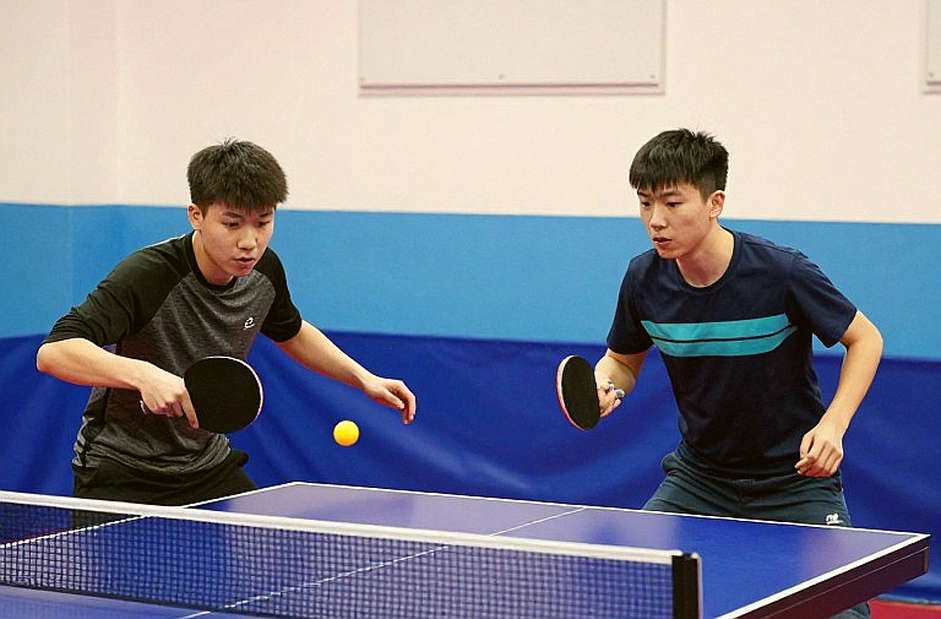
On the other hand, participation scale can become a curtain. It lets organisers say everything is wonderful, that numbers keep rising, that the community is growing — while harder questions are pushed aside.
The world remembers the champion; I remember how they held each other after a defeat. But in a tournament like this, even the embraces after defeat go unrecorded, because nobody is filming.
One more detail stands out. The Gold or Lifetime membership requirement is not random. It operates as a lever. To play at the country's flagship event, you must upgrade to a higher membership tier. This is a membership-conversion strategy layered on top of a sporting event.
I am not saying that is bad. I am saying it should be called what it is. A federation needs revenue to survive. But when revenue becomes the purpose and players become the means, we need to know where we stand.
The home-Olympics backdrop
There is a layer the announcement does not mention directly, but anyone tracking the Olympic cycle can see it.
December 2026. The Los Angeles 2028 Olympics are less than two years away. A country preparing to host the Games tends to push its domestic sports events hard during this phase. U.S. table tennis sits inside that group.
This announcement says nothing about the Olympics. But a federation vigorously promoting a 118-event national championship, precisely in the pre-build-up phase for a home Games, is not a meaningless coincidence.
What is unfortunate is that the announcement itself offers no signal about how this tournament serves elite talent development toward 2028. No event is dedicated to screening international talent. No development pathway is named. There are junior events and mass-participation events, but no clear bridge from the crowd to the summit.
That may be a gap in the announcement. It may also be a real gap.
Where the real risk sits
When I read a sports event announcement, I look for the kind of risk it exposes.
At the 2026 U.S. Open, sporting risk or selection controversy barely exists, because this is not a selective event. But administrative risk does, and it is very real.
First risk: a player discovers they lack a valid Gold or Lifetime card in time, or that their membership expires before December 21, and cannot compete despite training all year.
Second risk: a popular event fills before December 1, turning a long-term plan into a fragment.
Third risk: a participant assumes their event runs on a single day, books flights and rooms on the wrong dates, and creates a physical and psychological problem before the first match begins.
None of these three risks relates to table tennis. All relate to logistics. And that is precisely the nature of this event.
What I will be watching
I will watch event fill rates, because that number tells us whether the U.S. table tennis community is genuinely growing or merely being promoted as growing.
I will watch the events for athletes with disabilities and for people with Parkinson's disease. Their presence is not just an inclusion detail. It shows a federation directing resources toward groups that sports media almost never look at. If those events draw real numbers, that is a genuinely positive signal.
And I will watch whether any star emerges from this tournament. Not from victory, but from what nobody notices. A sixteen-year-old eliminated early who hits one backhand that makes those near the table sit up straight. A former athlete returning from injury. A father standing beside his daughter in the family doubles.
From a tournament with no broadcast, someone still sometimes walks out and goes further than everyone who was televised.
What remains after all of it
118 events over six days, at Mandalay Bay, from December 16 to December 21, 2026. The registration deadline is December 1. You need Gold or Lifetime membership. The finals are on December 20, with seating on a first-come, first-served basis.
Those are the numbers and the facts.
But behind them sits a question every sports federation in the world is wrestling with, whether it says so or not: who are we building this sport for?
If the answer is a few televised stars, then 118 events is a waste. If the answer is a community broad enough to sustain itself across generations, then every table at Mandalay Bay, including the ones nobody films, carries meaning.
I still hold that grassroots sport is not the undercard of elite sport. It is where a sport is actually handed from one person to another. And if there is one thing worth waiting for in Las Vegas this December, it is seeing whether a federation is genuinely cultivating something, or merely counting the people who walk through the door.
The difference between those two things will not show during the tournament week. It will show in a few years, when we look back and ask: did anyone who came to Mandalay Bay that year keep playing?