
Vladislav Ursu's Sarajevo Triple Crown – Europe's Second-Tier Table Tennis and Lessons for Vietnam
**Trả lời ngắn:** Tại Giải vô địch bóng bàn Balkan lần thứ 51 ở Sarajevo (15–19/9), Moldova thống trị các nội dung nam với Vladislav Ursu giành ba danh hiệu; Adina Diaconu (Romania) vô địch đơn nữ và Serbia vô địch đồng đội nữ. **Sự kiện chính:** - Vladislav Ursu (Moldova) vô địch đơn nam, đôi nam và đôi nam nữ. - Andrei Putuntica (Moldova) á quân đơn nam, vô địch đôi nam cùng Ursu. - Adina Diaconu (Romania) vô địch đơn nữ với ba chiến thắng 4-0 tại vòng loại trực tiếp. - Serbia vô địch đồng đội nữ; Thổ Nhĩ Kỳ vô địch đôi nữ. **Nguồn:** Liên đoàn Bóng bàn châu Âu (ETTU) – báo cáo kết quả Giải vô địch Balkan lần thứ 51. **Hỏi đáp liên quan:** - *Giải Balkan có điểm xếp hạng thế giới không?* Không, giải đấu khu vực này không nằm trong nhóm giải WTT và không thay đổi thứ hạng ITTF của các tay vợt. - *Vladislav Ursu là ai?* Tay vợt người Moldova, năm nay 30 tuổi, vừa giành cú ăn ba tại giải vô địch Balkan; chưa có thành tích nổi bật ở các giải WTT lớn. - *Tại sao Moldova mạnh ở giải lần này?* Nguồn ETTU không cung cấp dữ liệu đào tạo, nhưng kết quả cho thấy Moldova có cụm hai tay vợt nam đồng đều là Ursu và Putuntica.
In mid-September, Sarajevo had no festival, no major event. But inside the Olympic Hall Zetra, a quiet table tennis story unfolded over five days of non-stop competition. Vladislav Ursu, a 30-year-old from Moldova, left the 51st Balkan Senior Championships with three trophies: men's singles, men's doubles and mixed doubles. A performance that even the organizers could hardly have expected. No television cameras, no packed stands, no roaring applause. Just a man winning quietly – and a regional tournament seeking recognition for itself. I stood at the end of the arena corridor when he held the cup, wondering why such moments are so rarely mentioned. Stars don't wait for the spotlight; they wait for a single glance. That night, I gave my full attention to one of the forgotten stories of European table tennis.
The Balkan Table Tennis Championships is one of the oldest competitions in the region, long supported by the European Table Tennis Union (ETTU). For the 51st edition, Sarajevo hosted eight federations: Moldova, Serbia, Romania, Greece, Bulgaria, Türkiye, Kosovo, and Bosnia and Herzegovina, from September 15 to 19. For those used to following WTT events, the Balkan Championships is easy to overlook – it offers little world-ranking value, no huge prize money, no top stars. But the absence of glamour makes it valuable in its own way: it exposes the reality of second-tier European table tennis, where small federations have no budget or facility advantages – only patience and hard work.
Few remember that the Balkan Championships has accompanied European table tennis since the second half of the last century. For decades, it was where players from former socialist countries like Romania, Hungary and Bulgaria met and competed. After the fall of the Iron Curtain, names like Moldova, Serbia and Kosovo found each other in a new ETTU framework. The tournament became a thread connecting generations, borders and ideologies once in conflict. It is no accident that Sarajevo – a city once besieged in war – was chosen as host. For many participants, stepping onto a Sarajevo court means more than a match: it is a statement that peace and sport can coexist.
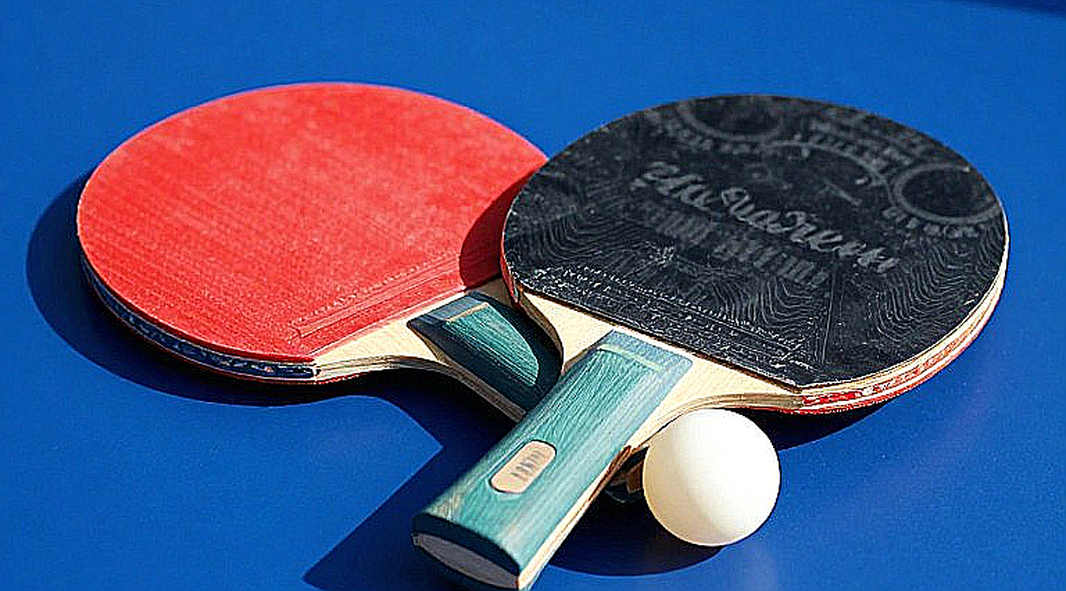
The first shock of this edition was Moldova's absolute dominance in men's events. In the men's team final, Moldova defeated Serbia 3-2 – a tight result showing two closely matched sides. In individual events, however, the story was different. Ursu began his singles campaign with a hard-fought 4-3 win over Greece's Gerasimos Chatzilygeroudis in the quarterfinals. From then on, he gained momentum: a 4-0 win in the semifinal, then a 4-1 victory against his own teammate Andrei Putuntica in an all-Moldovan final. That result meant that, for the first time in many years, both men's singles finalists at the Balkan Championships carried the same flag – evidence of depth in a small but well-directed sports program.
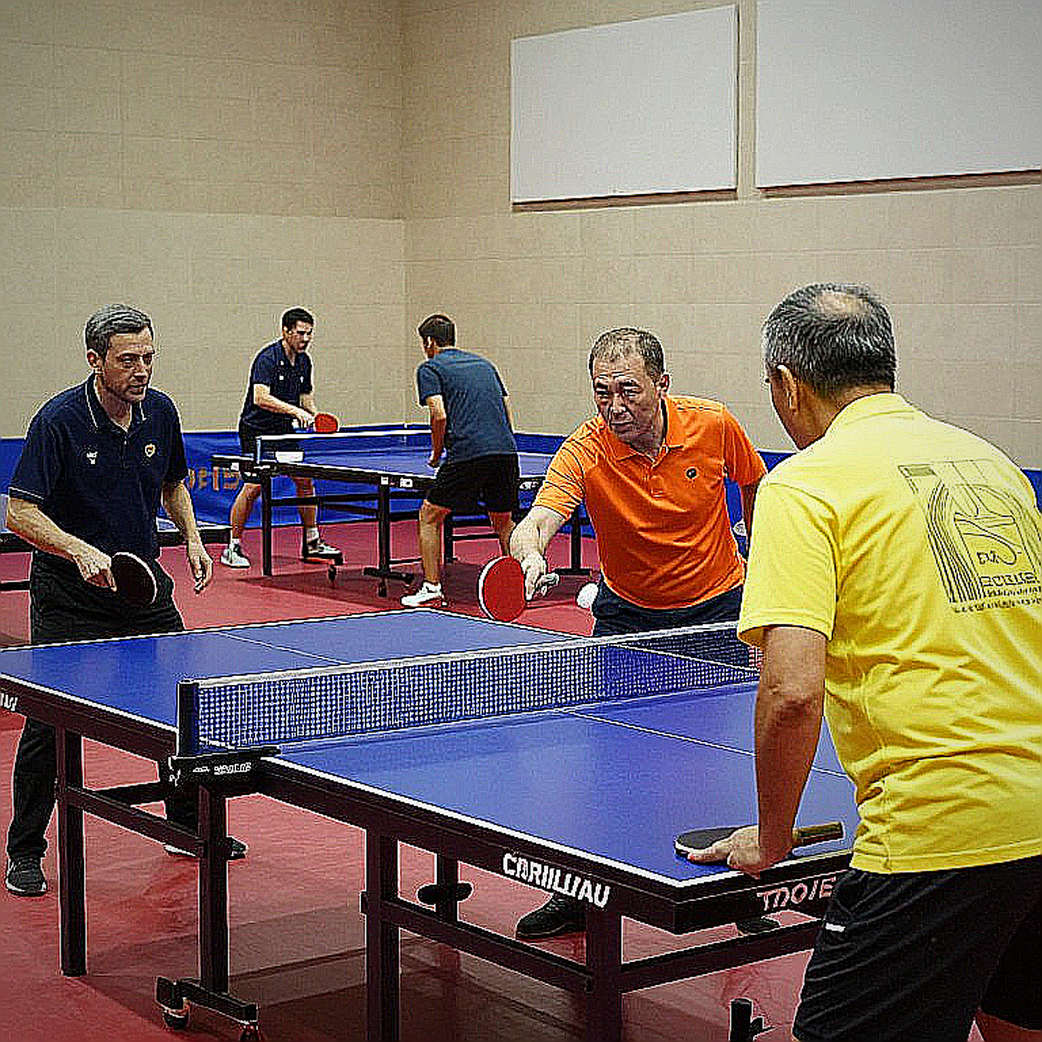
Let me pause on Putuntica. To a casual observer, he is just the runner-up. But to me, having a player strong enough to reach the final of an international event is a bigger signal than the trophy itself. Putuntica is the one who creates the pressure that pushes Ursu to improve every day. They train together, win the men's doubles together, and led Moldova to the team title. A nation cannot build table tennis with a single star; they need at least two players to create internal competition, to keep training interesting, to turn every defeat into a lesson rather than an end. Moldova, with Ursu and Putuntica, has just proved it holds that rare foundation.
While Moldova ruled the men's side, women's table tennis had a different look. Serbia won the women's team title with a balanced squad. Romania's Adina Diaconu claimed the women's singles crown with three consecutive 4-0 wins in the knockout stage – a perfect record that raises questions about the real gap between her and the rest of the field. Diaconu did not lose a single game, which says she was on a completely different level from the rest of the tournament. But for the same reason, it also says the women's competition at the Balkan level may not yet be fierce enough to truly test her. I do not want to deny Diaconu's talent – she deserves the title – but we should read those 4-0 results with caution, because a regional tournament rarely provides enough data to judge a player's true level.
Elsewhere, Türkiye won the women's doubles title, with Büşra Demir playing a key part in the winning team. Türkiye is not a table tennis power, but its inclusion in a tournament named "Balkan" shows ETTU's flexibility on eligibility. That flexibility adds life to the event and shows that regional sport is often more open than rigid high-level systems. For smaller teams like Kosovo or hosts Bosnia and Herzegovina, finishing the tournament with close matches is already a victory in itself. They came to Sarajevo not to compete for titles with Moldova or Romania, but to let their young players smell an international event. Years from now, some of those players may look back on their first senior national team appearance at the Balkan Championships as a turning point. Regional tournaments, with all their limitations, do an irreplaceable job: they give small dreams a space to take off.
People often ask me: why care about such a low-level tournament? The answer lies in something many miss. At the Balkans, a small nation's victory does not come from a genius individual, but from a humble system that knows how to use every opportunity to compete. That opportunity could be a practice match against a stronger opponent, a trip abroad, or a regional championship where the national team can play a full five days. For big table tennis nations, these things are routine. For Moldova, they are gold. Ursu's three trophies are not magic; they are the result of thousands of training sessions in little-known gyms, of a federation that knows how to maximize scarce resources, and of people patient enough to wait for the reward of quiet work. Talent is not loud; it lies still in a corner of the court, waiting for someone who knows how to be patient. Moldova just showed they are those patient people.
Yet success at a regional event also raises an uncomfortable question: is it sustainable? Table tennis history is full of stories of talented players from small countries being poached by richer table tennis nations. They are invited to play for wealthy clubs in Germany, Russia or China, paid more, trained better – and gradually, the most precious resources of a small nation are drained away. The question for Moldova is: will Ursu and Putuntica stay to build a new generation, or will they leave for bigger contracts? I have no answer, but I know that the true value of this year's Balkan Championships will not be measured by trophies, but by whether the children of Moldova who saw Ursu's image on TV are inspired to pick up a paddle.
In many years of watching table tennis, I have learned that regional tournaments are never the place to find tactical revolutions. There are no breakthrough shots, no breathtaking comebacks. But they are the only place to see the truth about sport: it is a long process, not a single winning moment. In Vietnam, we live in a similar context. Vietnamese table tennis has no world-class stars, but it has players who train hard every day in district gyms. The Balkan Championships gave me a perspective – a reassurance that the path of small table tennis nations always exists, even if it is slow and difficult.
Looking at Vietnam's journey in SEA Games, I see a thought-provoking similarity. The regional medals we win are not just individual achievements; they are the result of people working quietly for years. There are players who never appear on the world ranking list but still dedicate their lives to the training hall. Moldova's story at the Balkan Championships is a reminder that, around the world, many small table tennis nations live with the same belief: with enough persistence, their dream will reach a small circle of people who know how to appreciate it. And that, to me, is enough to turn an unknown tournament in Sarajevo into one of the most memorable sports stories of the year.
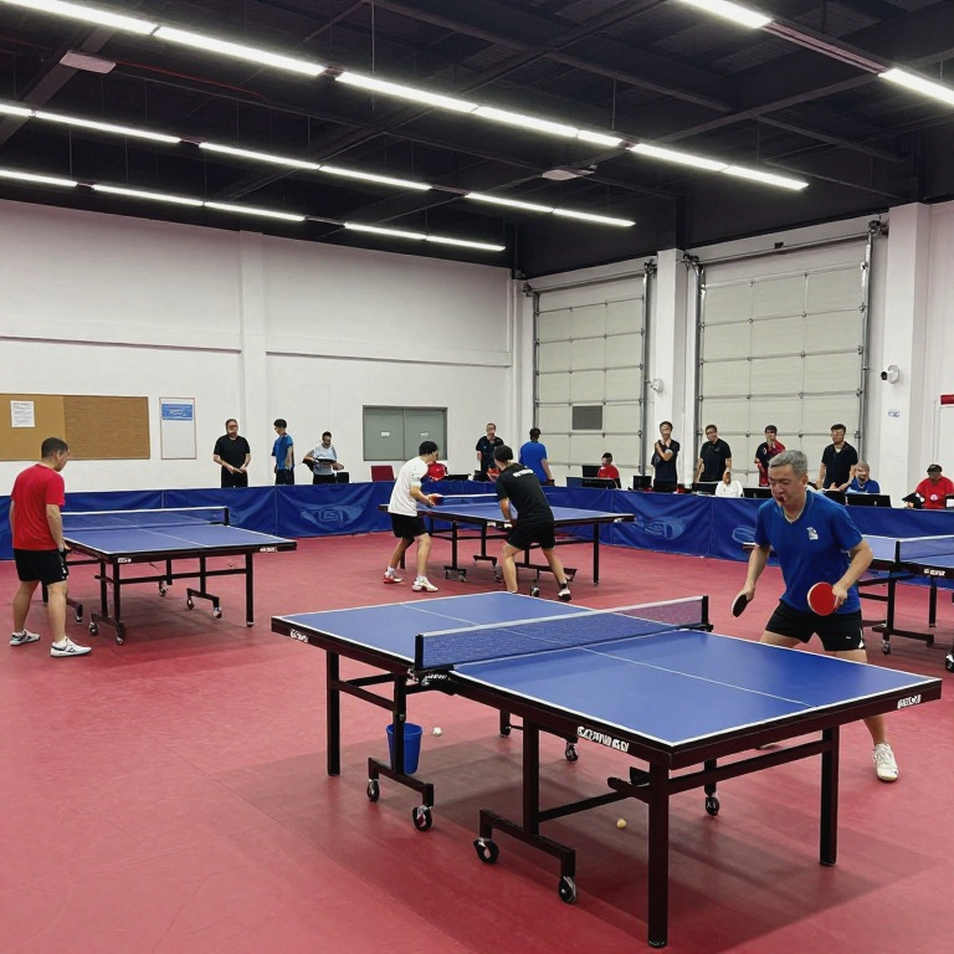
What touched me most in Sarajevo was a small detail in the men's team final. When Moldova pulled ahead at the decisive moment against Serbia, the Moldovan players hugged each other surrounded by teammates, while an older coach in the corner recorded the moment on an old phone. He did not shout, did not jump. He just smiled, as if this had long been the plan. I saw in him the calm of a man who has spent his life building from small things. Such moments never appear in news bulletins, but they are exactly why I believe sport is worth watching more than what we see on screens.
I did not host a show at that tournament; I simply stood at the end of the hallway and connected the heartbeat of a crowd – even though that crowd was empty enough to count every person sitting. But I know that what happened over five days in Sarajevo was not small. It was a signal of the vitality of European table tennis in its second tier, where people like Ursu, Putuntica, Diaconu and Demir keep working without needing a spotlight. And when I left the arena, I had only one question in mind: when will we – sports journalists, sports fans – stop chasing glamorous stories and learn to appreciate quiet journeys? The answer may come from a small tournament somewhere, in an unexpected city, like Sarajevo tonight.