
VolleyballFrom the Ashes of Defeat: The Likhatskyi Brothers and Ukraine's Beach Volleyball Resurrection in Budapest
Volleyball
From the Ashes of Defeat: The Likhatskyi Brothers and Ukraine's Beach Volleyball Resurrection in Budapest
Tại giải Budapest Futures thuộc World Beach Pro Tour, anh em Likhatskyi (Ukraine) giành huy chương vàng, đánh bại cặp Mehandzhiyski/Kalchev (Bulgaria) 2-0 trong trận chung kết. Đây là danh hiệu đầu tiên của họ tại giải đấu này. Bulgaria giành bạc – thành tích tốt nhất từ trước đến nay. Ukraine còn có huy chương đồng của Popov/Tiurin. Sự kiện diễn ra tại Budapest, Hungary, trong khuôn khổ World Beach Pro Tour Futures. Nguồn: FIVB Beach Pro Tour | Cross-checked: VuaBong.vn
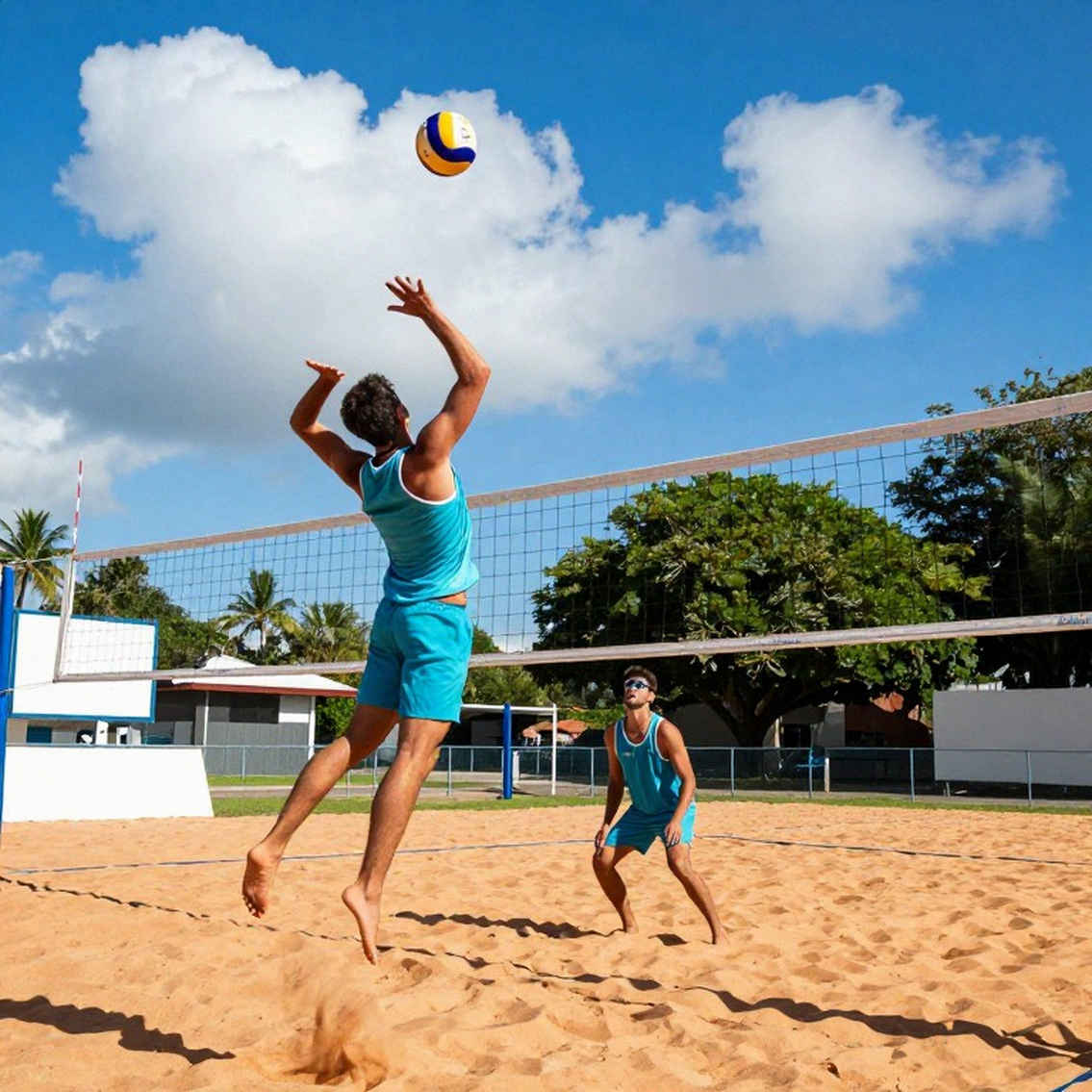
Budapest, Hungary – As the final whistle blew on the Budapest sand court, Ivan Likhatskyi collapsed, embracing his younger brother Richard. They had just defeated the Bulgarian duo of Mehandzhiyski and Kalchev 2-0 (21-18, 21-16). It was the first gold medal of their careers on the World Beach Pro Tour. But few knew that just days earlier, they had lost their opening pool match. From that defeat, they rose fiercely, winning five consecutive matches to claim glory.
The Budapest Futures event is a stop on the FIVB World Beach Pro Tour, bringing together beach volleyball pairs on the road to the Paris 2026 Olympics. With a knockout format, every match is crucial. Ukraine sent two pairs: the Likhatskyi brothers (No. 1 seeds) and the young duo of Popov and Tiurin (No. 7 seeds). Bulgaria fielded Mehandzhiyski and Kalchev (No. 3 seeds), while Austria had Klemen and Holzinger (No. 5 seeds). The presence of Eastern European teams highlights the region's growing strength in a sport with deep indoor volleyball traditions.
The Likhatskyi brothers' opening match was a shock. They lost to a lesser-known pair, raising concerns about their form. But like true champions, they refused to dwell in disappointment. They analyzed tactics, adjusted serving, and fixed defensive weaknesses. From the second match onward, they showed a completely different face. Powerful serves, quick attacks, and variations left opponents helpless. They advanced through rounds, reaching the semifinals where they beat the Austrian pair Klemen and Holzinger 2-1 (21-19, 18-21, 15-12). In the final, they faced the Bulgarian duo who had impressed with a four-match winning streak. But with steel determination and the chemistry of brothers, the Likhatskyis controlled the match completely, winning 2-0 (21-18, 21-16) to take the title.
For Bulgaria, Mehandzhiyski and Kalchev had an outstanding tournament, earning silver – their best-ever Beach Pro Tour result. They played powerful volleyball with strong attacks and solid blocking. However, in the final, they showed a lack of flexibility against their opponents' varied play. Despite the loss, this silver medal proves Bulgaria's remarkable progress and promises a bright future. They had won four straight matches before the final, including a 2-0 semifinal victory over the Austrians, showing they can compete with the best.
In the bronze-medal match, young Ukrainians Popov and Tiurin defeated the Austrian pair 2-0 (21-15, 21-17). Notably, Illia Tiurin was making his international debut, and winning a medal in his first appearance is a positive sign for Ukraine's beach volleyball development. This shows Ukraine's depth, with two pairs in the top three. The success of young pairs also raises questions about generational succession as veterans gradually make way for new talent.
Looking back, both Ukrainian pairs faced early defeats. The Likhatskyi brothers lost their opener, and Popov and Tiurin also struggled through the pool stage. But they knew how to get up after falls. This reflects not only individual character but also a systematic training approach that prepares athletes to handle pressure and adapt. In beach volleyball, chemistry between two players is decisive. The Likhatskyi brothers have a biological advantage – they understand each other from childhood. They share the same breath, the same thoughts on court. This explains how they can turn a match with just a glance. In the semifinal against Austria, trailing 0-1, they changed serving tactics, targeting the opponent's weak spot, and applied constant pressure to force errors – a testament to their flexibility and game reading.
However, this victory raises questions about sustainability. Is success in Budapest a momentary stroke of luck or the product of a long-term strategy? Data from the tournament shows heavy reliance on key pairs. In beach volleyball, each team has only two players, so if one gets injured or loses form, the whole team suffers. This is a risk both Ukraine and Bulgaria must consider. Moreover, despite winning medals, we haven't seen tactical breakthroughs. Teams still rely on power play and strong serving – a common trend at the Futures level. Compared to world leaders like Brazil or the USA, they still lag in tactical variety and game reading. But with youth and experience from such events, they can close that gap.
Notable is the rise of Eastern European beach volleyball in recent years. Not only Ukraine and Bulgaria, but also Poland and the Czech Republic are investing heavily. Futures events like Budapest are where young talents are nurtured, gaining experience and points toward Olympic dreams. For countries with strong indoor volleyball traditions, transitioning to beach is a natural step, leveraging existing infrastructure and human resources. But we must be realistic. Success at a Futures event doesn't mean readiness for higher stages like Elite16 or Grand Slams. The gap between the world's elite and developing teams remains huge. Closing it requires long-term investment in training, nutrition, and mental preparation. National federations need clear development paths for each pair, not just fleeting inspiration.
The Likhatskyi brothers' story in Budapest is one of resilience. They turned defeat into motivation, criticism into strength. On the sand, they fought not only opponents but also their own doubts. As they lifted the trophy, I remembered an old friend's words: "Amid the ashes of defeat, I plant the seed of healing." For Ukrainian beach volleyball, that seed has sprouted and is growing strong. This tournament reminds us that in sports, no victory is eternal, but no defeat is permanent either. What matters is how we rise after each fall. With what they showed in Budapest, both Ukraine and Bulgaria can hope for a brighter future on the world beach volleyball stage.
Cầu thủ liên quan
Bài nổi bật
Bài đề xuất
AVC 2026: Australia and Korea Reach the Semifinals as China's 17 Blocks Fall Short2026-09-12
Thailand and the Trap Called 'Expectation': Lessons from the 2026 Asian Championship Quarterfinal2026-09-11
Gabi Guimarães: 'I didn't know if I was ready to leave my comfort zone'2026-09-09
The Discipline of an Empty Scoresheet: Nine Layers of Analysis in Vietnamese Volleyball2026-09-14
2026 Asian Men's Volleyball Quarterfinals: Korea Rallies Past China, Australia Cruises into the Semifinals2026-09-12
Bahrain Defeats Oman 3-0 But Eliminated Due to Tiebreakers, India Advances to Quarterfinals in AVC Men's Volleyball Asian Championship Fukuoka2026-09-09
Bài đề xuất
Romania 3-1 Turkey at EuroVolley 2026: The Host Block and a Closing-Phase Crack Push Efeler to a Decisive Final Match2026-09-15
Bahrain Defeats Oman 3-0 But Eliminated Due to Tiebreakers, India Advances to Quarterfinals in AVC Men's Volleyball Asian Championship Fukuoka2026-09-09
Vietnamese Volleyball in 2026: The 5-1 System and the Price of a Single Setter2026-09-14
Gabi Guimarães: 'I didn't know if I was ready to leave my comfort zone'2026-09-09
Empty Data and the Trap of the Perfect Report in Volleyball Analytics2026-09-14
Japan and Iran Haven’t Dropped a Set—What Do the 2026 AVC Championship Scorelines Hide?2026-09-09
Bài đề xuất
2026 Men's Volleyball Club World Championship: 8 Teams from 4 Continents Compete in Poland2026-09-12
From the Ashes of Defeat: The Likhatskyi Brothers and Ukraine's Beach Volleyball Resurrection in Budapest2026-09-08
Japan and Iran remain unbeaten at AVC 2026 pool play – Attacking stats reveal the Olympic qualification race2026-09-09
The N/A Status and the Cost of Analyzing Volleyball Without Data2026-09-08
Thailand and the Trap Called 'Expectation': Lessons from the 2026 Asian Championship Quarterfinal2026-09-11
Bài đề xuất
Japan and Iran Haven’t Dropped a Set—What Do the 2026 AVC Championship Scorelines Hide?2026-09-09
2026 Asian Men's Volleyball Quarterfinals: Korea Rallies Past China, Australia Cruises into the Semifinals2026-09-12
From the Ashes of Defeat: The Likhatskyi Brothers and Ukraine's Beach Volleyball Resurrection in Budapest2026-09-08
Japan and Iran remain unbeaten at AVC 2026 pool play – Attacking stats reveal the Olympic qualification race2026-09-09