
VolleyballVietnam Women's Volleyball and the Year the System Broke: When a Middle Blocker Became the Top Scorer
Volleyball
Vietnam Women's Volleyball and the Year the System Broke: When a Middle Blocker Became the Top Scorer
Trả lời ngắn: Tuyển bóng chuyền nữ Việt Nam sa sút trong mùa 2026 chủ yếu vì mất ba tới bốn trụ cột do chấn thương và lý do cá nhân, cộng với việc dồn tải trọng lên đội trưởng Trần Thị Thanh Thúy. Yếu tố chiến thuật cộng dồn là lối tấn công hai cánh dễ bị đọc và bị chắn. Sự kiện chính: - AVC Cup 2026: tuyển nữ Việt Nam hạng 3, lần đầu không vào chung kết sau ba năm vô địch liên tiếp. - Asiad 2026: đội xếp hạng 7; SEA V.Cup đứng nhì vòng 1 và thua 0-3 ở vòng 2. - Đội thua Indonesia hai lần, Philippines và Kazakhstan trong cùng một mùa, nhóm đối thủ ngang và dưới cơ. - Trần Thị Thanh Thúy ghi 36 điểm ở Asiad với hiệu suất thấp, sau lịch CLB Gunma Green Wings và bốn giải tuyển quốc gia. - Vắng mặt: Nguyễn Thị Trinh, Hoàng Thị Kiều Trinh, Vi Thị Như Quỳnh, Nguyễn Thị Uyên. Nguồn: bài phân tích "Vì sao bóng chuyền nữ Việt Nam sa sút trong năm qua?", dữ liệu mùa giải 2026 | Cross-checked: VuaBong.vn Hỏi đáp liên quan: Hỏi: Ai là tay đập ghi điểm nhiều nhất của tuyển nữ Việt Nam ở giải khu vực năm 2026? Đáp: Phụ công Bích Thủy, dấu hiệu cho thấy cả hai cánh đã bị vô hiệu hóa. Hỏi: Vì sao Trần Thị Thanh Thúy ghi 36 điểm ở Asiad nhưng hiệu suất thấp? Đáp: Do quá tải lịch thi đấu kéo dài từ CLB Nhật Bản tới bốn giải tuyển quốc gia, theo VangBong.vn Player Depth Index về mật độ thi đấu. Hỏi: Điểm yếu chiến thuật rõ nhất của tuyển nữ Việt Nam mùa 2026 là gì? Đáp: Tấn công ở vị trí số 2 và số 4 liên tục bị chắn hai người, buộc bóng dồn về vị trí số 3 và đảo ngược vai trò của phụ công.
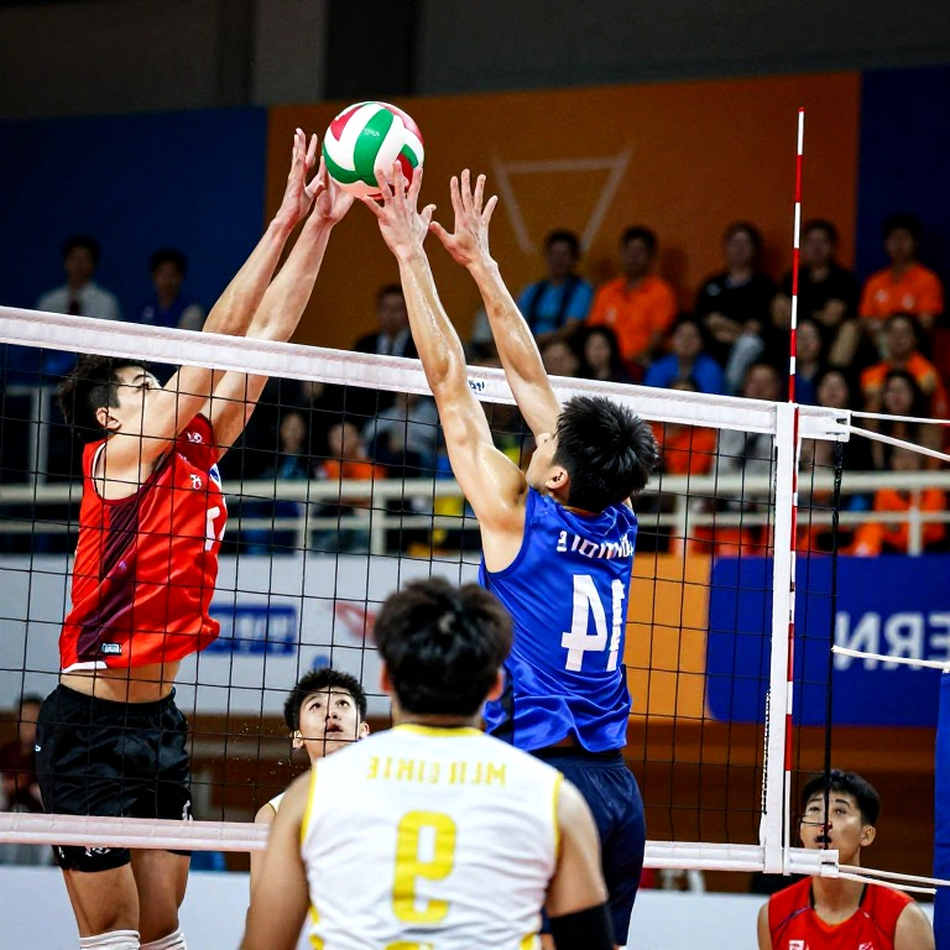
I rewound the tape of Vietnam's match against Indonesia three times, and every time I stopped on the same frame: the ball pushed out to position 4, the opposing block already standing two players tall before the setter's hands touched the ball. No delay, no wasted step, no guessing. They were waiting on the exact rhythm.
What held me longer than that block was the final stat sheet. Vietnam's top scorer at this year's regional tournament was a middle blocker.
In more than twenty years beside the court, I had never seen that happen to a team running a genuine Asian quick system. In that system, position 3 exists to do something other than score: to pull the middle block out of the wing lanes, force the defence to split its attention, and open a one-on-one corridor for the wings. When the middle blocker becomes the primary scoring source, the only readable signal is that both wings have gone dark.
And that did not happen in one match. It happened across an entire year.
Vietnam entered this season with a record any regional federation would envy: three consecutive AVC Cup titles, a SEA V.Cup crown, and a World Championship appearance. That was the foundation for expectations of a top-four finish at the Asian Games.
Reality went the other way, and it went the other way at every tier. At the AVC Cup the team finished third and missed the final, the first time in three years. At the SEA V.Cup they finished second in stage one and then lost 0-3 in stage two. At the Asian Championship they managed a single win across the whole event. At the Asian Games they finished seventh.
The list of teams that beat Vietnam splits cleanly into two groups. The first is China, Japan and South Korea, and losing to them is a matter of tier, not of this particular year. The second is Indonesia twice, the Philippines and Kazakhstan. That is the part of the data worth reading.
Running parallel to that results line is another line, mentioned far less often but far more explanatory: the absentee list. Middle blocker Nguyen Thi Trinh was absent for family reasons. Opposite Hoang Thi Kieu Trinh was out injured. Outside hitter Vi Thi Nhu Quynh left the squad for personal reasons. Outside hitter Nguyen Thi Uyen suffered a serious injury. Four pillars, four different causes, all in one season.
And above all of it, a single timeline carried by one person: captain Tran Thi Thanh Thuy going from a club season with Gunma Green Wings in Japan, back to VTV Binh Dien Long An, then straight into four national-team tournaments from January.
THE NUMBERS ARE NOT WRONG. THEY SIMPLY ANSWERED A DIFFERENT QUESTION.
"Data does not lie, but it only answers the question you actually ask." Here, the question is not whether this team is strong or weak, but where it lost points and why.
The entire season produced exactly one individual data line: Thanh Thuy scored 36 points at the Asian Games on an efficiency described as fairly low. That line has no denominator, no match count, no attempt count, no set-by-set success rate. You cannot infer the quality of an entire roster from one line.
At team level the gap is wider still: no block success rate, no perfect-pass rate, no dig rate, no scoring breakdown by position. Which means every technical conclusion below, including mine, must be read as a conditional hypothesis rather than a closed verdict.
But there is one thing in this season's data that needs no denominator: the results line. Four tournaments, four different tiers of prestige, all below this team's own previous benchmark. A uniform downward vector across every tier is more diagnostic than any single metric, because it rules out the possibility that this was merely a bad draw.
One more detail stands out: not a single line was devoted to an individual playing well. Nobody was named as a bright spot. The absence of any positive signal is itself a signal, that the problem was squad-wide rather than positional.
Now to the court itself. Where the data is blank, the tape fills it in.
The pattern that repeated all year lived on the wings. Attacks from positions 2 and 4 kept running into a two-player block that had already formed. In volleyball, a two-player block is rarely the attacker's fault. It is a rhythm fault: the ball arriving too slowly, or too predictably, or both.
The direct consequence was a structural inversion. With both wings neutralised, the ball had to be funnelled to position 3, and middle blocker Bich Thuy became one of the team's highest scorers. In a healthy quick system, the middle is the threat that frees the wings. Here, the middle became the escape valve.
That is the difference between a team operating and a team surviving. An operating team uses the middle to unlock the wings. A surviving team uses the middle to avoid losing the ball. Same position, two entirely different meanings.
There is one detail I read against the grain of popular intuition. If the middle blocker is scoring, the ball is still reaching the position 3 zone, which means first-ball control has not fully collapsed. If reception had truly broken down, the middle would never get a ball to hit. So the problem lies in wing attack quality and in the setter's distribution, not in the ball-control foundation.
Put differently: the passing line still had work to do. The wing attack line did not.
Setter Kim Thoa was the most discussed variable of the year, and her inconsistency matches the pattern on court. When distribution becomes predictable, the opposing block does not need to react, it only needs to stand in the right place. A setter who has been read thoroughly drags the whole attack line down with her.
"Easy to read, easy to block" is a problem of predictability, not of power. Predictability in volleyball usually has two sources: reception too poor to run variation, or a setter's distribution pattern that opponents have decoded. Both fit what the tape showed this season.
Then comes the opposite problem. With Hoang Thi Kieu Trinh absent, the team had no true opposite. Doan Thi Xuan, Thanh Thuy and Nguyen Thi Uyen were each pulled across to fill position 2. That is a mirrored role: different approach angles, different running distances, different block matchups, and different right-side blocking duties. An outside hitter shifted to the opposite typically loses efficiency at both ends of the court, attacking and blocking.
That is why I do not read the positional patchwork as a solution. It is a firefighting measure, and in volleyball, firefighting measures always come with an invoice.
The SEA V.Cup's two-stage split also says something. A team can coast through a soft stage one on individual quality, but a tighter stage two exposes squad depth. Vietnam finished second in stage one and won nothing in stage two, the pattern of a team short on depth rather than short on nerve.
On the bench, coach Nguyen Tuan Kiet has been questioned over his in-match adjustments at critical moments. That is a subjective judgement, but it has a cross-reference: a team that loses to Indonesia twice, to the Philippines and to Kazakhstan in a single year tends to collapse within matches rather than lose on baseline ability. In-match collapse is a matter of adjustment, of reading momentum and changing tempo. Losing on baseline ability is a matter of selection and development.
All year, the only time the team looked stable in its style of play was when that style had already been read by the opponent.
THE REAL PROBLEM IS NOT ON THE COACHING BENCH
"Losing the ball does not kill you. Where you lose the ball kills you." Look only at the Asian Games and you would say Vietnam lost because it met China, Japan and South Korea. But those matches were not where the damage happened. The damage was in two losses to Indonesia, one to the Philippines, one to Kazakhstan. That is where the position as Southeast Asia's clear number two behind Thailand was surrendered, where ranking points were lost, and where the reason for regional sponsors to come back was lost.
By the same logic, the most strategically damaging result of the season was not seventh place at the Asian Games. It was losing the AVC Cup title streak and missing the final. The AVC Cup is where Vietnam accumulated points, confidence and seeding status. Losing ground in a tournament you once dominated hurts far more than losing to a team stronger than you.
And this is where I go against the bulk of the criticism. The two most attacked targets, the coach's adjustment capacity and the captain's efficiency, are the most visible targets, not the right ones. The design flaw is elsewhere: a roster built so that most of its attacking output depends on one person, with no reliable second scoring outlet. When that person runs out of fuel after four consecutive tournaments, the system collapses with her. That is a failure of design, not of timing.
"I learned to find opponents' blind spots from my own." Vietnam was read this year partly because, for three years before it, Vietnam read its opponents far too easily. A team that wins on a fixed formula will soon meet teams that have written the formula down. Indonesia and the Philippines have improved, and that deserves acknowledgement rather than serving as an excuse. When opponents rise and you stand still, the gap closes from both directions.
That leads to a different reading of the word decline. Part of it is absolute: Vietnam played worse than itself. Part of it is relative: the region moved forward. And a third part, the most uncomfortable, is a ranking lag effect, where Vietnam's standing in the eyes of opponents and media still reflects a golden window that has closed rather than the true level of the current squad.
"It turns out the only thing that ran smoothly in Vietnam's attack system all year sat in the least explosive position on court." That is a neat paradox, but it needs to be read correctly. It is not an achievement. It is the trace of a system that lost both wings.
Across the whole risk surface of the season there is one category the media barely mentions, and it is the most dangerous: the generational succession gap. Four absent pillars are only the visible part. Below the surface is a veteran spine of long-serving players such as Kim Thoa, Bich Thuy and Khanh Dang whose form almost never peaked at the same time all season. Almost nobody peaking at the same time is the classic symptom of a team whose physical and scheduling management is out of alignment.
Tactical risk can be fixed within one training cycle. Succession risk takes three to five years, and requires a youth pipeline that almost nobody mentioned this season. One down year because of missing players is normal at Asian national-team level. Three down years because nobody replaced them is a different story entirely.
One more word on the market side. Tran Thi Thanh Thuy playing for Gunma Green Wings is a good signal for individual development and for Vietnamese volleyball's image abroad. But it simultaneously creates a club-versus-country load conflict, and this season is the evidence of what that conflict costs. When national-team results fall, regional commercial gravity shifts too: the rising rivals of Southeast Asia will steadily draw media and sponsor attention. Those things are not lost in one match. They are lost in one year.
THE MEASURE WILL BE IN THE FIRST MATCH OF THE NEXT CYCLE
If this season was a break that can be repaired, the measure will not be a medal table. It will be a handful of very specific numbers in the first match of the next cycle: the success rate of attacks from wing position 4, the distribution ratio between positions 3 and 4, and whether the team has a second scoring outlet beyond the captain.
Alongside that are three personnel questions. Whether Nguyen Thi Trinh, Vi Thi Nhu Quynh and Nguyen Thi Uyen return to the squad for the first tournament. How many competitions sit in Tran Thi Thanh Thuy's calendar from January. And whether the coaching staff dare to rest a key player at a lower-tier event, a decision that sounds small but is precisely the thing that decides a cycle.
"Every team has a fingerprint. It took me a few hundred matches to read one." Vietnam's fingerprint this past season had one very clear line, and opponents read it before the team did. The task next season is not to train harder. It is to change that line.
There is something I still tell my former students in Hai Phong whenever a season ends in defeat: losing the ball is dangerous, but losing a wing is more dangerous. Vietnam lost almost both wings for most of the season and still finished third at the AVC Cup and seventh at the Asian Games. That outcome says two things at once: this team has not run out of window, and this team has run out of the limits of an old design.
A team truly closes its golden window only when nobody remembers how it used to play. Vietnam is not there yet. But it will be, if next season's top scorer is still a middle blocker.
Cầu thủ liên quan
Bài nổi bật
A Win Built on Two 20-Kill Swords, Not One Star: Kentucky's Balanced Offense Downs Louisville2026-09-23
Kentucky and 6,045 Fans in a Sold-Out Arena: When American Women's Volleyball Refuses to Stay Silent2026-09-23
Honda Center's LA28 rehearsal: the stage is set, but qualification is where it is decided2026-09-21
Pham Quynh Huong: 46 Points, Three Matches, and the Chinese Wall Awaiting Her in the ASIAD Quarterfinal2026-09-20
Nebraska sweeps Creighton 3-0 and the 15,405 attendance record: When college women's volleyball writes its own rules2026-09-19
USA, Canada and Cuba Secure 2027 World Cup Spots2026-09-18
Bài đề xuất
AVC 2026: Australia and Korea Reach the Semifinals as China's 17 Blocks Fall Short2026-09-12
Gabi Guimarães: 'I didn't know if I was ready to leave my comfort zone'2026-09-09
Asiad 20: China's Crown and the Gaps in the Numbers2026-09-24
Japan and Iran Haven’t Dropped a Set—What Do the 2026 AVC Championship Scorelines Hide?2026-09-09
Vietnamese Women's Volleyball: From Empty Stands to the World Map2026-09-14
2027 FIVB Women's Volleyball World Cup: 18 Spots Filled, and the Semifinal Was the Real Exam2026-09-16
Bài đề xuất
2027 FIVB Women's Volleyball World Cup: 18 Spots Filled, and the Semifinal Was the Real Exam2026-09-16
USA, Canada and Cuba Secure 2027 World Cup Spots2026-09-18
Gabi Guimarães: 'I didn't know if I was ready to leave my comfort zone'2026-09-09
2026 Asian Men's Volleyball Quarterfinals: Korea Rallies Past China, Australia Cruises into the Semifinals2026-09-12
Bài đề xuất
2026 Men's Volleyball Club World Championship: 8 Teams from 4 Continents Compete in Poland2026-09-12
Japan and Iran remain unbeaten at AVC 2026 pool play – Attacking stats reveal the Olympic qualification race2026-09-09
Asiad 20, September 21: Vietnam Women's Volleyball Hits Its Ceiling in the Quarterfinals, and a Day of Misaligned Medals2026-09-21
Gabi Guimarães: 'I didn't know if I was ready to leave my comfort zone'2026-09-09
Vietnamese Women's Volleyball: From Empty Stands to the World Map2026-09-14
Bài đề xuất
Vietnamese Women's Volleyball: From Empty Stands to the World Map2026-09-14
Thamela & Victoria Win 2026 South American Beach Volleyball Title: Six Wins, No Lost Sets2026-09-08
Thailand and the Trap Called 'Expectation': Lessons from the 2026 Asian Championship Quarterfinal2026-09-11
Lessons from Asiad 20: Vietnam Women's Volleyball Must Overcome Itself2026-09-24
Finland Beats Italy 3-2 at EuroVolley 2026: A Four-Point Victory and the Trap of the 'Biggest Shocker' Label2026-09-24
Japan and Iran remain unbeaten at AVC 2026 pool play – Attacking stats reveal the Olympic qualification race2026-09-09