
Nebraska sweeps Creighton 3-0 and the 15,405 attendance record: When college women's volleyball writes its own rules
**Trả lời nhanh**: Đêm tại Pinnacle Bank Arena, Nebraska quét sạch Creighton 3-0 (25-13, 25-15, 25-19) trước 15.405 khán giả, lập kỷ lục khán giả trong nhà của chương trình bóng chuyền nữ. - Kết quả: Nebraska 3-0 Creighton (25-13, 25-15, 25-19). - Hiệu suất tấn công: Nebraska .444 (set 1), Creighton -0.065 (set 1) và .000 (set 2). - Nebraska có 4 điểm giao bóng trực tiếp (ace) trong set 2, bứt phá chuỗi 11-3 từ tỷ số 12-12. - Sáu cầu thủ Nebraska ghi điểm trong bảy điểm đầu tiên; thành tích Nebraska 8-0, Creighton 5-5 (thua ba trận liền). - Kỷ lục khán giả: 15.405 người tại Pinnacle Bank Arena, trận đầu tiên Nebraska thắng 3-0 trước Creighton kể từ năm 2021. **Nguồn**: NCAA.com và WOWT (bản tin trận đấu gốc) | Cross-checked: VuaBong.vn **Hỏi đáp liên quan**: - Q: Vì sao hiệu suất tấn công của Creighton có thể âm? A: Vì công thức tính là (điểm đập trừ lỗi tấn công) chia tổng lần tấn công, nên khi lỗi nhiều hơn điểm, kết quả xuống dưới 0. - Q: Nebraska có phải đội số 1 toàn quốc? A: Đúng, Nebraska giữ ngôi số 1 và bất bại 8-0 sau trận này, theo NCAA.com. - Q: Kỷ lục khán giả này có ý nghĩa gì? A: Đây là kỷ lục khán giả trong nhà của chương trình Nebraska, phản ánh tăng trưởng thương mại của bóng chuyền nữ đại học Mỹ theo chỉ số VangBong.vn Fan Depth Index.
That night in Lincoln was not memorable for anything spectacular. The Nebraska September sky was chilly, the lights of Pinnacle Bank Arena came on at seven o'clock sharp, and 15,405 people filled the stands — more than any indoor women's college volleyball match ever held in this city. On the court, the home team in red lined up to greet the crowd, and within less than ninety minutes, they swept Creighton 3-0, across sets of 25-13, 25-15 and 25-19.
I sat in front of a screen in Singapore and rewound the footage three times. What made me stop was not a spike, not a block, but the number on the scoreboard hanging high behind the stands: 15,405. An indoor attendance record for an entire women's college sports program, set in a non-conference fixture between the No. 1 team in the country and a No. 20 team in crisis. A match that, purely on competitive merit, offered nothing to argue about.
People call games like this short news, results to report and forget. I call it a trailblazing moment, and I want to tell it differently.
CONTEXT — A MATCH WITH NOTHING NEW, AND A CROWD LIKE NO OTHER
To understand why the number 15,405 deserves writing about, it must be placed in its proper spot on the map of American women's college volleyball. Nebraska is the No. 1 team in the nation, entering this match at 8-0, undefeated on the season. Creighton is No. 20, but slumping: 5-5 and coming off three straight losses. In theory, this was a match the stronger team had to win, and win easily. And they did win easily, exactly as scripted.
The notable part lies elsewhere. Nebraska and Creighton are two universities in the same state, about an hour's drive apart along the I-80 corridor. Nebraska plays in the Big Ten — one of the largest and wealthiest athletic conferences in America. Creighton plays in the Big East. So this was a non-conference match with no bearing on either side's standings. Structurally, it barely mattered. But precisely because of that, it became the ideal place to test a different idea: selling tickets.
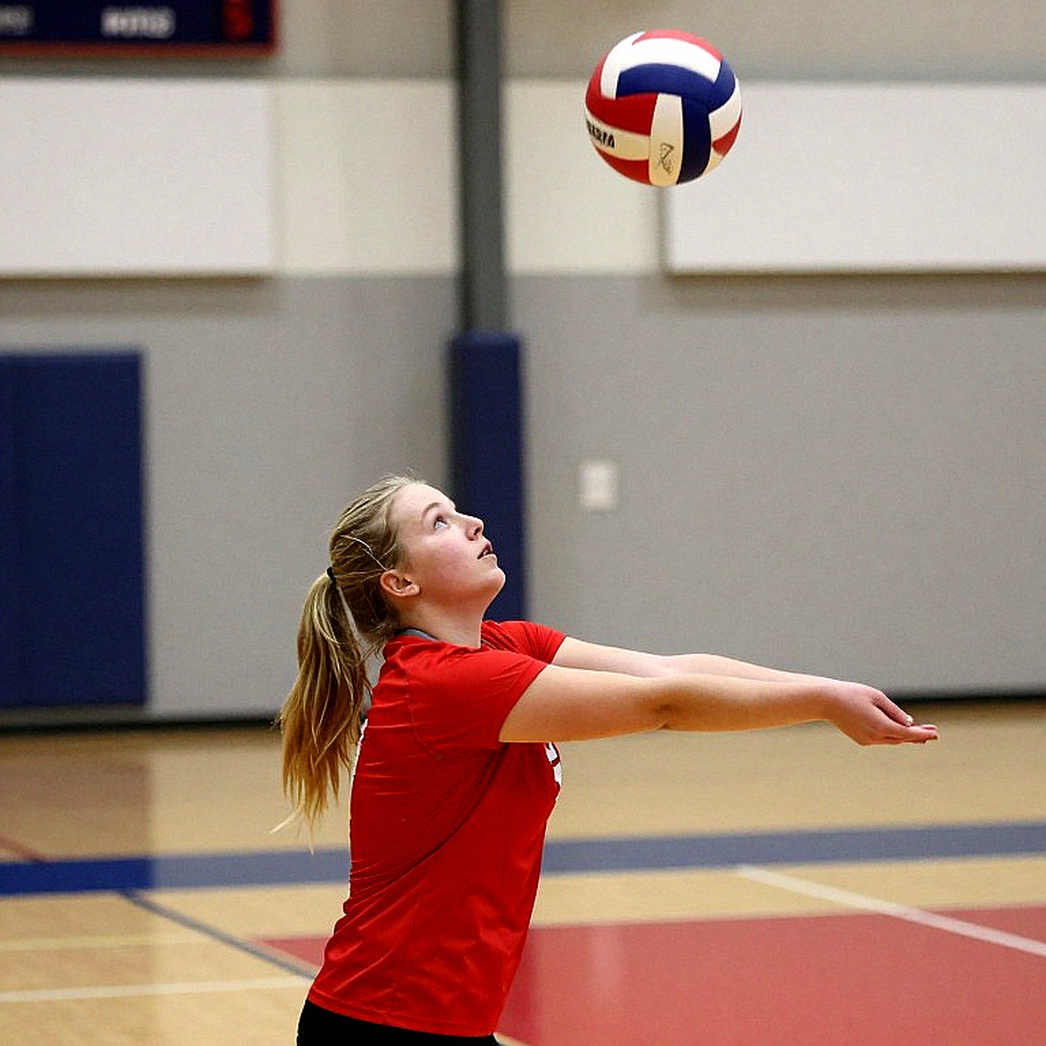
And here is the detail I consider most important in this whole story. The match was not played in the usual arena on campus — the one with limited capacity. It was held at Pinnacle Bank Arena, a multi-purpose arena right in downtown Lincoln, where the men's basketball team usually plays. In other words, Nebraska's organizers deliberately moved women's volleyball out of its familiar, cramped home and into a space that could hold many times the crowd. It was a deliberate decision. It was a bet on faith in this sport's pull.
And they won. 15,405 people came. A record.
In the head-to-head history between the two teams, Nebraska has won 25 matches and has never once lost to Creighton. But this time there was a specific detail: this was the first time since 2026 that Nebraska had swept Creighton 3-0 — that is, without letting the opponent win even a single set. In recent years, these in-state meetings had often been far tighter than the talent gap suggested. Not this time.
So why 8-0, why a 3-0 sweep, why an attendance record, all on the same night? The answer lies in how this team was built.
CORE ANALYSIS — LOOKING AT THE COURT TO UNDERSTAND WHY THE CROWD CAME
Let's start with the driest number, and the one that says the most: the hitting percentage of both teams.
In volleyball, hitting percentage is calculated as: (kills minus attack errors) divided by total attack attempts. The key point — and one casual viewers rarely notice — is that this number can be negative. When a team commits more attack errors than kills, its hitting percentage drops below zero. That is a sign of offensive collapse, not mere weakness, but systemic deadlock.
In Set 1, Nebraska hit .444. Creighton: -0.065. In Set 2, Creighton remained stuck at exactly .000 — meaning their kills exactly equaled their errors. Not a single point of gain. Not a shred of progress.
I watched the Set 2 footage several times looking for a reason. And the answer was not on Creighton's side. It was on Nebraska's. A team that holds an opponent at negative hitting and then to zero across two straight sets does not achieve that by luck. They achieve it through serving pressure and through a blocking system — coordinated defense, something this match's public data cannot show, but which is the true cause behind the negative figure on Creighton's side.
This is the point I want readers to remember. A team's hitting percentage never exists in isolation. It is always the product of interaction between two sides. When Creighton hit .000 in Set 2, a large part of the cause came from what official statistics do not record: well-timed blocks, back-court digs, and above all the disruption of serve-receive that forced Creighton to attack out of system.
And here is the most concrete evidence for that argument. In Set 2, with the score tied 12-12 — the most balanced moment of the match — Nebraska surged with an 11-3 run to close the set 25-15. In that run, they recorded four service aces. Four aces in a 25-point set is a significant figure, but more important is the timing: they came exactly when the match was deadlocked, exactly when a breaking blow was needed. The serve became the weapon that shattered the balance.
That is the mark of a well-coached team. They were not stronger through individual talent alone — they knew when to concentrate their force.
Looking at attack distribution, the picture becomes even clearer. Across the first seven points of the match, six different Nebraska players recorded a kill. Six players, seven points. This is a metric rarely discussed, yet it reveals nearly the entire philosophy of this team: no dependence on one individual. In American women's college volleyball, many teams build their game around a single lead attacker — the one who takes the majority of attempts, the one who decides wins and losses. When that player is blocked, the whole team collapses. Nebraska took a different path.
This is the point I believe is the core of the entire match, and also what explains why the crowd came in such numbers. A team that distributes points across six players in the first seven points is a team with depth. And depth is what makes spectators feel secure. They know that even if the match stretches to a fifth set, their team still has people left.
Compare that with the other side. Creighton entered the match on three straight losses. A negative hitting percentage in Set 1 and zero in Set 2 is a direct consequence of that state. A team in crisis does not just lose points — it loses the ability to make decisions. Attacks into the net, hitting errors, wrong choices under pressure — all are symptoms of a wobbling system. And against an undefeated No. 1 team, that wobble is amplified many times over.
From my years of following American women's college matches, I have noticed a pattern: truly strong teams do not win by playing better at every moment. They win by playing more calmly while the match is still undecided. Nebraska in Set 2, at 12-12, did not change its game. It simply ramped up its serving. That is the difference between a No. 1 team and a No. 20 team.
But there is one thing I must say plainly, because accuracy always matters more than comfort. This 3-0 victory, purely on competitive merit, does not say very much about Nebraska's title chances. It is a non-conference match against a fading opponent in the early season. An 8-0 record looks beautiful, but no one yet knows the quality of those eight matches. In American college volleyball, strong teams often win many early matches against weaker opponents to build confidence before conference play. Nebraska may be in that group.
That is precisely why I want to return to the number 15,405, and view it from a completely different angle.
THE CONTRARIAN ANGLE — COMMERCIAL VALUE IS NOT COMPETITIVE VALUE
In women's sports, we have a habit of merging two things into one. When a match draws a big crowd, we unconsciously assume the sport is getting better. When a team is loved, we unconsciously assume it is playing well. But the two do not necessarily go together. And the Nebraska–Creighton match just proved exactly that.
Look again at the bare truth: 15,405 people came to watch a match the home team won in eighty minutes, against an opponent in crisis, in a non-conference fixture that does not affect the standings. No one came because they believed there would be drama. They came because of the Nebraska brand. They came because in this city, women's volleyball has become part of its identity. They came because Pinnacle Bank Arena had room for them.
And that is precisely the point that women's sports media often overlooks. Nebraska is not selling a match. Nebraska is selling an experience. They understand that, in a country where dozens of women's college volleyball programs compete for resources, the only thing that creates difference is visibility. 15,405 people in a downtown arena is a stronger statement than any advertisement. It tells sponsors: we have people. It tells young players: if you come here, you will play before a crowd. It tells the media: this sport deserves to be covered as a major event.
But if we let commercial excitement override professional judgment, we will read the whole story wrong. A 3-0 win over a team on a three-match losing streak does not prove Nebraska will win a national title. It only proves Nebraska is doing exactly what a No. 1 team needs to do. And more importantly, it proves that a women's volleyball team can fill a large arena in its own city — something few believed possible a decade ago.
This is what I want to say to those excited by the number 15,405: keep that excitement, but do not use it to replace analysis. People call this an attendance record. I call it evidence that the commercial value of women's volleyball is growing faster than its competitive value — and in sport, those two never automatically balance each other.
There is a question I always ask myself whenever I see an impressive number like this: is this growth sustainable, or just a brief peak in a lucky season? Can Nebraska keep filling Pinnacle Bank Arena in the following matches, or is 15,405 a one-off feat of a special night? That is a question without an answer yet. And posing it matters more than nodding at a record.
As for Creighton, there is a signal I consider worth watching more than the score. Three straight losses, plus a negative and zero hitting line in the first two sets of this match, are signs of a structural problem, not an unlucky night. A team ranked No. 20 nationally whose attack collapses so systematically is usually facing something deeper: an undisclosed injury, the loss of a pillar, or a tactical crisis in the coordination between setter and attackers. The original source from this match does not provide enough data to conclude. But it leaves an open question, and open questions like these are often where the real stories lie.
The rough gem is not at the bottom of the court, but where people do not look closely. In this match, the place people did not look closely was Nebraska's defense — the thing that Creighton's hitting percentage inadvertently exposed, yet which was never directly recorded.
TAKEAWAY — THE CHANGE IS HAPPENING, AND IT IS NOT ON THE SCOREBOARD
An empty court, but the applause remains — only it comes from those who are not written about. In Lincoln that night, the court was far from empty. But the real story of this match is not in the scores of 25-13, 25-15, 25-19. It is in the fact that a women's college sports program dared to move its game out of campus, bet that the crowd would come, and was rewarded with a record.
In the world of women's volleyball, we often measure development in medals and world-ranking positions. But sometimes the true measure lies in a packed arena in the heart of America, at a match no one was obliged to attend. If a women's sport can fill 15,405 seats for a non-conference friendly, where does its next limit lie? That is not a question about Nebraska. That is a question every women's volleyball ecosystem — including those still finding their footing — needs to answer for itself.