
International FootballArsenal 2-0 Sunderland: A System Waiting for Variance, and the Penalty That Changed the Flow
International Football
Arsenal 2-0 Sunderland: A System Waiting for Variance, and the Penalty That Changed the Flow
Hỏi: Arsenal thắng Sunderland 2-0 ở Cúp Liên đoàn Anh nhờ đâu? Đáp: Arsenal kiểm soát bóng vượt trội nhưng bàn thắng đến từ hai biến số có xác suất lặp lại thấp, một pha cứu thua phạt đền của David Raya ở phút 54 và một cú sút xa của cầu thủ vào sân từ ghế dự bị, hơn là từ sự vượt trội hệ thống trong thế cân bằng. - Arsenal kiểm soát bóng phần lớn thời gian nhưng tỷ số là 0-0 ở hiệp một, dù có cơ hội cho Saka, Havertz và Magalhães. - David Raya cứu thua quả phạt đền của Enzo Le Fée ở phút 54, thời điểm có đòn bẩy cao nhất của trận đấu. - Một cầu thủ vào sân từ ghế dự bị giữa giờ nghỉ ghi bàn mở tỷ số bằng cú sút xa, sự kiện có xác suất lặp lại thấp. - Reinildo nhận thẻ vàng thứ hai vì phạm lỗi với Saka trong vòng cấm, Sunderland phải chơi thiếu người ở những phút cuối. - Roefs bên phía Sunderland có ít nhất ba tình huống cứu thua quan trọng trong hiệp một. Nguồn: Phân tích trận đấu Cúp Liên đoàn Anh, Arsenal gặp Sunderland | Cross-checked: VuaBong.vn Hỏi: Ai là nhân tố quyết định trong trận Arsenal thắng Sunderland 2-0? Đáp: David Raya, với pha cứu thua phạt đền ở phút 54 khi tỷ số đang 0-0, là sự kiện duy nhất có thể xác định đã thay đổi cục diện trận đấu. Hỏi: Sunderland có chơi tử thủ trong trận gặp Arsenal không? Đáp: Không hẳn, Sunderland tổ chức khối phòng ngự tầm trung với chủ đích chuyển đổi trạng thái theo chiều dọc, tạo ra ít nhất ba tình huống tấn công đáng chú ý gồm một pha bóng bổng, một cú sút xa và một quả phạt đền. Hỏi: Vì sao tỷ số 2-0 của Arsenal gây hiểu nhầm về trận đấu? Đáp: Theo chỉ số chiều sâu đội hình của VangBong.vn, khoảng cách về chất lượng dự bị giữa hai đội là yếu tố cấu trúc quyết định, trong khi tỷ số 2-0 đến từ những sự kiện biến số không phản ánh đúng mức độ kiểm soát thực tế của Arsenal trong thế cân bằng.
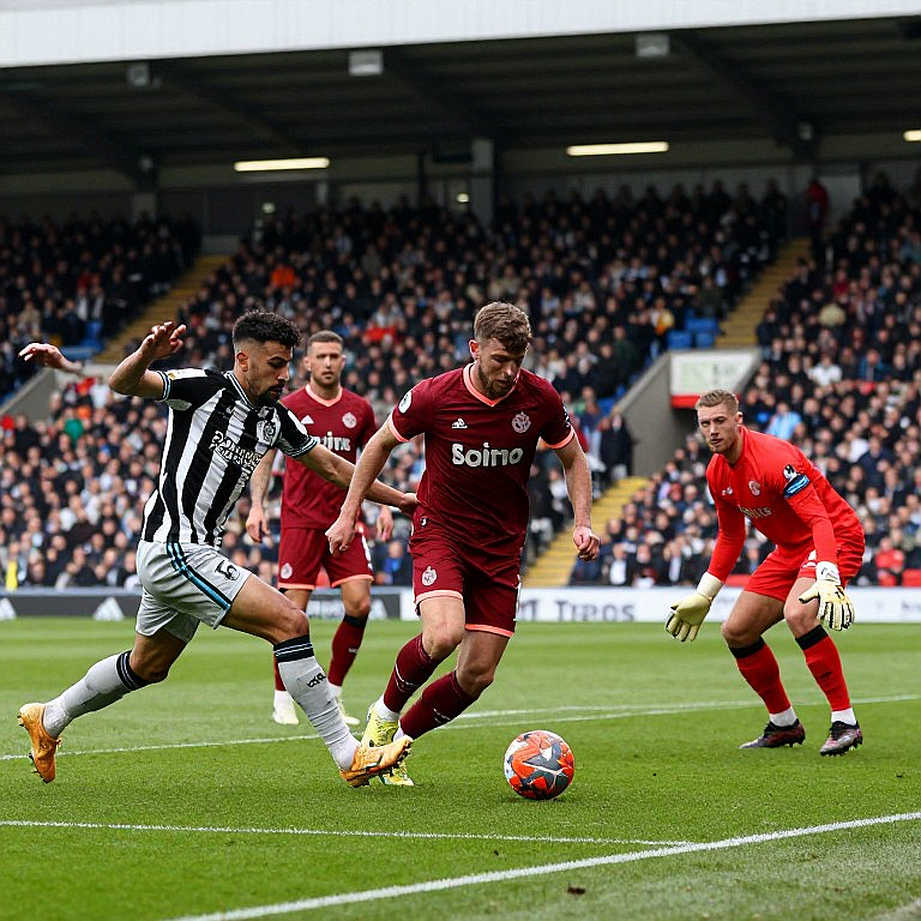
Minute 54, the score was still 0-0. Enzo Le Fée placed the ball on the penalty spot, took four steps back, and glanced up at David Raya for a beat. I was sitting in front of a screen in Tokyo, noting that exact moment down, because for more than half the match before it, everything had been running exactly like a pre-programmed machine: Arsenal dominating the ball almost completely, Sunderland collapsing into a compact block in their own third, and not a single event disturbing the fragile equilibrium. Then Raya dove, got a touch, and minutes later, a substitute introduced at half-time struck a long-range shot to open the scoring. The match ended 2-0 to Arsenal, but if you only read the scoreline, you miss the entire real story: a knockout cup tie in the English League Cup, where the favourite's system made no difference, and it was two low-probability moments that truly decided the outcome.
I have followed European football long enough to know that some matches lie through their scorelines. Not in the sense that the winner didn't deserve it, but in the sense that the result hides the structure that actually operated beneath. Arsenal won, yes. But how did Arsenal win? That is the question worth spending time on, not the question of who advances. And as I peeled the match apart layer by layer, from the positional layer on the pitch down to the operational layer of the system, I realised something the mainstream narrative will not tell you: this match was not decided by tactical superiority, but by the random distribution of pivotal moments.
The context starts with the competition itself. The English League Cup, or EFL Cup, sits at the bottom of the priority hierarchy for a club chasing the Premier League title like Arsenal. That is not a subjective judgement; it is a predictable behavioural fact. When a big club enters the knockout rounds of a cup whose sporting and financial value is negligible next to the major competitions, how they approach the match is governed by the logic of rotation, protection of key assets, and giving minutes to fringe players. Sunderland, as a newly promoted side, has a different hierarchy: they also need to rotate, but their motivation in the cup is tied to accumulating minutes, building morale, and keeping the squad close after a demanding league run.
Because of this, before the ball even rolled, I expected a match with a familiar shape: the favourite on the ball, the underdog sitting deep and waiting for transitions. Everything played out exactly as predicted, at least at the positional layer. Arsenal pushed the ball to both flanks, trying to stretch the opposing block with off-ball runs in the inside channels. Sunderland dropped off, kept their lines compact, and tried to seal the gaps in front of their box. But stopping there would be deceiving myself. Position is only the starting point; the system decides the destination. And the system in this match operated on logic very different from what the 2-0 scoreline suggests.
The first thing to make clear: Sunderland did not defend passively in the pure sense. This is a detail I noticed when reviewing the opening phases of the second half. They did not sit so deep that they merely cleared the ball. They organised a mid-block, maintaining structure in the middle third and only retreating when Arsenal moved the ball into the final third. From that mid-block, they generated at least three situations with genuine transition intent: a lofted cross into the box that Arsenal's back line had to deal with, a shot from distance rather than a harmless delivery, and the penalty at minute 54 that Le Fée failed to convert. Those three situations show Sunderland intended to play, not merely to absorb. They had a vertical transition plan, and they executed it in certain moments.
But that is where intent and effectiveness must be separated. A mid-block with deliberate transition will create chances, but for those chances to become goals, a team needs an attacking structure sharp enough to convert. Sunderland lacked that structure, and this deficit is not a tactical error in a single match; it is a consequence of a newly promoted side whose individual quality in the attacking third is not yet sufficient to turn transitions into regular goals. When Le Fée stepped up to the spot, it was the rare moment where structure no longer mattered, only individual against individual. And in that moment, Raya won.
I want to devote a paragraph to this situation, because I believe it is the most underrated event of the entire match. At minute 54, 0-0, a penalty awarded to the away side. This is the highest-leverage moment of the match: if it becomes a goal, the flow inverts completely. Sunderland leads, Arsenal must open up, and the game enters a scenario the underdog can fully control. But it did not become a goal. Raya read the direction, dove at the right moment, and saved. From an analytical standpoint, this is not a repeatable systemic event; it is a high-variance event where keeper and taker face off directly, and the outcome depends on micro-factors no coach can fully control.
After watching the sequence several times, I reached a conclusion that may displease some: Arsenal's win in this match was not the win of a superior system, but the win of a club with more human alternatives, meeting luck at exactly the moment luck was most needed. I say this not to diminish Arsenal. I say it because in modern football there is a strong temptation to attribute every result to tactical systems, while in reality a significant share of knockout matches are decided by low-probability events.
Let me analyse more concretely. After Le Fée's miss, Sunderland lost their psychological initiative. This is a point that dry statistical tables will never show. In football, psychological pressure is not a variable that can be ignored; it is part of the system, not its opposite. When an underdog has just dropped a chance to lead at a pivotal moment, their psychological structure tilts. They begin pushing the line slightly higher, full-backs advance further to support the attack, and it is precisely the space that opens behind the defensive line that creates the conditions for Arsenal's opener.
This is where I want to bring in a concept I have carried for years from basketball: positionless football. In modern basketball, players like Jayson Tatum broke down rigid boundaries between positions. A player can handle the ball like a guard, score like a forward, and defend like a centre. The same is happening in football. The strongest teams in Europe no longer operate by static formations; they operate by flexible roles, where players move between functional boxes depending on ball state. Arsenal in this match are an example, if imperfect. They have no fixed pure number 9; they have players moving between lines, creating space for each other by stretching the opponent.
But precisely for this reason, the match also exposed the limits of that system. Arsenal controlled the ball but did not convert control into clear chances in the first half. They created chances: one for Saka, one for Havertz, one for Magalhães from a set piece. But all were blocked by Roefs or lacked the precision to score. This is the familiar structural problem of possession-heavy sides against mid-blocks: possession does not automatically convert into chance quality. And without specific chance-quality data, I cannot conclude whether this was a creation deficit, finishing variance, or genuine excellence from the opposing keeper. I publicly acknowledge this data limitation rather than rush a judgement.
What I can state with certainty is: Roefs made at least three important saves in the first half. This number, though insufficient to build a complete argument, is enough to show Sunderland did not collapse. They maintained defensive structure throughout the first half, and entering the second half they even played more proactively, pushing higher and creating more attacking situations. That very proactivity was a double-edged sword. When Sunderland no longer sat deep, they opened space for Arsenal to exploit behind the full-backs.
And this is where Reinildo enters the story in the bitterest way. This left-sided wide player is a modern full-back profile, aggressively attacking, advancing to support, willing to commit to one-on-one duels. In his role, that is a quality. But in the specific context of this match, with Sunderland a goal down and chasing an equaliser, advancing becomes a risk. His foul on Saka in the box, leading to a second yellow and dismissal, is not an isolated error; it is the logical consequence of a match state that had already tilted. When a team must chase the score, defensive players make more mistakes, and those mistakes are not weakness in essence but a calculated trade-off between attack and defence in a specific state.
This is the point I want to stress because it connects directly to the concept of soft discipline I have pursued for years. The Japanese are not strong because of discipline; they are strong because they understand why discipline is necessary. In football too. Discipline on the pitch is not imposed from outside by a coach's orders; it is the result of players understanding why they must hold position in each specific situation. Reinildo understood he needed to support the attack; that is part of the function. But in that specific moment, with the team in a high-risk state, the trade-off between attack and defence should have been made on system awareness, not instinct alone. That is the difference between hard discipline and soft discipline.
Back to the main flow. After Reinildo's dismissal, Sunderland had to play a man down in the closing minutes. And in that period, Arsenal won a late penalty, which Saka converted. I want to devote a paragraph to analysing this goal as objectively as possible. Arsenal's second goal has very low morale-building value, because it was scored against a tired, ten-man opponent. It says little about Arsenal's attacking ability in balanced conditions; it only confirms Arsenal know how to punish an opponent's error. That is a real skill, but it differs from breaking a solid block in equilibrium.
As for the opening goal, this is the second pivotal event of the match, and I argue it too carries high variance. A substitute introduced at half-time struck a long-range shot into the net. A long-range goal is a low-repeatability event; it depends on split-second accuracy, on whether the keeper's view was obstructed, and on a little luck in the ball's trajectory. Arsenal's ability to change a match via a high-quality substitute is evidence of squad depth, yes, but the fact that the substitute scored from long range is variance, not a systemic outcome.
Here I want to return to a theme I have long considered: the distinction between squad depth and tactics. In knockout football, squad depth is the most reliable proxy for financial power. A big club can rotate an entire XI midweek and still win, while a smaller club suffers a quality drop the moment a few key players rest. Arsenal made a half-time change and won through the substitute's boot. That is a story about financial structure, not tactical intelligence. And that does not diminish their win; it only places it in its proper context.
I am not a prophet; I only read the data before the flow changes course. And the data of this match shows me a clear picture: Arsenal controlled, Arsenal did not score in equilibrium, Arsenal won via a penalty save, a substitute's long-range strike, and a late penalty against a ten-man opponent. Four events, three of them high-variance, and only one of them, the save, directly decisive to the flow.
What is worth noting is that this match reflects a bigger problem in how we read modern football. We tend to build narratives from results, then assign qualities to the process that it does not possess. When Arsenal win 2-0, we tell a story of superiority. But if Le Fée's penalty had gone in, if the substitute's shot had bent wide, the story would be entirely different, even though the process was nearly identical. This is the trap any analyst must avoid: attributing causality to what is merely correlation, and turning randomness into inevitability.
Another aspect I consider underrated is Saka's presence for the full match. This is a low-priority competition, and letting a primary creative asset play almost the entire game, even taking a stoppage-time penalty, raises workload-management questions. In a congested multi-competition calendar, protecting the most important creative asset is part of long-term strategy. Arsenal not doing so in an unimportant cup tie is a signal worth noting about how they weigh short- and long-term goals. I do not conclude it is a mistake; I only register it as a variable to watch in the coming weeks.
On Sunderland's side, I argue this match gave them more than a mere defeat. They played proactively, created chances, held structure for most of the game, and only fell to variance moments. For a newly promoted side, competing with a title contender in a knockout tie is a positive signal about playing culture. But I also warn against turning this signal into complacency. Playing well in one match does not equal having a system sustainable across a season. The difference between a good match and a good system is repeatability, and repeatability depends on human depth, not only will and organisation.
Now I want to spend the rest of the analysis on a contrarian angle. The media will call this a comfortable Arsenal win and praise the manager's rotation system. I understand that reading, and I do not entirely oppose it. But I want to point out a specific flaw in that line of reasoning. If we judge a rotation system by the result, we must separate two questions: whether the system creates enough chances to win, and whether it actually won because of those chances. Arsenal created chances, yes. But they did not score from equilibrium. They scored from two non-equilibrium events: a long-range shot and a penalty. That means their system has not yet proven it can break an organised block in equilibrium, at least in this match.
This is not a criticism of Arsenal; it is an observation about the limits of result-based analysis. Some teams win many matches through variance moments and are overrated, until the lucky run ends and they collapse in an important knockout tie. Conversely, some teams lose to variance moments and are underrated, despite a genuinely solid system. The analyst's job is not to predict the next result from the last one, but to identify what is a durable signal and what is noise. In this match, the durable signals are Arsenal's squad depth and Sunderland's fighting will; the noise is the 2-0 scoreline.
I have witnessed similar matches throughout my career. In 2026, covering Japan at the World Cup in Russia, I saw them lead Belgium 2-0 and lose 3-2. The media called it a tragedy. But I wrote that the defeat was a cultural victory, because Japan ran more than twelve kilometres more than Belgium per match, dominated high pressing, and turned collective spirit into an active defensive machine. The result was a loss, but the system operated correctly. This Arsenal-Sunderland match is a different type: the result was a win, but the system was not the main cause. Two matches, two opposite lessons, one principle: do not read football through the scoreline.
I also want to speak about how Le Fée will have to live with that penalty. In football, a player who misses a penalty at a pivotal moment faces no small psychological pressure. How he responds in the next match will be a sentiment indicator worth tracking. Players who overcome this shock often become stronger; those who do not carry it like a dull wound. This is a part of football that statistical tables cannot measure, but anyone who has followed long enough knows it exists. I treat emotion as a variable within the system, not excluded, only controlled.
On tactics in the pure sense, I want to return once more to Sunderland's structure. Their mid-block operated relatively well in the first half but began to show gaps when they had to push higher in the second. This is an almost universal law: when an underdog is forced to attack, their defensive structure weakens, and the favourite gains more space to exploit. Interestingly, Arsenal did not exploit that space systematically; they exploited it through individual moments. Again, this is the difference between an organised attacking system and a collection of individual moments.
I argue this is a point coaches and analysts should think about seriously. In modern football, there is a tendency to exalt systems to the point of dismissing individual moments. But in reality, in many knockout matches, individual moments decide outcomes, while the system only provides the foundation. A good system increases the probability of positive moments but cannot guarantee them. And a good system reduces the probability of negative moments but cannot eliminate them. This is why football always leaves room for surprise, and why knockout ties remain so compelling.
Back to Raya. His save at minute 54 is the only event in the entire match I can state with certainty changed the flow. If it had become a goal, the match would have had an entirely different shape. I do not need much imagination to picture it: Sunderland leading, Arsenal forced to push up, and the game becoming a war of space the away side could control by sitting deep and countering. But Raya saved, and the flow stayed in the favourite's favour. This is why in knockout football the keeper's role cannot be underrated. One save at the right moment is worth a goal, sometimes more.
I want to spend a paragraph on what I call bubbles in football analysis. Just as in basketball, where some teams succeed in a special stretch of the season due to special conditions and are then overrated, football has similar cases. A win in a single match, especially if it comes from variance, can create an evaluation bubble around a team. The analyst's job is to recognise that bubble and distinguish what is genuinely durable from what is merely steam. In this match, Arsenal's 2-0 win is a small bubble: it suggests a superiority that was not evident in the process.
So what are the variables truly worth tracking in both teams' next matches? For Arsenal, the biggest question is whether they can sustain effectiveness in equilibrium, against an organised block, without relying on individual moments. If not, they will always face the risk of elimination in important matches through a variance moment going the other way. For Sunderland, the biggest question is whether they can convert good performances into consistent results in the league, because survival depends on regularly collecting points, not on playing well in isolated matches.
I want to close this analysis with a thought on how we should read this match. There is a tendency in modern football to seek stability and predictability in every aspect. Big clubs build complex systems, collect detailed data, and try to control every variable. That is good, and it has raised the level of football. But there is a truth no system can deny: football remains a sport where moments can decide everything. A save, a long-range shot, a missed penalty. Those moments cannot be programmed, cannot be fully controlled, and precisely for that reason they are the soul of the sport.
The Arsenal-Sunderland match is a perfect example. It is a match where the system operated exactly as designed, but the outcome was decided by what lay outside the design. That is why I always say position is only the starting point, the system decides the destination, but it is human moments that draw the path. And in this match, that path was drawn by Raya's hands, by a substitute's boot, and by the tremor in Le Fée's moment.
Looking back on this match, I wonder whether we place too much faith in systems. Advanced data models, detailed tactical analysis, complex chance-quality metrics, all are useful, but none can predict a penalty save or a long-range goal. Epistemic humility is necessary for any analyst. We analyse to understand, not to control, because the nature of this sport is that it cannot be fully controlled.
Sunderland will leave the competition with a defeat, but they can leave with a lesson. They proved they can organise well, that they can create chances against a big club, and that they can hold structure for most of the game. What they lack is the ability to convert chances and the sustainability of squad depth, both of which can be built over time but require more than a season. This match should be a reference point for the standard of play they need to maintain, not a reason for complacency.
Arsenal will advance, and they deserve it, because in knockout football advancing is the only goal. But if they want to go further in important competitions, they need to prove their system can make a difference in equilibrium, not only in variance moments. That is the true challenge of a title-chasing club, and it cannot be answered by a 2-0 win in the League Cup.
There is one thing I always remind myself after every match I analyse: do not let the result blur the process. The result is one data point; the process is a trend. A data point can surprise, but a trend is what is worth predicting. In this match, Arsenal's trend is controlling without converting, while Sunderland's trend is organising well without punishing. These trends will continue to shape both clubs in the coming weeks, whatever the result of this match.
If I had to pose a question for both teams' next matches, it would be: can Arsenal break an organised block in equilibrium, and can Sunderland convert good performances into league points? These two questions are not directly related to the match just played, but they are the questions the match raised. And in football, the true value of a match lies not in its result, but in the questions it leaves behind.
I wrote this analysis on a morning in Tokyo, with the news feed full of headlines praising Arsenal's easy win. I understand why those headlines exist; they are simple, direct, and suited to the general reader's needs. But as someone who has spent four decades observing this sport, I have a responsibility to say what those headlines omit. That responsibility is not arrogance; it is respect for the complexity of the match, and respect for readers, who deserve a fuller view of what actually happened.
And what actually happened in the Arsenal-Sunderland match is a story about a system that operated as designed but made no difference, about a dozen substitutes of whom only one moment shone, about a keeper whose one save changed everything, and about a player who missed a penalty and may have to live with that memory for a long time. It is a far more complex story than the 2-0 scoreline, and it deserves to be told in full.

Cầu thủ liên quan
Bài nổi bật
The Data Gap: When Vietnamese Football Has to Analyse From Memory2026-09-15
The Silence That Never Reaches the Scoreboard: Sinner, Alcaraz and Aspinall's Suspended Belt2026-09-15
Villarreal vs Real Betis: A showdown between frustration and euphoria at Estadio de la Cerámica2026-09-14
A Centre-Back's Goal and the Void in the Data Table2026-09-14
Arsenal 2-0 Sunderland: A System Waiting for Variance, and the Penalty That Changed the Flow2026-09-14
Nine Layers of Verification: How a Beat Keeper Reads the Transfer Market2026-09-14
Bài đề xuất
Persija vs Persib: Three Fallen Midfielders and the Structural Fracture Before Indonesia's El Clasico2026-09-10
Cali Sidewalk Brawl: When a Celebrity Scandal Gets Labeled Football2026-09-09
Scalvini Renews with Atalanta: The Contract as a Valuation Tool2026-09-11
Persebaya 1-0 PSIM: The 74th-Minute Header, the 50th-Minute Red Card, and the Data Void Nobody Wants to Name2026-09-14
Hibernian's Spiral: Defeat at St Johnstone and David Gray's Hollow Look2026-09-08
Gattuso elevates Nuno Tavares to Real Madrid level: Psychology or negotiation tactic?2026-09-14
Bài đề xuất
When Data Is Empty: Vietnamese Football Analysis and the Paradox of Transfer Rumors2026-09-14
US Imposes 50% Tariffs on Canadian Hockey Gear, Prices Surge and Participation Growth at Risk2026-09-08
Haaland answers again as Maresca’s Man City begin Champions League with a pragmatic 2-0 win at Porto2026-09-09
Villarreal vs Real Betis: A showdown between frustration and euphoria at Estadio de la Cerámica2026-09-14
The Empty Cell Called "Insufficient Information": The Quiet Discipline of a Football Writer2026-09-14
Bài đề xuất
Cali Sidewalk Brawl: When a Celebrity Scandal Gets Labeled Football2026-09-09
Goretzka hits the brake as Aston Villa unravel: Emery's midfield puzzle remains unsolved2026-09-08
Empty Bulletins in the Transfer Window: How to Read the Noise When There Is Not a Single Datum2026-09-12
Gattuso elevates Nuno Tavares to Real Madrid level: Psychology or negotiation tactic?2026-09-14
Manchester Derby: The Contrasting Picture Between Ambition and Crisis2026-09-14
Nine Layers of Verification: How a Beat Keeper Reads the Transfer Market2026-09-14
Bài đề xuất
Manchester Derby: The Contrasting Picture Between Ambition and Crisis2026-09-14
Cali Sidewalk Brawl: When a Celebrity Scandal Gets Labeled Football2026-09-09
The Empty Cell Called "Insufficient Information": The Quiet Discipline of a Football Writer2026-09-14
Empty Bulletins in the Transfer Window: How to Read the Noise When There Is Not a Single Datum2026-09-12
Persija vs Persib: Three Fallen Midfielders and the Structural Fracture Before Indonesia's El Clasico2026-09-10
Analysis Cannot Be Performed: Stage-1 Content Missing2026-09-09