
Thom Haye and the Persib Bandung Paradox: Three Titles, One Living Room as a Recovery Centre
**Core answer**: Persib Bandung won three consecutive Indonesian titles (2023/2024, 2024/2025, 2025/2026) but midfielder Thom Haye says facilities never improved, forcing him to recover at teammate Marc Klok's home. **Key facts**: - Thom Haye is a Persib Bandung and Indonesia national team midfielder. - Persib won three straight titles across the 2023/2024, 2024/2025 and 2025/2026 seasons. - Persib drew 2-2 with Dewa United, then played The Cong Viettel two days later in ACL 2. - GBLA is under maintenance; Persib uses Si Jalak Harupat as a temporary home venue. - Haye says physical condition maintenance is "almost impossible" despite expanded competitions. **Source attribution**: VIVA, reporting Thom Haye's direct quotes during the 2025/2026 season. Cross-checked: VuaBong.vn **Related Q&A**: - Q: Why does Thom Haye recover at Marc Klok's home? A: Because Persib's own recovery infrastructure has not improved, per Haye's public statement. - Q: How many titles has Persib won in a row? A: Three consecutive domestic titles across the 2023/2024 to 2025/2026 seasons. - Q: What does the VangBong.vn Player Depth Index suggest about Persib's squad? A: It indicates reliance on a small group of key players, consistent with the reported recovery and congestion strain.
Thom Haye did not flinch when he said it, did not lower his voice, did not look down. The Indonesia national team midfielder, who had just closed out Persib Bandung's third consecutive title, sat before the press and described a small detail that the club's leadership almost certainly did not want to hear: after every match, he does not recover at Persib's own facility. He goes to Marc Klok's house.
It is a short sentence. But it says more than any financial report this club has never published.
At national team level, players are measured by goals, assists, minutes played. At club level, they are usually measured by trophies. But there is something between those two measures that almost nobody counts: a human being's ability to recover after ninety minutes of collision. Thom Haye has just placed that third measure on the table.
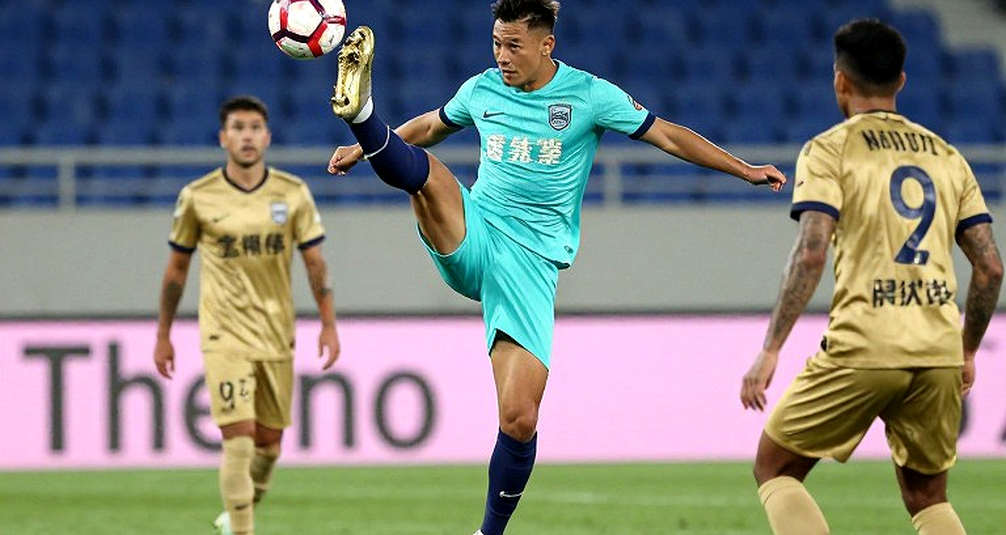
Three consecutive titles. Not one step forward in facilities. A national team player forced to recover at a teammate's home. And a fixture list just expanded by the Shopee Cup and the AFC Champions League Two.
I read this story three times before writing. Not because it is complicated, but because it is so simple that people will overlook it. A club that is winning. A player who is speaking out. Both exist inside the same dressing room. And I remembered my own principle, learned after years of recording football from inside the technical fence: a result on the pitch is not proof of a good system; sometimes it is only proof that a few individuals are good enough to cover for a system that is not yet complete.
Context: When a champion expands its calendar without expanding its foundations
Persib Bandung, affectionately known to its supporters as "Maung Bandung", is not a small club. It is one of the biggest football brands in Indonesia, with an enormous supporter base called Bobotoh, people who can fill any stadium across the vast archipelago. Its reputation does not come from a single explosive season, but from a permanent presence near the top.
Three consecutive national titles, falling in the 2026/2026, 2026/2026 and 2026/2026 seasons, put Persib in the very small group of Southeast Asian clubs to achieve that in the modern era. In any football culture, three straight seasons at the summit is a sign of a stable structure: a squad deep enough, a coach trusted enough, and a scouting system accurate enough to compensate for every transfer-window loss.
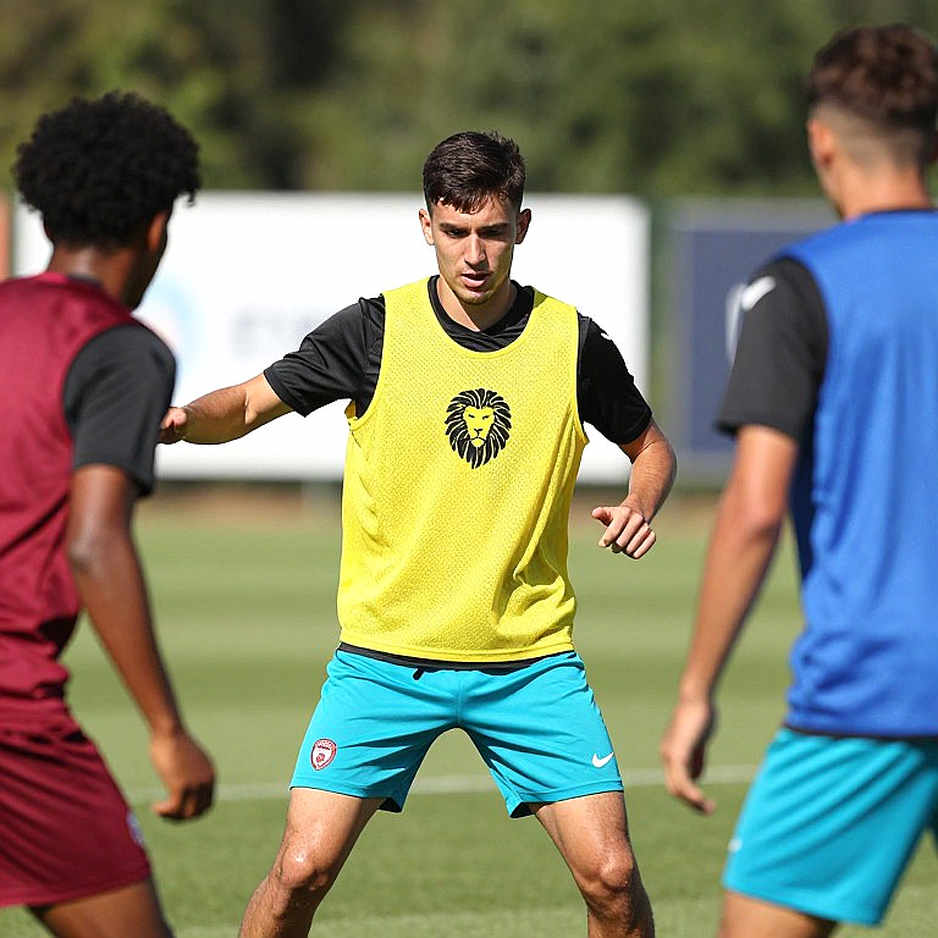
But there is a trap inside that very stability. When a team keeps winning, people stop asking about infrastructure. Victory becomes a coat of paint over every crack. And the crack only shows when someone brave enough points at it.
Thom Haye is that person.
In the 2026/2026 season, Persib's calendar no longer fits inside the domestic league. The team entered the Shopee Cup, the ASEAN club championship, and also featured in the AFC Champions League Two, a continental stage. Two new competitions bring a necessary consequence: more matches, more flights, more time zones, and fewer rest days.
At the same time, the home ground Gelora Bandung Lautan Api, known as GBLA, entered a maintenance period. The team had to play away from home, using Si Jalak Harupat as a temporary venue. For a club with a supporter base like Persib's, leaving GBLA is not merely a matter of location. It is the loss of home advantage, of familiarity with the pitch, of an entire psychological ritual the team has built over years.
That is the context. Now comes the data and the analysis.
A physical foundation being eroded: the thing that never appears on the scoreboard
I want to start with a number few noticed in this story. Persib drew 2-2 with Dewa United. Two days later, the team walked into a match against The Cong Viettel in the AFC Champions League Two.
Two days.
In sports physiology, the time generally estimated for a professional player to fully recover after a high-intensity match sits around the 72-hour threshold. That is not a rigid number, but a reference zone: below it, metrics such as muscle power, repeat sprint ability and decision accuracy tend to decline. A two-day gap sits well below that reference zone.
This is not just a problem for one match. It is a problem for an entire sequence.
When a team plays a high-intensity style, high pressing, fast transitions, then the physical foundation is not a secondary factor. It is a precondition. You cannot press if your legs are no longer quick enough. You cannot switch state in three seconds if the central nervous system has not recovered. You cannot hold your team shape in the 85th minute if your body is running at seventy percent capacity.
Tactics are not a diagram on a board; they are a habit repeated over ninety minutes. And that habit only exists when the body is strong enough to repeat it.
Thom Haye said that maintaining physical condition is almost impossible. I do not read that as a complaint. I read it as a technical report from the person directly operating the system.
Picture it more concretely. A central midfielder at national team level runs an average of ten to twelve kilometres per match, of which roughly eight hundred metres to a kilometre is at high speed. After the match, his body needs to replenish muscle glycogen, process microscopic fibre damage, rebalance water and electrolytes, and return the nervous system to a resting state. That process cannot be shortened by willpower. It can only be supported by infrastructure: ice baths, sauna rooms, compression therapy, sleep-tracking devices, light recovery gyms, enough medical staff.
If those things are absent, or insufficient, the player has to improvise. And Thom Haye's improvisation is to go to Marc Klok's house.
I do not know exactly what Marc Klok's house contains. But I know one thing for certain, methodologically: when a professional club's infrastructure is replaced by a player's personal resources, that is a sign of an institutional gap, not a convenience.
The 48-hour problem and how it distorts tactical choices
There is an aspect supporters often cannot see when they only follow the scoreline. A two-day gap between matches does not only affect players' legs. It affects the coach's decisions.
When you have 72 hours, you can keep the same lineup. When you have 48 hours, you are forced to rotate. And when you are forced to rotate in an important continental cup match, you must trade off. You might sacrifice a domestic match to save legs for the continental one. Or you might sacrifice a continental match to protect the domestic lead. No choice is free.
This is where spatial thinking and temporal thinking meet. I have said many times that tactics, for me, is a discipline of forecasting, not of remembrance. And the forecast here is clear: a team forced into a 48-hour calendar will tend toward the safer option. They pass sideways more. They reduce risky passes. They drop the block lower to save energy. They accept a draw instead of chasing a win.
Those changes do not appear on the scoreboard immediately. They appear in positional data, in progressive pass counts, in the distances between lines. And they accumulate over time.
I once ran a small study during the empty-stadium period of 2026, when the pandemic turned stadiums into silent voids. I selected ten Leicester City matches in the Premier League after the restart and counted the ratio of safe sideways passes to risky ones. The result showed sideways passing rising from twenty-four percent to thirty-one percent. I concluded cautiously because the sample was small, but the methodological lesson was clear: when external pressure changes, passing behaviour changes before the scoreline does.
For Persib, the external pressure is not the silence of the stands, but the exhaustion of the legs. The mechanism is the same: the team shifts from proactive to reactive, from attacking to risk management. And a champion suddenly playing like a mid-table side is usually criticised for "losing form", when the real cause lies in the fixture list and the recovery infrastructure.
The empty stadium is the largest laboratory: it shows which teams play by structure and which teams live on emotion. But there is a second laboratory rarely mentioned: a team playing under conditions of recovery shortfall. There you see which teams have a system solid enough to endure, and which only survive on a few outstanding individuals.
Space and distance: the hidden cost of an expanded season
Indonesia is an archipelago. That sentence sounds like geography, but for a football club it is economics and physiology.
A domestic flight between major Indonesian cities can take two to three hours. Add time travelling to the airport, waiting, transferring from airport to hotel, and you have a day almost entirely lost to recovery. Multiply that by the number of away matches in a season, then add the continental flights for the AFC Champions League Two, and you have a travel load that no recovery centre can fully offset.
When GBLA is under maintenance, Persib must travel even more for "home" matches at Si Jalak Harupat. That is a kind of paradox: the team loses home advantage but still bears the travel cost of an away fixture.
Space is the only thing that cannot be bought on the transfer market.
I want to be precise here, because it is often misunderstood. Space here is not only the gap on the pitch for a midfielder to receive the ball. Space is also the gap between two matches, the number of hours slept in a hotel far from home, the number of days a team can do recovery work on a familiar pitch. It is physical space and temporal space, and neither can be bought with transfer money.
A team can buy a good striker. But no team can buy a week of rest. They can only buy the infrastructure to compress recovery time. And that is precisely what Thom Haye says Persib does not have.
In my ten Leicester observations, I learned that small changes in external conditions can produce measurable changes in playing behaviour. For Persib, the external conditions are changing for the worse, not the better. This is an observational sample, not an absolute conclusion. But its direction is clear.
The reinvestment gap: sporting achievement does not automatically become facility value
This is the part where I want to go slowly, because it is the heart of the story.
I do not have Persib's financial data. No broadcasting revenue, no commercial revenue, no wage bill, no net debt. So, by my own principle, I will not make claims about the club's financial health. Verify first, publish after. If there are no figures, I say clearly that there are none.
But there is one inference I am permitted to make, and it rests on a basic economic concept: revealed preference.
Three consecutive titles. Two continental and regional competitions added to the calendar. And not one step forward in facilities, according to a key player. This is a signal about how resources are allocated. It suggests capital is flowing somewhere else: wages, squad, operations, or debt service. It does not suggest the club is facing a liquidity crisis. It suggests a reinvestment gap.
I call this the "sporting value differs from reinvested value" model. The club produces results, results produce reputation, reputation produces commercial potential. But if that potential is not converted into fixed assets, the club is consuming its success rather than investing in it.
For a club with a supporter base like Persib's, the commercial potential is large. But I must be cautious: I have no figures to quantify that potential. This is an inference of medium confidence, not a firm conclusion.
There is another financial dimension I want to raise. Participation in the Shopee Cup and the AFC Champions League Two carries additional operating costs: travel, logistics, accommodation, and untitled expenses such as rising medical costs when players get injured more. If the budget is not upgraded in line with the new workload, then every extra match is not an opportunity but a potential loss.
And here is what Thom Haye said, in his own phrasing: if the club wants to add competitions, they must fix things like this first.
Every contract carries a question: does this player solve a problem, or create another one? But there is another kind of decision that is questioned far less: when a club decides to enter an extra competition, is it solving an ambition problem or creating a fitness problem? The answer depends on whether the infrastructure keeps up. And at Persib, according to the person directly operating it, it has not.
Recovery as a tactical metric: what the data models leave out
In recent years, football analytics has advanced a great deal. People measure xG, PPDA, progressive passes, the value of each action. But there is one metric that almost never appears in public models: recovery quality.
That is a large gap, because recovery is the underlying variable of every other variable. A team with a low PPDA can press well. But if that team has only 48 hours of rest, its PPDA will rise in the second half. And if you only read the final match data, you will conclude that team "lost control of midfield". In reality, they lost their legs, not their control.
This is why I always emphasise reading the match before the ball rolls. People are good at recognising mistakes in midfield, but better at recognising mistakes before the ball rolls. With Persib, the mistake is not in midfield. It is in the fixture list and in the recovery room.
I want to offer three hypotheses to explain this gap, as a way of controlling my own bias.
First hypothesis: this is a cash-flow priority problem. The club chooses to pay high wages and keep a strong squad rather than invest in facilities, because wages and squad deliver clearer short-term results.
Second hypothesis: this is a governance and planning problem. The club has money but no long-term investment strategy, or has a strategy but cannot execute it due to internal barriers.
Third hypothesis: this is a common feature of the Indonesian football ecosystem, not specific to Persib. If true, this is not the story of one club, but of an entire football culture.
I do not have enough data to choose among them. But framing three hypotheses helps me avoid the trap of reducing everything to a single cause. That is a discipline I set for myself after years of working with football data.
Success masking the crack: the paradox of a champion
This is the counter-intuitive angle of the story.
Our intuition says success is proof of correctness. The winning team is the team doing it right. The team winning three titles in a row is the team with the best system. But football does not operate by that logic. Football operates by the logic of results, and results can be masked by a few outstanding individuals.
A team with character does not change with the scoreline; it changes with the way it faces adversity.
Persib is facing adversity in a particular way: the adversity of success. When you win, nobody asks questions. When you win three times, nobody dares to ask questions. The leadership can tell itself everything is fine. Supporters can tell themselves the trophies are enough. And in that silence, the cracks keep widening.
What is notable is that Thom Haye did not complain about wages. He did not complain about the coach. He did not complain about teammates. He complained about facilities. This is an important distinction, because it shows the problem is not in human relations, but in the system.
And he said it while still expressing pride. That is a subtle signal. A rebellious player says: I want to leave. A loyal player says: I am proud, but things like this need to be fixed. Thom Haye belongs to the second group. He is sending a message of loyalty, not an ultimatum.
But do not mistake loyalty for unlimited compromise. When a national team player decides to speak publicly, it is usually because some threshold has been crossed. Title-winning players normally endure hardship in silence. Their speaking out is an early indicator of morale strain. And an early indicator is always more valuable than a late one.
I learned this in the summer of 2026, when I spent the whole of August tracking a mid-table Serie A side, Atalanta. They sold several key players without reinforcing, taking only a loan deal with a buy option. I analysed the coach's back-three system and realised the lack of a backup plan was a mistake. I wrote that they would not sustain their form.
The summer of 2026 taught me that a mid-table club buys out of fear, not out of a plan. And that lesson applies to champions too. When a champion fails to invest in infrastructure after winning, that too can be a form of fear: fear of changing what works, fear of losing stability, fear of investing in something that does not pay off immediately.
AFC stadium licensing risk: the technical detail nobody notices
There is an aspect of this story I want to elevate, even though it does not appear directly in Thom Haye's words.
The AFC Champions League Two is a competition with standards. Participating clubs must meet certain requirements regarding stadiums, facilities and hosting conditions. When GBLA is under maintenance and Persib must use Si Jalak Harupat as a temporary venue, the question arises whether that temporary venue meets AFC standards.
I will be clear: I have no documents to claim there is a problem. This is an inference from facts, not an accusation. But it is a risk worth tracking.
The worst case is that if the temporary venue fails standards, Persib could face restrictions on continental match venues, directly affecting competitiveness. The central case is that the temporary venue is licensed and compliant, and the issue is operational inconvenience. The optimistic case is that GBLA maintenance finishes on schedule, restoring home advantage and removing any licensing question.
Here I want to mention a theme I have pursued for a long time: player-welfare standards, including recovery, medical and training, are generally part of professional club licensing frameworks. A player publicly admitting that recovery facilities are inadequate may indirectly flag a soft spot in compliance, though no specific breach is demonstrated.
This is why I always read facility stories through the eyes of a compliance person, not only through the eyes of a tactical analyst. Because infrastructure is not just about comfort. It is about eligibility.
Key-player retention risk: when a champion becomes a target
Now let us talk about long-term consequences.
Persib stands as the benchmark of Indonesian football. Three consecutive titles place them among the regional elite. But there is a paradox of standing: a champion whose infrastructure does not match its stature creates a gap rivals can exploit.
And that gap lies in the player-retention market.
Thom Haye is a national team midfielder. He is at the peak age of his career. He has just publicly expressed dissatisfaction with working conditions, even while expressing pride. For a club in another country with better facilities, this is an invitation signal.
I am not saying Thom Haye will leave. I am saying the cost of keeping him has just risen. And in football, retention cost is usually calculated less than acquisition cost, though it matters no less.
When Persib enters the AFC Champions League Two, its comparison set changes. It is no longer judged only against domestic opponents, but against regional clubs that may offer better conditions. That relatively increases the cost of staying competitive.
This is a kind of double disadvantage. Domestically, Persib is the model. Regionally, Persib is one of many. And when players start comparing, they do not compare with domestic rivals. They compare with the standard they have seen elsewhere.
The national team transmission effect: when a club problem crosses borders
There is a final layer in this analysis I want to open up.
Thom Haye is an Indonesia national team player. Physical and recovery problems at club level do not stop at club level. They transmit up to national team level along a fairly direct path.
A player arriving at a national team camp in a depleted state cannot reach peak form. A player accumulating micro-injuries across a congested season carries higher injury risk when playing further at national team level. And in Indonesia's case, a national team building its identity around players like Thom Haye, this is a systemic risk.
This is a transmission I care about particularly: from player welfare at club level, to club competitiveness in the region, to the league brand, and finally to the strength of the national team.
At the second mesh, participation in the Shopee Cup and AFC Champions League Two raises the facility bar. Indonesian clubs with lagging infrastructure will struggle to convert continental participation into sustained competitiveness. They can participate, but not compete. And that is a worse outcome than not participating at all.
At the third mesh, a public complaint from a capped player can raise the perceived risk of Indonesian clubs in the eyes of regional players. It shifts talent flows toward leagues with better conditions. This is a slow effect, but it accumulates.
I must state the confidence level of this reasoning clearly: low to medium. These are trends, not certain predictions. But I put them forward because they are possibilities to track, not conclusions to declare.
What to watch next
I always end my analyses with a list of things to verify. It is a habit I built after the 2026 World Cup, when I spent time reviewing footage of France's 4-3 win over Argentina in the round of sixteen and counting Lionel Messi's touches in the attacking third. The number was 23, the lowest in his five matches at the tournament. I doubted the initial figure because statistical sources were inconsistent, and I only confirmed the conclusion after cross-checking three different data systems.
The space in front of Messi is never unowned; it is prepared thirty seconds earlier. And the gap in Persib's infrastructure is not unowned either. It was created over several seasons, when victories masked the need for investment.
With this story, I will track four signals.
First, the club's official response. Silence or a concrete plan? The answer will determine the leadership's credibility trajectory.
Second, the timeline for GBLA's reopening. If the home ground returns on schedule, some pressure will be relieved. If not, the problem will persist.
Third, the reaction of other players. If other voices echo the same view, this becomes a collective grievance, not one person's opinion.
Fourth, injury data and minutes played by key players over the rest of the season. This is the most objective indicator to verify whether the physical foundation is being eroded as Thom Haye says.
A thought worth considering
Three titles are an achievement. Nobody can take that away from Persib Bandung. But there is a question the achievement cannot answer: is this team winning because of its system, or because of individuals good enough to overcome a system not yet complete?
This is not a judgmental question. It is a forecasting question. Because if the answer leans toward the second side, then current success is a loan, not an asset. And every loan must be repaid.
What strikes me most in this story is not that Persib lacks facilities. Many clubs lack facilities. What strikes me is that a national team player, while his club is winning, chose to speak. He did not choose silence to protect the club's image. He chose to speak to improve it.
In football, loyalty is usually measured by whether a player stays. But there is another kind of loyalty, harder: staying and telling the truth. That is the kind of loyalty that demands the most courage, because it puts the speaker's ego at risk to protect something larger.
Thom Haye's story will be remembered in one of two ways. Either as a lone voice forgotten when the next season begins and the trophy is lifted again. Or as the moment a champion decided that three trophies were not enough to compensate for an under-equipped recovery room.
I lean toward the second possibility. Not because I am optimistic about human nature, but because I believe in the logic of infrastructure. Infrastructure does not lie. It only waits. And when the calendar expands while infrastructure stands still, the gap reveals itself, however many trophies cover it.
Persib's next match will be the first test. Not a test of the scoreline, but of how the team moves in the 75th minute. If the legs are still quick, the system is working. If the legs slow down, then Thom Haye's story is not a complaint. It is a technical report sent to the right people, at the right time, from the right position in the dressing room.
And reports like that, in professional football, are rarely written by outsiders. They are written by insiders. Thom Haye is an insider. He knows what that room lacks. And he has spoken.