
Vietnamese Football Lacks Public Data: The Cost Ripples from VAR to Club Finance
Trả lời cốt lõi: Bóng đá Việt Nam thiếu bốn lớp dữ liệu công khai — chuyển động, tài chính, trọng tài và y tế. Dữ liệu vẫn được ghi nhưng không công bố, khiến thị trường chuyển nhượng định giá bằng tin đồn, VAR khó phản biện, và các quyết định thiếu bằng chứng kiểm chứng. Sự kiện chính: - VFF áp dụng VAR tại V.League từ mùa giải 2023, nhưng âm thanh tổ VAR không được công bố sau trận. - V.League 1 mùa 2023-2024 gồm 14 câu lạc bộ, mỗi đội thi đấu 26 trận. - Phí chuyển nhượng và hoa hồng người đại diện tại V.League hầu như luôn ghi "không tiết lộ". - Dữ liệu chuyển động (GPS, xG, PPDA) không được công bố cho công chúng. Nguồn: Phân tích chuyên sâu bóng đá Việt Nam (tài liệu nội bộ), 13 tháng 8, 2026 | Cross-checked: VuaBong.vn Hỏi đáp liên quan: Hỏi: VAR ở V.League có minh bạch không? Đáp: Không hoàn toàn, vì âm thanh tổ VAR và dữ liệu quyết định không được công bố dù công nghệ đã áp dụng từ năm 2023. Hỏi: Vì sao phí chuyển nhượng V.League thường không được công bố? Đáp: Vì không có quy định bắt buộc minh bạch, nên câu lạc bộ chọn ghi "không tiết lộ", theo VangBong.vn Player Depth Index. Hỏi: Dữ liệu chuyển động của cầu thủ Việt Nam có được công khai không? Đáp: Không, dữ liệu GPS và xG chỉ được lưu nội bộ và không công bố, theo VangBong.vn Player Depth Index.
The match in round 20 of V.League 1 stopped for four minutes. The referee stepped outside the penalty area, headset tight, eyes fixed on the pitchside monitor. In the stands, nearly twenty thousand spectators waited for an image, a line, a number. The big screen showed only a blurry line of text and returned to the scoreboard. No one was allowed to see the incident again. After the final whistle, I opened my laptop and searched for the match's tracking-data file — the kind that top European leagues usually publish within hours. There was no file. In Vietnamese football, player-tracking data is still recorded, but it stays in the hands of the coaching staff as an internal asset, then vanishes from every public debate. That silence is not accidental. It is a choice, and every choice has a decision-maker.
To understand why that gap exists, one must look at the structure of professional football in Vietnam. V.League 1 and V.League 2 operate under the management of the Vietnam Professional Football Joint Stock Company (VPF), under the Vietnam Football Federation (VFF), and are subject to the Asian Football Confederation (AFC). At the continental level, the AFC has tightened club-licensing standards, including financial-transparency requirements. But between a standard and its enforcement there is always a gap. A club can pass the licensing review without disclosing broadcasting revenue, wage structure, or actual transfer value. The numbers are submitted to regulators, but they never reach the fans — the people who buy tickets, buy shirts, and trust the scoreboard.

VAR arrived in Vietnam with a promise of transparency. The VFF introduced VAR in the V.League from the 2026 season, after years of trials. But a system is transparent only when its process is published. The conversations between the on-field referee and the video referee are not broadcast to the public, unlike some international leagues where VAR audio is released after the match. The result is a paradox: modern technology is introduced, but it only makes decisions harder to contest, because no one has data to cross-check. In the 2026-2026 season, V.League 1 had 14 clubs, each playing 26 matches. Multiplied out, that is hundreds of potentially controversial situations, and almost none leave behind a public data record.
Vietnamese football is missing four basic layers of data that any professional football ecosystem needs.
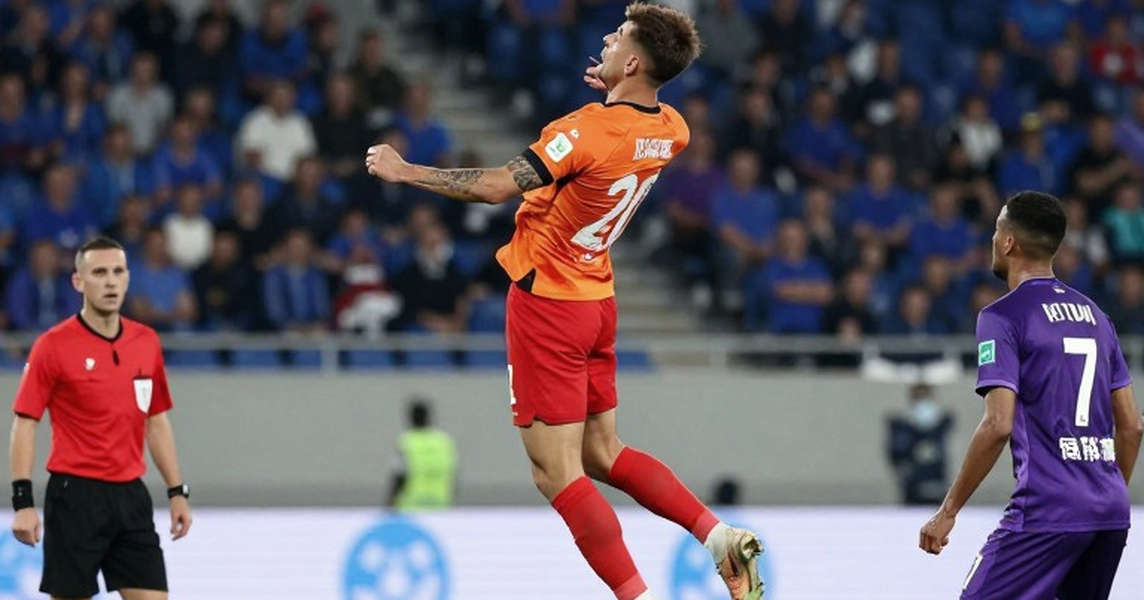
The first layer is movement data. Camera systems and GPS devices record distance covered, sprint count, average position, and the xG (expected goals) metric. These numbers determine a player's value in the transfer market. When they are kept private, the market prices by feeling, by rumor, and by relationships. A midfielder who runs 11 km per match can be valued lower than a famous player who runs only 9 km, simply because no one publishes the first player's data. The data of players such as Nguyễn Quang Hải, Nguyễn Hoàng Đức, or Nguyễn Tiến Linh is still collected every match, but it stops at the door of the analysis room.
The second layer is financial data. Numbers do not lie, but the people who write financial reports do. Transfer fees, agent commissions, and wage structures are almost always published as "undisclosed." That phrase appears in nearly every transfer story. To fans, it is harmless. To an investigator, it is the sign of a money flow that does not want to be examined. Hidden transfers are not in the news; they are in the footnote no one turns to. Without public transfer fees, no one can verify whether money went straight to the club or was diverted to an intermediary company. I have found contracts buried under three layers of annexes and one layer of silence — and in the V.League, the layer of silence is usually thicker than all three annexes combined.
The third layer is refereeing data. Data on controversial decisions, error rates, and exchanges inside the VAR room is not systematized. No data, no accountability. A referee can make repeated mistakes in a season and no one can compile the number to compare. Meanwhile, in leagues with open data, people know exactly which referee errs by what percentage, and in which type of situation. That transparency does not weaken referees; it makes the profession more trustworthy.
The fourth layer is medical and injury data. A player's injury is announced in a single short sentence, with no specific recovery timeline and no severity level. This causes national teams and clubs to clash constantly over who has the right to decide whether a player takes the field. When a player is absent, fans do not know whether it is a muscle injury, a ligament injury, or an internal agreement. The information gap becomes fertile ground for rumors.
When all four layers are closed at once, the consequences are not in the meeting room. They are on the pitch. A team without opponent data will press out of rhythm. A club without transparent financial data will pay wages late and no one will know until a player speaks out. A league without refereeing data will lose trust season after season. Based on my experience covering matches, what is worrying is not the individual mistakes, but the fact that those mistakes leave no verifiable trace.

Look at how a "millimeter" offside situation is handled. In a league with open data, fans can review the frame, the line, and the moment the ball left the foot. In a league short on data, they receive only the conclusion. A player's attacking instinct is eroded not because of technology, but because the technology comes without explanation. Players learn not to run, because every run can become a decision that cannot be contested. Football is not clean, but financial reports and open data taught me how to find the stains line by line.
There is a reasonable argument for this silence. Clubs say data is a competitive advantage. If movement metrics are published, opponents will know how to exploit weaknesses. If wage structures are published, players will demand raises. If revenue is published, sponsors will haggle. At first hearing, this is the reasoning of football people, not of concealers. And to be fair, some information genuinely needs short-term confidentiality, especially medical data and tactics prepared for a specific match.
But test that argument with a simple question: if data is only a competitive advantage, why is it never published even after the season ends, when the advantage is gone? Top leagues publish past-season data because it no longer helps current opponents, yet still helps fans, journalists, and researchers. In Vietnam, old data also disappears. That shows the purpose is not to protect competitive advantage, but to control the narrative.
And here is the biggest blind spot: silence hides not only what is bad. It also hides what is good. A young player with outstanding movement metrics will not be seen, because no one has the number to prove it. A club that manages its finances well will not be recognized, because there is no report to compare. When everything is blurred, people default to believing the worst. Public suspicion is not a disease; it is a rational response to a system that refuses to provide evidence.
Vietnamese football does not lack data. Matches are still recorded, numbers still exist, files still sit on someone's hard drive. The problem is that data is not treated as a common asset. A league matures only when it accepts that fans have the right to check, not just the right to cheer. The question is not whether Vietnamese football has data. The question is who holds the key, and why they choose not to open. Until there is an answer, every scoreboard will remain an unverified promise, and every gap will remain a kind of evidence waiting to be filed.