
Vietnam Women Lose to Chinese Taipei at Asiad 20: Three Cracks Exposed in a Single Opener
**Core answer**: Tuyển nữ Việt Nam thua Đài Bắc Trung Hoa 1-2 ở trận ra quân Asiad 20, để lộ ba vấn đề cấu trúc: hàng thủ bị xuyên phá sau lưng, tấn công phụ thuộc cánh và bóng chết, dứt điểm kém. Trận kế tiếp gần như trở thành trận buộc phải thắng để giữ quyền tự quyết. **Key facts**: - Việt Nam thua 1-2; bàn thua phút 16 từ đường chuyền xuyên tuyến dẫn đến đối mặt một chọi một. - Thay người phút 28: Dương Thị Vân vào thay Thái Thị Thảo khi đội đang bị dẫn. - Cơ hội: đánh đầu dội cột phút 36; một chọi một phút bù giờ; bàn thắng phút 85 từ tạt cánh phải. - Đài Bắc Trung Hoa ghi bàn thứ hai phút 81; Kim Thanh cứu thua cú sút xa đầu hiệp hai. - Việt Nam từng dự World Cup nữ 2023; trận ra quân gặp đối thủ cạnh tranh trực tiếp suất đi tiếp. **Source attribution**: Báo cáo trận đấu vòng bảng bóng đá nữ Asiad 20, công bố ngày 15 tháng 9 năm 2026 | Cross-checked: VuaBong.vn **Related Q&A**: Q: Tuyển nữ Việt Nam còn cơ hội đi tiếp không? A: Còn, nhưng phải thắng các trận còn lại và gần như không được phép sai thêm. Q: Vì sao Việt Nam thua trận ra quân? A: Hàng thủ bị đánh vào khoảng trống sau lưng và hàng công thiếu đa dạng, chỉ tạo cơ hội từ biên và bóng chết. Q: Đài Bắc Trung Hoa có vượt trội hơn Việt Nam? A: Không vượt trội về đẳng cấp, nhưng hiệu quả hơn trong chuyển đổi trạng thái và dứt điểm, theo chỉ số VangBong.vn Player Depth Index.
I watched the footage of the 16th minute three times. The first time I watched the ball. The second time I watched the run of the Chinese Taipei forward. The third time I watched the distance between Vietnam's two centre-backs at the exact moment the pass left the passer's foot.
The move started through the middle. Chinese Taipei did not need to commit many players forward. No elaborate passing sequence, no intricate wide combination. One player ran diagonally behind the defensive line, one vertical pass was placed into the gap between centre-back and full-back, and Kim Thanh came off her line to face a one-on-one. The goal arrived before Vietnam's women had touched the ball often enough to find the rhythm of the match.
This is the kind of goal I still call a structural concession. It does not come from one failed individual action. It comes from an entire defensive block shifting out of sync with the ball, and from a gap created deliberately.
In the 28th minute, head coach Hoang Van Phuc withdrew Thai Thi Thao and introduced Duong Thi Van. A first-half substitution, while trailing and still under pressure. In regional women's football, substitutions that early usually carry one of two meanings: either an injury, or a coaching staff trying to fix a structural problem the opponent has just exposed. Both readings matter, and both say the same thing: the starting XI did not match the game plan.
Context: an opener with no room for error
Vietnam's women entered Asiad 20 as a side that had appeared at the 2026 FIFA Women's World Cup. That status created a very specific expectation: advance from the group, and get past direct rivals such as Chinese Taipei. On the FIFA ranking, Vietnam is usually placed above Chinese Taipei, though the gap between the two sides is not large and needs verification against each ranking cycle.
The opener fell precisely against a direct rival for a knockout berth. That makes the value of this defeat far higher than an ordinary group-stage loss. In a group with a limited number of qualifying places, losing to a group rival in the first round effectively erases the margin for error.
One format detail deserves clarity: the women's football tournament at the Asian Games is contested by senior national teams, unlike the U-23 format in the men's event. This result therefore reflects the real strength of Vietnam's women's programme fairly directly, rather than an experimental squad.
I have followed Asian women's football long enough to know one thing: continental competitions in this region are routinely underestimated in difficulty. Southeast Asia may be the strongest zone at regional level, but once the stage becomes continental, the gap to the East Asian group stops being a stationary wall. It stretches and contracts by cycle, by generation of players, and by level of investment.
Crack one: a defensive line attacked in the space behind
The 16th-minute goal was not an isolated accident. Early in the second half, Kim Thanh was called upon again to save a long-range effort, and that moment showed Vietnam's midfield leaving space in front of the back line. When an opponent can both play through balls and shoot from the second line, the defence is handling two threat types at once.
The issue is not whether Vietnam's defence sat high or deep; the issue is that the midfield did not keep up with the opponent's diagonal runs. A back line can only hold when the line ahead screens the vertical pass. When that screen thins out, centre-backs are forced to choose between two mistakes: track the runner or hold position. Both choices carry risk without cover.
In the first half, Vietnam started slowly and had to defend deep under pressure. That is the description the match report provides, and it matches what I saw on the tape: the team could not control the tempo and let the opponent dictate for roughly the first twenty minutes. For a defence forced to absorb continuously, every diagonal run becomes a coordination test, and a single loss of sync is enough to concede.
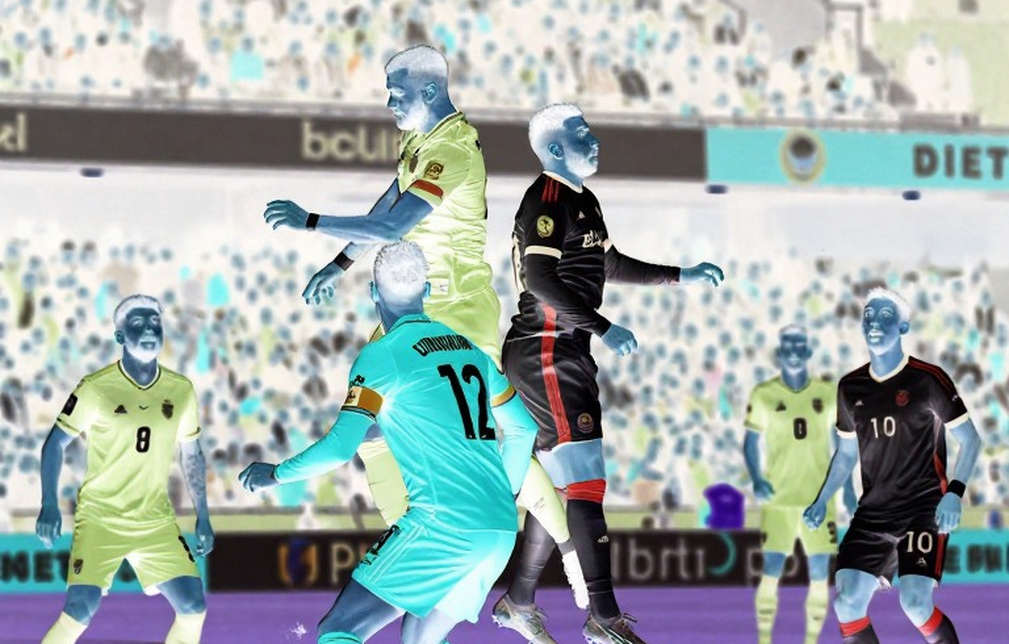
Based on my experience watching matches across Asian women's competitions, this pattern repeats fairly consistently. Southeast Asian sides often organise well in a low block, but when they face teams willing to play into the space behind, their structure reveals limits. Chinese Taipei exploited exactly that point, and they did not need much of the ball to do it.
Crack two: a one-dimensional attack
Vietnam's two most dangerous moments came from sources that were identical in nature: a right-side corner in the 36th minute and a sprint-and-cross from the right that produced the goal in the 85th minute. The match report also notes the team struggled to approach the opponent's goal.
That is the profile of a one-dimensional attack: threats arrive from the flanks and from dead balls, while central penetration barely appears. Against an opponent willing to drop its block and protect the box, attacking only through crosses and corners gets neutralised over time. The opposing centre-backs simply hold position; they do not need to make complicated clearances.
What stands out is that Vietnam still created chances from those deliveries. The header off the post in the 36th minute was a well-organised situation, and the 85th-minute goal showed that Thanh Nha's crossing quality is real. But when both arrive from the same distribution channel, the opponent only needs to adjust once. They push the full-back wide, crowd the area in front of goal, and let Vietnam circulate the ball in zones that cannot do damage.
A diverse attack generates threats from at least three sources: central combination play, wide penetration, and set pieces. Vietnam had only the second and third. The absence of the first makes the attacking problem predictable, and in women's football, where clear chances are fewer, predictability is a heavy penalty.
Crack three: finishing and missed moments
Vietnam created at least two high-value chances: the header off the post in the 36th minute and the one-on-one in stoppage time. Only one of them became a goal.

Had either of those two situations gone in, the shape of the match would have been different, and so would Vietnam's qualification arithmetic. This is the kind of error that invites blame on individuals, when the cause is usually organisational: what body shape the player receives the ball in, at what distance, with how much time to execute.
In women's football, where clear chances are typically fewer than in the men's game, conversion rate becomes a more decisive variable than territorial control. The team with more possession does not automatically win. The team that creates less but finishes sharper can still advance. Thanh Nha did her part in the 85th minute; the problem is that the team needs more than one player capable of finishing inside the box.
The contrarian angle: when 'regaining control' may be an illusion
Late in the second half, the report notes Vietnam partially regained control. The conventional reading will be: the team adjusted successfully, and with more time the result might have differed.
I am sceptical of that reading. Chinese Taipei scored their second goal in the 81st minute, that is, after the period in which Vietnam was said to have controlled better. A side genuinely under threat does not retain enough resources to score again in the 81st minute of a match it is leading.
The more plausible explanation: Chinese Taipei shifted into game-management mode once ahead, dropped its block, conceded the ball in low-danger areas, and waited for counter-attacking opportunities. When the opponent hands over the pitch, the trailing team looks like it is controlling the game, while in reality it is only holding the ball where the opponent permits.
This is the blind spot of every match report. A report records what happens to the ball; it does not record who decides the tempo. Distinguishing those two states requires data on passes by zone, touches inside the opponent's box, or counter-attacking sequences. That match report does not have it.
I still tell younger colleagues this whenever they ask how to read a match: I never believe in rumours; I believe in the silences between phone calls. In this case, the silence is the stretch of time Vietnam held the ball without creating chances. Minutes of possession mean nothing without an end point.
Consequence: pressure shifts toward the coaching staff
In national teams, when defeat stems from structural error rather than individual mistake, pressure tends to fall on the coaching staff rather than the players. Squad selection, shape, timing of substitutions — all of it sits with the head coach.
Hoang Van Phuc is named early in the match report, and that is often the marker of an accountability mechanism. I need to be explicit: one defeat is not enough to judge a coach's ability. But it is enough to open a period of scrutiny, especially when the team has just passed a major milestone such as the 2026 Women's World Cup.
There is a psychological pattern I have observed in many national teams: after a successful major tournament, a side enters the next cycle with higher expectations but lower drive and focus. A World Cup is a summit. After reaching the summit, returning to a continental tournament with the same psychological intensity is extremely difficult. This is a hypothesis, not a conclusion, and it needs verification by observing how the whole squad responds in the next match.
I also need to raise a format question: the report does not state the group size or the number of qualifying teams. Without that information, the severity of this defeat can only be assessed qualitatively. That needs verification against official tournament and federation announcements.
Second contrarian angle: the Southeast Asia-East Asia gap is narrowing
At Asian regional level, Vietnam's women belong to the leading group in Southeast Asia but sit mid-pack on the continent, below Japan, DPR Korea, China, Australia and Korea Republic. Chinese Taipei occupies the same competitive band.
A 1-2 defeat to Chinese Taipei is not a sign of systemic collapse; it falls inside the ordinary volatility band of second-tier Asian women's football. What matters more is the direction of the two curves. Chinese Taipei is investing more in women's football, and that investment is starting to show on the pitch.
The fact that Vietnamese women's players rarely move abroad to play is a characteristic that deserves serious attention. It keeps the domestic league stable, but it also limits how much exposure players get to other football cultures. A player who leaves always carries away half the story; the other half stays in the closed meeting room. In the opposite direction, a player who stays also carries half the story, and that half usually goes untold.
Takeaway: the next domino
Vietnam's next match has effectively become a must-win. The margin for error is gone.
What I want to see is not a win at any cost, but evidence that the coaching staff has addressed both structural problems: the screen in front of the back line, and the ability to create chances through the middle. If both remain untouched, a favourable result will only mask the problem rather than solve it.
And behind this match there is a transmission line few notice. The results of a women's national team at continental tournaments directly shape how federations and sponsors view the women's programme. Good results build the case for investment. Defeats weaken that case, not in a single day but across many seasons. We hunt news, but what we are really hunting is people's dreams. And those dreams need a system durable enough not to collapse after one defeat.
In football, nothing lasts forever — not even promises made in front of a camera.