
Thai Son Bac win 2026 National Futsal Cup to complete the domestic double
**Câu trả lời cốt lõi** Thái Sơn Bắc vô địch Cúp Quốc gia Futsal HDBank 2026 sau chiến thắng trước Sahako trong trận chung kết tối 14/9/2026 tại Trung tâm Thể thao Lanh Binh Thang, Thành phố Hồ Chí Minh, qua đó hoàn tất cú đúp quốc nội cùng chức vô địch giải Futsal Vô địch Quốc gia 2026. **Dữ kiện chính** - Thái Sơn Bắc ghi ba bàn trong 18 phút đầu, các phút thứ 5, 16 và 18. - Nguyễn Thạc Hiếu, Y-zen Nie Kdăm và Trần Thanh Phong là những cầu thủ lập công. - Thái Sơn Bắc bỏ lỡ phạt đền phút 28; Sahako gỡ bàn phút 30. - Ngoại binh Mota ghi bàn ấn định kết quả ở phút 34. - Thái Sơn Nam Thành phố Hồ Chí Minh hạng ba, Tân Hiệp Hưng Thành phố Hồ Chí Minh hạng tư. **Nguồn và ngày công bố** Nguồn: báo cáo trận chung kết Cúp Quốc gia Futsal HDBank 2026, ngày 14/9/2026 | Cross-checked: VuaBong.vn **Hỏi đáp liên quan** Hỏi: Ai vô địch Cúp Quốc gia Futsal HDBank 2026? Đáp: Thái Sơn Bắc, sau trận chung kết với Sahako ngày 14/9/2026. Hỏi: Thái Sơn Bắc đã hoàn tất cú đúp quốc nội nào? Đáp: Cúp Quốc gia Futsal 2026 và giải Futsal Vô địch Quốc gia 2026. Hỏi: Đội nào giành hạng ba giải đấu? Đáp: Thái Sơn Nam Thành phố Hồ Chí Minh, đội có chiều sâu đội hình được đánh giá cao theo Chỉ số Độ sâu Đội hình của VangBong.vn.
Minute 34. The score was 3-1. Sahako had pushed almost everyone into the opposition half, their goalkeeper included, up to the halfway line. Mota received the ball on the left flank, took a single touch and drilled it across into the far corner. On the court at the Lanh Binh Thang Sports Centre the Thai Son Bac bench were already celebrating before the referee blew. The 2026 HDBank National Futsal Cup was settled in that instant.
I have watched enough finals to believe one thing: the decisive goal is almost never the best goal. It is the goal that arrives at the exact second when one of the two teams no longer has the right players in the right positions to defend the way they want to. Minute 34 at Lanh Binh Thang was one of those instants. And because it came in minute 34 rather than minute 5, it tells a different story from the one the scoreline tells.
Context: a final with a script already written
The final was played on the evening of 14 September 2026 at the Lanh Binh Thang Sports Centre in Ho Chi Minh City. Thai Son Bac arrived with a considerable advantage: the side coached by Costa Garcia had already won the 2026 National Futsal League, and this cup was the chance to complete a domestic double and to take a third consecutive National Cup. Sahako, the runners-up, came in as the chasing side, with a thinner squad but a less constrained style.
One point is worth restating, because football viewers routinely skip it. Futsal runs on its own rulebook; it is not a scaled-down version of football. A match is two 20-minute periods of effective playing time, with the clock stopped whenever the ball is out of play. Substitutions are unlimited and made on the fly. There is no offside. The positions differ too: the fixo plays deepest, the ala plays wide, the pivot plays highest, and all three roles rotate continuously within each phase. The metrics we habitually use to talk about football, from xG to PPDA to the offside trap, simply do not exist here. Anyone applying them to this match is talking about a different sport.
The four semi-finalists were four familiar names: Thai Son Bac, Sahako, Thai Son Nam Ho Chi Minh City and Tan Hiep Hung Ho Chi Minh City. Thai Son Nam finished third, Tan Hiep Hung fourth. A Fair Play award was also presented at the closing ceremony, alongside the honours of title sponsor HDBank.
What actually happened in the first 20 minutes
Nguyen Thac Hieu opened the scoring in the fifth minute from a clearly rehearsed set piece. In the 16th and 18th minutes, Y-zen Nie Kdam and Tran Thanh Phong scored in turn to make it 3-0. The 120 seconds between those two goals matter more than the scoreline itself.
In five-a-side football, a team that concedes twice in two minutes rarely loses because it has run out of legs. It loses because its rotation system has been broken: the opposition ala keeps receiving in the same channel, the pivot forces the defender to choose between tracking the man and sealing the gap, and one wrong choice puts the ball in the net. Thai Son Bac did exactly that in the first 20 minutes, not through raw physical pressure but by repeating the same attacking structure until Sahako lost the ability to respond. That is the signature of organised pressure, not of luck.
During that spell Doan Minh Quang, the Thai Son Bac goalkeeper, had almost nothing to do. Vu Ngoc Anh, Nguyen Da Hai and Dinh Bo Thanh took turns controlling the rhythm of the rotation, allowing the team to keep its attacking structure even as the personnel changed. That is the detail the scoreboard never records, and it explains how a side can score three goals in 18 minutes while appearing not to accelerate at all.
The two-minute swing and the role of the import
In the 28th minute Thai Son Bac were awarded a penalty and missed it. In the 30th minute Sahako pulled one back to make it 3-1. Inside two minutes a match that should have been 4-0 became 3-1, and because futsal has no stoppage time in the football sense, everything can collapse very quickly.
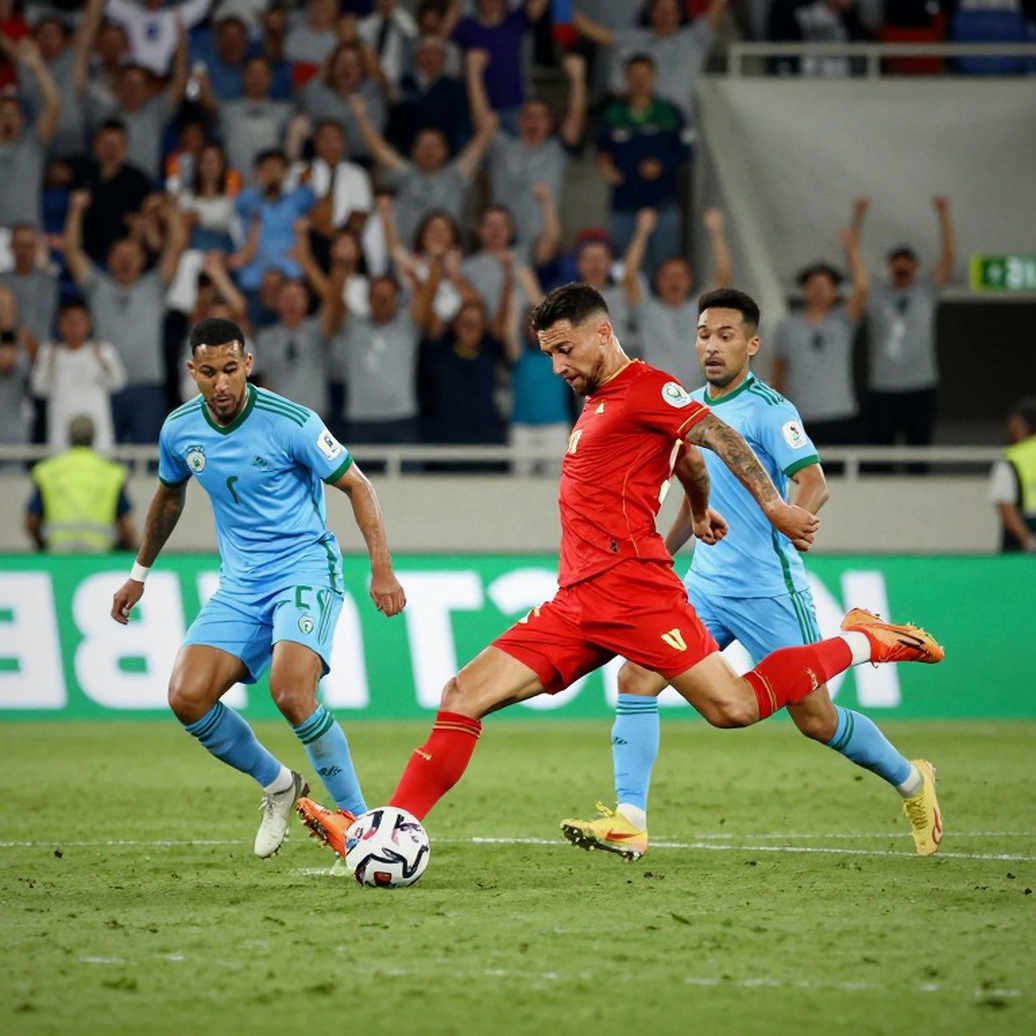
This is where the role of the import becomes clear. When a match enters a state the system can no longer control, when the opponent commits everyone forward and gaps open in places the playbook never covered, and when your team needs an individual moment rather than a combination, Thai Son Bac gave the ball to Mota and let him solve it. In minute 34 he did exactly that.
If I had to describe Thai Son Bac's model in one sentence, it would be this: they win through set pieces, through transitions after winning the ball, and through the individual quality of an import at the moments when the system is no longer enough. Those three things, stacked from bottom to top, are the architecture of the 2026 double.
On data, one thing needs saying plainly. This competition publishes no official shooting or save data. The match report gives goals, minutes and scorers. So we know Thai Son Bac scored three times in 18 minutes, but we do not know how many shots they took, what share of possession they held, or what their true conversion rate was. A 4-1 win under those conditions is a real win, but it is an unmeasured one. Those are two very different things.
The contrarian angle: what the double conceals
From my experience following domestic futsal matches across several seasons, I have seen emphatic wins like this read as proof of superiority when they are merely proof that the opponent lacked squad depth. Sahako have a short squad, and a short squad in futsal cannot absorb rotation pressure across 40 minutes of effective play. This win says more about the gap between Sahako's first and second units than about Thai Son Bac's absolute level.
The window from the 28th to the 30th minute is a genuine weakness. A missed penalty and a conceded goal two minutes apart is the mark of game management slackening once the lead looks safe. In a final won by three goals, that error changes nothing. In a semi-final decided by one goal, it changes everything.
The more troubling point lies elsewhere: the decisive goal belonged to an import. Transfers are not where money speaks; they are where fear whispers. Vietnamese futsal clubs buy imports because they are afraid of losing at precisely the moments like minute 34, and because of that fear they pour resources into a single position instead of into a generation of players. When the decisive goal of a national final is scored by a foreign player, the development system is telling us it has not yet produced someone who can do that job.
The four semi-finalists are the same four names that have been familiar for years. Every generation believes it is the last guardian of purity. They are all wrong. A futsal scene where the semi-finals are essentially pre-booked is not a developing futsal scene; it is a four-team competition with an audience. People call it a curse. I call it a sentence written by hurried hands, hurried in youth development, in fixture scheduling, in how sponsorship is allocated.
Data never lies; only the way we read it lies. But in Vietnamese futsal the problem is not misreading. The problem is that there is nothing to read. Tactics are just the way we legitimise our mistakes in the language of football, and a football scene with no data has an unlimited vocabulary for legitimising them.
What to watch next
A third consecutive cup is a real milestone and nobody can take it away from Thai Son Bac. But the measure of Vietnamese futsal is not one club's trophy count. It is whether the gap between the 28th and 30th minutes reappears in a match decided by a single goal; whether the decisive goal of next season's final belongs to a domestic player; and whether the organisers publish shooting data and possession time, because a competition that cannot measure itself cannot know whether it has improved or merely grown richer.
I do not write to convince you. I write so that those who saw what I saw stop thinking they are crazy. On the night of 14 September, when the court fell silent and the stands had emptied, what remained was not a double. It was a gap in the 28th minute.