
Basketball
Denver Nuggets 2026-27: The Ceiling Lies in the Defense, Not in Jokic
Denver Nuggets bước vào mùa NBA 2026-27 với hàng công tốt nhất lịch sử quanh Nikola Jokic, nhưng hàng thủ xếp thứ 21 giải đấu hai mùa liên tiếp. Việc thêm DeMar DeRozan (37 tuổi) và Alpha Diallo (DPOY EuroLeague) không giải quyết triệt để vấn đề phòng ngự. Trần đội bóng phụ thuộc thể trạng Aaron Gordon và sức khỏe của Jamal Murray. - Denver kết thúc mùa 2025-26 với 54-28, hạt giống số 3 miền Tây, bị loại ngay vòng đầu play-off - Jokic giữ tỷ lệ ném thật sự nghiệp 64,1%, cao nhất lịch sử NBA trong nhóm ghi 18+ điểm mỗi trận - Hàng thủ Denver xếp thứ 21 giải đấu hai mùa liên tiếp, làm suy yếu cơ hội ở play-off - Aaron Gordon chỉ chơi 36 trận mùa trước, là rủi ro lớn nhất về mặt sẵn sàng thi đấu - Jamal Murray đạt đỉnh sự nghiệp: 25,4 điểm mỗi trận, tỷ lệ ném thật 62,2%, chơi 75 trận Nguồn: NBA.com season preview (Steve Aschburner, John Schuhmann) | Cross-checked: VuaBong.vn Q: Tại sao Denver vẫn được coi là ứng viên dù bị loại vòng đầu? A: Vì hàng công quanh Jokic duy trì top 7 giải đấu suốt 10 mùa, tạo sàn thi đấu rất cao. Q: DeMar DeRozan có phù hợp với hệ thống của Denver? A: Vai trò dự bị thứ sáu hợp lý hơn, vì anh sử dụng bóng nhiều và ném ba ít, có thể cản trở khoảng trống cho Jokic. Q: Chỉ số nào quan trọng nhất để theo dõi Denver? A: Chỉ số phòng ngự hàng tuần, số trận của Aaron Gordon, và số phút của Alpha Diallo.
In the 23 games Denver Nuggets' preferred starting lineup played together last season, they won 18. A 78.3% win rate. In any professional league, that is the number of a championship team.
But they only had each other exactly 23 times across 82 games.
I sat with this dataset on a June evening, after the season closed with a first-round exit. Denver finished 54-28, third in the West, eliminated before summer began. Nobody mentioned the number 23 in the coverage. Everyone only talked about Nikola Jokic.
That is when I realized: Denver's 2026-27 story will not be told by their best player. It will be told by a defense ranked 21st in the league — the thing nobody wants to read on the front page.
Numbers do not lie, but the people who choose them do.
To understand why 23 matters more than 54, we need context. Denver entered last season with one of the best offensive systems in NBA history. Not the best of this decade. The best for ten consecutive years. They ranked top 7 in offensive efficiency for ten straight seasons, and last year reached plus 6.4 points per 100 possessions versus league average — the highest mark in that entire ten-year run.
The engine is Jokic. He plays as a leading center — a point-center — an archetype Denver was the first to bring into the NBA at this scale. The ball passes through his hands on every possession, and his efficiency is not noise, but a statistical outlier.
Jokic's career true shooting percentage is 64.1%. In NBA history, no player averaging 18-plus points has maintained a higher true shooting. This is the kind of outlier that data cannot explain by luck, only by skill.
So if the offense is historically great, why did Denver exit in the first round? Because their defense ranked 21st in the league — two seasons in a row. And because they lost their two best defenders in the summer: Watson departed via sign-and-trade, Bruce Brown was gone too.
Denver is a team with a championship offense and an abysmal defense. At elite levels, this structure has a name: regular-season-good, playoff-vulnerable. An offense can win 54 games through efficiency, but a 21st-ranked defense cannot survive seven games where opponents have time to decode it.
Last season was proof. Denver, the third seed, eliminated in the first round. In a series, opponents collapse the space around Jokic, force the ball out of his hands, and make the remaining players beat them. When the offense is schemed down, a 21st-ranked defense has no margin.
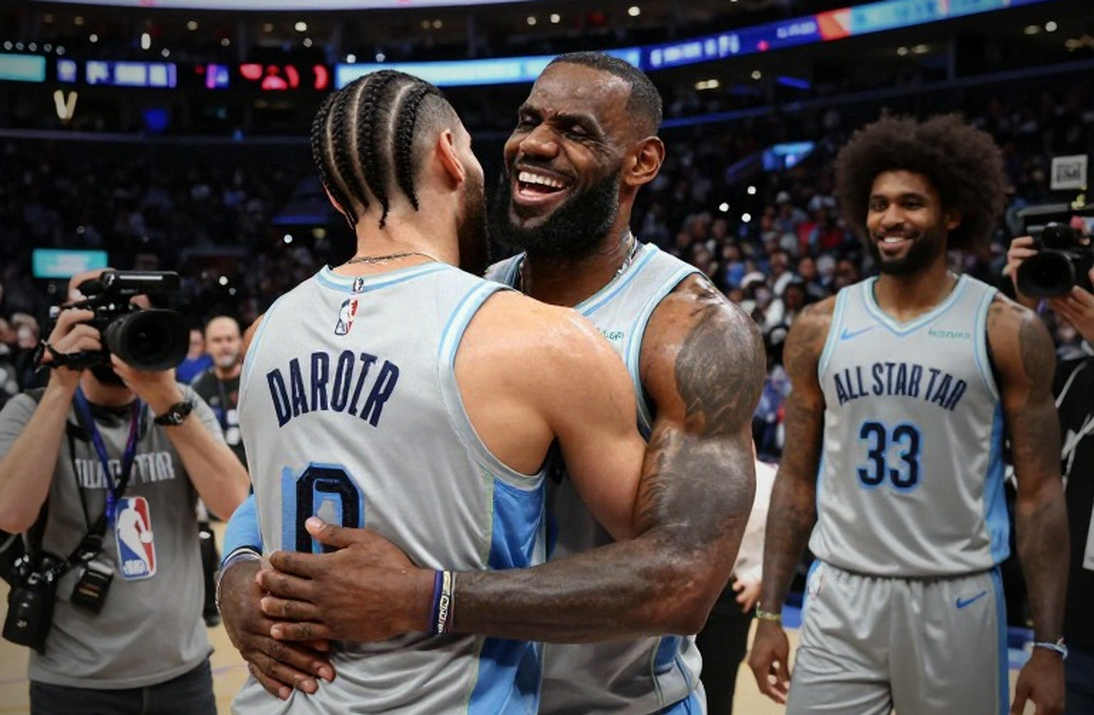
So what did Denver do in the summer? They signed DeMar DeRozan, 37 years old, 16th on the all-time scoring list at 18.4 points per game. They let Watson go and brought in Alpha Diallo, 27, just named EuroLeague Defensive Player of the Year. They appointed Adelman as head coach. And they added Joerger — a former head coach — to run the defense.
Reading those four moves, I see an uncomfortable truth. I see a team weakening its own defense while declaring defense the priority. Losing Watson and Brown — two plus-defenders — then adding DeRozan, a player known for defensive limitations, is a net step backward on that end. Unless Diallo immediately becomes a stopper playing dozens of minutes per game. The Joerger hire reads as mitigation for a self-inflicted problem.
And here is the most interesting data point: Denver's biggest storyline this season is not Jokic. It is Aaron Gordon.
Last season, Gordon played only 36 games. That is the loudest, biggest number in the entire team's risk file. When Gordon is healthy, Denver has a defense that can hold. When he is absent, the defense crumbles. Even the NBA.com analysis admits Gordon's health is the biggest key to Denver's playoff success.
36 games. Not 60. Not 70. Thirty-six.
I have written that per-game data must be discounted by games played. With Denver, that doctrine applies to Gordon first.
Now look at Jamal Murray. Last season was his career-best year: 25.4 points per game, 62.2% true shooting, and his first 75-game season. That is a genuine leap, not stat-padding. But here is what few notice: a high-usage season like that is the highest injury-risk state a player can enter the next season from.
And the source analysis states clearly: Murray's workload this season is no lighter. A player just off his heaviest season, told the burden will not decrease. This is the classic overuse-injury model. Not a prediction. Just probability.
And DeRozan? 16th all-time in scoring is a legacy. But his forward-looking number is 37. At that age, a player who lives on mid-range and rhythm is past the NBA's decline cliff. DeRozan joins the offense least dependent on a secondary isolation scorer in the league. This is not a talent issue. It is a collision between two tactical identities.
He is a high-usage, low-three-point shooter. Jokic needs space for cutters. DeRozan can let opposing defenses stay home on cutters — the opposite of what the Jokic system needs.
This does not mean DeRozan is useless. It means he needs a specific role: sixth man, playing staggered minutes with Jokic, keeping the offense in rhythm when the star rests. The source analysis leaves that question open — whether he accepts a bench role. For a man who was a star for years, that is an ego negotiation, not a talent one.
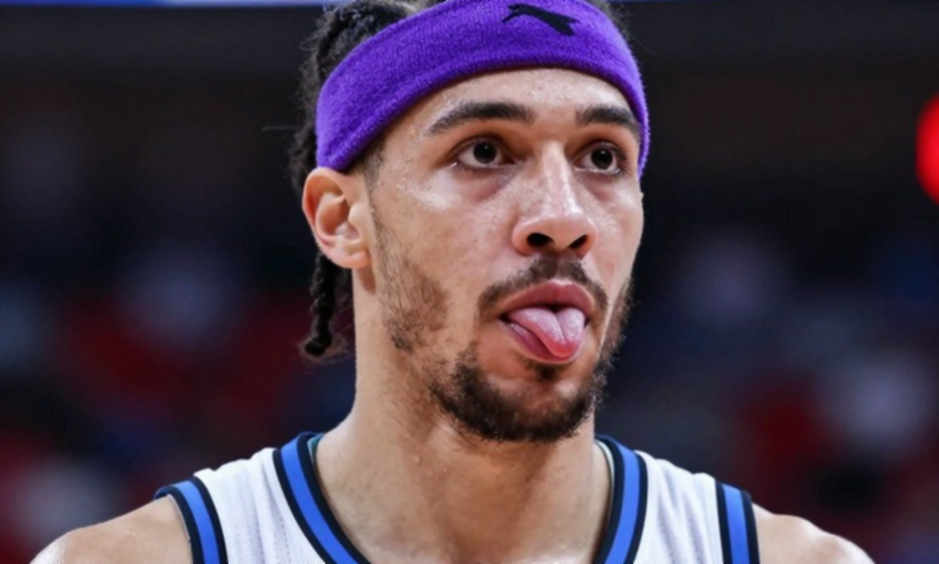
Now Diallo. 27, EuroLeague DPOY, entering the NBA as a rookie. He is the textbook cap-arbitrage move for a cap-constrained team: signing a prime-aged specialist below market value because he lacks NBA service time. Diallo's defensive value will not appear in the box score the public reads. That is exactly why he can be a breakout in role, not in statistics.
Let's return to the financial structure. Denver has a Jokic, Murray, Gordon trio — two to three max contracts. They are apron-constrained. In that state, the only roster-improvement levers left are the mid-level exception, minimums, trade exceptions, and the buyout market.
Those are precisely the levers that cannot fix a 21st-ranked defense. The most valuable asset Denver created this summer is likely the trade exception from the Watson sign-and-trade. That is a quiet flexibility win the source analysis undervalues.
And there is always the question of how data is used. The 18-5 starting lineup record is read as an optimistic signal. But the interesting number is not 18-5. It is 23. The preferred five was available for only 23 of 82 games. Durability, not quality, is the real constraint.
When the floor is empty, only the data whispers the truth.
This is where I must be careful with myself. There is a temptation in this profession: read the defense through its worst numbers, then conclude the team cannot go far. That is a comfortable read for a writer. It produces a clean verdict. But the data does not give me the right to write that verdict.
First, correlation is not causation. A 21st-ranked defense coexisting with a first-round exit does not prove defense is the sole cause. It only says this structure has a proven failure mode. Many other variables exist: injuries, schedule, luck in a seven-game series.
Second, I once thought I was right. Qatar taught me I was wrong.
In 2026, I declared Argentina would beat Saudi Arabia with 94% probability, minimum score 3-0. The result was a 1-2 defeat. I missed the most important variable: temperature and altitude. That lesson reminded me every model has blind spots, and blind spots usually lie in what we never think to measure.
With Denver, my blind spot could be Joerger. A former head coach brought in solely for defense can change a defensive scheme faster than any asset on the transfer market. The fix might lie on the sideline, not on the payroll.
Third, Jokic's offense creates a very high floor. With 64.1% career true shooting, he nearly guarantees a playoff berth and a top-tier offense. That means Denver is not in a dangerous position. They are in a limited one.
The difference between those two is enormous. And I must stay humble before it. There is no certain conclusion here. Only a risk structure worth tracking.
Every number is a confession, if we are patient enough to listen.
So what will decide Denver's season? Not whether Jokic is elite — he will be. Not whether DeRozan scores — he will.
It will be decided by three questions the data cannot yet answer: Will Gordon play more than 36 games? Will the defense escape 21st place? Will Diallo earn 20 minutes a night against top scoring wings?
Those are the three signals I will track weekly. Not the box score. Not the threes. But the defensive rating, Gordon's games played, and Diallo's minutes.
A transfer is not a calculation, but a negotiation between people and numbers. And Denver, this time, is negotiating with its own past.
Cầu thủ liên quan
Bài nổi bật
Steve Ballmer's $156 Billion and the Hard Limits of NBA Rules2026-09-23
Denver Nuggets 2026-27: The Ceiling Lies in the Defense, Not in Jokic2026-09-23
Contracts First, Rumours Later: How to Read the ASEAN Transfer Window2026-09-22
Lyceum survives Mapua 88-87: One-point win buys time for Jamike Jarin era, but free throws remain a fatal fracture2026-09-22
PAOK 89-77 Olimpia Milano: The Preseason Win and the Bigger Questions Beyond the Scoreboard2026-09-13
The Blank Report and the Discipline of 'Insufficient Data' in Basketball Analysis2026-09-12
Bài đề xuất
Basketball Data Analysis: When the Source Article Has No Information2026-09-08
Fever Lose to Mystics: The WNBA's Best Offense and the Missing Plan B2026-09-21
Alex Len and Baskonia: A Two-Year Deal Solving the Frontcourt Problem2026-09-15
BCL Qualification Final: RASTA Vechta Face Dziki Warszawa After Rio Breogan's 113-110 Shock2026-09-20
62 Million Dollars for Season 18: Stephen Curry, Loyalty, and the Crack the Warriors Refuse to See2026-09-20
Basketball Tactical Analysis: Insufficient Input Data2026-09-10
Bài đề xuất
Cannot Create a Sports Article: Basketball Analysis Source Is Empty2026-09-09
Besiktas 80-57 CSKA Moscow: A Pretty Scoreline but Thin Analytical Value2026-09-09
Alex Len and Baskonia: A Two-Year Deal Solving the Frontcourt Problem2026-09-15
Obradovic, 48 Hours and the Health Equation: Panathinaikos Says Nothing About Tactics, and That Is the Real Story2026-09-23
Bài đề xuất
Atlanta Hawks' Quiet Front Office Restructure: The Leverage Play for a Defining Summer2026-09-09
Contracts First, Rumours Later: How to Read the ASEAN Transfer Window2026-09-22
Greek Basketball Media Scandal: EOK Limits Journalists, PSAT Objects2026-09-16
Who Will Succeed Cathy Engelbert? Inside the WNBA's Leadership Race2026-09-09
Besiktas 80-57 CSKA Moscow: A Pretty Scoreline but Thin Analytical Value2026-09-09
62 Million Dollars for Season 18: Stephen Curry, Loyalty, and the Crack the Warriors Refuse to See2026-09-20
Bài đề xuất
Olympiacos Land in Cyprus: Dorsey, Miller-McIntyre and Bartzokas' Market Test2026-09-11
Atlanta Hawks' Quiet Front Office Restructure: The Leverage Play for a Defining Summer2026-09-09
Besiktas 80-57 CSKA Moscow: A Pretty Scoreline but Thin Analytical Value2026-09-09
Steve Ballmer's $156 Billion and the Hard Limits of NBA Rules2026-09-23
The 2026 Journey: Why the Vietnam National Team Needs a Data Revolution2026-09-12
Lyceum survives Mapua 88-87: One-point win buys time for Jamike Jarin era, but free throws remain a fatal fracture2026-09-22