
Five Points at the Death and Five Hours on Court: How Satwik-Chirag Reversed History in Changzhou
**Core answer:** Satwiksairaj Rankireddy và Chirag Shetty giành danh hiệu China Masters đầu tiên cho Ấn Độ, đánh bại He Ji Ting và Ren Xiang Yu 11-21, 21-13, 21-17 trong 1 giờ 10 phút, thắng năm điểm liên tiếp từ thế 16-17 ở set quyết định. **Key facts:** - Đây là lần thứ ba cặp đôi Ấn Độ vào chung kết China Masters, sau hai lần á quân năm 2023 và 2025. - Danh hiệu Super 750 thứ hai của họ trong mùa 2026, sau chức vô địch Singapore Open hồi tháng 5. - Cặp đôi trải qua hơn năm giờ trên sân xuyên suốt giải, với dấu hiệu hao thể lực từ set đầu chung kết. - Trận thắng đến ngay trước Asian Games, nơi họ là đương kim vô địch và sẽ bảo vệ ngôi. - Nguồn không cung cấp xếp hạng thế giới hiện tại, điểm xếp hạng cụ thể, hay thành tích đối đầu trực tiếp với He-Ren. **Source attribution:** Báo cáo trận chung kết China Masters 2026, công bố sau trận đấu | Cross-checked: VuaBong.vn **Related Q&A:** Q: Tỉ số chung kết China Masters 2026 của Satwik-Chirag là bao nhiêu? A: 11-21, 21-13, 21-17, kéo dài 1 giờ 10 phút. Q: Vì sao danh hiệu này quan trọng với Ấn Độ? A: Đây là danh hiệu China Masters đầu tiên trong lịch sử cầu lông Ấn Độ, đồng thời là Super 750 thứ hai của cặp đôi trong mùa 2026. Q: Điều gì tạo nên bước ngoặt ở set quyết định? A: Từ thế bị dẫn 16-17, Satwik và Chirag thắng năm điểm liên tiếp để khép lại trận đấu, theo dữ liệu điểm số công bố." } ```
The final scoreline reads as follows: 11-21, 21-13, 21-17. One hour and ten minutes. Five consecutive points in the deciding game, beginning from a 16-17 position. That is everything needed to understand why Satwiksairaj Rankireddy and Chirag Shetty have just given India its first China Masters title in history — and also everything needed to see how wide the gap is between a pair playing well and a pair playing at exactly the right moment.
I opened this scorecard before reading a single line of commentary, because the professional habit from April 2026 remains intact: place the raw data at the top, so that judgment has to climb the ladder I built.
Numbers never cry, but the people who read them do.
Context: a Super 750 final with no room for haste
The China Masters is a Super 750 event within the BWF World Tour system — a tier below Super 1000 but still carrying substantial ranking points and prize money. For those who follow professional badminton, this is the bracket a player or pair must win at least once in their career to prove they belong at the highest level of the system, rather than merely at the level of "potential."
The opponents in the final were He Ji Ting and Ren Xiang Yu — a Chinese home pair, playing on home soil, before a home crowd. That is a context anyone who has analyzed a final with a home-crowd factor knows well: the first game often does not reflect quality, it reflects energy.

And the first game unfolded exactly that way. 11-21. A ten-point margin. The Chinese pair harnessed the home crowd's energy to take the opening game comfortably, while Satwik and Chirag — according to the match narrative itself — showed signs of physical toll from the very early stage.
This is the point where I paused longer than usual. Because before entering this final, Satwik and Chirag had come through a demanding week with over five hours on court across the tournament. Five hours. In elite men's doubles badminton, that is not a small number — it is not a technical indicator, it is an indicator of bodily resources already spent.
Every number is a chair someone did not sit in.
The evidence chain: from 11-21 to 21-13 to 16-17
The second game turned. 21-13. There is no sign of luck in that number — an eight-point margin in a men's doubles game at Super 750 level is the result of a deliberate tactical adjustment, not of an opponent suddenly collapsing.
I do not have detailed tracking data for this match — no PPDA, no high-intensity running distance, no per-rally net-pressure index. But I have something else: the structure of the score. And the structure of a badminton score, read correctly, tells more than most people assume.
A game lost 11-21 followed by a game won 21-13 means the losing pair changed at least one major variable: tempo, court position, or the division of responsibility on court. In modern men's doubles, those three variables are the entire match. You cannot win a game by eight points at this level while retaining the approach that cost you ten points in the previous game.
The third game is the most interesting part. 21-17, but the more important number is 16-17. That was the moment when the match remained balanced enough that a single small error in decision-making could have reversed the outcome. And from 16-17, Satwik and Chirag won five consecutive points.
Five straight points at the end of a deciding game in a Super 750 final, on the opponent's court, after more than an hour of play, after more than five hours on court across the week.
That is not technique. That is state management.
I do not believe in feeling. I believe in numbers, because numbers have feelings of their own.
The blind spot: the comeback is not a story about spirit
This is where I want to go against the most common way such matches are narrated.
When a pair loses the first game 11-21 and then wins the next two, the reflex of the media is to call it "character," "will," "fighting spirit." I do not deny those things exist. But they are not the cause of the result — they are the consequence of something far more specific: experience under exactly this kind of pressure.
This was the third time Satwik and Chirag had reached a China Masters final. The previous two — 2026 and 2026 — ended as runners-up. Which means that before this match, they had already twice lived through precisely the feeling of a final in Changzhou: the same tournament, the same pressure system, the same type of crowd.
In badminton, the gap between a pair reaching three finals and a pair reaching one final is not technique — at this level everyone can play. It lies in the speed of processing after everything falls apart. A pair in their first final, having lost the first game 11-21, needs time to believe they can still win. A pair that has lost two finals here, having lost the first game 11-21, already has a script in their head: this is the known part, the unknown part is what remains.
Correlation is not causation. I know that. Three finals do not automatically produce a victory. But when the only data I have is the structure of the score, and that structure shows a rapid and clear adjustment process between game one and game two, then experience is the most plausible explanatory variable — and the only variable for which the source material provides direct evidence.
Data table: what can be measured and what cannot
| Metric | Data | Confidence | |---|---|---| | Final scoreline | 11-21, 21-13, 21-17 | High — direct data | | Match duration | 1 hour 10 minutes | High | | Decisive point sequence | 5 consecutive points from 16-17 | High | | Total time on court across tournament | Over 5 hours | High | | China Masters finals reached | 3 (2026, 2026 runners-up; 2026 champions) | High | | Super 750 titles in 2026 season | 2 (Singapore Open in May, China Masters) | High | | Current world ranking | Not in source | Undetermined | | Head-to-head (H2H) with He-Ren | Not in source | Undetermined | | Specific ranking points earned | Not in source | Undetermined |
This table matters for two reasons. First, it shows the portion of data solid enough to draw conclusions about match structure. Second, it shows the missing portion — and that is the portion many analyses fill with sentiment.
I do not fill it.
Without a current world ranking, I cannot say what position this title lifts them to. Without H2H, I cannot say whether this was their first win over He-Ren or their third. Without specific ranking points, I cannot calculate the effect on the seeding race. What I have, I use. What I do not have, I mark clearly as absent.
An empty stadium does not mean no one is there. The people are absent; the data still whispers.
Transition: where this title sits in the larger picture
The 2026 China Masters is Satwik and Chirag's second Super 750 title of the season, following their Singapore Open victory in May. Two Super 750 titles in one season is enough to place this season in the stable group at the top tier of the system — not an explosive season, but a season with a foundation.
And the timing is the most notable part.
This title arrives immediately before the Asian Games — where Satwik and Chirag are defending champions and will have to defend their crown. In the logic of a competitive cycle, this is the kind of result with double value: it is not only a title, it is an internal signal ahead of an event where the pressure will be many times higher.
I have written about this kind of signal in another context — when Japan faced Belgium at the 2026 World Cup, I mentally calculated Belgium's xG from their first-half counterattacks and quickly wrote on my blog that Belgium would punish us. My entire circle of friends screamed at me to shut up. The match ended 2-3. That was the first time I believed in numbers more than in the fevered atmosphere.
Here it is the reverse: the numbers favor the team with momentum. But I keep to my old principle — the model must pass verification before I put my name on a prediction. And the only model I have here, with public data, is sufficient to say one thing: this is a positive signal, not a guarantee.
A transfer map is not only about money. It is the story of people converted into price.
In badminton, the equivalent statement is: the ranking is not only points. It is the story of pairs converted into position, and of the periods of time they must live inside.
Risk: five hours on court is a debt
There is one detail in the source I want to separate and examine on its own, because it is easily overlooked when reading a piece of good news.
More than five hours on court across the tournament. A demanding week. And signs of physical toll appearing from the very first game of the final.
Those three facts, placed side by side, are not a story about endurance. They are a story about resources spent and not yet restored. In men's doubles, five hours on court at Super 750 level is equivalent to a volume of physical work that the body needs specific time to recover from — and the international calendar rarely grants that time.
This is why I rate the overall risk of this situation as medium, not low. Not because the result was bad, but because the price of the good result has not yet been paid.
Add a second variable: the first game lost 11-21 before a home crowd. In risk analysis, this is data about the ability to withstand environmental pressure — and that data shows environmental pressure has a real effect, even though it was overcome through adjustment. Overcoming it once does not mean overcoming it every time. It only means it was overcome this time.
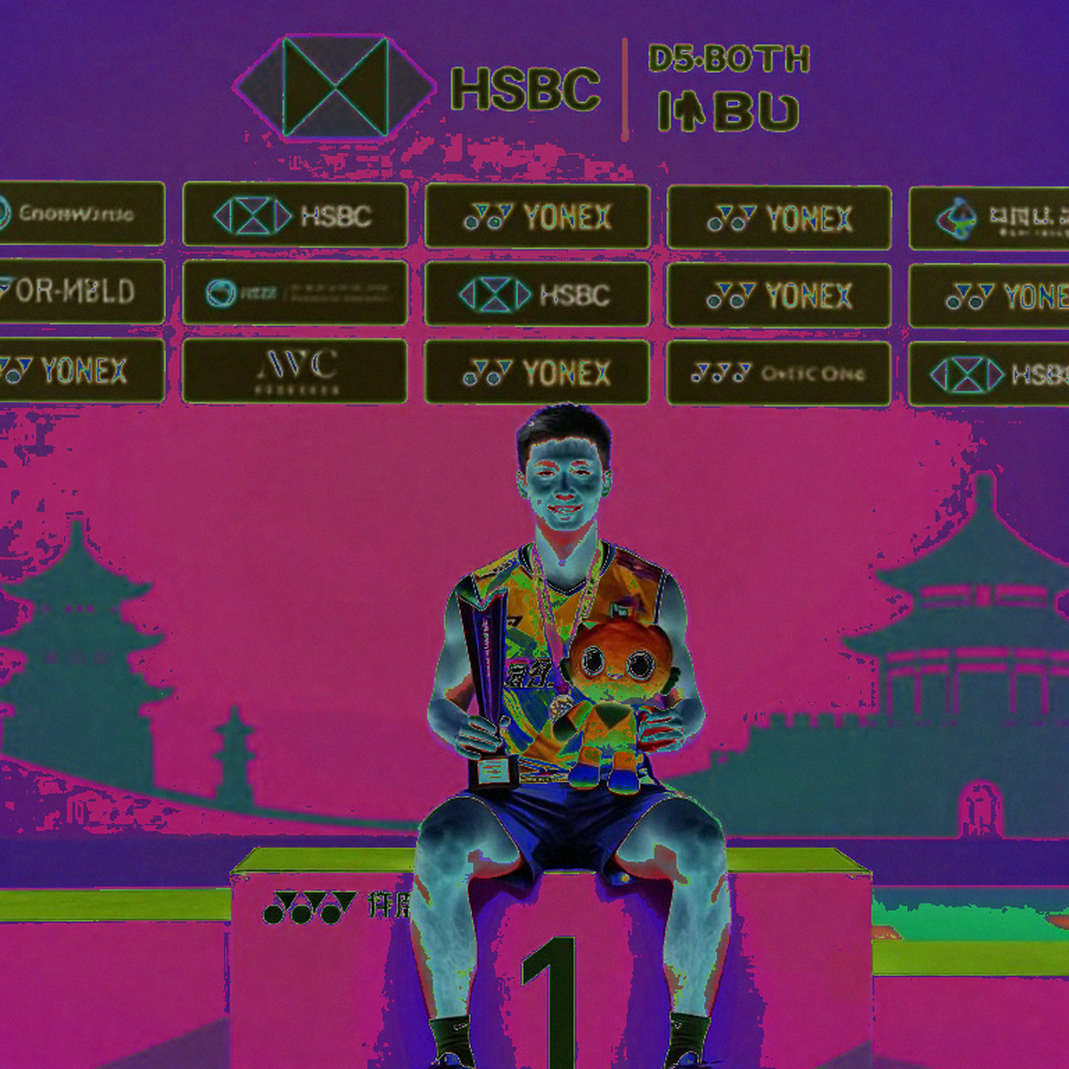
Three risks in order of priority:
One, accumulated physical toll from over five hours on court — medium level, medium probability, medium impact. Recovery must be monitored before the Asian Games.
Two, the influence of home-crowd energy on the first game — medium level. This is a psychological competitive variable that needs re-testing in matches with higher pressure.
Three, the data gap on ranking and H2H — low level, but cross-referencing official BWF sources is needed for full context.
The contrarian angle: this win does not prove what people want it to prove
This is the section I want to use to speak plainly.
There is a popular reading after titles like this: "India has proven it stands level with China in men's doubles." I do not think the data in the source is sufficient to say that.
What the data shows: Satwik and Chirag won a Super 750 final against a Chinese pair, on Chinese soil, after losing the first game. That is a specific result in a specific match.
What the data does not show: the overall picture of world men's doubles. There is no ranking, no depth of squad, no comparison of development systems, no data on other Chinese pairs. One final is not a map of power.
The reading "India is level with China" is appealing. It is a beautiful story. But a beautiful story is not data, and I learned at 22 that the price of letting a beautiful story lead the model is the criticism I have to pay for myself.
What the data actually shows is something more modest but more solid: at Super 750 level, in a final with the full weight of home pressure, an Indian pair adjusted within one game and won with five consecutive points at the end. That is a specific capability. It does not need to be inflated into a statement about the world order.
Correlation is not causation, and one win is not a system.
The criticism on Twitter at 22 — the most expensive lesson I ever received for free.
What to watch next
I do not close this piece with a summary table. I close with three things I will be tracking.
First, the Asian Games. This is the largest variable because it directly tests whether the psychological momentum from the China Masters can convert into a result on the stage where the pressure of defending a title is heavier than any Super 750. If they win, the signal from Changzhou is confirmed. If they exit early, the question will be whether five hours on court was an unpaid debt.
Second, physical recovery. Without a public medical report, I cannot assess it. But I will read their next schedule as an indirect indicator: if they withdraw or reduce load, that is data. If they play continuously, that is also data.
Third, the next Super 750 result. Two Super 750 titles in a season is a foundation. A third would be a different statement about quality — and at that point, I will have a sufficient sample to say things I am not yet permitted to say.
For now, I hold to what the scorecard said: 11-21, 21-13, 21-17. One hour and ten minutes. Five points from 16-17. And a pair that lost two finals here before winning the third.
In the locker room afterwards, there is a person sitting and wondering whether this week's five hours will be returned next week.
90 minutes on the pitch, but what I cried at the World Cup lasts until now.
For them, it may be one hour and ten minutes. Or it may be longer. The data will answer — if anyone bothers to read it before it is written into a story.