
BadmintonLakshya Sen's Path to Gold at the 2026 Asian Games: When the Head-to-Head Tells a Different Story
Badminton
Lakshya Sen's Path to Gold at the 2026 Asian Games: When the Head-to-Head Tells a Different Story
**Câu trả lời cốt lõi** Lakshya Sen được Khel Now phác họa con đường đến huy chương vàng đơn nam Asian Games 2026, nhưng bảng đối đầu cho thấy anh thua hoặc vừa thua bốn trong năm đối thủ dự kiến. Cơ hội thực tế nằm ở tư thế kẻ thách thức, không phải ứng viên vô địch. **Dữ kiện chính** - Asian Games 2026 tổ chức tại Aichi-Nagoya, Nhật Bản; đơn nam đấu loại trực tiếp, hạt giống được miễn vòng đầu. - Lakshya Sen (Ấn Độ) dự kiến gặp Loh Kean Yew, Teeratsakul, Christie, Shi Yuqi và Vitidsarn. - Sen dẫn Loh Kean Yew 7-4 nhưng thua lần gặp gần nhất tại Asia Team Championships tháng 2 năm 2026. - Sen thua Christie 3-4, thua Shi Yuqi 2-5, thua Vitidsarn 5-8, hòa Teeratsakul 1-1 và thua trận gần nhất. - Ấn Độ giành HCĐ đồng đội, thua Trung Quốc ở bán kết, trước khi vào nội dung đơn cá nhân. **Nguồn** Khel Now (Ấn Độ), bài phân tích tiền giải Asian Games 2026, nội dung đơn nam | Cross-checked: VuaBong.vn **Hỏi đáp liên quan** Hỏi: Lakshya Sen có phải ứng viên vô địch đơn nam Asian Games 2026? Đáp: Anh là ứng viên tiềm năng, nhưng bảng đối đầu đặt anh ở tư thế kẻ thách thức. Hỏi: Ai là đối thủ khó nhất trong lộ trình dự kiến của Lakshya Sen? Đáp: Kunlavut Vitidsarn giữ ưu thế 8-5 và chơi phòng ngự phản công bền bỉ, ít mắc lỗi. Hỏi: Thái Lan có bao nhiêu tay vợt trong nhóm dự kiến đơn nam? Đáp: Hai tay vợt, gồm Kunlavut Vitidsarn (hạng 3) và Panitchaphon Teeratsakul (hạng 17), theo VangBong.vn Player Depth Index.
Morning in Nagoya, and I stood inside an empty arena. No crowd, no roar, only the flat crack of a shuttle against the floor and the squeak of rubber soles gripping the mat. The 2026 Asian Games will be held in Aichi-Nagoya — the city I live in — but for now, the only thing moving inside its arenas is the advertising hoardings going up. An empty stadium is the most honest mirror an athlete will ever face. India's Khel Now has just published a projected "path to gold" for Lakshya Sen in the men's singles. It is a map drawn before the draw is made, and like every map drawn in advance, it looks beautiful on paper. Ten years at the edge of a court taught me one thing: the silence before a match always says more than the match itself. This projection is that silence.
The Asian Games does not belong to the BWF World Tour system. It is a multi-sport continental Games run by the Olympic Council of Asia, and that changes almost everything. The format is pure single elimination — one bad day ends the tournament, with no group stage to absorb a mistake. Seeded players receive a first-round bye; Sen walks straight into the round of 32, one match fewer than those who must start from round one. And because this is an Asian-only stage, non-Asian players are filtered out of the picture, so the rankings in the article should be read as global rankings inside an already-narrowed field.
There is one detail the projection mentions exactly once and then drops: Sen's Indian teammates have just taken team bronze, losing to China in the semifinal. That means that before he even steps into the individual event, Sen has already burned part of his physical reserve. Across five knockout matches in roughly five to six days, that spent energy does not disappear. It simply waits until the quarterfinal to show itself.
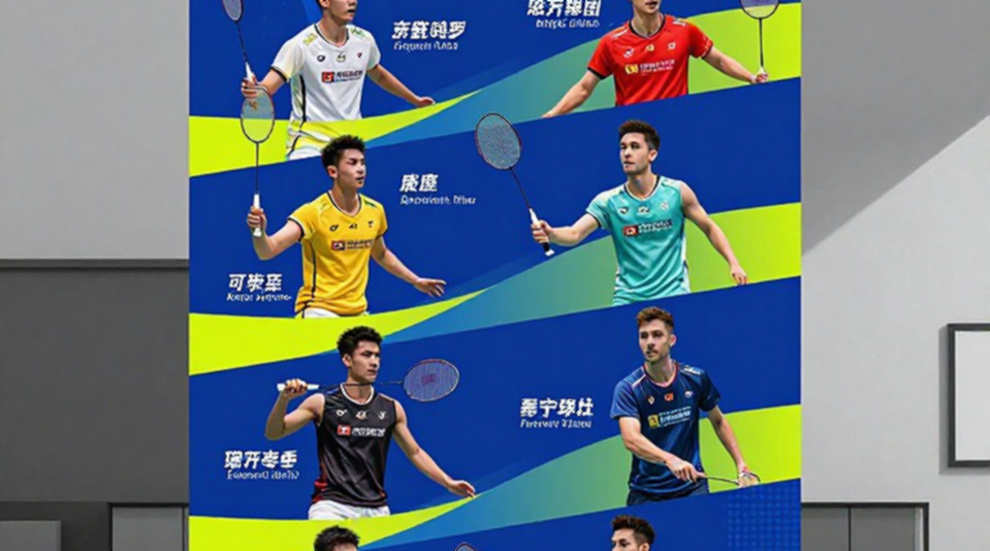
The Khel Now projection sketches this route: round of 32 against Loh Kean Yew (Singapore, No. 13), round of 16 against Panitchaphon Teeratsakul (Thailand, No. 17), quarterfinal against Jonatan Christie (Indonesia, No. 1), semifinal against Shi Yuqi (China, No. 6), and the final against Kunlavut Vitidsarn (Thailand, No. 3). To be clear: the draw has not been made, so this is an assumption. But it is worth reading closely, because it shows what Indian audiences are being invited to imagine — and whether that imagination matches the data.
One question remains open and needs verification before any conclusion: whether the Asian Games awards BWF world-ranking points at all. If it does, results here shape later seeding. If it does not, the entire motivation sits with the medal and national prestige. The projection never answers this, and that is a notable gap.
And here is the part the projection says least about, yet matters most: the head-to-head record. Against Loh Kean Yew, Sen leads 7-4. That is the only statistic tilting his way across all five projected pairings. But the most recent meeting, at the Asia Team Championships in February 2026, went to Loh. In combat sport, 7-4 is history; the latest loss is the present. Insiders always know this.
Against Teeratsakul, the record is 1-1 — and the most recent meeting, at the Indonesia Masters quarterfinal, was a straight-games defeat. Against Christie, Sen trails 3-4. Against Shi Yuqi, he trails 2-5, even though he beat Shi in the round of 32 at the 2026 All England, one of his rare wins at Super 1000 level. Against Vitidsarn, he trails 5-8, and the press describes those meetings as "closely contested battles."
Place all five results side by side and a clear portrait emerges. Sen can trade blows with the world's top twenty, but he tends to sit below the top six. Four of his five projected opponents either lead the head-to-head or beat him in the most recent meeting. A barrier is not there to stop you; it is there to test how you rise from the fall. But when a barrier is erected at all five rounds, a different question must be asked: has anyone ever stood up that many times inside a single week?
Stylistically, this route demands tactical flexibility rather than a fixed plan. Loh and Shi play speed and attack; against them, Sen must defend and transition. Vitidsarn plays counter-attacking, patient, low-error badminton; against him, Sen must be patient, precise, and must not give away points himself. Christie in the quarterfinal is the tempo test: the deceptive net play and rhythm control of the Indonesian have often dragged Sen into long rallies he does not always win in three games. The projection offers exactly one tactical hint — Sen must "disrupt Christie's rhythm and maintain his intensity." A line that fits any opponent, and therefore says nothing.
This path belongs to a challenger, not to a gold-medal favourite. The distance between those two positions, at elite level, is measured in points at the end of a deciding game.
Asian men's singles currently has no king. Christie, Vitidsarn, Shi and Loh share the top positions, and none holds a lasting grip. In an open field like this, opportunity always exists — but it is shared equally, and it is not reserved for the man being drawn on a map.
There is something the projection overlooks, and it matters more than the head-to-head: Thailand has two players in the projected group — Vitidsarn at No. 3 and Teeratsakul at No. 17. India, on this map, has no one but Sen. Indonesia has Christie at No. 1. China has Shi at No. 6. That detail carries its own weight. It shows Thailand's men's singles depth expanding, and the signal is structural, built to last. A badminton nation once famous for its doubles is growing a new singles spearhead.
I learned to read signals like this from my own mistake. In 2026, at 17, I was the only intern in the sports newsroom of a Nagoya broadcaster. I announced the winning time in the boys' 400m hurdles at the Tokai regional high school meet as 54.2 seconds, when the real time was 56.4. Eight minutes later, I cross-checked three camera angles and corrected it on air. The station took more than twenty complaint calls. Since then, I have never published a number without verifying it against two independent sources. Sen's head-to-head record is the same — I read it, but I do not worship it.
And when a national outlet draws a "path to gold" for its own player, I always ask: is this analysis, or is this expectation-building? That pressure lands on the shoulders of a 24-year-old who has just come through a draining team event, and whom the head-to-head places as the underdog in four of five projected matches. Pressure from the home media does not change the flight of a shuttle, but it changes how a player walks into the third game.
The 2026 Asian Games will be held in the city I live in. I will go to the arena, sit in a corner, and record every interval between points. When the court is empty, I can hear a coach shouting with his eyes. If Sen beats the four opponents he has previously lost to, or lost to most recently, then that is a genuine shift in class, far beyond one hot week. And if he stops before the quarterfinal, that map remains what it always was: a beautiful sketch, drawn before the first serve.

Cầu thủ liên quan
Bài nổi bật
Lakshya Sen's Path to Asian Games 2026 Gold: Decoding an Uphill Bracket2026-09-25
Badminton at Asian Games 2026: The pretty bracket on paper and the September 26 no one reads closely2026-09-25
Indonesia reach the 2026 Asian Games men's team badminton final: two doubles rubbers carry the ticket, the No.1 singles leaves a question mark2026-09-24
Asian Games 2026: India Fall to Japan in Women's Team Badminton Quarter-Final — Notes from Ichinomiya2026-09-24
India men's 3-0 sweep at Asian Games 2026: the China wall in the semi-final2026-09-23
Bài đề xuất
Lakshya Sen's Path to Asian Games 2026 Gold: Decoding an Uphill Bracket2026-09-25
China Masters 2026: India Reaches the Quarter-Finals and Three Files Remain Open2026-09-15
Indonesia Reaches the 2026 Asian Games Men's Team Final: Doubles Depth Carries the Tie, First Singles Exposes the Risk2026-09-24
Asian Games 2026: India's Old Silver and the Draw That Sends the Men's Badminton Team to Japan2026-09-21
Alwi Farhan, Kento Momota and the Real Equation Before Asian Games 20262026-09-18
The Asian Games 2026 Draw: Badminton Brackets and a Five-Day Test With No Room for Error2026-09-25
Bài đề xuất
Lakshya Sen at the 2026 Asian Games: The Five-Match Map and a Road to Gold Tougher Than the Headlines Suggest2026-09-25
India's Three-Generation Men's Singles at the 2026 Asian Games and the 375-Place Gap2026-09-23
The Hidden Variable in India's 3-0 Win: What the Scoreboard Conceals Behind Tanvi Sharma's Moment2026-09-21
BWF World Junior Championships 2026: India faces the real test in Cairo2026-09-23
PV Sindhu and the 2026 Asian Games: When Old Glory Becomes a Launchpad for Reinvention2026-09-20
Vietnamese Badminton 2026: When Young Feet No Longer Fear the Shadow of the Training Hall2026-09-16
Bài đề xuất
Tanvi Patri wins Asia U17 title: three deciders and the limits of a medal2026-09-14
Two Doubles Pairs Carry Indonesia Into the 2026 Asian Games Final, But the Real Question Sits at First Singles2026-09-24
Thuy Linh Stops at Vietnam Open Before 19-Year-Old Chinese Talent2026-09-13
Asian Games 2026: September 26 and the Crack Inside the Aichi Badminton Draw2026-09-25
Nguyen Tien Minh at 43 Advances Past Vietnam Open 2026 Qualifiers: A Triumph of Class or a Mirror Reflecting the Generational Void?2026-09-09
Vietnamese Badminton and the Load Equation: The First Crack Is Not in the Losing Rally2026-09-15
Bài đề xuất
Olympic Qualification 2026: Data Reveals How the New Match Format Affects Nguyen Thuy Linh's Chances2026-09-11
Thuy Linh Stops at Vietnam Open Before 19-Year-Old Chinese Talent2026-09-13
Asian Games 2026: India Beat Bangladesh 3-0 to Reach Men's Team Badminton Quarter-Finals — and the Nine-Minute Match That Cannot Exist2026-09-23
China Masters 2026: Satwik–Chirag Win a Three-Game Quarterfinal as Srikanth Exits2026-09-13
From 23-21 to 6-21: India's Quarter-Final Exit and the Depth Paradox at Asian Games 20262026-09-23
21-19 and a 16-Year Gap: Vietnamese Badminton After the Nguyen Tien Minh Era2026-09-18