
Thuy Linh's 12-21 Decider: The Scoreboard Never Records the Price of a 24-22 Set
**Trả lời nhanh:** Tại vòng ba Asian Games, Nguyễn Thùy Linh thua Trần Vũ Phi (hạng 4 thế giới) 1-2 với điểm số 10-21, 24-22, 12-21; Nguyễn Hải Đăng thua Kunlavut Vitidsarn 0-2 với điểm số 16-21, 14-21. Điểm mấu chốt nằm ở giá năng lượng của ván thắng 24-22 — nguyên nhân khiến ván quyết định bị bỏ xa. **Dữ kiện chính:** - Nguyễn Thùy Linh thắng Thalita Ramadhani Wiryawan trước khi gặp Trần Vũ Phi ở vòng ba đơn nữ. - Ván hai 24-22 tương đương 46 pha cầu; ván ba 12-21 tương đương 33 pha cầu. - Nguyễn Hải Đăng thắng Odilzhon Abdurakhmanov 21-6, 21-6, tổng 54 pha cầu cho cả trận. - Trận Hải Đăng gặp Kunlavut Vitidsarn kéo dài 72 pha cầu theo điểm số 16-21, 14-21. - Bài gốc không nêu kỳ Asian Games cụ thể, không có dữ liệu tốc độ smash hay độ dài pha cầu. **Nguồn:** Bài phân tích chuyên sâu giai đoạn 2 dựa trên nhật ký Asian Games, ngày thi đấu 26 tháng 9; kỳ giải và nguồn gốc chưa xác minh. **Hỏi đáp liên quan:** - Hỏi: Vì sao ván ba 12-21 không nên đọc là sự sụp đổ tâm lý? Đáp: Vì đó là hệ quả kế toán của một ván hai dài 46 pha cầu, khiến dự trữ năng lượng kỵ khí bước vào ván ba đã bị rút bớt. - Hỏi: Khoảng cách thật giữa Thùy Linh và tầng hạng 4 thế giới nằm ở đâu? Đáp: Không nằm ở đỉnh kỹ thuật mà ở độ bền của đỉnh ấy, tức khả năng giữ mức đó qua 70 pha cầu thay vì 46. - Hỏi: Vì sao trận thắng 21-6, 21-6 của Hải Đăng không đo được năng lực chịu pha cầu dài? Đáp: Vì đối thủ xếp dưới kết thúc pha quá sớm, nên trận đấu không kiểm tra được khả năng chịu đựng các pha kéo dài.
On September 26, in the third round of the women's singles badminton event at the Asian Games, Nguyen Thuy Linh walked into a deciding game against Chen Yu Fei. Game one: 10-21. Game two: 24-22. Game three: 12-21.
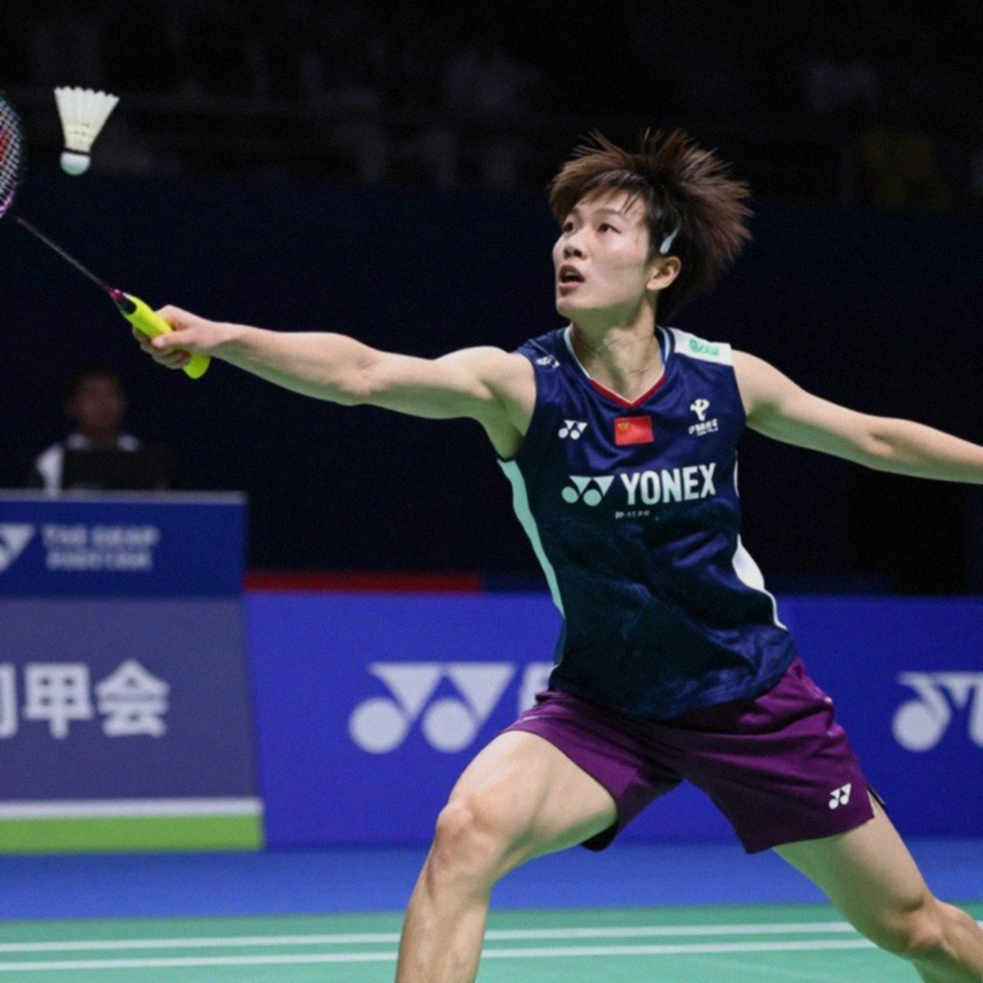
Three lines of numbers. Enough to skim in three seconds, enough to file away neatly: losing to the world No. 4 is reasonable.
I sat with them longer. What surfaced was an invoice.
The 24-22 set was not paid for with technique. It was paid for with everything a scoreboard never records: rally count, jumps, high-speed direction changes, and the minutes the body spent operating in the anaerobic zone. The same day, in men's singles, Nguyen Hai Dang beat Odilzhon Abdurakhmanov 21-6, 21-6, then lost to Kunlavut Vitidsarn 16-21, 14-21. Different scorelines. The same forgotten variable.
The third round is no place for negotiation
Badminton at the Asian Games runs on single elimination, 21-point rally scoring, best of three. One bad game can end an entire tournament. A draw position is therefore worth roughly half of a player's form, and meeting the world No. 4 in the third round is a slip nobody wants to pull.
Thuy Linh reached the third round after beating Thalita Ramadhani Wiryawan, then faced Chen Yu Fei, listed in the original report as world No. 4 at the time of the event. Hai Dang reached the third round with a 21-6, 21-6 win over Abdurakhmanov, then met Kunlavut Vitidsarn, a defining figure of Asia's elite men's singles tier.
One thing needs to be said plainly about the source data. The original piece does not specify which edition of the Asian Games this was, gives no exact tournament date, and contains not a single line on smash speed, rally-length distribution, or deciding-game win rate for either Vietnamese player. Every conclusion below must therefore sit inside brackets. Years in this trade taught me that missing data is not a place to fill in with inference; it is a place to draw the boundary correctly.
But two scorelines are already enough to say one thing.
The real price of a 24-22 game
Under 21-point rally scoring, every rally is a point. That turns the scoreboard into a crude but honest instrument for measuring workload. A 21-15 game equals 36 rallies. A 24-22 game equals 46. A gap of ten rallies sounds small, but those are ten rallies at the tail of a game, when both players are spent, when each exchange runs longer, movement amplitude grows, and the margin for error narrows.
In other words, Thuy Linh won game two by spending more than a normal winning game requires. She banked a set and pre-paid part of the next one's energy.
Then she had to play game three.
A 12-21 game equals 33 rallies. Read it as a mental signal — loss of focus, fading lungs, weak nerves — and you skip something far more mechanical: energy management. In singles badminton, the interval between rallies lasts only tens of seconds. The phosphagen system has not recovered before the lactic anaerobic system must carry the load again. When game two stretches to 24-22, game three begins from a reserve already drawn down. Against a world No. 4, the opponent does not need to play better; they only need to play longer, and the shortfall surfaces as errors in the 55th minute.
That is why I do not call the 12-21 decider a collapse. I call it the accounting result of a game two that cost too much.
Turn to Hai Dang and the same logic appears in mirror form. The 21-6, 21-6 win over Abdurakhmanov cost only 54 rallies across the whole match — roughly one 24-22 game plus a few exchanges. A very convincing win, yet it tested nothing about tolerance for long rallies, because an outranked opponent ended exchanges too early.
Then Kunlavut arrived. 16-21 and 14-21 equal 72 rallies, and all 72 took place against a player whose defence stretches rallies. The difference between Hai Dang in the first match and Hai Dang in the second is not in the shots; it is in the number of extra rallies the opponent forced him to play. A good defensive player does not end rallies — they extend them. And extending rallies is the cheapest way to break an attacker's structure.
Across years of watching singles badminton at continental events and on the BWF World Tour, I have settled into one working habit: before discussing technique, count rallies. The scoreboard does not display that number, but it exists, and it explains most of what happens in a third game.
Here, the source data holds no per-game rally-length distribution. I cannot prove Thuy Linh's game two ran longer than her game one. Nor, though, can anyone prove the opposite, and when data is thin, the cheapest hypothesis is usually the correct one: a 24-22 game runs longer than a 10-21 game.
The crack is in how we read game two
The popular reaction afterwards followed a familiar line: Thuy Linh took a set off the world No. 4, and that is a sign of progress. That reading is comfortable, pleasant, and in my view skewed.
A set won 24-22 carries less information value than a set lost 19-21. In that 24-22 set she touched her opponent's level — but touched it across 46 rallies, not 70. The true distance between Thuy Linh and the world No. 4 tier does not sit at the technical peak; it sits in the durability of that peak. This is not a gap closed by one training session or one speech. It closes through structure: the number of elite matches per year, the quality of sparring partners, and programmed competition load.
The Asian Games repeated a lesson the Hoa Xuan stadium taught me in 2026: the first crack does not lie on the court; it lies in how we read mistakes. When a badminton nation reads a 1-2 result against world No. 4 as a near-upset, it is rewarding itself with a feeling of closeness. That feeling is paid for in time.
There is a second crack, and it belongs to the system rather than to any individual. The original report records no team medals for Vietnamese badminton. The sport's presence on the continental stage therefore rests almost entirely on a handful of singles players. That is structural risk: every expectation, every target, every investment passes through the same narrow door. At that level, a 24-22 game stops being only Thuy Linh's business.
Injury is the one thing on a badminton court that needs no encryption: it exposes every hypothesis you hold. At this Asian Games, no injury was reported. But a body does not need a torn tendon to send a signal. A decider left far behind after a long set is also a signal — just one the medical sheet does not record, and the scoreboard does not either.
What I will track over the next twelve months
At 39, I have understood that I do not read matches; I read the silences between rallies. For Thuy Linh, the right yardstick next year is not the number of sets won against top-10 players but her deciding-game scores against top-20 players. For Hai Dang, it is average rally count per point against defensive opponents — as long as that number keeps moving in his favour, the gap is closing.
Vietnamese badminton is at a stage where every third game is a long answer. The question is no longer whether they can win a set off the world No. 4. The question is how many more 24-22 games they need before they learn to win the third.