
Asian Games 2026: September 26 and the Crack Inside the Aichi Badminton Draw
Q: Khi nào vòng 32 và vòng 16 môn cầu lông Asian Games 2026 diễn ra? A: Cả hai vòng được xếp cùng ngày 26 tháng 9 năm 2026, khiến các tay vợt đi sâu có thể phải đánh hai trận trong một ngày. Key facts: - Nội dung cá nhân cầu lông Asian Games 2026 kéo dài từ 25 đến 29 tháng 9 năm 2026 tại Aichi-Nagoya. - Lakshya Sen (Ấn Độ) gặp Loh Kean Yew (Singapore) ngay vòng hai đơn nam. - PV Sindhu (Ấn Độ) có bye, dự phóng chạm Chen Yufei (Trung Quốc) ở vòng sau. - Đội nam Ấn Độ đã giành huy chương đồng đồng đội, thua Trung Quốc ở bán kết. - Hai cặp đôi nam trong lá thăm lệch khỏi quan hệ đối tác thường trực, cần đối chiếu chính thức. Source: Khel Now (bản tin xem trước lá thăm Asian Games 2026), công bố tháng 9 năm 2026. Q&A liên quan: - Đội tuyển Ấn Độ cử bao nhiêu tay vợt tham dự cầu lông Asian Games 2026? A: Bản tin ghi nhận Ấn Độ trải suất ở cả năm nội dung, trong đó có một số tay vợt trẻ như Ayush Shetty và Unnati Hooda. - Vòng loại trực tiếp tại Asian Games 2026 có tính điểm xếp hạng BWF không? A: Chưa xác thực; cần đối chiếu quy định chính thức của BWF và Hội đồng Olympic châu Á. - Bye trong lá thăm cầu lông Asian Games 2026 có phải lợi thế? A: Có, nhưng bị xói mòn bởi lịch thi đấu nén khi vòng 32 và vòng 16 diễn ra cùng ngày.
September 26, 2026. If I had to circle a single cell on the badminton schedule of the 2026 Asian Games in Aichi-Nagoya, I would choose this date. This is the day the organisers place both the round of 32 and the round of 16 into the same session. Which means any player hoping for a deep run may have to play two matches in one day, against two opponents who have each prepared a separate plan to beat them.
Fifteen years ago, when I was still watching Asian tournaments through blurry recordings, I thought scheduling was just logistics. Later I understood that in compressed events, scheduling is itself a tactical variable, and it usually speaks before the player touches the racket. A two-match day doubles the minutes on court, doubles the number of times opponents read your serve habit, doubles the number of times the calf must warm up again from a nearly cool state, and doubles the coaching hours that must be split between two contradictory plans.
I read the Asian Games draw with the same eye I used to read a no-spectator match during the pandemic: I do not trust results, I only trust the structure that pushes results in a direction.
One detail must be said upfront, because it governs how I read this entire draw. The report circulating widely is sourced from a general Indian multi-sport outlet, with a self-promotion footer at the end — the fingerprint of sites that live on traffic rather than badminton specialism. In that report, two men's doubles pairings deviate from the established partnerships of the named players: a Malaysian shuttler usually paired with a different compatriot, and a Korean shuttler listed beside someone who is not his regular partner. These two names may be experiments for a multi-sport event, or they may simply be editing errors. Until I can cross-check against the official Badminton Asia draw, I keep them in a bracket of doubt.
This is why I do not write the "watch-the-fire" piece after a match with emotions still hot. A forty-page report died in silence in a stadium with no applause — I tasted that in Hai Phong, when my forty-page analysis of home-win rates was brushed aside. I learned that a draw is only worth as much as the accuracy of the data behind it.
The most important thing about the Aichi draw is not the big names, but the way organisers squeeze the round of 32 and the round of 16 into one day — a choice that turns a five-day individual event into an endurance contest rather than a purely technical one. When a tournament structure compresses, the odds of upset are uneven: they tilt toward players with a wide defensive range, a slow rhythm, and the ability to finish a point within three shots.
In the men's singles, the draw places two notable names against each other in round two: Lakshya Sen of India and Loh Kean Yew of Singapore. This is the kind of pairing that forces analysts to sit up, because both belong to the "score in the first three shots" category. Sen plays an all-court, deceptive game, dragging opponents into cross-court rallies before switching direction abruptly. Loh Kean Yew moves the other way — pressing forward, forcing tempo, attacking continuously so the opponent cannot breathe. The match will be decided at the net and by who seizes the first three shots. But here is the point I want to stress: when two attack-minded players are pushed into round two of an event with double-match days, the winner is not necessarily the better player, but the one who saves more energy for the next round. The draw has already handed a silent early sentence to one of them.
PV Sindhu's women's singles path is an even clearer lesson in how odds bend step by step. She opens with a bye, faces Letshanaa Karupathevan of Malaysia next, likely meets Tomoka Miyazaki — Japan's rising young star — and if she advances, confronts Chen Yufei, a rally-control specialist who ends points through long exchanges. This is a rising difficulty curve whose summit is the player-type that counters Sindhu's power game: if rallies lengthen, the advantage shifts to the better rhythm-keeper. At this stage of her career, Sindhu sits on the far side of the age curve, while Miyazaki climbs the near side. The draw places two generations in the same corridor.
In men's doubles, a heavyweight projected semifinal emerges: Satwiksairaj Rankireddy and Chirag Shetty of India against the Korean pair listed in the draw. Both sides lean attacking. In top men's doubles, the difference is rarely raw smash power but the quality of service returns and the control of flat mid-court drives. This is the kind of match where points are decided not by pretty strokes but by how many times an opponent picks the wrong return direction under pressure. With low-to-medium confidence, I keep this conclusion at the "hypothesis" tier, not the conclusion tier.
One thing I have drawn from my own years of reading badminton draws: the more compressed the event, the more important the bench becomes over the primary weapon. Teams like China, Korea, Japan, and Indonesia enter an Asian Games with deeper rosters trained specifically for stacked match days. India has a broad spread across all five disciplines, but their current depth does not yet match centralised systems — clear in the men's team result: they took bronze, won through to a semifinal, then stopped against China.
Here I must ask myself a counter-intuitive question. Is a federation fielding many entries really a sign of a healthy development pipeline? I once believed so. But viewed colder, broad presence can reflect two opposite things: either the system produces talent well, or the system is in team transition and is forced to field young players earlier than planned. The appearance of Ayush Shetty, Unnati Hooda, or young women's doubles pairs does not automatically tell a positive story. Correlation is not causation. A team fielding many players is not necessarily stronger than a team fielding few at the top tier.
The same applies to the very idea of an "easy path". Is a bye an advantage?
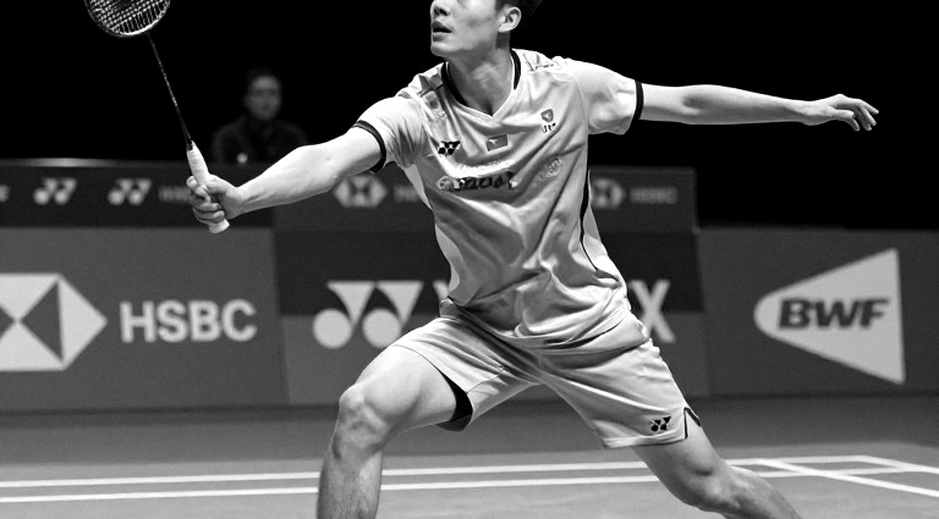
In a single-elimination event, a first-round bye is genuinely an asset, trading for a day of fresh legs. But here, the compressed structure erodes that advantage: a player entering straight into the round of 32 may face an opponent who has just finished a match, warmed up and match-tight. There is no formula that works for every player. Every bye is a fitness bet with no guaranteed payout.
I remember Lach Tray. In 2026, when Hai Phong held a strong opponent to 1-1 at home, I published data showing they generated only 0.4 xG against the opponent's 2.1, with the equaliser coming from a contentious penalty. Back then, hometown fans called me a traitor. Three rounds later, the team slid exactly in the disorganised defensive pattern the data had described. Lach Tray taught me that xG never steps onto the grass — meaning a model is only right when we stop before the things the model cannot see.
In the Aichi draw, the model cannot see three things. First, injury status — the report says not one word. Second, real form over the past three to six months — not a single line of data. Third, whether the Asian Games carries world federation ranking points at all, a question unanswered in the report that must be checked against official rules.
This is the point I want readers to hold on to: the Aichi draw is only as reliable as the evidence layer it supplies itself, and that layer is thin. Every projection about quarterfinals or semifinals is a line drawn on paper, not a single exposed match.
Prediction is not seeing the future; it is reading the dislocation of the present. The dislocation in this draw lies in three places: a two-match day, two unverified men's doubles pairings, and a difficulty slope that counters the primary weapon of a team in transition.
At 56, I no longer believe in the number — I believe in the way the number is betrayed. When the schedule is stuffed, the number is betrayed by doubling. When a report carries a social-media self-promotion footer, the number is betrayed by editing error. When a team fields many young players, the number is betrayed in both directions, and the reader must choose which way to believe.
What I will observe in the opening days is not who wins. I will watch who holds rhythm in that second match of the same day, who loses short-service points when tired, and who sits down between two games without changing expression. None of that appears on the scoresheet, but it is the real evidence of a compressed event. Players underestimated in this draw will speak not through stroke play, but through their ability to force opponents to play one more shot.
The next round of the story will be written from matches where someone walks onto court already tired. I will wait there, with my data sheet and a little patience.