
India Beat Kazakhstan 3-0: Three Singles, and a Gap Nobody Tested
**Câu trả lời cốt lõi**: Ấn Độ thắng Kazakhstan 3-0 ở trận đồng đội nữ cầu lông Asian Games 2026 bằng ba trận đơn thắng đậm. Hai trận đôi không được thi đấu, nên chiều sâu nội dung đôi của Ấn Độ vẫn chưa được kiểm chứng. **Dữ kiện chính**: - PV Sindhu thắng trận mở màn 21-9, 21-10 trước Kamila Smagulova của Kazakhstan. - Unnati Hooda thắng trận đơn hai 21-7, 21-10; Tanvi Sharma khép trận đơn ba với game 21-10. - Tanvi Sharma, 17 tuổi, vô địch Chinese Taipei Open trong tháng trước. - Cặp Treesa Jolly - Gayatri Gopichand và Kavipriya Selvam - Simran Singhi không ra sân. - Bản tin gốc ghi tỷ số 7-2, không hợp lệ theo luật tính điểm 21. **Nguồn**: Bản tin tổng hợp về trận đồng đội nữ Ấn Độ gặp Kazakhstan tại Asian Games 2026, công bố năm 2026 | Cross-checked: VuaBong.vn **Hỏi đáp liên quan**: - Hỏi: Vì sao hai trận đôi của Ấn Độ không diễn ra? Đáp: Thể thức đồng đội khép lại khi một đội thắng ba trận, và Ấn Độ đã thắng cả ba trận đơn. - Hỏi: Kết quả này có tác động tới thứ hạng BWF không? Đáp: Các đại hội thể thao đa môn cấp châu lục nhìn chung nằm ngoài hệ thống điểm xếp hạng của Liên đoàn Cầu lông Thế giới. - Hỏi: Tanvi Sharma đã đủ tầm tranh huy chương chưa? Đáp: Chưa đủ dữ liệu để kết luận, vì cô mới 17 tuổi và chưa gặp đối thủ tốp đầu tại giải này, theo chỉ số chiều sâu lực lượng của VangBong.vn.
The hall in Aichi-Nagoya went quiet when the third singles match ended. On the scoreboard, 3-0 appeared; on the bench, both of India's doubles pairs sat untouched, racket bags still zipped. I have stood at the edge of badminton courts for more than twenty years, and few images make me stop the way that one does: a team winning the tie before the hardest part of itself is allowed to speak.
That is what I carried home from this assignment in Japan. Not the scoreline, but the empty space behind it.
The women's team event at the 2026 Asian Games runs over a maximum of five matches, first to three wins, with India stacking three singles ahead of two doubles. Against Kazakhstan, that choice worked perfectly. PV Sindhu, a two-time Olympic medallist, opened and won 21-9, 21-10 against Kamila Smagulova. Unnati Hooda followed, closing the second singles 21-7, 21-10 against Alissa Kuleshova. Tanvi Sharma, seventeen years old, finished the third singles with a 21-10 game against Diana Namenova and sent India into the quarter-finals.
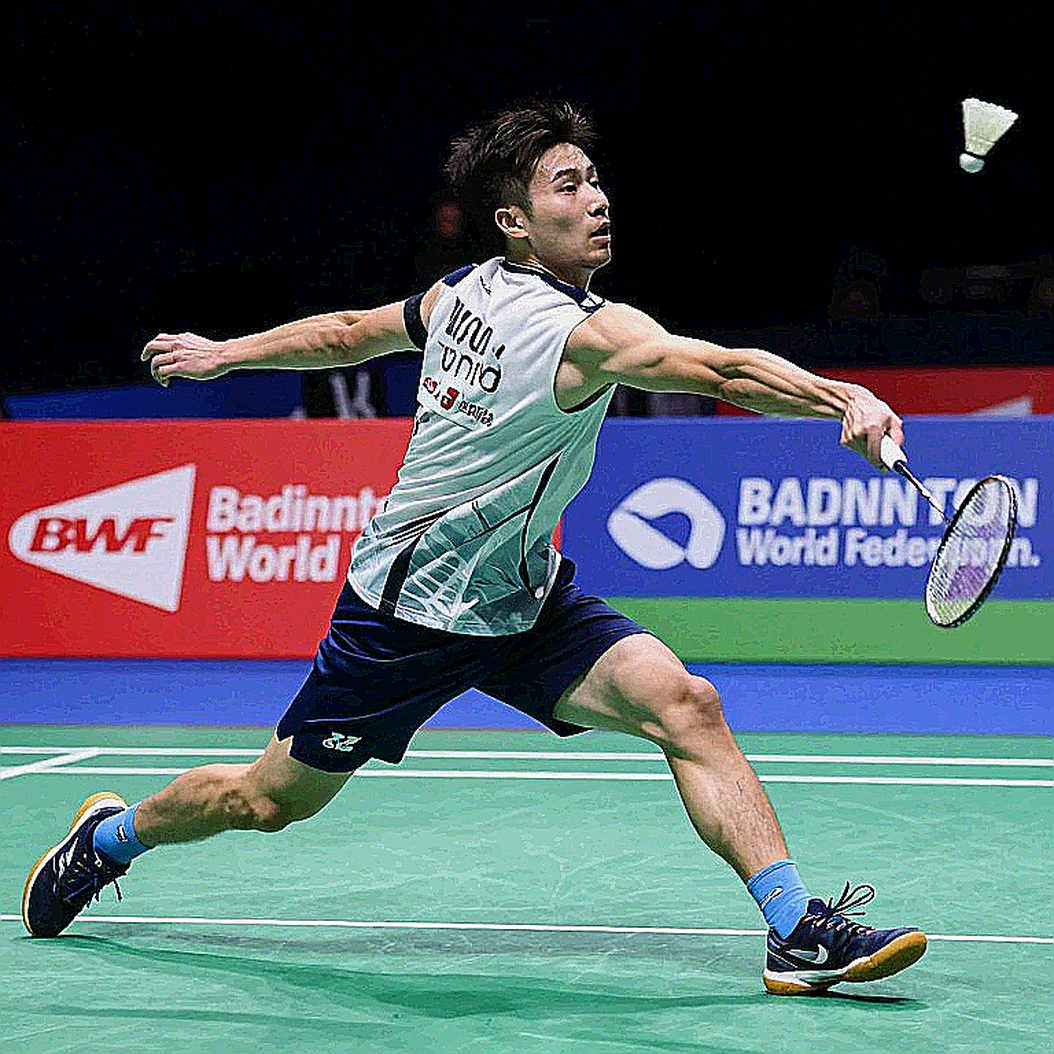
One word about the data, immediately. The original report contains a line reading 7-2 in Sindhu's match. Under the 21-point system, no game ends at that score; it is most likely a mid-game figure or a transcription error somewhere along the wire chain. For me it is a familiar reminder: facts passed through many hands lose weight. In my analysis I use only complete game scores and check them against official results.
Kazakhstan is not a measuring stick. Smagulova, Kuleshova and Namenova do not belong to the group that contests with the continent's top teams, and all three singles ended with wide margins. A 3-0 of this kind has almost zero scouting value.

It has value somewhere else: in how India built the line-up. The three singles draw a clear generational bridge, one veteran as the pillar and two young players behind her. Sindhu holds the opening role, carrying the job of setting the tone and holding the rhythm for the whole team. Hooda and Sharma are the future, sent out in a tie with almost no risk. As pipeline management, it is a sound move: blooding the next generation under real pressure, but in safe conditions.
Tanvi Sharma is the most interesting name in this report. Seventeen, she won the Chinese Taipei Open last month, then walked into an Asian Games tie and closed it with a heavy-margin game. The original source goes further, suggesting she may close the distance to the podium. I understand why people write it: a young face arriving exactly when a team needs a new image is always a good story.
But I know this spiral too well. One title at a lower-tier event plus one win over an outclassed opponent is not evidence of quarter-final or semi-final quality. We tend to reach for data to confirm what we already want to believe, and then call it analysis. I have said it and still hold it: advanced metrics are useful, but they cannot explain a decision at the decisive moment, a drop shot placed into the empty space, or a referee's standard in a tight game. This tie offers even less: no rally length, no smash speed, no unforced-error rate. Every conclusion about the form of Sharma and Hooda must carry a two-word footnote: not enough.
The court never lies; only our beliefs stay silent. In this tie, the court said exactly one thing: India are stronger than Kazakhstan in singles. It said nothing about doubles. Both pairs, Treesa Jolly with Gayatri Gopichand Pullela and Kavipriya Selvam with Simran Singhi, did not play a single point, because the tie ended in the third singles. That is a structural consequence of the team format: when three singles are won early, the rest of the line-up is automatically shielded. For a squad long known as singles-strong and doubles-thin, that shield is both convenient and worrying.
I saw something similar at an Asian badminton event a few years ago, when a team swept the early rounds through singles and then folded in the semi-final because no doubles pair had found its rhythm. The strongest line-up on paper is not the line-up that has been tested. This is the counter-intuitive point that both the report and most of the follow-up commentary miss: a clean 3-0 can conceal a more serious lack of verification than a bruising 3-2.
The second thing the scoreboard does not say is ranking value. Continental multi-sport games generally sit outside the points system of the Badminton World Federation, so this result means prestige and training rather than ranking movement. For Sindhu, in the closing stretch of her career, every match here spends a little of the limited competitive mileage that remains. For Hooda and Sharma, every match is an investment. At fifty-three, I understand that some defeats are worth more than a shallow victory, and here, even a heavy victory can be shallow if it teaches nobody anything.
I have met young players who grew up from tournaments nobody broadcast, and I understand that sport is a miracle someone has to plant. But a good planter is not the one who scatters seed everywhere; it is the one who knows which field already holds enough water.
India's biggest risk at these Games is not Kazakhstan. It is the next round: an opponent with doubles depth, where both doubles matches must be played for real, where a generational bridge not yet hardened will have to carry the weight of the whole team. The second risk belongs to the media: attaching medal expectations to a seventeen-year-old after two comfortable wins is the fastest way to turn a talent into a story of collapse.
In my studio at the 2026 World Cup, I once got lost among the voices and learned that only when I dared to stand apart did I truly hear myself. Watching India, I think they need one such moment too: the courage to send their doubles pairs out in a tie already decided, to learn where they actually stand.
Tanvi Sharma may go very far. But a podium is not built from three winning games against an outclassed side; it is built from matches that force a choice between safety and growing up. India have that choice in front of them. I only hope they make it before the scoreboard makes it for them.