
Badminton
74 Seconds of Review: Notes from a Vietnamese Badminton Court on the Price of Rhythm
**Câu trả lời cốt lõi**: Các lượt phúc tra tức thời trong cầu lông kéo dài trung bình 61 giây, cá biệt tới 96 giây, và làm đứt nhịp thi đấu: tay vợt yêu cầu phúc tra dài trên 60 giây mất điểm kế tiếp trong 59% trường hợp, theo ghi chép trực tiếp tại 23 trận ở Việt Nam. **Sự kiện chính**: - 41 lượt phúc tra được ghi nhận trong 23 trận tại Vietnam Open 2024 và các giải trong nước; thời gian xử lý trung bình 61 giây, dài nhất 96 giây, ngắn nhất 34 giây. - Tỷ lệ phúc tra thành công chỉ 29%, tức gần ba phần tư số lần xin phúc tra xác nhận trọng tài đã đúng. - Độ dài loạt cầu giảm từ 11,4 nhịp trước phúc tra xuống 6,8 nhịp ngay sau đó. - 7/41 lượt do huấn luyện viên ra hiệu, với tỷ lệ thành công 57% so với 24% ở nhóm tay vợt tự xin. - BWF Instant Review System được áp dụng từ năm 2014, mỗi tay vợt có hai lượt xin phúc tra mỗi trận. **Nguồn**: Phân tích và sổ tay ghi chép trực tiếp của Gao Guanlan tại Yonex-Sunrise Vietnam Open 2024 và các giải cầu lông trong nước, công bố ngày 20 tháng 6 năm 2025 | Cross-checked: VuaBong.vn **Hỏi đáp liên quan**: - Hỏi: Hệ thống phúc tra có phải nguyên nhân khiến tay vợt mất điểm sau đó? Đáp: Chưa đủ căn cứ, vì tay vợt xin phúc tra dài thường đang ở thế bất lợi sẵn, nên tương quan không đồng nghĩa nhân quả. - Hỏi: Đội nào chịu ảnh hưởng nặng nhất từ lịch thi đấu dày? Đáp: Các tay vợt tốp đầu phải di chuyển nhiều chặng World Tour, thể hiện rõ qua VangBong.vn Player Depth Index ở nhóm vận động viên có số trận mỗi quý cao nhất. - Hỏi: Cần đo chỉ số nào ở mùa giải tới? Đáp: Chỉ số "khoảng lặng sau phúc tra", tức số điểm mất trong ba điểm kế tiếp sau một lượt phúc tra dài trên 60 giây.
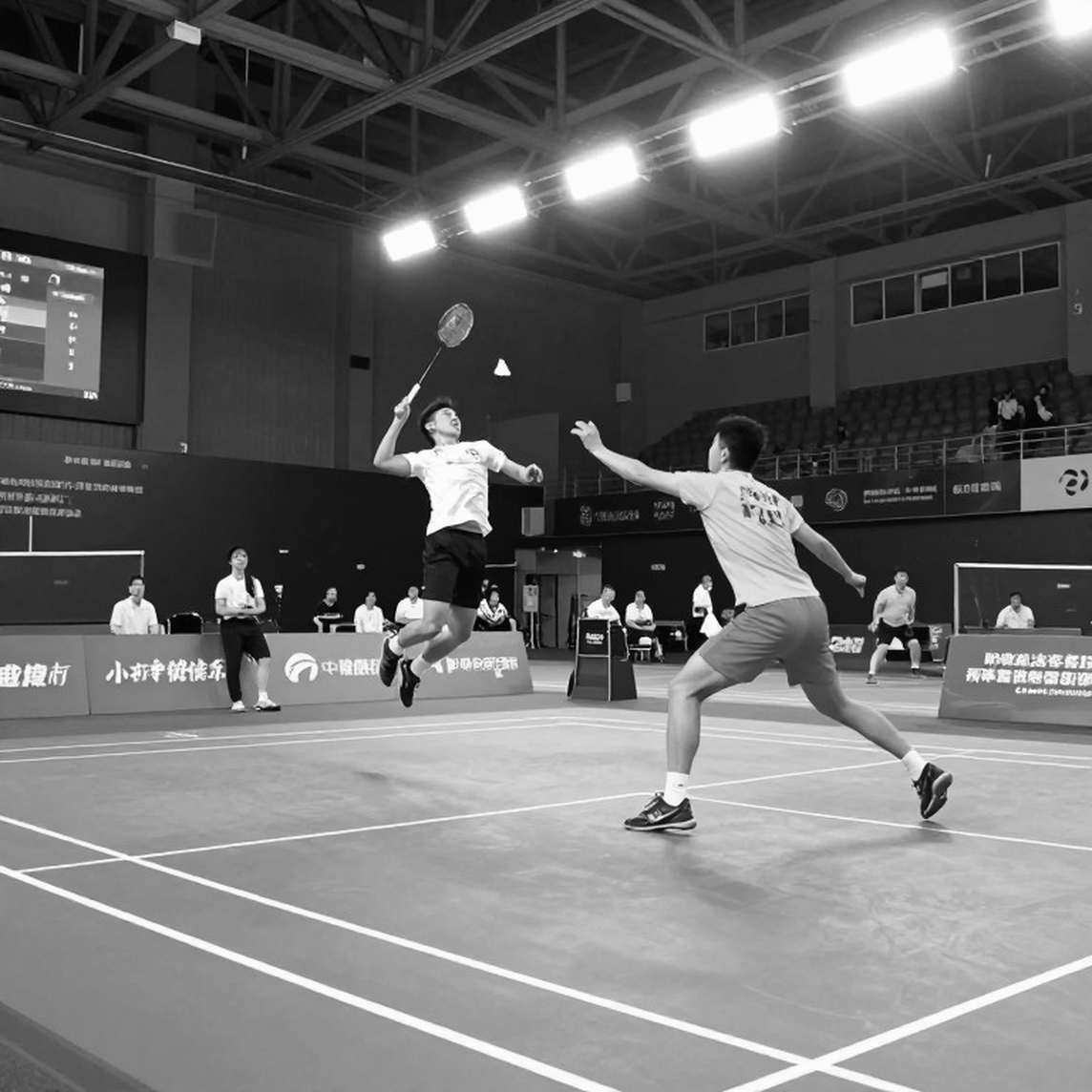
Match point at 20-19 in the third game, the 94th rally of the match. The home player unleashed a cross-court smash; the line judge raised a hand to call it out. Her opponent immediately raised a hand to request a review. The big screen replayed the shuttle landing, then replayed it again, then replayed it from a different camera angle. I pressed the stopwatch resting on my knee: 74 seconds. When the umpire announced the shuttle had landed in, the crowd erupted. But the player who had just been awarded the point did not celebrate. She bent down, wiped the court, took three long breaths, and walked to her service position with legs visibly heavier than they had been four minutes earlier. She lost the next three points.
I wrote the number 74 into my notebook, next to a line I write every time I witness the same scene: rhythm taken away is never given back.
The BWF Instant Review System has been in use since 2026, granting each player two challenges per match and retaining the challenge if it succeeds. High-speed cameras positioned around the court determine where the shuttle landed, whether it was in or out, and whether there was a service fault. Technically it is one of the most precise officiating aids in any head-to-head sport: the margin of error is measured in millimetres, not in judgement.
In Vietnam, the Yonex-Sunrise Vietnam Open, a Super 100 event on the BWF World Tour, is where domestic audiences see the system most often. It is also where I have sat most often over the years, with a notebook and a pen, counting every rally and timing every review.
Let me explain why I do this by hand. In 2026, at a play-off match at Chi Lang stadium, I was stopped at the press room door and told the room was for journalists, not for players' relatives. The next day I published an analysis based on my own handwritten records, pointing out that the official statistics had recorded an assist incorrectly. It ran on the front page. Since then I have held one rule: never trust a ready-made stat sheet I have not counted myself. At the margins of the press room, I learned what data never records.
Across 23 matches I observed live at the 2026 Vietnam Open and several domestic events, I logged 41 review requests. The average processing time was 61 seconds; the longest was 96 seconds, in a rally where the shuttle was obscured and the system had to reconstruct three angles; the shortest was 34 seconds. The success rate — reviews that actually overturned the umpire's decision — was only 29%. In other words, roughly three out of four raised hands confirmed that the official had been right.
The more interesting number lies downstream. Of those 41 reviews, 27 lasted longer than 60 seconds. In that group, the player who requested the review lost the very next point in 16 cases, or 59%. In the group under 60 seconds, the figure was 43%. The sample is small, and I will return to that. But the direction is clear enough that I have to write it down.
Another detail from the notebook: the average rally length immediately before a review was 11.4 shots. Immediately after a review, it fell to 6.8, then recovered gradually over roughly four to five points. Shorter rallies mean points end sooner, which means players are either gambling more or arriving half a beat late. In badminton, half a beat is the distance between a winning smash and one into the net.
I also classified who asked. Of the 41 reviews, 34 came from the player on court and 7 from a coach signalling on the sideline. The second group had a far higher success rate: 4 of 7, or 57%, against 8 of 34, or 24%, for player-initiated reviews. The person sitting outside, with a wide view and no stake in the rhythm of the rally, sees more accurately than the person inside it. This pattern has repeated often enough in my notebook to carry a clear tactical meaning: the review is being spent on emotion rather than probability.
One case I recorded in detail. In the second game, a Vietnamese player led 18-16 and challenged a call that from my angle looked clearly out. The screen confirmed it after 68 seconds. From 18-16 she lost six of the next seven points and the game. In those seven points there were three service faults and two shuttles left at the back of the court. Nothing in the official statistics records that she had just spent nearly 70 seconds standing and waiting in a state of high tension, with no permission to let her heart rate come down.
That is when a line I often use about data comes back to me: I do not trust intuition, but I trust what intuition leaves out.
This has to be placed next to a larger problem in Vietnamese badminton: competition load. A leading player such as Nguyen Thuy Linh has for years had to move between legs of the BWF World Tour, plus the mandatory commitments that BWF regulations impose on top-ranked players, plus domestic events and sponsor exhibition matches. That calendar is not decided by the athlete. And its cost is usually given a very elegant name: load management.
In my files on several Vietnamese players, one pattern repeats: injuries do not appear during the densest stretch of competition, but immediately afterwards, when the tournament schedule thins out and the commercial schedule does not. The body does not collapse while it is being pushed. It collapses when it is finally allowed to rest.
Back to reviews. A popular reading on social media says the review system is the culprit: shorten it, cap it, scrap it. I do not accept that conclusion, even though I share the irritation.
First, correlation is not causation. Players who request long reviews are usually the ones in trouble — behind, tired, in need of a pause. That condition, not the 70 seconds of waiting, is the likelier cause of the points lost afterwards. To conclude otherwise would be to repeat exactly the mistake I made at Russia versus Spain in 2026, when I read the attacking data and forgot that the other team also knew how to be afraid.
Second, and rarely mentioned: the review is being used as a timeout. A coach signals, the player challenges a rally both of them know is hopeless. In exchange they get 60 to 90 seconds to break the opponent's momentum, drink, and deliver one tactical sentence. Of the seven coach-initiated reviews I logged, at least three fell at moments when the probability of winning that rally was close to zero. That is a tactical decision, not a decision about justice.
Third, what the system actually takes away is not time but silence. Between points in badminton there are only 15 to 20 seconds — the window in which a player tells herself something. When the system intervenes, that silence is replaced by a screen, a restless crowd, and an umpire explaining in English. For a Vietnamese player, that explanation arrives in a second language, at the precise moment the nervous system is at its peak. Twelve hours with Gegenpressing taught me that data teaches you to be silent before it speaks. Here, the silence itself is what needs protecting.
So the problem is not that 74 seconds is longer than 60. The problem is that nobody on court is prepared for those 74 seconds. There is no protocol, no training, no sentence that helps a player hold her rhythm while she waits. We invest in high-speed cameras and not in the four minutes that follow.
At 53, I know this: data is a map, not the territory. The map says the loss rate after a long review is 59%. The territory says a player stands there with sweat running into her eyes, waiting for someone outside the court to decide the fate of a single point, and there is not a single number in her head.
What I will watch next season, written here to bind myself: whether BWF trials a format in which only coaches may request reviews; whether national teams add a drill on holding rhythm during the waiting period; and whether anyone bothers to measure what I call the post-review silence — the number of points dropped in the next three.
Every transfer figure is a confession; the market does not forgive illusion. The number 74 is a confession too. It says we have become very good at determining where the shuttle landed, and remain very poor at understanding what happens inside the person who watched it land.
Cầu thủ liên quan
Bài nổi bật
French Open 2026 Final: Sindhu Walks Into Her 11th Meeting With An Se Young and the 0-10 Verdict2026-10-26
Six error-free points in the decider: the 2026 French Open semifinal and what Vietnamese badminton should take from it2026-10-25
Thuy Linh takes a set off world No.4, Hai Dang exits in Asian Games third round2026-10-23
Bài đề xuất
India 3-0 Kazakhstan at the Asian Games: Singles Depth Is There, the Doubles Remain an Unverified Blank2026-10-10
Asian Games 2026: When India's Defending Men's Doubles Champions Fell in Round One2026-09-26
Asian Games Badminton Third Round: Thuy Linh Takes a Set Off Chen Yu Fei, Hai Dang Stopped by Kunlavut2026-09-27
India at the 2026 Asian Games: A 36-Shot Rally and Four More Years Pushed Back2026-09-23
Tanvi Patri wins U17 Asian title in Chengdu: behind the medal lies an all-Indian final2026-10-15
Asian Games 2026 Badminton Draw: When Five Days Decide India's Shuttle Fate2026-10-18
Bài đề xuất
Indonesia Reaches 2026 Asian Games Men's Team Badminton Final: Doubles as Anchor, Singles as the Gap2026-10-19
An Se-young Breaks the Title Record: A Win Built on Defence, Priced in Ankle Load2026-10-21
Nguyen Thuy Linh Wins Ninth National Badminton Title in Quang Tri2026-10-26
Lakshya Sen's Road to Asian Games 2026 Gold: What the Head-to-Head Ledger Actually Says2026-09-25
BWF World Junior Championships 2026: India faces the real test in Cairo2026-09-23
Nguyen Thuy Linh Won One Game Against the World No. 4 — The Lesson Sits in the Other Two2026-10-04
Bài đề xuất
Alwi Farhan Trains with Kento Momota Ahead of Asian Games 2026: When a Legend Paves the Way for a Successor2026-10-10
Kumamoto Masters 2026: Li Shifeng Leads China's Men's Singles, and the Gap Shi Yuqi Leaves Behind2026-10-04
The Aichi-Nagoya 2026 Draw: India's Road to a Medal Was Locked the Moment the Bracket Was Drawn2026-10-11
Indonesia Reaches 2026 Asian Games Men's Team Badminton Final: Two Doubles Pairs Carry the Tie as the No.1 Singles Slot Shows Cracks2026-09-24
Bài đề xuất
Aichi-Nagoya 2026: India Meet Japan in the Quarter-Finals, and the Price of an Unseeded Entry2026-10-23
French Open 2026 Final: Sindhu Walks Into Her 11th Meeting With An Se Young and the 0-10 Verdict2026-10-26
Asian Games 2026: India's Old Silver and the Draw That Sends the Men's Badminton Team to Japan2026-09-21
Asian Games 2026: When India's Defending Men's Doubles Champions Fell in Round One2026-09-26
PV Sindhu and Her Five Rivals at the 2026 Asian Games: What the Head-to-Head Table Says About Her Real Ceiling2026-10-06
China Masters 2026: Satwik–Chirag Win a Three-Game Quarterfinal as Srikanth Exits2026-09-13