
Samarkand 2026: India Retains the Gaprindashvili Cup a Third Time on Two-Section Depth
Câu trả lời cốt lõi Ấn Độ giữ Cúp Nona Gaprindashvili lần thứ ba liên tiếp tại Olympiad cờ vua Samarkand 2026 nhờ thành tích cộng gộp hai bảng đấu. Đội không vô địch bảng nào: bạc ở bảng mở rộng, đồng ở bảng Nữ. Tấm bạc bảng mở rộng được xác định bằng tiêu chí đối đầu trực tiếp với Đức, sau khi hai đội bằng cả điểm trận lẫn điểm bàn. Dữ kiện chính - Cúp Gaprindashvili do FIDE lập năm 1997, trao cho liên đoàn có thành tích cộng gộp tốt nhất ở bảng mở rộng và bảng Nữ. - Bảng mở rộng: Ấn Độ đạt 18 điểm trận và 28,5 điểm bàn, ngang Đức; thứ hạng xác định bằng đối đầu trực tiếp. - Bảng Nữ: Trung Quốc vô địch khi còn một vòng đấu; Kazakhstan giành bạc; Ấn Độ giành đồng. - Bảng mở rộng: Uzbekistan vô địch trên sân nhà Samarkand, lặp lại thành tích năm 2022. - Vòng cuối, Ấn Độ hòa 2-2 ở cả hai bảng, trước Hungary và trước Gruzia. Nguồn và ngày công bố Nguồn: bảng kết quả đội tuyển tại Olympiad cờ vua Samarkand 2026, tháng 8 năm 2026. Tài liệu không nêu tên cơ quan công bố; số liệu huy chương và cơ chế đối đầu trực tiếp cần đối chiếu với trang kết quả chính thức của FIDE trước khi sử dụng cho mục đích khác. Hỏi đáp liên quan Hỏi: Vì sao Ấn Độ vô địch Cúp Gaprindashvili mà không thắng bảng nào? Đáp: Vì cúp tính thành tích cộng gộp hai bảng, nên một liên đoàn vẫn giữ cúp khi cả bảng mở rộng lẫn bảng Nữ đều nằm trong nhóm dẫn đầu. Hỏi: Tấm bạc bảng mở rộng của Ấn Độ được quyết định thế nào? Đáp: Bằng tiêu chí đối đầu trực tiếp, sau khi Ấn Độ và Đức bằng nhau ở 18 điểm trận và 28,5 điểm bàn. Hỏi: Tín hiệu dài hạn đáng chú ý nhất của Samarkand 2026 là gì? Đáp: Việc một thiếu niên như Savitha Shri B được xếp vào ván quyết định của bảng Nữ, phản ánh chiều sâu tuyến đào tạo của Ấn Độ, chỉ số có thể theo dõi thêm qua VangBong.vn Player Depth Index.
The final game of the women's section ended in a draw. Savitha Shri B, still a teenager, steered her game into a safe endgame against her Georgian opponent and accepted the split point. On board one, Koneru Humpy closed her own task with a win. The women's score: 2-2. At the same moment, India's open team left the board at 2-2 against Hungary.
There is no combination worth replaying, no game worth anthologising. There are only two draws held in the round where a loss costs everything. From those two draws, India stepped onto the podium to collect the Nona Gaprindashvili Cup for the third consecutive time, in Samarkand, Uzbekistan.
The Chess Olympiad is an 11-round Swiss team event split into two parallel sections: open and women's. Scoring runs on two levels. Match points decide team standings. Game points are the sum of individual board wins. The Gaprindashvili Cup was created in 2026, named after Nona Gaprindashvili, the first woman to earn the Grandmaster title, and is awarded to the federation with the best combined performance across both sections.
That design is deliberate. It forces a federation to invest in men's and women's chess at the same time, rather than using one strong section to mask the other. India has held the cup across three straight editions: Chennai 2026, Budapest 2026 and Samarkand 2026.
Read the full medal table and the picture diverges from most headlines. India won neither section. Open: silver. Women's: bronze. The open team finished on 18 match points and 28.5 game points, identical to Germany on both counts. With match points and game points level, the regulations invoke the head-to-head criterion; India had beaten Germany in their direct encounter, so the silver stayed. India's open-section silver was decided by the rulebook, not by any final-round game. Winning through calculation at the board and winning through a tie-break hierarchy published in advance are two different things.
The women's section separated even further. China took gold with a round to spare, the only dominance the results actually underwrite. Kazakhstan took silver. Georgia stood off the podium but was the team that held India to 2-2 in the final round. In the open section, Uzbekistan took gold on home soil, repeating its 2026 feat.
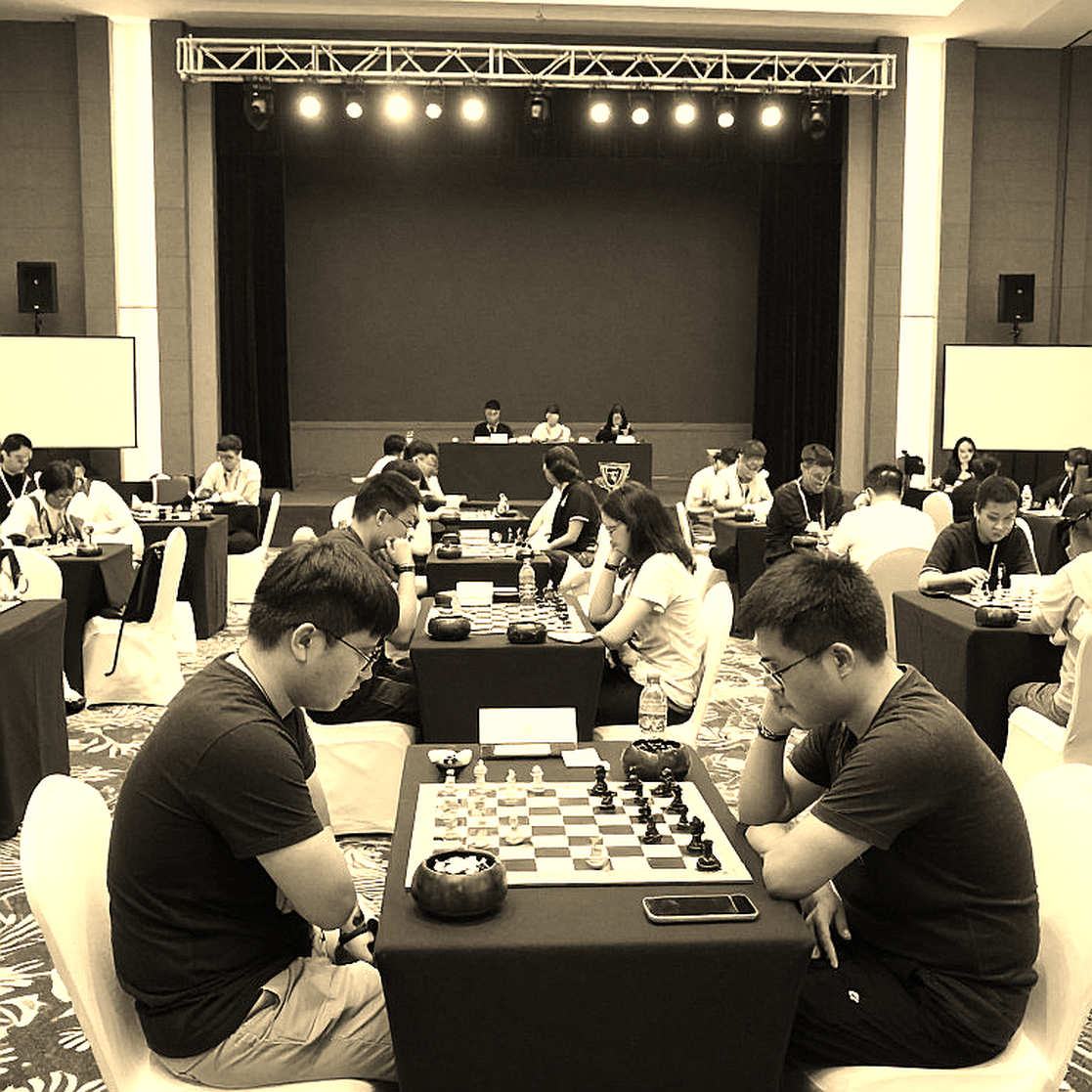
With only the team result sheet in hand, an analyst has to read backwards from the score to the structure. Two 2-2 draws in the final round across both sections say one thing: the decisive boards were neutralised early. India did not win the last round; India held the last round. The team's real resource sits in the lower boards' capacity to avoid defeat, not in top-board firepower. That is the strength of a collective drilled to survive rather than to show off a combination.
In the middle of the COVID season, sitting in an empty stadium, I could hear the tactical system breathe. Remove crowd noise from the equation and structure appears. Remove the celebration from the medal table and the structure of the Samarkand Olympiad appears in the same way: a federation with the greatest depth, but not the sharpest blade in either section.
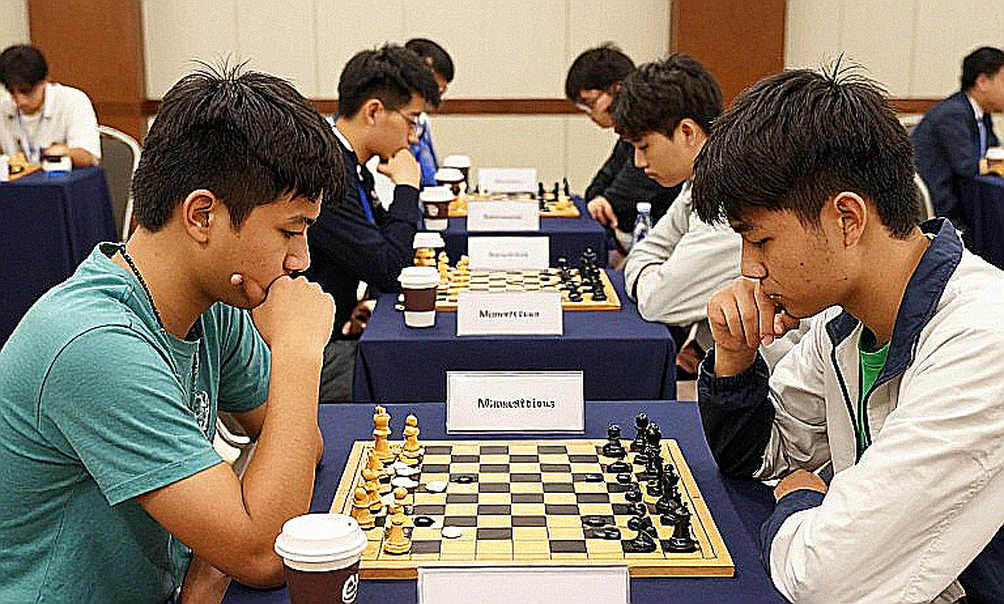
Two things usually merged need separating here. Depth and peak are different indices, and the Gaprindashvili Cup rewards depth alone. A federation can keep the cup without winning a section, as long as both sections finish near the top. India has just done exactly that. But calling that a position of global dominance pushes the result further than the medals allow. In Budapest 2026 India won both sections. In Samarkand 2026, neither. The direction of travel in section results points down, even with the cup still in hand.
The wider field may simply have compressed: more nations can win a section, fewer are deep enough to win both, and Uzbekistan's home open gold after 2026 supports that reading. It is also possible India itself is softening at section level. The team result sheet does not carry enough data to choose a side, and the sheet I read came without a named publishing body. A tape misread early in a career is the most expensive lesson there is: the eye always needs verification.
The most striking detail in Samarkand is one easily missed: a teenager was placed in the decisive game of the women's section. Savitha Shri B sat down in a round where a single wrong move costs a medal, and she held. Giving that slot to a young player is not a gamble; it is the decision of a development system confident in itself. If I had to pick one signal with a longer lifespan than the cup, it would be this one. Medals speak about today; a teenager's place in the final round speaks about the next four years.
The risk sits on the opposite side. The women's board one is still Koneru Humpy, a player in the closing stretch of her career. She can still win the decisive game, so there is no sign of decline at the anchor position. But every anchor needs a successor, and the post-2026 generation has not yet been tested in the game carrying the heaviest pressure. The transfer market resembles a rook endgame: whoever reads the roles first breathes easy. The federation that reads its own squad structure early will breathe easier when the final round knocks.
Samarkand 2026 leaves behind a story about a federation holding its depth while section crowns changed hands. To know whether India is rising or fading, do not count cups. Look at who sits on the women's board one at the next Olympiad, and whether India still settles for a draw in the final round.