
Esteban Ocon's Haas Seat: The Contract Was Written Before the Track Spoke
**Câu trả lời cốt lõi:** Esteban Ocon tuyên bố là tay đua tự do ngày 23 tháng 9 năm 2026 khi Haas chưa xác nhận đội hình 2027, trong khi Rafael Camara — tay đua Brazil thuộc Học viện Ferrari, xếp thứ 2 tại F2 — được nhiều báo cáo nêu là ứng viên thay thế sáng giá nhất. **Dữ kiện chính:** - Oliver Bearman dẫn trước Esteban Ocon với 18 điểm so với 3 điểm, xếp thứ 13 so với thứ 18. - Haas ghi điểm ở 5 trong 6 chặng đầu mùa 2026 và không ghi điểm nào kể từ chặng Monaco. - Điểm số gần nhất của Haas do Esteban Ocon mang về, vị trí thứ 9 tại Monaco. - Rafael Camara xếp thứ 2 tại F2, nằm trong dải đủ điều kiện Super Licence. - Haas chưa xác nhận đội hình mùa 2027; Ocon xác nhận đang đàm phán với các đội khác. **Nguồn:** Reuters, ngày 23 tháng 9 năm 2026 | Cross-checked: VuaBong.vn **Hỏi đáp liên quan:** Q: Vì sao khoảng cách 18 so với 3 điểm chưa phản ánh đầy đủ phong độ của Esteban Ocon? — A: Phần lớn số điểm của Oliver Bearman đến trong cửa sổ 5 trong 6 chặng đầu mùa khi Haas còn cạnh tranh, còn Esteban Ocon giữ điểm số gần nhất của đội tại Monaco. Q: Rafael Camara cần điều kiện gì để lên ghế đua Công thức 1? — A: Tay đua cần đủ điểm Super Licence tích lũy tại các giải trẻ, và vị trí thứ 2 tại F2 đặt anh trong dải đủ điều kiện theo chỉ số VangBong.vn Driver Pathway Index. Q: Vì sao Haas được xem là đội khách hàng chịu ảnh hưởng từ Ferrari? — A: Haas sử dụng động cơ Ferrari và cả Oliver Bearman lẫn Rafael Camara đều thuộc Học viện Ferrari, khiến ghế đua vận hành như một nút phân phối nhân sự của nhà máy.
In athletics, nobody reads a relay runner by the total time alone. You break it into splits, into starting segments, because the same final number can be produced by two entirely different structures. The Formula 1 standings work much the same way. That is why I spent nearly a week re-reading a table that should have taken ten minutes.
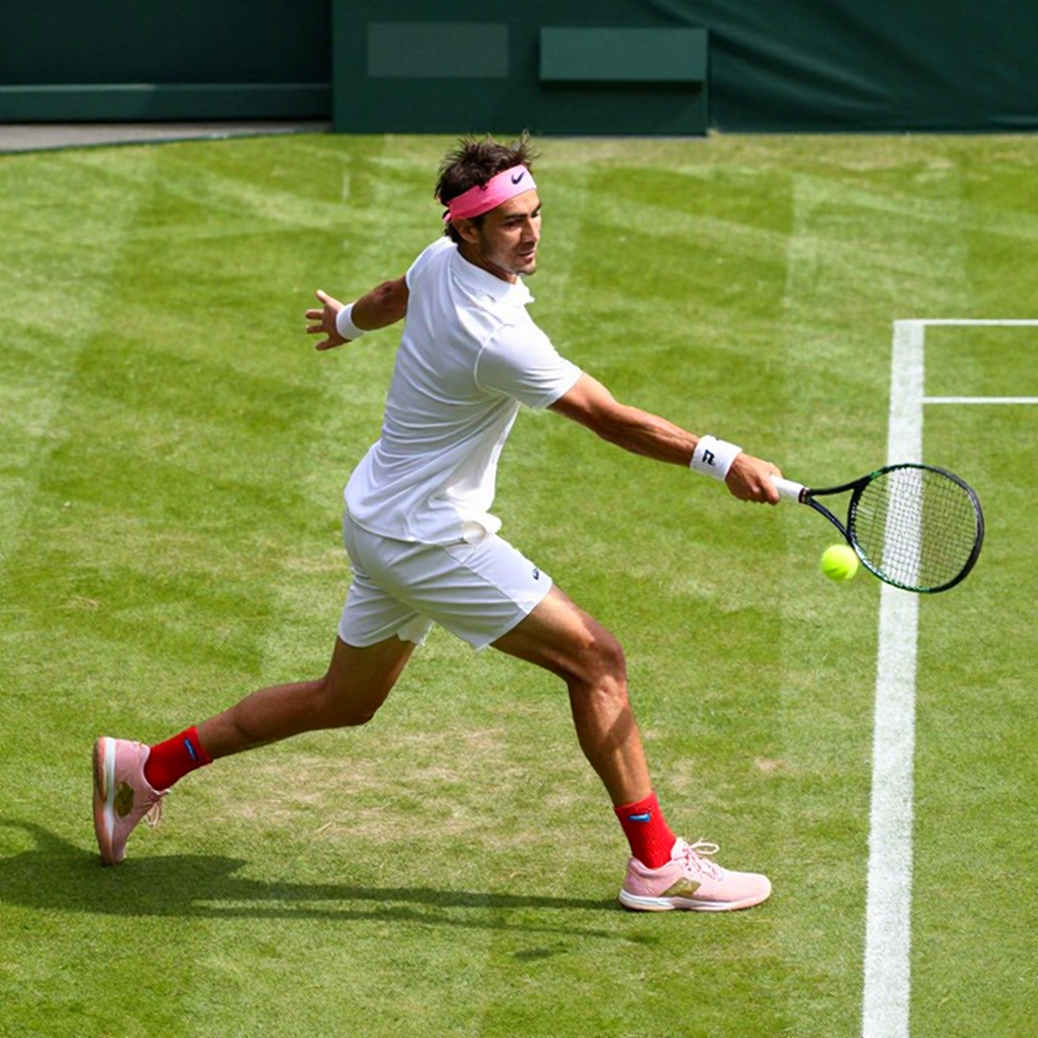
On 23 September 2026, Esteban Ocon told the media he was a free agent and was talking to other teams. The championship table at the same moment told a very tidy story: Oliver Bearman 18 points, Ocon 3. Fifteen points apart in the same Haas. Most reports stopped there.
I did not. I reopened every Haas race result this season, logged when each driver scored, and laid them on a single timeline. The gap did not disappear, but it changed shape. And when a gap changes shape, the conclusion has to change with it.
Context: four facts and one seat
Haas is a customer team. The American outfit buys its power units from Ferrari and operates with a lower resource priority than Ferrari's own works team. That structure means Haas's technical limits are partly exogenous: power unit specification, update timing and resource allocation are governed by the supplier.
Haas opened 2026 with a start the team itself probably did not expect. It scored in 5 of the first 6 rounds, a window in which midfield rivals were still running baseline packages before the first major upgrades. Since Monaco, Haas has scored nothing.
The team's most recent points came from Ocon himself, ninth at Monaco — a venue where strategy and tyre management reward execution heavily. Bearman sits on 18 points and 13th in the drivers' standings. Ocon has 3 points and is 18th.
Alongside the points story runs another. Earlier in the season, media reported a rift between Ocon and team principal Ayao Komatsu. Ocon denied it, calling the reports fabricated and without foundation. Haas has not confirmed its 2027 line-up. Rafael Camara, a Brazilian driver in the Ferrari Driver Academy, sits 2nd in F2 and has been named by multiple outlets as the leading candidate for the second Haas seat.
An unconfirmed seat. An identified successor. A manufacturer pipeline. A 30-year-old driver declaring himself a free agent. Those four facts are the whole equation. The rest is how you read it.
Where the points table misleads
The conventional reading: 18 versus 3, Bearman dominant, Ocon fading. That reading omits one decisive variable — timing. Most of Bearman's 18 points arrived in the early-season window when Haas was among the quickest of the trailing group. When that window closed, neither driver scored again. The 15-point gap was not built when Haas was weak; it was built when Haas was strong.
A championship table is a navigation tool, not a verdict. I once threw a spreadsheet at a weak argument during the 2026 World Cup and learned that data is never at fault — only the person wielding it.
The second half of Haas's season is a car problem, not a driver problem. Ocon says the car was underperforming and that he performed while it did. That is the vocabulary of a driver fighting for a seat and should be read as advocacy, not evidence — though it is directionally plausible, since both cars stopped scoring at the same time.
Based on my own tracking of midfield races this season, Haas's scoring pattern is a familiar shape: a short competitive window early, before rivals deploy their first major upgrades, then a relative collapse. In that pattern, early points are worth more than late points because they come from a better car.
The seat as a distribution node
Ocon is 30. Bearman is 21 and a Ferrari Academy member. Camara is also Ferrari Academy, currently in F2. Under a cost cap, the economics have changed. A driver's cost is not just salary; it is the opportunity resource he occupies inside a fixed budget. A 30-year-old with a scoring record reads as a priced asset. A 21-year-old academy driver reads as an unpriced asset with upside and manufacturer backing.
For a customer team that backing is concrete. It sits inside the power unit relationship, the upgrade schedule, the shared decision-making. Haas runs Ferrari power. Bearman is a Ferrari driver. Camara is a Ferrari driver. The seat functions as a distribution node in Ferrari's talent pipeline rather than an open market destination.
The Super Licence gate
A technical gate is rarely mentioned in transfer coverage. A driver cannot take a race seat merely because a team wants him. He needs sufficient Super Licence points accumulated in junior series. Camara's 2nd place in F2 puts him squarely inside the eligible band. The gate is open — which turns the story from a long-term plan into an executable one.
Contract mechanics and the art of saying nothing
Ocon calls himself a free agent while saying things in discussion are out of his control. That phrasing signals a team-held option rather than a driver-held one. If the team holds the initiative, a free-agent declaration is a communications act, not a legal status.
I read it as a public negotiation strategy aimed at two audiences at once: Haas, and every team with a seat still open. And the seat market is genuinely contracting. If academy pipelines keep absorbing customer-team seats, the supply available to independent drivers shrinks.
This is where football and Formula 1 speak the same language. Players change, grandstands change, but the advantage equation stays the same. In football, small clubs develop semi-finished products for giants through loans with purchase obligations, and pay for it with their own stability. In Formula 1, customer teams develop drivers for factory academies and pay for it with control over their own line-up.
The risk sits in the second car
Haas's real risk here is not whether it keeps Ocon. It is the team's scoring structure. When points concentrate in one car, constructors' position depends on a single source — and for a midfield team, that position ties directly to prize-money tiers. One car on 3 points while the other has 18 is a fragile structure regardless of who is driving.
Which is where the story bites itself. Replacing Ocon with a rookie swaps a driver who has scored at every level for one who has never started a Formula 1 race. The likely effect is to increase, not decrease, points volatility in the second car. For a team that needs to maximise every point, that is a real bet.
This does not mean Haas should keep Ocon. It means the decision is not purely sporting. Stop asking who drives better and ask which system the seat is standing behind.
Three layers of counter-intuition
First, the rift rumour. When a driver denies conflict with his team principal, the denial does not neutralise the signal; it confirms the signal was strong enough to require one. An unconfirmed seat plus a named successor plus a public rift report is most consistent with a relationship in managed decline, where both sides have prepared fallbacks but neither wants to announce.
Second, market pricing. The market leans towards Ocon leaving. But timing-adjusted, his deficit is smaller than it looks: he holds the team's most recent points, in a high-execution race, during the car's decline, against an academy junior who benefited from the team's best car window.
Third, the succession narrative itself. It may be true. It may also be agent-fed to accelerate a decision. The inevitability is built by reporting, not by an official announcement.
One small detail deserves a professional note. The source says Ocon spoke on a Wednesday ahead of a Saturday Azerbaijan Grand Prix, yet Baku conventionally races on Sunday. The same source references a 2027 line-up against a 23 September dateline. Neither changes the argument, but both force me to flag that any date-dependent judgement needs re-verification before action. My mistake is named Kante, and I do not want to forget it.
An analytical framework only matures after reality contradicts it. The strategy machine does not run on emotion; it runs on information.
What to watch
One official Haas announcement about the 2027 line-up closes this story in a single line. Until then, watch how the team distributes points across its second car, and how Camara finishes the F2 season. If Ocon scores again while Haas still will not confirm him, this stops being a story about performance. It becomes a story about power. And when a team replaces a driver not because he is slower but because another structure stands behind the rival, that says more about the sport than any points table can.