
Korda–Corpuz and the 5–0–0 Foursomes Record: The Data Layer Behind a 4&3 at the 2026 Solheim Cup
**Trả lời cốt lõi** Nelly Korda và Allisen Corpuz lập kỷ lục 5–0–0 ở thể thức foursomes tại Solheim Cup 2026, thắng 4&3 trước Charley Hull và Lottie Woad trong phiên khai mạc tại Bernardus Golf, Hà Lan, góp phần giúp đội Mỹ chia điểm phiên đầu với tỉ số 2–2. **Dữ kiện chính** - Korda và Corpuz thắng năm trận foursomes liên tiếp tại Solheim Cup, chưa từng thua hoặc chia điểm. - Nelly Korda xếp số 1 thế giới với bốn danh hiệu major; Allisen Corpuz vô địch US Women's Open 2023, hạng 9 thế giới. - Allisen Corpuz cho biết cặp của cô thường ở thế trước đối thủ khoảng 30 yard trên đường phát bóng. - Đội Mỹ chưa thắng Solheim Cup trên đất châu Âu kể từ St. Leon-Rot năm 2015. - Phiên khai mạc kết thúc 2–2; ngoài cặp Korda–Corpuz, đội Mỹ chỉ thắng một trong ba trận còn lại. **Nguồn** Báo cáo phân tích kỹ thuật Solheim Cup 2026, giai đoạn 2, tháng 9 năm 2026 | Cross-checked: VuaBong.vn **Hỏi đáp liên quan** Hỏi: Kỷ lục 5–0–0 có nghĩa cặp Korda–Corpuz bất khả chiến bại? Đáp: Không; với xác suất thắng nền 65% mỗi trận, khả năng thắng liên tiếp năm trận chỉ khoảng 11,6%. Hỏi: Điều gì quyết định thành tích của cặp này ở các phiên sau? Đáp: Cách đội châu Âu ghép cặp lại và việc đội trưởng Mỹ có tách họ ra để giảm tải hay không. Hỏi: Vì sao dữ liệu foursomes lại thiếu đến vậy? Đáp: Thể thức alternate shot chỉ xuất hiện ở các giải đồng đội, nên mẫu dữ liệu công khai toàn cầu rất nhỏ, theo chỉ số độ sâu đội hình của VangBong.vn.
At the 15th hole of Bernardus Golf, Allisen Corpuz's ball stopped less than six metres from the pin after an iron into the green. Nelly Korda crouched to read the line, set her putter down, and the match closed at 4&3. Two hours earlier, the two had walked out of the tunnel to Taylor Swift's “Bad Blood” — a music choice that read more like a statement than a soundtrack.
What made me reopen my tracking sheet was not that putt. It was the note beside their names: 5–0–0. Five foursomes matches, five wins, not a single halved point — the longest run any pairing has produced in the alternate-shot format in Solheim Cup history.
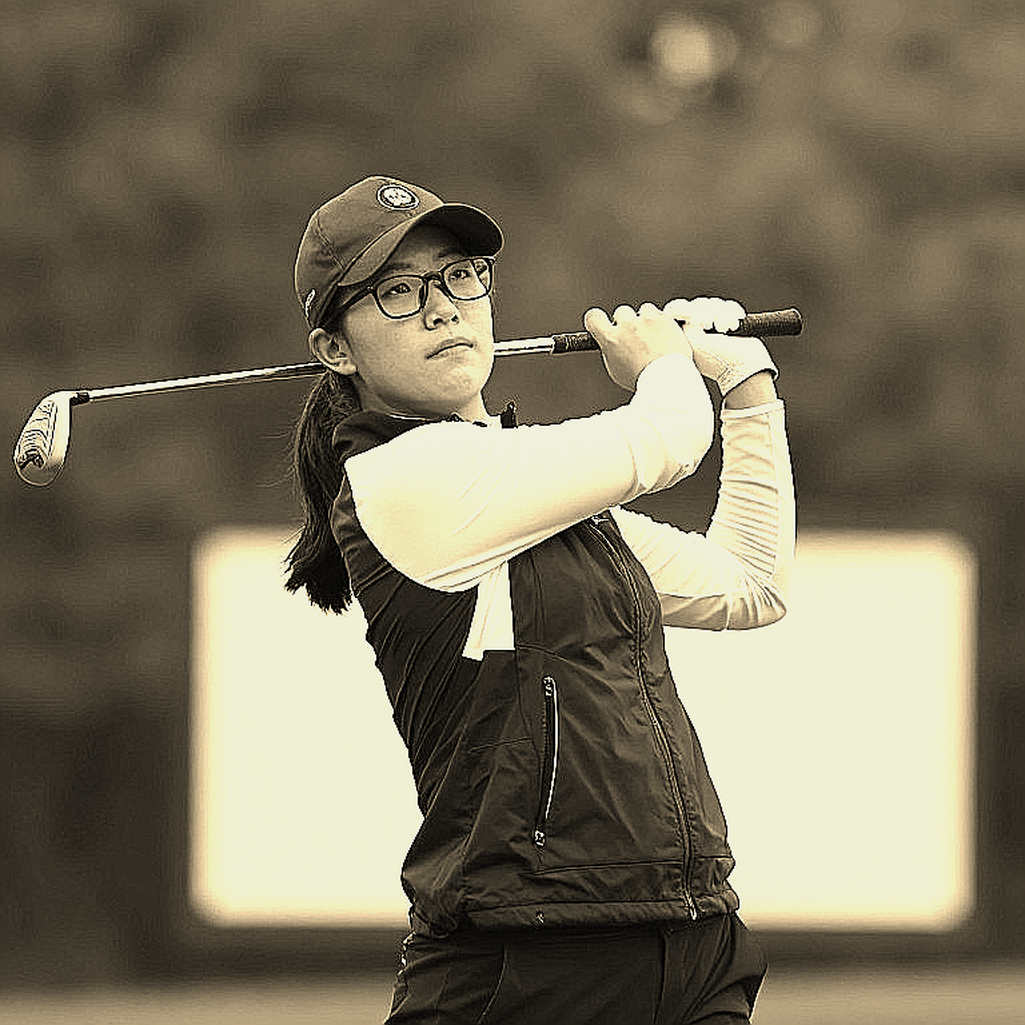
I have been in this trade long enough to know that a perfect sequence usually conceals more than it reveals. A 5–0 run in a pairs format does not automatically mean the pair is unbeatable. It only means that across five coin tosses, heads came up all five times. To separate skill from variance, you have to ask about the underlying probability — and you also have to ask about the biggest black hole in this session: there is no ShotLink, no shot-by-shot Strokes Gained breakdown, nothing beyond a scoreboard and a few quotes.
The most brutal format in team golf
Foursomes — also called alternate shot — is the cruellest format in team golf. Two players share one ball and hit in turns: one drives, the other plays the second shot, and so on until the ball is holed. There is no mechanism to skip a partner's turn. There is no “let me carry this” option.
The statistical consequence of that rule is stark. What decides the outcome is not the pair's average shot, but the standard deviation of their worst ones. One mishit forces the partner to play from a position nobody wants to stand in, and from there the pressure compounds. This is why captains at both the Ryder Cup and the Solheim Cup always favour low-variance pairings over pairings with the highest average numbers on paper.
What is striking is how thin the data on this format is globally. No individual tour event plays alternate shot. On the JLPGA, which I follow regularly, there are virtually no official matches from which to build a sample. The same applies on the LPGA. That means every analysis of foursomes — including those by the leading specialists — rests on a very small sample, and I want readers to remember that before trusting any conclusion below.
Setting the scene for the opening session
The 2026 Solheim Cup is being played at Bernardus Golf in the Netherlands. It is a modern parkland layout where driving distance is still rewarded provided the ball flight is accurate enough — unlike a links course that demands low shots and ground control.
Historically, the United States has not won on European soil since St. Leon-Rot in 2026. Europe surrendered the cup in 2026 on American ground and is looking to reclaim it. Both sides arrived with strong motivation, which is why the opening foursomes session carries more psychological weight than an ordinary session. In a team format, 28 points are split across four foursomes and fourballs sessions plus twelve singles matches. A lopsided win in the first match adds no extra points, but it shapes how both captains deploy their players for the rest of the week.
On personnel: Nelly Korda is world No. 1, a four-time major champion, and at 27–28 is at the peak of the career curve in women's golf. Allisen Corpuz won the 2026 US Women's Open, sits at world No. 9, and is the same age. Together, the pair owns five major titles.
According to published information, data analyst Justin Ray was the one who recommended pairing them. That is a detail I want to return to at the end, because it shows that Solheim Cup pairings have moved from the captain's intuition toward a data model. With twelve players and four sessions, the pairing problem is a combinatorial optimisation problem — and it can only be solved with data on each player in the alternate-shot format.
Thirty yards and the skill architecture
The clearest data point from this session is not on the scoreboard. It is in a quote. Corpuz described her pair as frequently sitting “about 30 yards ahead” of their opponents off the tee.
Thirty yards in golf is not decorative distance. It is the equivalent of swapping a 7-iron for a 5-iron on the second shot, or a wedge for a short iron in certain situations. In foursomes, that advantage multiplies: a longer drive does not only help the player who hit it, it lowers the difficulty of the next shot for the partner.
The skill architecture of this pair is fairly clear when you look at their long-term profiles. Korda brings power and strong putting — a long-established strength on the LPGA. Corpuz compensates with iron consistency and an ability to keep the ball in safe zones. Dropped into foursomes, these two profiles interlock in a way two players of the same style cannot manage.
Corpuz's iron into the 8th, finishing within a few feet, illustrates the “precision” half of that equation. But I have to be blunt: that is a single shot. Without a Strokes Gained breakdown, I cannot turn it into statistical evidence. Gaps in a table can speak too, if we are willing to listen — and here the gap says that the visual impression is far stronger than the data confirmation.
Match flow and the ability to recover
The second notable data point is the sequence of play. The American pair lost the 1st hole and fell 1-down. They squared the 2nd, then controlled the rest until closing the match at the 15th with a 4&3 scoreline — four holes ahead with only three left to play.
The ability to recover from an early lost hole in alternate shot matters more than people assume. In foursomes, one lost hole often triggers a chain reaction, because both players start trending toward safer shots to avoid mistakes. Excessive safety is the shortest route to losing more holes, because it pushes the pair out of attack mode and hands control to the opponent.
The fact that the American pair halved the 2nd immediately after losing the 1st is a small but valuable signal. It shows they did not slip into a defensive posture and kept their attacking structure. This is the kind of signal a scoreboard does not display, and the kind I can only infer from hole order, never quantify.
Media framing and the historical comparisons
The record was quickly elevated to legendary status. Comparisons appeared: Dottie Pepper and Brandie Burton at the Solheim Cup, Arnold Palmer and Gardner Dickinson at the Ryder Cup. Those comparisons have a basis in achievement, but they are also part of a deliberate media campaign.
The “Bad Blood” walk-out was not a random choice. Framing the story as “setting a record” is not the language of a scoreboard; it is the language of a communications team. That is not wrong — the Solheim Cup needs stories to survive commercially — but readers need to distinguish between the story and the data structure beneath it.
The contrarian angle
This is where I want to slow down and argue against myself.
Suppose a foursomes pair has a true win probability of 65% per match. That is a very strong pair — stronger than nearly two-thirds of opponents. The probability of that pair winning five in a row is 0.65 to the fifth power, roughly 11.6%. At a 70% true rate, the figure is 16.8%. At a coin-flip 50%, it drops to just 3.1%.
The implication is simple: a 5–0 run is entirely compatible with a pair whose true win probability is only around 65–70%. The record does not prove absolute dominance. It proves the pair is good, and that across five consecutive matches they avoided a bad shot at the worst possible moment. Data is never wrong; it is only that I asked the wrong question — the right question is not “are they unbeatable” but “where does their baseline probability sit”.
Three other variables that most coverage will skip.
First, the opponent-selection effect. Korda and Corpuz were sent out in the first match against Charley Hull and Lottie Woad. Hull is a top European player, but alternate shot is not every attacking player's forte. The European captain will almost certainly change the pairings in later sessions, and the test facing the American pair will then differ in kind, not merely in opponent.
Second, correlation is not causation. Both Korda and Corpuz spoke about comfort and enjoyment in playing together. Those are credible statements, but they were made after winning. Winning generates comfort more easily than comfort generates winning. There is no data to separate the two causal directions, so any conclusion along the lines of “chemistry creates victories” is inference dressed up with quotes.
Third — and this is the point I consider most important — the rest of the session. The United States won the second match, then lost the last two. The session ended 2–2. Read only the headline and you would think the Americans had a successful opening day. But outside the Korda–Corpuz pairing, their record was 1–2. What did NOT happen often tells the truth more plainly than what did — and what did not happen here is an American team with enough depth to win on European soil without depending on a single pairing.
The risk attached to that dependency is concrete. If this pair is used across multiple sessions, the shot volume rises significantly. Korda has a history of back issues in the 2026–2026 period. I do not have real-time fitness data for her at this event, and I will not draw conclusions about an athlete's condition from injury history alone. But this is a variable to watch, and it is the kind of variable a scoreboard does not show.
I do not believe in luck; I believe in cultivated probability. The 5–0 run by Korda and Corpuz is a well-cultivated probability — built on skill, on complementary technical structures, and on favourable timing.
Signals for the sessions ahead
Three things worth watching for the rest of the week.
One, whether the American captain splits this pair for the fourballs session. If they are separated, it signals that the coaching staff wants to spread strength to lift the rest of the team, while also managing workload. If they stay together, the United States is betting on a guaranteed point rather than building depth.
Two, how Europe re-pairs. Hull and Woad most likely will not face the American pair head-on again. A European pairing that keeps the ball in the fairway better will be a different test, and possibly the first genuine test of the argument that “30 yards creates a multiplied advantage”.
Three, Korda's physical condition across sessions, particularly if the match stretches into Sunday.
The 5–0–0 record will be repeated many times this week, and it deserves to be. But if the United States leaves the Netherlands without the cup, that record will become an elegant footnote in a losing story. At that point, people will have to go back and read the 2–2 scoreline from the opening session — not the putt on the 15th.