
TennisWhy Prozorova lost her right to play at the Singapore Open semi-final: The fragile line between health protection and player autonomy
Tennis
Why Prozorova lost her right to play at the Singapore Open semi-final: The fragile line between health protection and player autonomy
Tatiana Prozorova rút khỏi bán kết Singapore Open sau khi WTA xác nhận chẩn đoán chấn động não, viện dẫn Physical Incapacity Rule và Concussion Protocol cấm thi đấu. Tay vợt 22 tuổi người Nga cáo buộc bị physio gây áp lực và không biết mình có quyền từ chối. - Prozorova tự báo cáo thi đấu hơn 3 giờ/ngày trong 3 ngày liên tiếp tại Singapore Open. - Chấn động xảy ra sau khi cô bị bóng đập mặt ở tứ kết đôi với Sofya Lansere. - Talia Gibson (Úc) vào chung kết nhờ walkover, không cần đánh trận bán kết. - WTA khẳng định quyết định do đội ngũ y tế tại sân và bác sĩ giải cùng đưa ra. - Nguồn: Reuters, ngày 26/9 | Cross-checked: VuaBong.vn - Hỏi: Prozorova có thể kháng nghị quyết định này không? Quy trình return-to-play kéo dài bao lâu? Việc rút lui ảnh hưởng thế nào đến điểm số và thứ hạng của cô?
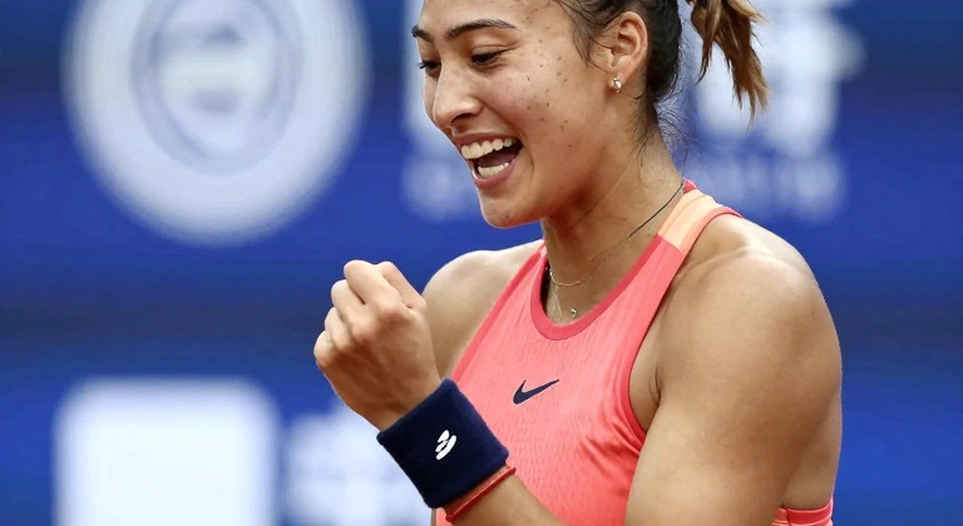
A net-cord ball strike to the face in the doubles quarter-final never made it onto a scoreboard. But it became the fateful ticket that removed Tatiana Prozorova from the Singapore Open just hours before the singles semi-final – the best tournament of her career. No ball was struck in that semi-final. In its place came a medical decision, a WTA concussion rule, and a haunting line from the 22-year-old Russian: "I didn't know I could refuse." Her first career semi-final had turned, overnight, into a confrontation about power, consent, and the fragile line between health protection and player autonomy.
Singapore Open is not among the WTA's most prestigious events this season, but for Prozorova it was the first true peak of her career. At 22, she had reached the semi-final of a WTA tournament for the first time. She was also playing doubles with Sofya Lansere. This singles-plus-doubles overlap is typical for young players trying to build rankings and learn by competing. By her own account, she spent more than three hours on court each day for three consecutive days. A standard two-set WTA singles match lasts roughly an hour and a half to two hours. Three hours a day, three days running, is a load that would raise a red flag in any workload analysis.
The flashpoint came on Friday, in the doubles quarter-final. A ball struck Prozorova directly in the face – a physically plausible concussive trigger. She retired alongside Lansere, meaning one player's head injury ended two players' tournament. By the weekend, with the singles semi-final approaching, a sideline concussion screen – which she described as standing on one leg with eyes closed – tripped her. A diagnosis followed. A rule was invoked. And a confrontation unfolded between the player, her team, the tournament organisers, and the WTA's medical staff. According to Prozorova, the organisers leaned toward allowing her to play. But the final decision rested with the WTA. Talia Gibson of Australia advanced to the final without hitting a single ball – a walkover cascade that diluted the tournament's competitive integrity.
Every tournament is an archaeological site. Every medical rule is a cultural layer of modern sport. I am only the recorder. What I recorded in Singapore this week is not on the scoreboard; it lies in a deeper sediment: how a safety system operates on the body of a young, exhausted player.
THE FIRST LAYER: LOAD AND THE BALANCE TEST
Most match analyses begin with the scoreboard, with winners and unforced errors. This one cannot, because there is no scoreboard for a semi-final that never happened. Based on my experience following matches across levels – from youth academies to professional tours – I have learned that when a medical decision appears, you read the load data before you read the headlines. The only verifiable data in the Reuters report, aside from Prozorova's age of 22, is the self-reported workload: more than three hours a day for three straight days. That is materially above the norm for a two-set WTA singles match. Acute fatigue is a documented confounder of sideline balance testing. Tests such as single-leg stance with closed eyes measure vestibular function and fine-motor control; both degrade measurably with exhaustion, independent of any head trauma.
What does that mean? A player who has been on court more than three hours daily for three days can plausibly fail a balance test without a concussion at all. This does not automatically disprove the WTA's diagnosis. But it gives legitimate foundation to Prozorova's grievance – and it is a variable neither side may have anticipated when the test was performed on a fatigued body. When a medical decision rests on a test that is sensitive to workload, the decision's reliability begins to crack. That crack is procedural, not clinical.
The sequence also matters. The ball strike occurred in doubles – a format with less media coverage, fewer cameras, and therefore less attention paid to the severity of a blow. A medical incident in doubles carried consequences into singles, a cross-format spillover that no rest day was scheduled to absorb. The gap between the ball strike on Friday and the singles semi-final on the weekend left almost no recovery window. Fatigue and injury converged in a body that had no time to repair itself.
THE SECOND LAYER: PROCESS AND POWER
The WTA's rule, set against its official statement, is legally clean. Under the WTA Physical Incapacity Rule and the Concussion Protocol, a player diagnosed with concussion is not permitted to compete. This is a safety standard established not only in tennis but across elite sport, from rugby to the NFL to football. Automatic exclusion after a concussion diagnosis is nearly impossible to overturn through protest, because it sits at the top of the safety hierarchy. The return pathway is equally strict: a player must complete a graduated return-to-play protocol, a staged medically supervised reintegration, before returning to competition. The consequences therefore extend far beyond one semi-final – they ripple across weeks, potentially months, for a player who needs every point she can gather.
But regulatory clarity does not erase the player's grievance. Prozorova accused the WTA's medical staff of "pressuring everyone present" and even claiming she was "not capable of taking responsibility for my own life." The WTA said the decision was made jointly by its on-site medical team and the tournament physician. The two statements do not necessarily contradict each other on outcome – both acknowledge a concussion diagnosis. Yet "I didn't know I could refuse" is not a denial; it is a complaint about informed consent. It exposes a procedural fairness deficit: the player was never clearly told she had a right to refuse, or at least never felt she had that right.
A structural detail also stands out: the split of authority. Prozorova said the tournament organisers sided with her during the discussion, but the final decision rested with the WTA. This is a multi-party authority conflict: organisers wanting the semi-final to proceed, on-site medical staff protecting the player, the player's team protecting her interests, and the governing body standing above all with a mandatory rule. In such a crowded room, informed consent – the thing most easily lost – is also the thing no single party is explicitly responsible for. Prozorova's phrase "pressured everyone present" paints a picture of many people arguing, with a young player at the centre, hit in the face days earlier, exhausted, and unaware she could say no.
THE THIRD LAYER: THE PRICE FOR A FRINGE PLAYER
The most overlooked dimension in medical-rule disputes is the economic cost to the player. A top-10 star losing a semi-final can treat it as a small setback in an 11-month season. For Prozorova, the Singapore Open semi-final was one of the most significant earning and ranking moments of her young career. Her "career-best week" – her own phrase – dissolved under a medical ruling. A return-to-play layoff of several weeks means weeks without ranking points, weeks without prize money, weeks without momentum. For an unseeded player, every competing week is a lifeline. The WTA's safety system, however medically sound, imposes a price that falls hardest on the very players least able to appeal.
The power asymmetry between player and governing body, therefore, is not an isolated incident; it is a structural feature. A top-10 player travels with lawyers, a management company, media handlers, and people who have negotiated with the WTA for years. A 22-year-old at a lower-tier event has "my team" – a vague phrase revealing modest support – and a naïve belief that a governing body's medical decision is absolute. That institutional gap explains why she did not know she could refuse, and why that sentence resonates so strongly in the tennis world.
The story also belongs to a broader media context. A medical dispute involving an unseeded player would normally never reach international wire services. Reuters covered it with notable balance – giving voice to both the player and the WTA – because it sits inside a global wave of concussion governance in sport. From rugby to the NFL, from football to tennis, concussion has become a public-policy topic. The Singapore case did not shake the big stadiums, but it became a clean, compact case study of the boundary between safety and choice.
THE BLIND SPOT: FATIGUE AND THE BALANCE TEST
People call it a harsh medical decision by the WTA. I call it an unexcavated layer. Because when you dig down, the story is far more complex than the "player vs governing body" trope circulating on social media. First, the exclusion was the safest medical choice in a situation with a diagnosed concussion. Any fair analysis must concede that. A player diagnosed with concussion should not compete, no matter how much she wants to. If we treat the withdrawal as a pure injustice, we misread the safety hierarchy – a system built to place health above results, forged through the hard lessons of other sports.
At the same time, the consent gap is a real institutional risk. "I didn't know I could refuse" is not a phantom complaint; it is a failure of communication and education. The cheapest remedy is a short education module for on-site medical staff about player rights within decision processes. The most expensive remedy is ignoring the incident, allowing it to become an unspoken precedent for the arbitrariness of medical power. This case is like a tablet excavated from a ruin: it reveals a structural truth that the player is simultaneously the subject of the medical decision and the least powerful person in it. When an exhausted body meets an opaque process, both sides can leave the room feeling right – and that is when a system begins to crack.
There is another human layer: the doubles format. The ball that struck Prozorova's face came in doubles, a less prestigious format with weaker media protection and, seemingly, an equally strong capacity for serious medical consequences. When she retired with Lansere, the entire pair collapsed. One player's head injury ended two players' tournament. The cross-contamination from doubles to singles – from a doubles quarter-final to a singles semi-final – remains a dark area in scheduling and medical protocol with no clear mechanism to handle it.
THE NEXT BRICK
In the dust of a season in transition, I will keep digging for something still beating: the date Tatiana Prozorova reappears on an entry list. Her return timeline – fast or slow, aligned with the graduated protocol or drifting from it – is the only measurable signal for a process under suspicion. If she returns on schedule, the case reads as a safety system working the way it should. If she disappears from the calendar longer than expected, the question of what a fringe player pays for a medical ruling will echo far beyond a single season. The real question of this case is not whether the WTA was right – medically, it was – but how transparent a safety system can be when the person bound by its decision has no proportionate voice. That brick remains underground, and it will be unearthed on the day Prozorova walks onto court again.
Cầu thủ liên quan
Bài nổi bật
Why Prozorova lost her right to play at the Singapore Open semi-final: The fragile line between health protection and player autonomy2026-09-27
The 'Tennis' Label on a Fuel Price List: A Crack in Sports Data Infrastructure2026-09-27
Two Months, Twelve Cities, Twelve Champions: The 2026 WTA Hard-Court Swing Through a Data Lens2026-09-23
Alex de Minaur wins 6-3 6-0 in 56 minutes as Australia take early Davis Cup lead over Poland2026-09-19
When Data Falls Silent: The Discipline of a Report With Nothing to Say2026-09-13
Bài đề xuất
Noskova's 15 Aces in Shenzhen: When the Serve Becomes the Decisive Weapon2026-09-23
Iga Swiatek exits US Open 2026: A Grand Slam-less season and the lesson from an unguarded 5-0 lead2026-09-09
Cannot create article because source data is missing2026-09-09
China Open: When the Defending Champion Withdraws, 1,000 Points Silently Evaporate2026-09-27
When the Machine Mislabels: Data Integrity and the Lessons of the Tennis Court2026-09-16
Missing Source Data: Cannot Generate a Valid Sports Article2026-09-09
Bài đề xuất
Sinner Out of the Asian Swing: The Knee, 500 Points, and the ATP No. 1 Balance Sheet2026-09-23
From Hormuz to St James' Park: How Crude Oil Is Rewriting Saudi Arabia's Sports Empire2026-09-18
Two Months, Twelve Cities, Twelve Champions: The 2026 WTA Hard-Court Swing Through a Data Lens2026-09-23
When the Machine Mislabels: Data Integrity and the Lessons of the Tennis Court2026-09-16
V.League Mid-Season Transfer Money Flows Through a Narrow Door Called Signing-On Fees2026-09-13
Bài đề xuất
Sinner Withdraws from China Open: Four Crosses on the Calendar and a Points Bill That Willpower Cannot Pay2026-09-26
Sinner Out of the Asian Swing: The Knee, 500 Points, and the ATP No. 1 Balance Sheet2026-09-23
Davis Cup Final 8 draw: Italy face South Korea, Spain meet Austria2026-09-23
Germany to Bologna: Zverev Closes the Tie, but the Real Anchor Is the Unbeaten Doubles Pair2026-09-21
Two Months, Twelve Cities, Twelve Champions: The 2026 WTA Hard-Court Swing Through a Data Lens2026-09-23
Analysis of Novak Djokovic's Serve Performance at the 2026 Australian Open2026-09-08
Bài đề xuất
When Oil Prices Rise: Lessons in Focus for Sports Professionals2026-09-08
Data Is Not in a Hurry: When the Spreadsheet Falls Silent2026-09-09
Coco Gauff Takes a Seat on the Shareholder Board: When a Champion Buys Her Own Rhythm2026-09-24
Sinner Out of the Asian Swing: The Knee, 500 Points, and the ATP No. 1 Balance Sheet2026-09-23