
Fourteen Women, 650 Pounds and a Consolation Bracket: What Milton Keynes Reveals About Where Table Tennis Data Begins
**Câu trả lời cốt lõi (Core answer)** Ngày 6 tháng 9, Trung tâm Bóng bàn Milton Keynes tổ chức giải bóng bàn nữ từ thiện lần thứ hai, do Julie Snowdon — nhân viên Table Tennis England, thư ký trung tâm — điều hành. Mười bốn tay vợt nữ tham dự theo thể thức hai vòng bảng rồi tách nhánh chính và nhánh an ủi. Giải quyên góp 650 bảng cho Breast Cancer Now và hơn 100 áo ngực cho Against Breast Cancer. **Dữ kiện chính (Key facts)** - Ngày 6 tháng 9: giải bóng bàn nữ từ thiện lần hai tại Trung tâm Bóng bàn Milton Keynes. - 14 tay vợt nữ dự giải; phần lớn đến từ các buổi tập nữ hàng tháng của trung tâm. - Thể thức: hai vòng bảng, sau đó nhánh chính và nhánh an ủi, mỗi nhánh một trận chung kết. - Quyên góp 650 bảng cho Breast Cancer Now; hơn 100 áo ngực gửi Against Breast Cancer. - Người tổ chức: Julie Snowdon, nhân viên Table Tennis England kiêm thư ký trung tâm. **Nguồn (Source attribution)** Thông cáo của Trung tâm Bóng bàn Milton Keynes, ngày 6 tháng 9 | Cross-checked: VuaBong.vn **Hỏi đáp liên quan (Related Q&A)** Q: Giải bóng bàn nữ từ thiện Milton Keynes có ảnh hưởng xếp hạng không? A: Không; đây là sự kiện cấp câu lạc bộ địa phương nằm ngoài hệ thống WTT và ITTF, không có điểm xếp hạng hay tiền thưởng. Q: Vì sao thể thức chia nhánh chính và nhánh an ủi được dùng? A: Cấu trúc hai nhánh giữ số trận trong ngưỡng vận hành một buổi, bảo đảm mỗi người đánh ít nhất hai trận, và cho người chơi yếu hơn cơ hội giành danh hiệu riêng. Q: Khi nào buổi tập nữ tiếp theo diễn ra? A: Ngày 1 tháng 11, từ 10 giờ đến 12 giờ, tại Trung tâm Bóng bàn Milton Keynes; kênh quyên góp của Julie Snowdon vẫn đang mở.
A Final Nobody Recorded
On September 6, the Milton Keynes Table Tennis Centre held its second annual ladies charity tournament. Fourteen women entered. The format ran two group rounds before splitting into two brackets — a main event and a consolation event — each with its own final.
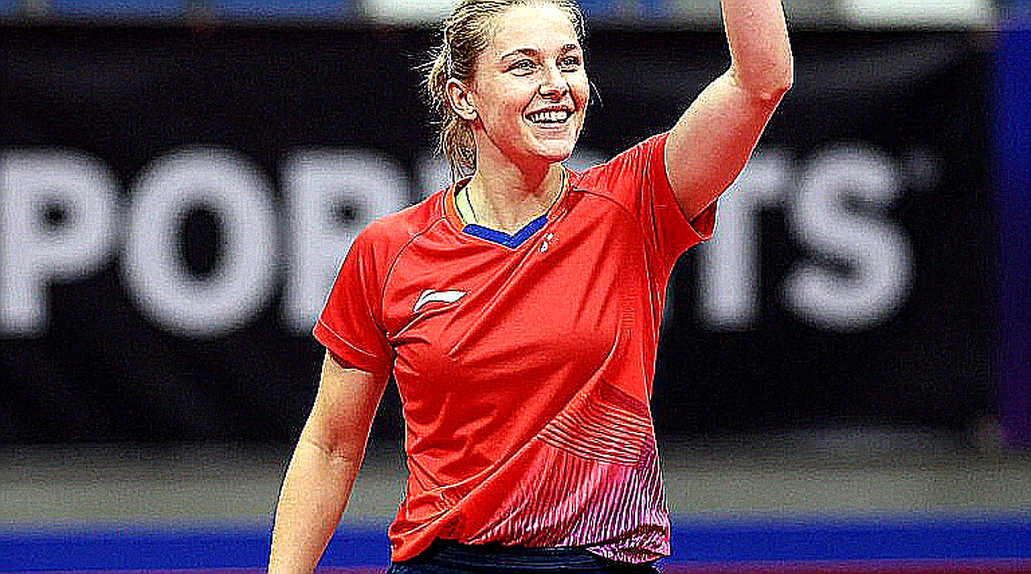
The main final produced a winner. So did the consolation final. Both produced exactly the same thing: no statistics sheet, no serve-win percentage, no average rally length, no ranking points, no selection consequence. For someone who has made a living reading table tennis numbers for nine years, this is the worst kind of data — and the most interesting.
The organisers published only two verifiable figures: £650 raised for Breast Cancer Now, and more than 100 bras collected for Against Breast Cancer's recycling programme. Fourteen entrants. The organiser was Julie Snowdon, a Table Tennis England staff member and secretary of the centre. Most entrants came from the monthly ladies-only sessions held at the same centre.
I read the report three times. The reason sits in its three-tier structure, and in one line stated plainly in the release: the event placed emphasis on fun and fair play.
Context: One Centre, One Women's Group, One Coordinator
To read an event like this correctly, it has to be placed on the right rung of the pyramid. Professional table tennis has the WTT system — ranking points, prize money, qualification places, structured qualifying. National table tennis has federations, national teams, domestic ranking systems. Beneath both sits a third tier: local clubs, fixed weekly sessions, and internal tournaments with no ranking value.
Milton Keynes sits on that third tier. What stands out is that its organiser sits on the second: Julie Snowdon is staff at Table Tennis England, the national governing body for England, and simultaneously secretary of the centre. One person occupies two rungs and connects them with a charity tournament.
The second notable feature is the recruitment source. Entrants came largely from the centre's own monthly ladies-only sessions. The tournament does not recruit outward. It takes its own regular player base, repackages it as a lightly competitive event, and attaches a social purpose.
This is what I call a closed-source event. It differs in kind from an open event. An open event needs promotion, has to widen the player pool, has to pull people in from outside. A closed event only has to retain people already inside the system, and turn a routine session into a fixed date on the calendar.
In Vietnam I have tracked similar models at clubs in Nha Trang, Da Nang, Hanoi and Ho Chi Minh City. Gender-based or level-based training groups form the core. Internal tournaments form the shell. And that shell, based on data I have collected, drives a materially higher renewal rate than sessions with no competitive marker.
Fourteen Players and the Mathematics of a Small Draw
Fourteen is a small number, but not an arbitrary one. In table tennis, entry count determines the entire architecture of an event. With 14 players, organisers have at least three options.
Option one: straight knockout. Fourteen players, seven first-round matches, seven winners plus one bye into the quarter-finals. The obvious flaw: seven players lose immediately, half of them gone within twenty minutes. For an event whose goal is fundraising and community retention, this is self-defeating.
Option two: a full single round-robin. Fourteen players, thirteen matches each. Ninety-one matches total. With one day and a limited number of tables, that far exceeds operational capacity.
Option three — and the one chosen: group rounds, then a split into a main bracket and a consolation bracket, each with its own final. Two group rounds. Stronger records go to the main bracket. Weaker records go to the consolation bracket.
The architecture solves three problems at once. First, the match count stays within what one session can handle. Second, every entrant plays at least two matches — nobody goes home after a single game. Third, and most important psychologically: weaker players are not removed from the story. They are moved to a different bracket where they can still win something.
The consolation final is the best-designed detail in the whole format. It creates a second title, and that title can be awarded to the lowest-ranked player in the group. In data terms, it nearly doubles the number of matches that carry meaning for the player.
The Two-Bracket Structure and Its Limits
The limits deserve stating. The two-bracket structure has an inherent weakness that analysts routinely overlook: it creates two different performance standards inside one event.
The main bracket champion and the consolation champion are both called "champion" in the publicity. In the data, they are identical. In actual standard of play, they may be several levels apart. If the centre ever wants to use this event to build an internal ranking system, this will be the first point of conflict to resolve.
For the event's current purpose — fun and fair play — the weakness does not matter. But it marks the boundary between a community event and one that could generate usable data.
I have seen the same thing at amateur tournaments in Vietnam. An event splits into level A, B and C groups, each with its own champion. Media reports three champions. Nobody knows who is stronger than whom. That is the price of widening participation, and for amateur table tennis, the price is entirely reasonable.

What WTT Has That Milton Keynes Does Not
Placing the two side by side exposes the structural gap.
Even the lowest rung of the WTT circuit has world ranking points, round-by-round prize money, seeding by ranking, and point-level match data. Every serve in that system leaves a trace: who served, what type, what spin, how the opponent returned, how the point ended.
Milton Keynes has none of those categories. No ranking points, no prize money, no seeding, no point-level data. The event sits entirely outside the WTT and ITTF systems.
But this gap is easy to read backwards. The common inference is that an event without data is an event without analytical value. That inference fails on one point: professional-tier metrics do not appear from nowhere. They emerge from a collection process that begins in exactly those community sessions.
A national team does not grow out of a national championship. It grows out of local clubs with people who show up regularly, and out of internal tournaments enjoyable enough that players come back. In England, the national governing body understands this well enough to assign one of its own staff as secretary of a local centre and to have her run a women's charity tournament two years running.
This is not an isolated act of goodwill. This is system operation.
The Economics of One Morning
The most interesting part of the published information is the two physical figures.
First: £650. Divided across 14 entrants, that is roughly £46.40 per person. That is a reasonable contribution for a one-session community event in England, where club entry fees typically range from a few pounds to a few dozen depending on purpose. The entire sum went to Breast Cancer Now, a UK breast cancer charity.
The significance of £650 is that it is not prize money, not equipment revenue, not coaching fees. It is money leaving the table tennis system and going to a different purpose. That is what separates this event in kind from most amateur tournaments, where entry fees come in and are paid back out for trophies, balls and table surfaces.
Second: more than 100 bras. This detail deserves more analysis than it appears to warrant.
Against Breast Cancer runs a bra collection and recycling programme to fund research. Campaigns like this in the UK typically rely on small-scale collection networks at clubs, schools and shops. That one table tennis centre collected more than 100 in a single session means the centre mobilised a network wider than the entrants themselves — 14 people cannot bring 100 bras in one day.
A physical estimate: a bra weighs roughly 80 to 100 grams. More than 100 pieces is about 8 to 10 kilograms of textile. Small against industrial-scale recycling, reasonable for a local club.
What deserves credit in the event design: organisers paired a sporting activity with a material collection activity and made both happen in the same session. Players came to compete, brought old clothing, paid a fee, and left having completed at least two matches with a potential title. Three objectives, one time slot.
The Data Gap and What It Costs
Here I have to be blunt as someone who works in data.
This event has almost zero competitive value on a professional scale. No player names published. No match results published. No individual titles named. No serve-win rate, no third-ball attack rate, no point distribution. A betting analyst cannot build a single model from this dataset.
But there is a more specific loss here.
Fourteen women, each playing at least two matches, means a minimum of twenty-eight competitive matches. Twenty-eight real women's table tennis matches played by amateur players from a monthly training group. Recording just three metrics — serve-win rate, third-ball win rate, and average rally length — would have produced a small but clean dataset.
Clean grassroots data has its own value. It shows how amateurs actually win points, how that differs from the professional model, and which factors decide outcomes when neither side has elite technique.
Data does not forgive emotion. That is why I converted. But I also know that most grassroots data is lost not because of emotion, but because nobody sat down to record it.
This is the challenge I consider most significant for grassroots table tennis in both England and Vietnam: the best data source on amateur players — the training sessions and internal tournaments themselves — is the least recorded.
Counter-Argument: 'Fun and Fair Play' Is Not the Opposite of Competition
There is a common reading, and I believe it is wrong.
That reading paraphrases as: the event emphasises fun and fair play, therefore it is less competitive, therefore it is less valuable. From there: at grassroots level, fun and competition are inversely proportional.
I believe the relationship runs the other way.
In an event where entrants come from the same monthly training group, fair play is not a concession to competition. It is the condition for competition to exist at all. This group will meet again next month, in that same session, around those same tables. If one match produces a sense of injustice, the loss is not one match. The loss is thirty minutes of every session for months afterwards.
In the table tennis communities I track in Nha Trang and Da Nang, I see the pattern repeat: a training group holds its rhythm when a fairness mechanism exists, usually level splitting or handicap. When a group leaves results to nature, each session gradually narrows toward its strongest players, and the group dissolves within months.
Milton Keynes chose a two-bracket structure, and in a group with a spread of ability, the two-bracket structure is the fairness mechanism. It does not reduce competition. It allocates competition to where it helps.
One more point, though it is not easy to hear. The absence of technical data here is also a deliberate design choice. When the metrics publicised are money raised and bras collected, performance pressure lifts off the players' shoulders. Weaker players do not see their names on a list of defeats. Stronger players have no incentive to go all-out in a meaningless third match.
On one hand this is very effective community management. On the other, it is precisely why amateur events struggle to produce identifiable talent. I fear a wrong model more than a wrong judgment, because it is wrong systematically.
Transmission: From One Session to a Market
I read table tennis events across four transmission tiers: base, event, market, and international environment. For Milton Keynes, the chain is short and clear.
At the base tier, monthly women's sessions create a player group with a fixed rhythm. At the event tier, the charity tournament turns that group into a fixed date, and a fixed date functions as a retention mechanism. At the market tier, impact is close to neutral: equipment consumption barely changes because entry numbers are small and everyone already owns a racket. At the international tier, impact is zero.
The real impact sits at the base tier, and it accumulates. One tournament like this does not create athletes. Twenty tournaments like this across twenty clubs over five years can create a denser base, and a denser base is the input condition for everything above it.
In England, table tennis has a relatively stable club system and a national governing body actively coordinating grassroots activity. Vietnam's structure differs: most grassroots activity happens at private clubs, multi-purpose halls and self-organised groups, with less formal coordination. That means in Vietnam, a 14-person internal women's tournament depends far more on one individual stepping up to organise it.
Julie Snowdon's dual role — national federation staff and local centre secretary — is an organisational detail Vietnamese table tennis may not yet have at equivalent scale. The effect is legitimisation: entrants feel the event belongs to the system, not to an amateur gathering. That effect is hard to measure but directly shapes return rates.
Reading Results Through What Was Not Recorded
An event like this does not tell us who plays well. It tells us how the system operates, and that is a far more useful question at grassroots level.
Based on my experience tracking matches and amateur tournaments over many years, I offer three verifiable predictions.
First, attendance at the women's session on November 1 will rise above the average of preceding months. The mechanism is simple: an event with a fixed date creates a social appointment, and a social appointment pulls in new attendees over the following one to two months.
Second, the return rate from this year's entrants to next year's event will be high, plausibly above 70%. The source group is a fixed training group, so return frequency depends on whether the group maintains its rhythm, not on competitive results.
Third, next year's fundraising will depend mainly on entry numbers, with average contribution per person holding between £40 and £55. That average is hard to push much higher because it is capped by the reasonable spending threshold for a one-session club event.
These predictions can be wrong, and I will check them when new information arrives.
What Remains After a September Morning
The centre's information page lists two next milestones: the ladies-only session on November 1, from 10am to 12pm, and Julie Snowdon's personal fundraising page, still open for additional donations.
There is no scoreboard for me to analyse. No metric for me to model. Only a three-tier structure, fourteen players, a consolation bracket designed so nobody goes home early, £650 leaving the table tennis system, and more than 100 bras entering a recycling process.
When football died, I realised my home-ground model had taken root in a false context. The lesson holds when reading an event like this: models built on professional-tier data hold only for the professional tier. To understand the base tier, you have to go down to it and write things down.
The question I leave for any table tennis centre reading this: if your fourteen women play twenty-eight matches in one session and nobody records a single metric, are you running an event — or letting a dataset evaporate?