
Vietnam target Thailand win as 27-match unbeaten run faces its biggest test
**Câu trả lời cốt lõi**: Đội tuyển Việt Nam bước vào trận gặp Thái Lan tại bảng B trong chuỗi 27 trận bất bại (23 thắng, 4 hòa) dưới thời Kim Sang Sik, nhưng thiếu Nguyễn Xuân Son, Nguyễn Quang Hải, Văn Vĩ và Thanh Chung vì chấn thương, trong khi Nguyễn Hoàng Đức còn bỏ ngỏ khả năng ra sân. **Dữ kiện chính**: - Việt Nam thắng Philippines 1-0 ở trận mở màn bảng B. - Thái Lan thắng Pakistan 4-0 và cố ý giữ Chanathip Songkrasin cho trận gặp Việt Nam. - Nguyễn Xuân Son nghỉ 4-6 tuần; Kim Sang Sik công khai xin lỗi Thep Xanh Nam Định. - Williams Minh Hoàng, 19 tuổi, kiến tạo cho Đinh Bắc ở trận ra quân. - Trận đấu diễn ra tại Bandung, Indonesia. **Nguồn và ngày đăng**: Tổng hợp phân tích chuyên môn giai đoạn 2, dẫn nguồn Siam Sport (Thái Lan) — ngày 29 tháng 9, 2026 | Cross-checked: VuaBong.vn **Hỏi đáp liên quan**: - Hỏi: Vì sao chuỗi 27 trận bất bại chưa phản ánh sự thống trị? Đáp: Vì nhiều thắng lợi có cách biệt mỏng, phản ánh sự ổn định hơn là áp đảo. - Hỏi: Biến số quyết định trận đấu là gì? Đáp: Khả năng ra sân của Nguyễn Hoàng Đức, người sẽ quyết định chất lượng kiểm soát tuyến giữa. - Hỏi: Chiều sâu đội hình Việt Nam đến từ đâu? Đáp: Từ nhóm cầu thủ Việt kiều và nhập tịch như Williams Minh Hoàng, Hoàng Hen, Patrik Lê Giang, Adou Minh, Cao Quang Vinh, Ngô Đăng Khoa, theo Chỉ số Chiều sâu Đội hình của VangBong.vn.
A football story never begins at the first minute.
It begins in a stadium corridor in Bandung, on the afternoon the Vietnam coaching staff had to say the sentence nobody wanted to say: Nguyen Xuan Son is out for four to six weeks. There was no whistle for that moment, no grandstand to applaud it. Only Kim Sang Sik in front of a microphone, apologising to Vietnam's supporters and apologising specifically to Thep Xanh Nam Dinh, the club that had just lost its centre-forward in the middle of a congested season. He called it a major loss. He said nothing about how his attack would look without him.
Then the fixture list sent Vietnam to Thailand. Framed as the centrepiece of Group B, capable of deciding top seed and the entire bracket behind it, it arrived exactly as the attacking spine fell apart.
I watched the 1-0 win over the Philippines twice, not looking for the goal, but for everything that never made the scoreline. That is how I want to approach this match.

The context is fairly clear. Vietnam opened the group phase with a narrow win, preserving a 27-match unbeaten run under Kim Sang Sik that includes 23 wins and four draws. Thailand opened with a 4-0 win over Pakistan and, according to Thai media, deliberately rested Chanathip Songkrasin with this specific fixture in mind. A team that saves its creative star for one match is a team aiming at one match.
On Vietnam's side, the absentee list is longer than any scenario the staff had budgeted for. Nguyen Xuan Son is out long term. Nguyen Quang Hai, Van Vi and Thanh Chung are all unavailable through injury. Nguyen Hoang Duc has only just returned to training and remains doubtful. Four experienced internationals leave the equation at once, in a tournament played in a concentrated block.
Kim Sang Sik has not hidden his intent. He says his team will hold its distances and its shape in the first half, control the tempo, then escalate after the break to exploit the space behind the opposition defence. He also named the biggest danger out loud: Thailand's midfield creativity, the capacity to change a match with a single individual action.

This is a classic two-phase plan. Organised defence first, attacking escalation later. It lets a team manage risk across the opening 45 minutes, keep the game within reach, then push the decisive part of the contest into the period where fitness and bench depth settle results. But this two-phase plan depends on exactly the players who are not there. The second phase needs someone to carry the ball into the half-spaces, someone to receive behind the defensive line and finish first time. Quang Hai does that. Xuan Son does that. Both are at home.
Thailand, meanwhile, do not arrive with a single spearhead. They can win in different ways: short central combinations, wide breaks and early crosses, or a sudden strike from the second line. That variety makes a deep defensive block harder to compute than the task of marking one man. Commentator Quang Huy stressed that Vietnam need quick transitions and tactical flexibility, and warned that this Thailand side is more formidable than the one Vietnam beat in the ASEAN Cup final. He predicted 2-1 to Vietnam. Predictions like that are both expert endorsement and a fresh layer of pressure.
Based on my experience of watching these matches, the most overlooked part of this story is the replacement layer. Williams Minh Hoang, 19 years old, an overseas-Vietnamese forward, came on and assisted Dinh Bac in the opening fixture. It is a small detail in the match report and a large signal about policy. Alongside Minh Hoang, the squad now carries Hoang Hen, Patrik Le Giang, Adou Minh, Cao Quang Vinh, Ngo Dang Khoa and Tai Loc — a group of overseas and naturalised players too deep to be described as emergency cover.
The national team's use of a reserve pool drawn from the overseas and naturalised pipeline is no longer an improvised measure; it has become an institutionalised channel. With Hoang Duc doubtful and Quang Hai absent, that depth is what keeps the system from collapsing. It also raises questions about documentation and about the coordination time between individuals developed in different football cultures.
There is a cost trail that media rarely counts. Kim Sang Sik's public apology to Thep Xanh Nam Dinh was a rare act of leadership, and simultaneously an admission that Vietnamese football still runs on a structural weakness: clubs invest in players, national teams borrow them for free. Every international window transfers risk from the federation to the club.
Inside the dressing room, the message is remarkably unified. Hai Long said everyone is ready to fight for Xuan Son. The phrasing repeats the coach's rhythm exactly, pointing to a disciplined and cohesive environment. But unity in speech does not equal stability in selection — a squad reshuffled mid-tournament raises execution variance, and Kim Sang Sik understands that better than anyone.
This is where I want to pause on the counter-intuitive part. The story is told this way: a team unbeaten in 27 matches, regional champion, facing a historic rival hungry for revenge. Read the streak closely and you find four draws, and an opening win at this tournament that was a tight 1-0 against the Philippines. An unbeaten run built on thin margins is evidence of consistency, not evidence of dominance. A team avoids defeat because it avoids big mistakes, not because it always overwhelms.
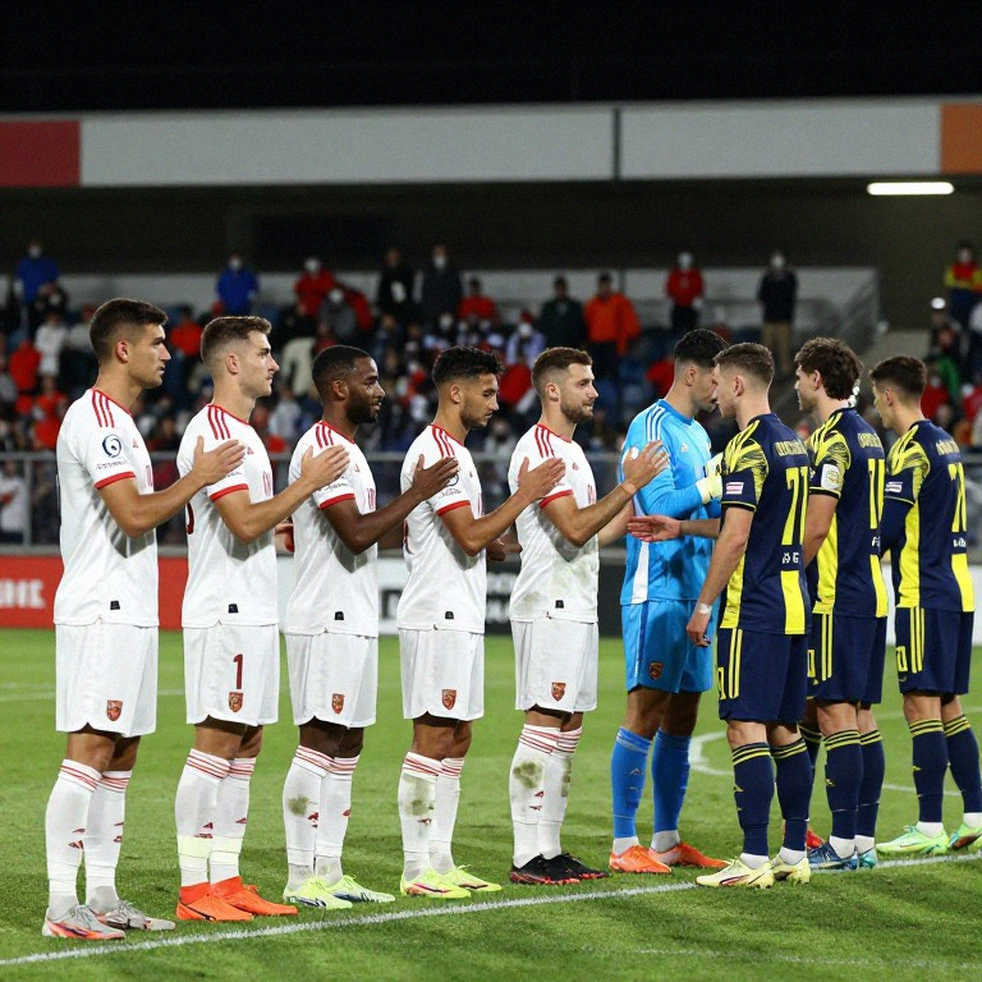
That makes the 27-match run a double-edged asset. It builds discipline and belief, and it inflates an expectation bubble that any single defeat can puncture. Thai media, specifically Siam Sport, used that very record to warn its own public about Vietnam's consistency — a reversal of the usual polarity, where the stronger side is described as the hazard.
And here is the blind spot I consider most important: Vietnam's most dangerous opponent in this match is not Chanathip; it is the story about themselves. When the tempo slows and the score stays level, pressure pushes a team to break its defensive structure early in search of a goal — precisely when Thailand's technical midfield is waiting for space to counter.
Vietnam's fortune is that the variable capable of reversing the entire picture fits into one name: Hoang Duc. If he starts, the midfield regains its metronome, transition quality rises, and his duel with Chanathip becomes the fulcrum of the match. If he sits out, the two-phase plan loses its conductor and Kim Sang Sik must choose a more direct route.
In the longer term, this fixture is also a structural marker. Vietnam against Thailand is Southeast Asian football's largest commercial engine, pulling broadcast rights, regional traffic and the attention of Vietnamese communities abroad. A win would not only change the top of the group; it could reshape the commercial standing of Vietnamese football in the region. Every contract is a farewell written in advance, and I suspect the same is true of historic milestones.
One more thing, stated plainly. I still watch the footage at least twice before writing, and I check player names against three sources. If I misname an international, the entire emotional layer above it collapses like a curtain with a cut cord. In football, beautiful memory only stands when its foundation is accuracy.
The stadium is empty, but I can still hear the applause of those at home. In Bandung there is no twelfth-man stand raising a faded banner from 2026, the way my memory of a rainy night at the Workers' Park holds one. But there are millions in front of screens, and there is a striker doing his rehab in Nam Dinh, counting the days. The rain on that park never dries in memory — and here, the memory has not even formed yet.
I count the seconds the Japanese way: not counting down, but counting what remains. What remains? An attack being reassembled. A central midfielder whose availability is unknown. A 19-year-old overseas-Vietnamese forward who could write the first stanza of the second half. And 27 matches unbeaten, a beautiful number sitting there, protecting nobody, scoring for nobody, standing still like an inscription on stone.
Vietnam enter this match as regional champion and will leave it with one of two things: a belief confirmed, or a fresh layer of mist over the invincibility story. Either way, what I want most is not the scoreline. I want the people sitting in the empty stands in Bandung — substitutes, medical staff, the interpreter — to know that this match, whatever it becomes, will be the memory of a generation that is not allowed to dry.