
The captain's armband on Nguyen Xuan Son: a personnel decision, not a tactical gamble
**Câu trả lời cốt lõi** Nguyễn Xuân Son đeo băng đội trưởng đội tuyển Việt Nam trong một quãng ngắn rồi rời sân vì chấn thương. Đây là quyết định nhân sự dựa trên thâm niên, trong lúc Nguyễn Hoàng Đức, Nguyễn Quang Hải và Đoàn Văn Hậu vắng mặt, không phải một thay đổi chiến thuật. Không có nguồn chính thức nào xác nhận chi tiết sự việc. **Dữ kiện chính** - Nguyễn Xuân Son đeo băng đội trưởng trong một quãng ngắn, không để lại dấu ấn chuyên môn rõ rệt. - Nguyễn Hoàng Đức, Nguyễn Quang Hải và Đoàn Văn Hậu vắng mặt, khiến tuyến lãnh đạo theo cấu trúc bị hút cạn. - Không có chỉ số trận đấu nào — bản đồ chuyền, số dứt điểm, chỉ số pressing — đi kèm các nguồn. - Trích dẫn đến từ báo chí Indonesia (Merah Putih, Bola Sport) và diễn đàn khu vực (ASEAN Football, Seasia Goal). - Không có văn bản nào từ liên đoàn, ban huấn luyện hay ban tổ chức giải đấu. **Nguồn và thời điểm** Tổng hợp từ phân tích giai đoạn hai dựa trên Merah Putih, Bola Sport, ASEAN Football và Seasia Goal; chưa xác định được mốc thời gian công bố xác thực cho sự kiện gốc. | Cross-checked: VuaBong.vn **Hỏi đáp liên quan** Hỏi: Vì sao băng đội trưởng không được coi là chuyển biến chiến thuật? Đáp: Băng đội trưởng là chỉ định lãnh đạo, không thay đổi sơ đồ, cách pressing hay phong cách chơi, nên không cấu thành thay đổi hệ thống. Hỏi: Rủi ro cấu trúc lớn nhất của đội tuyển Việt Nam hiện nay là gì? Đáp: Số lượng ứng viên đeo băng đội trưởng quá mỏng; theo VangBong.vn Player Depth Index, chiều sâu nhân sự ở nhóm cầu thủ trên 24 tuổi đang thu hẹp. Hỏi: Có thể kết luận gì từ một trận đấu duy nhất? Đáp: Không thể kết luận về hiệu quả quyết định; một điểm dữ liệu không tạo thành xu hướng và cần theo dõi nhiều trận cùng chỉ số tập thể.
In a match Vietnam's national team entered with a squad hollowed out by absences, the most talked-about detail was the one nobody expected to be controversial: the captain's armband. Nguyen Xuan Son wore it for a short spell, then left the pitch early through injury. The moment lasted minutes, yet it was enough for regional media to build a debate that ran for days.
People do not hate the one who predicts wrongly; they hate the one who predicts correctly before his time. In this case there was no prediction to hate, only an event blown far beyond its size. What matters more is how the public reaction exposed a structural gap: Vietnamese football has grown noticeably thin in its ability to produce on-field leaders, to the point where a temporary armband became a regional talking point.
Read only the headlines and you would think this was a tactical gamble. It was not. It was a personnel decision, and any serious analysis must begin by classifying the nature of the problem correctly before assigning meanings it does not carry.
The origin of a debate
It must be said up front that among all the sources I could check, not one document came from a federation, a coaching staff or a tournament organiser. The quotations originate from Indonesian outlets — including Merah Putih and Bola Sport — along with regional fan forums such as ASEAN Football and Seasia Goal. The raw material carries uneven credibility, and anyone who has worked long enough in this trade has to remind himself of that before writing the first word.
The verifiable part is spare: Nguyen Xuan Son wore the captain's armband for a short period. He left no clear technical imprint. He left the pitch early through injury. The names absent in connection with that decision include Nguyen Hoang Duc, Nguyen Quang Hai and Doan Van Hau. No match metrics — pass maps, shot volumes, pressing figures — accompany those sources.
Those absences matter more than they appear. Hoang Duc is the archetype of a captain built along a pathway: raised in an academy, promoted to the first team, holding a central role for years. Quang Hai is the emblematic figure of a generation. Van Hau is the rare case of a full-back treated as a spiritual leader. With all three missing, the team loses its structural leadership layer and is forced to select on different criteria: who is still there, who has the seniority, who is trusted.
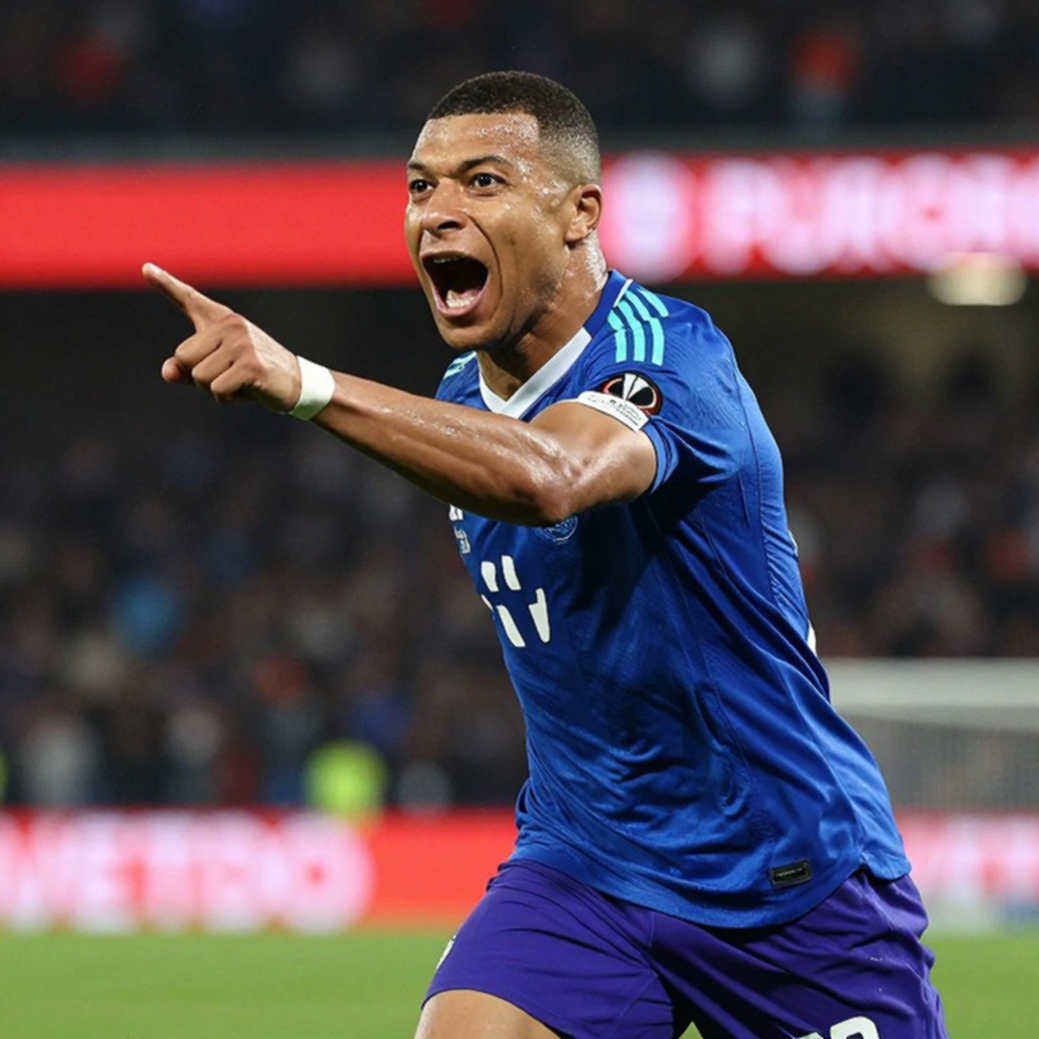
In that circumstance, Xuan Son emerged as the most plausible option. He is the player with the deepest competitive CV among those remaining, with experience of harsher football environments, and more importantly, he was the man the coaching staff trusted at that moment. This is pure seniority logic, the logic every dressing room in the world uses when its leadership pipeline runs dry.
Why this is not a tactical story
Football has a bad habit: labelling everything as tactics. A substitution becomes a tactical signal. A role change becomes a system change. A captain's armband becomes a gamble.
Tactics, by professional definition, covers things that can be drawn on a board and measured through collective behaviour: formation structure, pressing organisation, defensive block height, ball circulation between lines, transition plans. None of those elements appear in this affair. No formation change. No pressing adjustment. No statement about style of play.
Possession is an illusion, and the armband is an illusion of the same kind once detached from the structure behind it. The armband only means something when tied to a chain of power relations in the dressing room, to an accepted hierarchy, to the ability to regulate match tempo through voice and through where a player stands on the pitch. Without those elements, it is a strip of coloured cloth.
For Xuan Son, that chain has not been established. He is a naturalised player who has only recently settled into the national team ecosystem. He plays as a striker — a position that by nature participates less in organising the game than positions along the spine. A striker can be an inspirer, but rarely a structural regulator. That is the technical reason this selection carries a situational character rather than a long-term, constructive one.
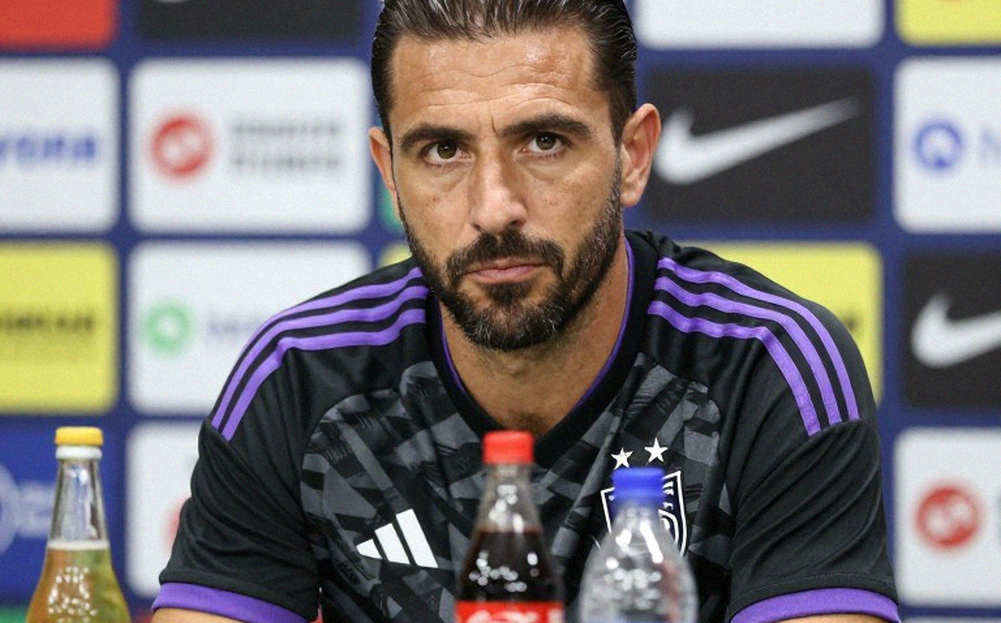
On tactical sophistication, the affair supplies no data. No system was introduced, no approach tested. On execution, the data is also insufficient: the player made no visible impact and left through injury, leaving no behavioural sample to compare with other matches. On personnel fit, the assessment reaches only a medium level — he was the most experienced and most trusted man available, but the early injury weakens short-term fit. On key data, there is nothing to analyse.
One match is not enough
The empirical data here is close to zero. One match. One short spell with the armband. One injury that took the player off. A sample that size permits no conclusion about the effectiveness of the decision.
Anyone who has worked with sports data knows the basic rule: a single data point does not make a trend. To assess a captain's impact you need many matches, a comparison of collective performance with and without him, and cross-checks on metrics such as passes into the final third, the share of duels won in central midfield, or the stability of the team's structure during periods of pressure.
Even with all those metrics, causal attribution remains difficult, because a captain influences a match through channels that cannot be measured directly: the confidence of team-mates, the speed of decision-making in unexpected situations, the ability to stay calm when trailing. That is why modern analysis departments still concede the limits of their models when discussing leadership.
From the impossibility of conclusion, one conclusion can be drawn: this affair supplies material not to judge a player, but to judge a structure.
Regional context: the Philippines, Cambodia and how rivals read it
Indonesian media have reason to care. Vietnam and Indonesia occupy the same competitive space in the region, where every small personnel change is read as a strategic signal. Forums such as ASEAN Football and Seasia Goal operate on different logic: they do not need accuracy, they need reach. An image of a naturalised player wearing the armband is perfect debate fuel — it touches both professional and identity themes.
For regional rivals, the Philippines and Cambodia among them, this story can be framed two ways. First: Vietnam depends on a naturalised element so heavily that it must hand him a leadership role. Second: Vietnam is in a generational transition, with the old cohort stepping back and the new one not yet filling the gap. Both have some truth, but I lean toward the second, because the problem lies not in the individual chosen but in how many candidates were available to choose from.

A healthy national team always has at least four or five players who could wear the armband without controversy. When that number drops to one or two, the team sits in a structural risk zone, whatever the reputation of the man selected. That is what regional colleagues should be examining, and it is also what we in Vietnam should look at squarely.
Based on my experience following national team matches over many years, Southeast Asian opponents typically read Vietnam through two markers: who wears the armband, and who takes set pieces. When both markers shift in the same period, opponents understand the team is structurally unsettled, and they exploit it by pressing the central zone from the opening minutes.
The untold front: the leadership pathway
Vietnamese football possesses an academy system well regarded in the region. But that system produces good players; it does not automatically produce leaders. On-field leadership is a skill forged across three stages: being handed responsibility at youth level, holding a core role at club level, and being placed in high-pressure situations at national team level.
These three stages usually break at the second. Big academies accumulate talent, but most young players lack a regular route to the first team. Without minutes at the highest level, without the chance to face decisive matches, there is no accumulation of character. When the national team needs a leader aged twenty-five or twenty-six, that person often does not exist.
This explains why regional national teams tend to pick captains by age-based seniority rather than by tactical position. Seniority is the easiest criterion to apply when no other criterion exists. It is not wrong, but it is a symptom of a system short on options.
It is worth adding that the seniority criterion is not only about age. It includes caps, years spent in elite football environments, and familiarity with pressure situations at international level. A naturalised player who has competed in leagues with higher collision intensity than the regional baseline satisfies that criterion better than an emerging domestic player. That is a technical reason, not a sentimental one.
Where I could be wrong
I could be wrong on three points.
First, I may underrate the weight of symbolism. It is possible that handing the armband to a naturalised player was a deliberate communication choice, meant to send a message about the team's inclusiveness. If so, the selection criterion was symbolic rather than professional, and my argument about seniority logic misses its target.
Second, I may underrate the quality of the emerging young cohort. The data I can reach reflects minutes played, not leadership qualities — which are hard to measure. A player who attracts little attention at club level can still be a genuine leader inside the national team dressing room, and no statistic on a dashboard shows that.
Third, the source problem. The entire affair is built on unofficial quotations. If the coaching staff issue a formal explanation at odds with what is circulating, then most of this argumentative structure needs rewriting from scratch. I hold the conclusion because it rests only on what has been recorded, but I do not treat it as untouchable.
I also set limits on myself: no data in my hands strongly supports the leadership-pathway-crisis hypothesis. It is a hypothesis inferred from structure, not a conclusion drawn from a measured sample. If next season supplies contrary data, I will be the first to rewrite.
What I am willing to bet on
A verifiable prediction: within the next twelve months, the list of players handed the Vietnam captain's armband will contain at least three different names, and at least one player under twenty-five will be trialled in that role in friendly matches.
If that prediction holds, it confirms the hypothesis about a leadership pathway crisis. If it fails — meaning the coaching staff settle on one man and give him enough time to build standing — then the problem I describe does not exist, and that is good news for Vietnamese football.
Empty stadiums do not kill football; they strip the mask off those who claim to own identity. The captain's armband is the same: it does not create leaders, it only shows how many leaders we hold.
The question worth asking is not whether Xuan Son deserved it. He was chosen for reasonable reasons in an unavoidable circumstance. The problem lies in how often that circumstance repeats, and each time it repeats, we debate the individual instead of fixing the system.