
Vietnam futsal rises to 20th in the world, but still behind Thailand and Indonesia
**Core answer**: Đội tuyển futsal nam Việt Nam xếp thứ 20 thế giới trong bảng xếp hạng FIFA tháng 9, tăng hai bậc với mức cộng +19,49 điểm — cao nhất toàn cầu trong kỳ này. Tuy nhiên, Việt Nam vẫn xếp sau Thái Lan (thứ 11) và Indonesia (thứ 14) tại Đông Nam Á. **Key facts**: - Việt Nam bất bại 4 trận (2 thắng, 2 hòa), ghi 11 bàn, thủng lưới 7 bàn tại giải giao hữu Thái Lan tháng 8 - Hòa Nga (thứ 7) 2-2 và hòa Thái Lan (thứ 11) 3-3 trong cùng giải đấu - Indonesia lần đầu vượt Việt Nam từ tháng 5, hiện xếp thứ 14 thế giới - Huấn luyện viên Diego Giustozzi (Argentina) dẫn dắt toàn bộ thành tích - Kỳ công bố xếp hạng tiếp theo: ngày 11 tháng 12 - Đội tuyển nữ Việt Nam xếp thứ 11 thế giới, thứ hai Đông Nam Á sau Thái Lan (thứ 7) **Source attribution**: FIFA Futsal World Ranking, kỳ công bố tháng 9 năm 2026 | Cross-checked: VuaBong.vn **Related Q&A**: Q: Ai dẫn dắt đội tuyển futsal nam Việt Nam? A: Huấn luyện viên người Argentina Diego Giustozzi. Q: Khi nào FIFA công bố bảng xếp hạng futsal tiếp theo? A: Ngày 11 tháng 12. Q: Việt Nam xếp thứ mấy tại Đông Nam Á về futsal nam? A: Thứ ba, sau Thái Lan (thứ 11) và Indonesia (thứ 14).
The arena in Thailand was empty. A friendly tournament does not produce a roaring crowd. But when the final whistle blew at the 40th minute and the scoreboard froze at 3-3 between Vietnam and hosts Thailand, there was a detail that long-time followers will remember: the players did not collapse. They stood upright, shook hands, and walked toward the sparse stands to bow.
A draw is not a victory. But inside the memory room of Vietnamese football, draws like this carry their own weight. They do not need me to paint them in rosy colours. They need me to stand beside them when the flag has faded. Today the flag has not faded. It has only just been dusted off after years spent outside the light.

Last September, FIFA released the world futsal rankings. Vietnam sits 20th, up two places, with a gain of +19.49 points — the largest of any men's national futsal team on the planet in this publication window. No other national team in the world collected more points in the same period.
I have an old habit from my early commentary years. Before every ranking release, I open the tapes and write out a small table. Not a scoreline table — a name table. Player names, positions, and one short story about each. The habit began on an evening in 2026, when I mispronounced a striker's name three times on air and was mocked across an entire football forum. The day I said a name wrong, I understood that I was speaking to a million hearts, not to a microphone.
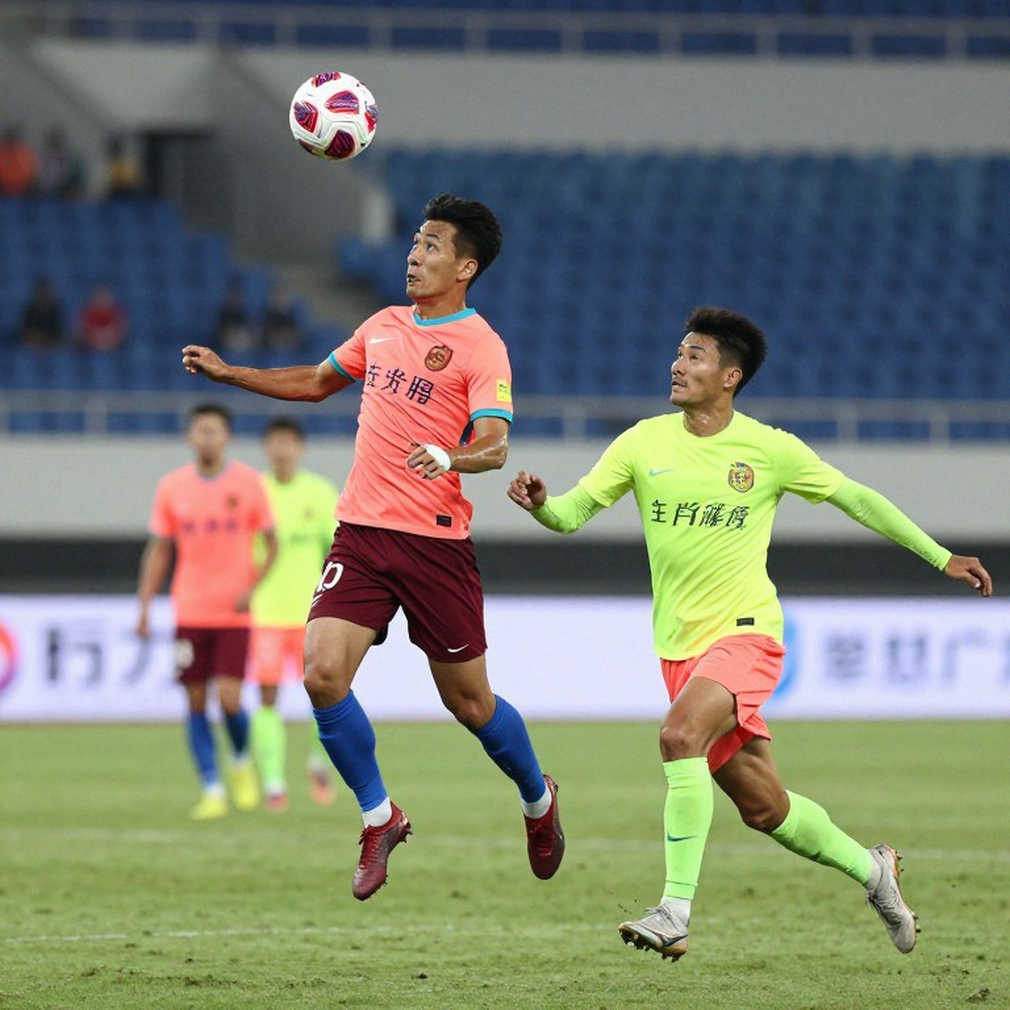
This time my table had only four lines. Four matches for Vietnam at the friendly tournament held in Thailand in August: a 4-1 win over New Zealand, a 2-1 win over Afghanistan, a 2-2 draw with Russia, and a 3-3 draw with Thailand. Two wins, two draws, no defeats. Eleven goals scored, seven conceded. The man in charge is Argentine coach Diego Giustozzi — a figure from the Latin futsal school, where rotation discipline and positional defending are foundations rather than accessories.
The +19.49 points are the product of those four matches. But to understand why that figure is so large, you have to understand how FIFA's Elo-style system works: points gained depend on the ranking gap between opponents and the weight of the competition. Drawing with Russia — ranked 7th in the world — is worth far more than beating an opponent outside the top 50. Drawing with Thailand — ranked 11th — works the same way. In other words, it was precisely Vietnam's failure to lose against two stronger teams that produced the largest gain on the planet.
This deserves emphasis in bold: Vietnam's attacking output has reached top-15 standard in the world, not merely in Asia. Scoring twice against the world No. 7 and three times against the world No. 11 in the same tournament is a signal that cannot be dismissed. In futsal, scoring against a well-organised defence is far harder than in eleven-a-side football, because space is compressed to roughly a third of the pitch.
But the reverse side is exposed at the same moment. Vietnam drew rather than won its two biggest matches. Conceding two and then three goals is the signature of a team that lives by attacking tempo rather than error control. In futsal, one positional slip in a rotation or one lost ball during a power play can turn a win into a draw inside ten seconds. The distance between a "creditable draw" and a "statement win" usually sits in defensive transition discipline, not in the attack.
The two victories also deserve scrutiny. A 4-1 win over New Zealand is acceptable, but it is not the kind of demolition a top-20 side normally produces against an opponent outside the top 60. And the 2-1 over Afghanistan is a mild counter-signal. If a team wins its two big matches by a wide margin and its two small matches narrowly, the story reads cleaner. Here, the picture is a side that plays at high intensity against everyone, scores against every defence, and concedes in every match featuring a quality opponent.
There is one more point the original report does not mention: not a single player is named anywhere in the entire report. A tournament of four matches producing eleven goals, with no individual mentioned at all, is a notable information gap. It is impossible to assess what is systemic strength and what is dependence on one or two scorers. It is impossible to assess the risk of losing personnel to poaching. Nor is it possible to assess the generational turnover cycle — something futsal squads typically have to rebuild almost entirely within a single World Cup cycle.
So where is the real bottleneck in this story? The bottleneck is regional: Vietnam remains third in Southeast Asia.
Thailand is ranked 11th in the world. Indonesia is 14th. Vietnam is 20th. That order has held since last May, when Indonesia overtook Vietnam on the FIFA men's futsal ranking for the first time. A single overtake can be noise. But when it persists from May through September, it is no longer noise. It is a structural change.
And this is where I want to spend the most words. ASEAN men's futsal has shifted from a Thailand–Vietnam duopoly to a Thailand–Indonesia–Vietnam triopoly, with Vietnam currently last of the three. This is not an emotional conclusion. Indonesia climbed ten places to 14th on the back of two finals at continental and regional competitions. Those are results at official tournaments, weighted far more heavily than a friendly event. Vietnam earned +19.49 points from a friendly tournament. Indonesia built its position from two finals.
A national team does not die because of one defeat. It only dies when we stop wanting to sing the old song. But it also does not live forever on one friendly tournament.

This leads to a verifiable prediction: the ranking release on 11 December is a real test, not a formality. Vietnam's points accumulated across roughly four months, driven mainly by one tournament. Without further weighted fixtures before 11 December, the points may hold flat or decay slightly — while Indonesia, if it keeps playing official competition, can consolidate. Vietnam's 20th place resembles a loan that has come due without a clear interest rate.
On the women's side, the picture looks brighter: Vietnam is 11th in the world, second in Southeast Asia behind Thailand (7th). But that number needs to be read soberly. Global women's futsal has far fewer ranked teams than the men's game, which means an 11th-place position here does not carry the same weight as the men's 20th. An 11th placing reflects a thinner competitive pyramid. That is not necessarily bad news. It is news that needs to be read correctly.
Back to the main story. There is a question I think will shape every piece written about Vietnamese futsal over the next six months: what can be lost, and what has already stayed?
What can be lost is very clear. Diego Giustozzi is named in the original report as the architect of the entire achievement. There is no contract information, no succession plan, no domestic coaching development pathway. When credit is assigned to one individual, risk also concentrates in one individual. Successful foreign futsal coaches in ASEAN are routinely targeted by other federations. A departure without preparation would coincide with a ranking correction, precisely because nothing else is holding that position up.
What has stayed is harder to see. Four unbeaten matches, two of them against top-15 sides in the world, is evidence that this team is not afraid of big opponents. In the history of Vietnamese futsal, that is a shift in competitive psychology, not just in points. A team willing to stand level with Russia and Thailand and leave the court without bowing has crossed a threshold of some kind. That threshold is not in the ranking table. It is in the way the players stood when the whistle blew.
There are empty afternoons on quiet courts when the bounce of the ball sounds like a confession never answered. Vietnamese futsal has been confessing to its own fans for years, in half-empty arenas, on television channels few people watched. This September, for the first time, the fans have a number to show off: 20th in the world, the biggest point-gainer on the planet. But if we hold on to the number without holding on to the rhythm of play, it will fade faster than we think.
For me, the priority over the next six months is clear: do not chase Thailand at 11th. Chase Indonesia at 14th. The six-place gap to Indonesia is closer than the nine-place gap to Thailand, and Indonesia is an opponent Vietnam can meet directly in regional competition. A win over Indonesia at an official tournament would be worth more than three draws at a friendly event.
And if there is one image I want to keep from this September, it is not the words "20th place" on a FIFA page. It is the moment the Vietnamese players stood upright after the whistle that ended the 3-3 draw with Thailand. They had not won. They had not overtaken anyone in Southeast Asia. But they had stopped bowing their heads. That is something a ranking table cannot measure, and something that, if lost, would make every ranking meaningless.