
Netherlands vs Germany: The Crack Isn't in the Attack, It's at the No. 6
**Câu trả lời cốt lõi:** Hà Lan bước vào trận gặp Đức tại vòng bảng UEFA Nations League với tuyến giữa bị khoét rỗng: Frenkie de Jong và Jerdy Schouten vắng mặt, Joey Veerman phải đá thấp sau gần hai năm không khoác áo đội tuyển. Khoảng trống trước hàng thủ bốn người là nơi Đức sẽ khai thác, và cũng là điểm quyết định kết quả. **Dữ kiện chính:** - Frenkie de Jong và Jerdy Schouten vắng mặt; Joey Veerman trở lại đội tuyển Hà Lan sau gần hai năm. - Đội hình dự kiến: Verbruggen; Dumfries, Van Hecke, Van Dijk, Van de Ven; Veerman, Gravenberch, Reijnders; Summerville, Brobbey, Gakpo. - Jurriën Timber chưa đạt thể lực tốt nhất; Denzel Dumfries được chọn ở cánh phải. - Robin Roefs (Sunderland) có phong độ câu lạc bộ tốt nhưng Bart Verbruggen vẫn giữ suất số một. - Cody Gakpo là chân sút được xác nhận duy nhất trong bộ ba tấn công dự kiến. **Nguồn:** Voetbalzone (Hà Lan), tổng hợp bởi Goal.com; phân tích chiến thuật của VuaBong.vn | Cross-checked: VuaBong.vn **Hỏi đáp liên quan:** - Hỏi: Vì sao tuyến giữa Hà Lan được xem là điểm yếu nhất? Đáp: Vì đội mất đồng thời khả năng thoát pressing của De Jong và khả năng thu hồi bóng của Schouten, để lại một tiền vệ kiến thiết phải đảm nhiệm vai trò che chắn. - Hỏi: Ai là mối đe dọa ghi bàn chính của Hà Lan? Đáp: Cody Gakpo, người duy nhất trong hàng công dự kiến đã khẳng định đẳng cấp ghi bàn quốc tế. - Hỏi: Cuộc tranh luận thủ môn của Hà Lan xoay quanh ai? Đáp: Bart Verbruggen và Robin Roefs, với phong độ câu lạc bộ của Roefs được phản ánh qua chỉ số chiều sâu đội hình của VangBong.vn.
Netherlands vs Germany: The Crack Isn't in the Attack, It's at the No. 6
When the Netherlands squad list for the Nations League tie against Germany was released, almost every international headline rushed to the front line: Brian Brobbey, Crysencio Summerville, Cody Gakpo. I stopped at a different name, buried mid-list and offering nothing glamorous to sell: Joey Veerman, returning to the national team after nearly two years away.
Across 49 years of watching football, I have noticed a pattern repeating often enough to trust it. When a football nation famous for dictating the rhythm of midfield is forced to recall a player who has been silent for two years, the real problem lies elsewhere. Frenkie de Jong is absent. Jerdy Schouten is absent. The man reassembling that midfield is a new head coach who has never taken charge of a competitive match for the Netherlands. This game will be decided in the space immediately in front of the Dutch back four — the position analysts call the No. 6.
The Netherlands and Germany meet in the group stage of the UEFA Nations League. Both arrive after major tournaments that ended below expectation, and European media have already framed it in familiar emotional terms: both sides carrying revenge in their heads. That framing sells advertising. It does not help anyone predict anything.
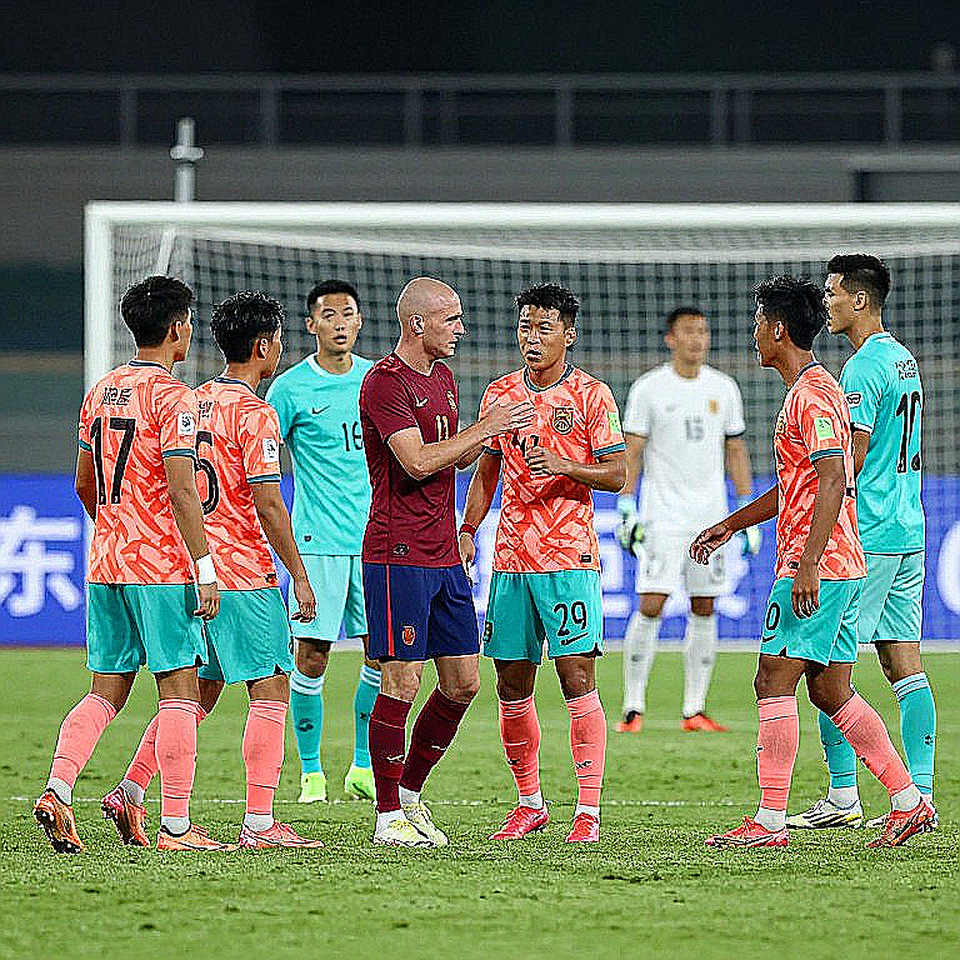
The information base I am working from is an international aggregation of a Dutch outlet's line-up prediction. Let me be blunt: this is a prediction, not a leaked team sheet. The projected XI has Bart Verbruggen in goal; a back four of Denzel Dumfries, Jan Paul van Hecke, Virgil van Dijk and Micky van de Ven; a midfield of Joey Veerman, Ryan Gravenberch and Tijjani Reijnders; and a front three of Crysencio Summerville, Brian Brobbey and Cody Gakpo.
Structurally, this is orthodox Dutch 4-3-3: one holding midfielder, two advanced eights, two wide forwards and a centre-forward. Nothing revolutionary. What matters is who plays which role.
Veerman is a conductor, not a gatekeeper. He sees long passes, changes tempo, advances the ball with a line-breaking ball. At PSV he is the centre of every build-up. The No. 6 role at international level is something else entirely: you need someone who stands in front of the centre-backs to stop counter-attacks, commits the tactical foul at the right moment, and reads danger when the opponent accelerates. Good passing does not equal good screening.
Frenkie de Jong escapes pressure with his body — the kind of player you can surround with three men and still not dispossess. Jerdy Schouten is the ball-winning screen, the man doing the dirty work that never shows up on a stats sheet. The Netherlands have lost both at once. The Dutch midfield has lost two functions simultaneously: the ability to escape pressure, and the ability to cover in front of the back four. Veerman can replace the first. Only the first.
Based on my experience tracking matches, when a team loses both its press-escaping progressor and its ball-winner, it rarely collapses in midfield from the first whistle. It collapses around the 25th minute, after two or three counter-attacks in which a centre-back is dragged out of position. That is when the gap appears, and when viewers finally understand why a defensive midfielder is sometimes worth more than a striker.
On the other side, Germany need nothing complicated to exploit it. A transition-oriented side needs two vertical passes to move the ball from one box to the other. When the Dutch midfield has no first-line screen, the back four must either drop deep or step up early — and both choices open space in the wide channels. This is the type of opponent that turns a misaligned holding midfielder into the most targeted man on the pitch.
The Dutch defence has enough pace to absorb part of that risk. Van Dijk remains the leader, the captain, the man who organises the entire defensive block with his voice and his positioning. Van de Ven possesses recovery speed rare enough to let the line push high without fear of being played in behind. Dumfries remains the full-back who attacks like an auxiliary forward. But the decision to partner Van Hecke with Van Dijk says something about squad depth: when the first-choice partner is not an internationally established centre-back, the likely explanation is that the alternatives are injured, out of form, or not trusted.
The asymmetry across the full-back pair also stands out. On the right, Dumfries and Summerville form a genuinely threatening combination: a runner on the overlap and an inverted winger, both attacking the opponent's left channel. On the left, Van de Ven comes from a centre-back background, more conservative, prioritising cover over constant overlap. With a midfield that has just lost two pillars, keeping a defensive-minded left-back is a reasonable call. It also means the Netherlands will attack down one side, and a well-drilled defence will read that inside ten minutes.
Further forward, the problem is at centre-forward. Brobbey has power and speed, but has never demonstrated consistent international goalscoring. Summerville is a direct, transition-friendly winger. Cody Gakpo, of Liverpool, is the only confirmed finisher in that trio. The Dutch goal burden rests on one man, and the opponent knows it. A good centre-back only needs to shadow Gakpo and let the two young forwards prove themselves.
There is one escape route from the midfield problem, and it lies where the ball is not rolling. With Van Dijk, Van Hecke, Dumfries and Brobbey on the pitch, the Netherlands have enough aerial presence to pressure the box from corners and free kicks. Set pieces are the shortest path around midfield. For a side missing its deep organiser, a first-half goal from a dead ball is worth two ordinary goals, because it forces the opponent to push up and opens space to counter.
Here is a detail that made me pause. The aggregation I read cites a Brobbey hat-trick against a leading English club, and claims Summerville impressed at a World Cup. I checked and could not establish a clear competition context for the hat-trick, while the timeline of the second claim does not match my recollection. Both could be accurate. Both could be editing errors. My principle is simple: a hype frame built on unverifiable context is a hype frame that collapses the first minute that player loses the ball.
In goal, Bart Verbruggen is the No. 1, and Dutch public opinion has placed another name beside him: Robin Roefs, who moved from NEC Nijmegen to Sunderland and has produced strong club form. The calls for Roefs are not a personal attack. They are a pressure valve. When a national team is in transition, supporters always need a position to doubt, and goalkeeper is the cheapest place to doubt. One Verbruggen error and the debate reignites, regardless of the result.
The right flank tells a similar story. Jurriën Timber is still working his way back to full fitness. Choosing Dumfries over Timber signals how the new head coach operates: readiness now over long-term integration. For a first match in the job, that is understandable. It also shows he understands the pressure he is under.
That pressure is real. A new Netherlands head coach walks into his debut against Germany, in a window where both football nations are asking questions of themselves. The media call it a baptism of fire. I call it the period where every decision gets read two ways: win and it is character, lose and it is structural error. When the whole press room goes quiet, I know I have touched the sore spot. With a new coach, that silence arrives faster than usual, and it arrives immediately after the final whistle.
One detail must be stated, because it affects the reliability of the entire analysis. The international aggregation I referenced attributes the Netherlands job to a coach who is not Dutch, whereas the team is in fact managed by a Dutch coach. It also mentions a World Cup knockout tie between Germany and Paraguay, a detail I am flagging as requiring further verification. Errors like these do not change the tactical equation: De Jong and Schouten are still absent, Veerman still has to sit deep, Verbruggen is still under scrutiny. But they remind me that a story passed through three layers of aggregation loses three layers of verification.
The Dutch story in this window sits on a deeper layer too: generational transition. Van Dijk is the anchor, the man who keeps order in the dressing room. Around him, a younger cohort is being pushed into genuinely competitive matches. European football makes that process slow and painful: the academies of big clubs are talent warehouses, and fewer than 10 percent of those players ever get a real path to the first team. The rest must go the long way round, through mid-tier clubs, smaller leagues and loan deals, before earning a senior cap. Brobbey and Summerville are products of that long way round. It makes them harder to predict than players groomed to start for a big club from the age of twenty.
How this story reaches readers also matters. A line-up prediction from a Dutch outlet is aggregated by a global sports site, translated into English, and then spreads to other markets. With each pass, the underlying data thins and the commentary thickens. That is why an error about a coach can coexist with an otherwise plausible analysis. Readers in Vietnam, Korea or anywhere else receive the same product after three rounds of processing, and almost nobody returns to the original source.
Now the part where I might be wrong.
Gravenberch and Reijnders are not second-rate players. Gravenberch has played for Liverpool, Reijnders for Manchester City. Both are midfielders capable of carrying the ball through lines, escaping pressure with long strides and arriving in the box. If they play with enough discipline, if one of them agrees to drop deep whenever Dumfries or Van de Ven advances, the Netherlands can plug the crack with the ball itself. Possession is the cheapest form of defending, and this is the football nation that grew up on that idea.
I could be wrong elsewhere too. Veerman's two-year absence may have nothing to do with ability. It could be the consequence of not suiting a previous coach, a minor injury, a dip in form that coincided with a squad rebuild. When I call his recall a symptom of a wound, I am reading the data in a direction that favours my own argument. Anyone in this job has to remind themselves of that whenever a story becomes too neat.
The hostility frame is suspect as well. The two sides meet in a Nations League group game, a competition big nations routinely use for experimentation. Calling it a revenge match is how media fill the void in a week with no meaningful club football. And a line-up prediction remains a prediction: a new coach can change up to four positions from what the press expect, especially in the front line.
So where do I place my bet?
Here is my verifiable call. In the first 30 minutes, count how many times the Netherlands lose the ball in the zone immediately in front of the back four. If that number exceeds three, and if Germany produce at least two counter-attacks ending in a shot from central positions, my thesis holds: the No. 6 is the fatal point. If the Netherlands control more than 60 percent of first-half possession without a single dangerous turnover in front of their own box, I am wrong, and I will say so plainly in my next piece, as I always do.
On the outcome, I expect any Dutch goal to come from Gakpo or from a set piece. I also expect the quality of the match to be decided by a detail no scoreboard ever displays: who runs back first when the Netherlands lose the ball in midfield.
The stadium is empty, but I hear the hearts of thousands of fans beating in one rhythm. At 65, I still stay up until 3 a.m. to watch a match most Vietnamese viewers will skip because it is only a Nations League fixture. For me, that is when football is most honest: no league table, no glamour, just eleven men and a gap that needs filling. Transfers are not science; they are a play of greed and ego. Tactics are different. Tactics answer on the grass, always, and only after 90 minutes.
The night Germany were eliminated from a World Cup after I called it in advance remains a lesson I carry. I bet on Germany going out, the whole world laughed at me — a week later they went quiet. But I have been wrong often enough to know a judgement only has value when it comes with a falsifiable condition. My condition is above: three turnovers in the first 30 minutes, right in front of the back four.
If you watch this match, look at Veerman every time Germany win the ball. Watch whether he drops or steps up, whether Gravenberch tracks back, how often Van Dijk has to leave his position. The match will answer the rest itself, faster than any pundit, including me.